2-Night Mini Cruise from Hull to Amsterdam
A 2-night mini cruise from Hull to Amsterdam packs sea travel, city sightseeing, and a short escape into one efficient break. It matters because many travelers want the feel of a holiday without using a full week of leave or spending hours in airport queues. This route blends an overnight ferry crossing with a day in one of Europe’s most rewarding capitals, so the journey becomes part of the experience. For couples, friends, solo travelers, and first-time cruisers, it offers a practical and memorable alternative to a standard city break.
Outline:
- What the mini cruise includes and how the Hull to Amsterdam route actually works
- What life on board is like, from cabins and dining to entertainment and comfort
- How to use a single day in Amsterdam wisely, with different sightseeing approaches
- What affects the overall cost and how the trip compares with flying or a longer cruise
- Who this break suits best, plus planning advice and a final takeaway for prospective travelers
1. What a 2-Night Mini Cruise from Hull to Amsterdam Really Includes
The phrase “Hull to Amsterdam mini cruise” sounds wonderfully direct, but the real travel pattern is slightly more nuanced, and understanding that makes the whole trip easier to plan. In most cases, you sail overnight from Hull, more specifically from the ferry terminal at King George Dock, to Europoort near Rotterdam. From there, passengers booked on the city-break style sailing usually continue by coach transfer into Amsterdam. That detail matters because it shapes your expectations: this is not a ship docking in the center of Amsterdam, but an overnight ferry journey paired with a day visit to the Dutch capital.
In practical terms, the break usually works like this. You board in the evening, settle into your cabin, spend the night on the ship, and arrive in the Netherlands the next morning after roughly 11 to 12 hours at sea, depending on schedule and conditions. After disembarkation, the onward road transfer to Amsterdam generally takes around 75 to 90 minutes. You then have much of the day in the city before returning to the coach and heading back to the port for the overnight crossing to Hull. By the following morning, the ship is back in Yorkshire, and the trip is complete. That rhythm is exactly why the mini cruise appeals to people who want a compact escape without taking much annual leave.
It helps to compare this format with two other kinds of travel. First, it is not a conventional cruise in the Mediterranean or Caribbean sense, where the ship visits several ports over many days and the vessel itself is the core of the holiday. Second, it is not simply a ferry ticket either, because the experience is curated as a short break, with cabins, dining, entertainment, and an organized city visit folded into the overall package. Think of it as a hybrid: part transport, part hotel stay, part sightseeing trip.
Its relevance has grown for a simple reason. Travelers increasingly value convenience and experience in equal measure. A mini cruise answers both needs:
- It avoids airport security lines and baggage restrictions associated with many short-haul flights.
- It creates a stronger sense of departure and arrival than a routine plane journey often does.
- It suits people based in northern England particularly well because Hull is accessible by road and rail.
- It offers a first taste of sea travel without the cost or commitment of a full cruise holiday.
There is also an emotional side to the appeal. Watching the port lights shrink into the evening, walking the outer deck with the North Sea air cutting cleanly across the rail, and knowing that the city break has already begun before you reach your destination gives the trip a distinct personality. For many travelers, that feeling is the whole point. The journey is not dead time. It is the opening act.
2. Life On Board: Cabins, Dining, Entertainment, and the Ferry Experience
One of the biggest surprises for first-time passengers is how different an overnight ferry feels from the bare-bones mental picture many people carry into the booking process. A 2-night mini cruise from Hull is not a luxury ocean liner, but neither is it merely a row of seats and a vending machine. The ship functions more like a floating hotel with transport built in. That distinction shapes the entire experience, especially for travelers who have never slept at sea before.
Your cabin is central to that experience because it turns the crossing into a proper overnight break rather than an endurance exercise. Even standard cabins usually provide en suite facilities, beds rather than recliners, storage space, and enough privacy to make the trip comfortable. Upgraded cabins may offer more room, better views, or premium touches, but the main benefit of any cabin is simple: you can unpack a few essentials, shut the door, and claim a temporary base. For couples, that adds a layer of calm. For families and groups, it makes the logistics manageable. For solo travelers, it offers security and quiet after time in the public lounges.
Food is another important part of the mini cruise, and it is often where expectations improve quickly. Most overnight ferries serving this route offer a mix of options, such as self-service dining, restaurants, bars, and casual cafés. Some passengers pre-book dinner or breakfast to keep spending predictable, while others choose on board depending on mood and budget. The best approach depends on how you travel. If you like structure, meal packages can make the trip smoother. If you prefer flexibility, paying as you go may suit you better. Either way, it is wise to treat meal choices as part of the planning rather than an afterthought.
Entertainment on board is usually relaxed rather than spectacular, which is perfectly fitting for a short North Sea crossing. Expect a combination of lounges, bars, possibly live music or a resident performer, shops, children’s play areas on some sailings, and shared spaces where people simply sit and talk. The pleasure lies in the atmosphere. There is something undeniably cinematic about hearing the low vibration of the ship, seeing reflections on black water, and stepping back inside for a drink while the crossing continues through the night.
A few practical points can improve comfort significantly:
- Pack a small overnight bag so you do not need to carry everything around the ship.
- If you are sensitive to motion, bring suitable travel sickness remedies before departure.
- Wear layers, since outside decks can be cold even when indoor areas are warm.
- Check dining times and entertainment schedules soon after boarding.
- Bring a power bank and any adapters you may need for your devices.
Compared with flying, the pace on board is slower, more social, and less compressed. Compared with a long cruise, the facilities are naturally more limited. But for two nights, that balance often works well. You get enough comfort to enjoy the crossing, enough activity to avoid boredom, and enough novelty to feel that the holiday begins the moment the ropes are cast off.
3. How to Spend Your Day in Amsterdam Without Feeling Rushed
The biggest planning challenge on this trip is obvious: Amsterdam deserves far more than a single day, yet a mini cruise gives you only a limited window. That sounds restrictive, but in reality it can sharpen your choices and lead to a more satisfying visit. The secret is not trying to “do Amsterdam” in full. It is choosing one style of day and doing it well. The city rewards focused wandering far more than frantic box-ticking.
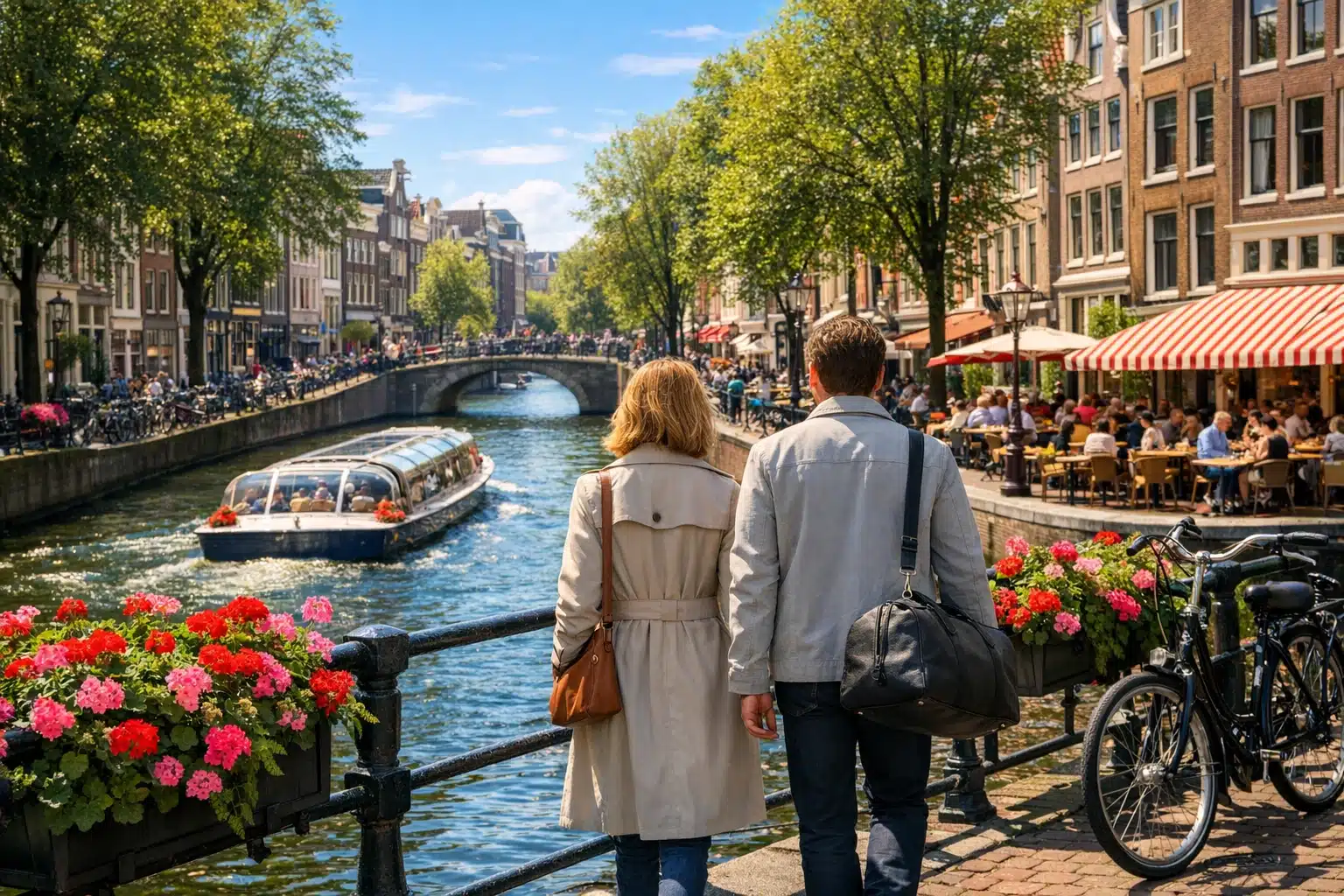
Amsterdam is compact by capital-city standards, and that helps enormously. Many of its best-known areas are close enough to combine on foot if you are comfortable walking. The canal belt, Dam Square, the Jordaan district, the flower market area, and stretches of the museum quarter can all fit into a well-organized itinerary. Public transport is also efficient, but many visitors find that walking reveals the city’s personality better than rushing between stops. The tilted canal houses, the bikes gliding past in determined silence, the cafés opening onto narrow streets, and the layered reflections in the water are part of the experience, not background decoration.
For first-time visitors, a simple route often works best. Start with the central area, get your bearings, and then choose one major highlight and one neighborhood to explore in more depth. For example, you might pair a canal cruise with the Jordaan, or the Rijksmuseum with a slower walk through the museum district and Vondelpark. If you are returning to the city, you can skip the headline sights and instead focus on markets, smaller museums, independent shops, or a long lunch by the water.
There are a few practical realities worth respecting. Amsterdam is famous for cycling culture, and visitors who forget that quickly notice how fast local riders move. Bike lanes are not decorative strips of pavement; they are working transport corridors. Museum tickets for major institutions are often best reserved in advance, especially during weekends and holiday periods. Payment by card is widespread, though carrying a little backup cash can still be useful. The euro is the local currency, and checking exchange rates before travel helps avoid small but annoying surprises.
Different day styles suit different travelers:
- Culture-led day: Rijksmuseum or Van Gogh Museum, canal walk, early dinner, brief shopping stop.
- Scenic day: canal cruise, Jordaan stroll, Nine Streets browsing, café break, riverside photos.
- Relaxed social day: brunch, market visit, leisurely wandering, one attraction, then people-watching.
- History-focused day: Dam area, Royal Palace exterior, Anne Frank House area, old canals, heritage stops.
What matters most is leaving breathing room between stops. A mini cruise day in Amsterdam should feel lively, not over-engineered. If you try to cram in six museums, three neighborhoods, and a shopping mission, the city becomes a checklist. If you allow time to stand by a canal, listen to tram bells, and absorb the rhythms of the place, even a short visit can feel full and memorable. In that sense, Amsterdam is unusually well suited to a fleeting arrival. It gives a lot of character very quickly, and that is exactly what a compact city break needs.
4. Cost, Value, and How This Break Compares with Flying or Booking a Longer Trip
Value is one of the strongest arguments in favor of a 2-night mini cruise from Hull, but only if you assess the total picture rather than focusing on the headline fare. At first glance, the trip can seem attractively priced because it combines transport and accommodation into a single booking. You are paying for two overnight sailings, a cabin, and usually the framework of the city visit. That can compare favorably with a short-haul flight plus a hotel, particularly during busy travel periods when city-center accommodation prices rise sharply.
That said, the real cost depends on several moving parts. The base price is only one layer. You may also need to budget for dining on board, drinks, city spending, parking at the port, rail travel to Hull, attraction tickets in Amsterdam, and optional cabin upgrades. Weekend departures, school holidays, and high-demand seasonal periods can push prices higher, while advance booking or off-peak travel may improve the deal. For budget-conscious travelers, a mini cruise often works best when approached as a planned package rather than an impulse purchase with lots of add-ons later.
Here are the main cost factors to consider:
- Cabin type, since inside, sea-view, and premium categories usually price differently.
- Meal packages, which can offer convenience but should be weighed against how much you actually eat.
- Transfers and local transport, especially if your booking structure varies by departure date or package type.
- Spending habits in Amsterdam, where museums, dining, and shopping can quickly exceed expectations.
- Travel to Hull itself, which matters more if you are coming from outside northern England.
Compared with flying, the mini cruise is usually slower but often more rounded. A flight from the UK to Amsterdam may be quicker in pure travel time, yet airport transfers, security, baggage rules, and waiting times reduce some of that advantage. Flying tends to suit travelers whose priority is maximizing time in the city. The ferry suits travelers who want the transport to be part of the holiday. Neither option is universally better; they deliver different kinds of value.
Compared with a longer cruise, the mini cruise is clearly more limited in scale, facilities, and destination variety. You get one city and two nights, not a floating resort with multiple ports. But that limitation is also its strength. The trip is accessible, digestible, and easy to fit around work or family commitments. It can also function as a trial run for people curious about cruise-style travel but unsure whether they would enjoy sleeping on a ship.
There is one more useful comparison: the mini cruise versus a standard UK weekend break. If you price up two hotel nights in a popular British city, rail tickets, meals, and entertainment, the Amsterdam ferry option can start to look surprisingly competitive, especially when the sea crossing itself is part of the attraction. In other words, the value is not only monetary. It is experiential. You are buying a short escape with movement, scenery, novelty, and a strong sense of occasion.
5. Who This Trip Suits Best, Smart Planning Tips, and a Final Takeaway
A 2-night mini cruise from Hull to Amsterdam is not the perfect break for every traveler, and that is precisely why it helps to define who will get the most from it. If your ideal holiday means several uninterrupted days in one destination, a quick in-and-out format may feel too brief. If you dislike fixed timetables, or if sea conditions make you uneasy, the journey element may outweigh the city break appeal. Yet for a very specific type of traveler, this trip is remarkably well judged.
It suits people who enjoy anticipation as much as arrival. Couples looking for a compact getaway often appreciate the built-in sense of occasion. Friends can treat it as a social weekend with a continental twist. Solo travelers may find it a comfortable way to sample both ferry travel and Amsterdam without committing to a long itinerary. It is also a good option for people based in Yorkshire, the Humber region, and other nearby parts of northern England, where reaching Hull is relatively straightforward. For first-time cruisers, the route offers an accessible way to decide whether sleeping at sea is enjoyable before considering a longer voyage.
The best results usually come from practical planning rather than heroic spontaneity. A short trip leaves little room for disorganization, so details matter. Check passport validity well in advance and confirm boarding requirements before travel. Reserve key Amsterdam attractions early if they are central to your plan. Pack for movement rather than excess, since a mini cruise works best when you travel light enough to stay flexible. Keep footwear comfortable, because even a “relaxed” day in Amsterdam tends to involve plenty of walking.
Useful preparation can be reduced to a simple checklist:
- Decide whether your priority is sightseeing, shopping, food, or atmosphere before you arrive.
- Pre-book timed-entry museums if you want a major attraction guaranteed.
- Carry layers, waterproof outerwear, and comfortable shoes for changing weather.
- Budget separately for on-board extras and city spending so the total cost stays clear.
- Leave room in the schedule for unplanned moments instead of filling every hour.
For the target audience, the core question is not “Is this the deepest way to experience Amsterdam?” The honest answer is no. A single day cannot replace a longer stay. The better question is “Does this create a memorable, manageable, and enjoyable short break?” For many travelers, the answer is absolutely yes. It gives you two nights with a genuine travel atmosphere, a taste of sea life, and a lively day in a world-famous city, all within a format that respects limited time.
In the end, this mini cruise is best understood as a smart short escape rather than a substitute for a full Dutch holiday. If you want a brief change of scene, enjoy the romance of departure, and like the idea of waking up on a ship with Europe on the horizon, it is a compelling choice. For busy travelers who value experience, ease, and a little drama in the journey itself, it remains one of the most distinctive short breaks available from Hull.