7 Safest Islands in the Caribbean
Safety shapes a Caribbean trip long before the first swim, because peace of mind affects where you stay, how you move around, and how freely you explore after sunset. This guide looks at seven islands that are often seen as safer choices thanks to stable governance, reliable tourism infrastructure, and generally manageable crime risks. It also explains why safe is never one-size-fits-all. A calm beach town, a well-lit capital, and a storm-resilient island can matter in very different ways.
Outline and the Real Meaning of Safety in the Caribbean
Before naming any island a safer choice, it helps to define what travelers usually mean by the word. For some, safety is mostly about crime. For others, it includes dependable roads, access to clinics, low hurricane exposure, clean drinking water, and the ease of finding licensed transport after dark. In the Caribbean, all of those factors matter. A destination can feel relaxed and still require basic street smarts, while another may have excellent healthcare and infrastructure but demand extra caution in nightlife areas or isolated beaches.
This article follows a simple outline so the ranking does not feel like a glossy brochure floating above reality. Instead, it looks at seven islands often regarded as safer picks for visitors and explains why they tend to earn that reputation.
- First, it sets the criteria used to judge safety.
- Second, it examines Aruba and Bonaire, two southern Caribbean islands known for calm tourism environments and lower hurricane risk.
- Third, it compares the Cayman Islands and Barbados, where strong services and mature tourism sectors make travel straightforward.
- Fourth, it reviews Curaçao, Martinique, and Anguilla, three very different destinations that still appeal to cautious travelers.
- Finally, it matches these islands to families, solo travelers, couples, and first-time Caribbean visitors.
Several practical signals shape the analysis. These include political stability, the visibility of tourism policing, the availability of reputable hotels and taxis, the quality of hospitals or clinics, and whether visitors can move around with relative confidence in major tourist zones. Another important factor is weather exposure. Aruba, Bonaire, and Curaçao sit outside the main hurricane belt, which does not make them immune to bad weather, but it does reduce a major travel risk compared with many northern Caribbean islands.
One caution is essential: no island is crime-free, and no destination remains equally safe in every district, at every hour, or for every traveler profile. Petty theft, phone snatching, poorly lit roads, alcohol-related incidents, and risky driving are still common concerns across the region. Think of this guide not as a promise of perfection, but as a smart map. The Caribbean may be painted in postcard colors, yet the safest trips are usually built on ordinary details such as lighting, transportation, local awareness, and good judgment.
Aruba and Bonaire: Why the ABC Region Appeals to Cautious Travelers
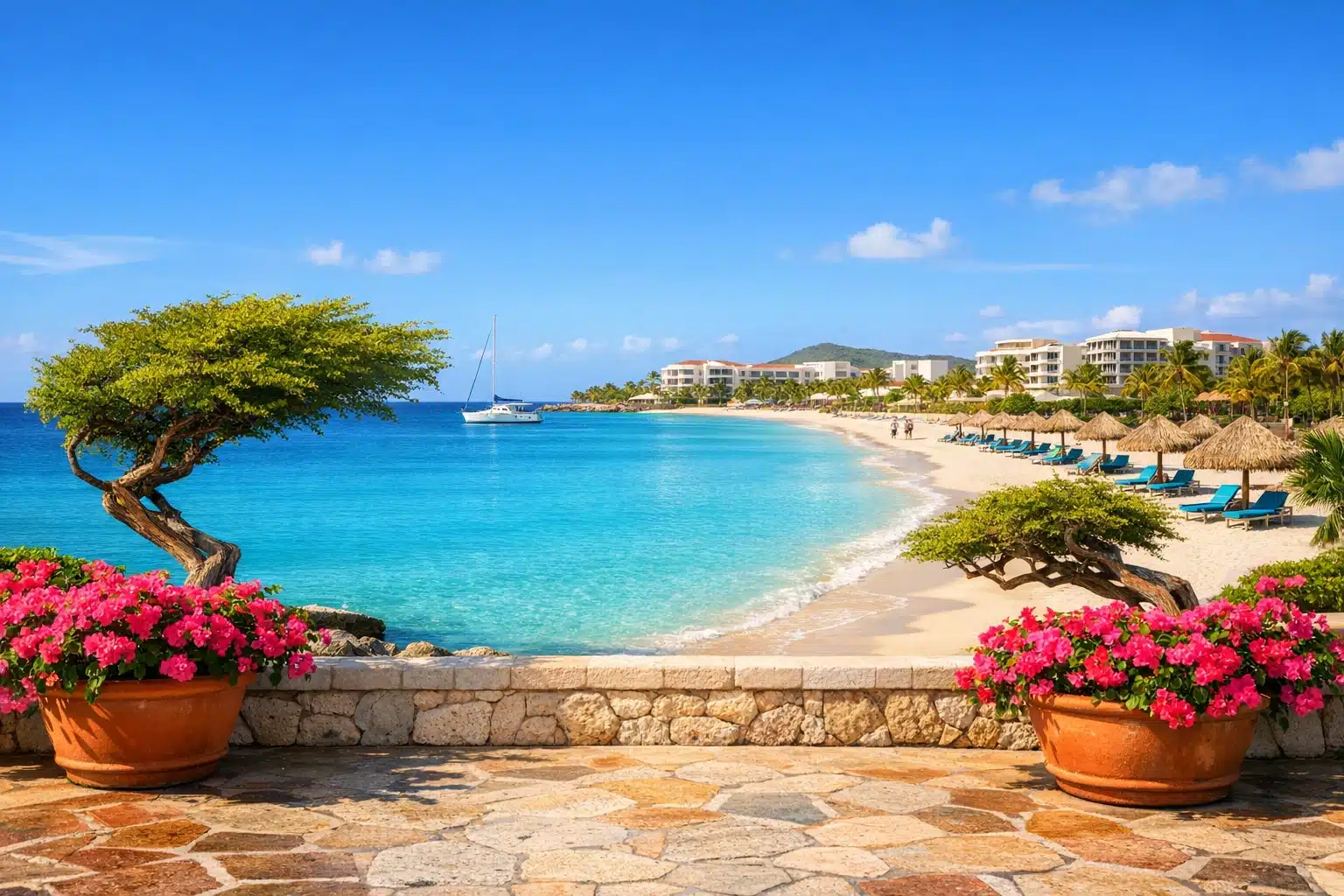
Aruba and Bonaire regularly appear in conversations about safer Caribbean vacations, and their appeal is not hard to understand. Both sit in the southern Caribbean and are generally outside the main hurricane belt, which is a major point in their favor for travelers planning trips during storm season. That alone does not guarantee a smooth holiday, but it changes the risk calculation in a meaningful way. Add well-developed tourism services, relatively organized visitor infrastructure, and a reputation for orderly resort areas, and these islands start to stand out.
Aruba is often the easier choice for travelers who want safety without sacrificing convenience. It has a polished tourism machine, broad hotel options, many English-speaking service workers, and a well-established visitor economy. Popular areas such as Palm Beach and Eagle Beach are busy, visible, and easy to navigate, which reduces the sense of isolation that can make some travelers uneasy. Aruba also tends to work well for first-time Caribbean visitors because it feels logistically simple. You can land, grab a registered taxi or rental car, and settle in quickly without decoding too many local complexities. That said, simple does not mean careless. Car break-ins, unattended belongings on beaches, and late-night overconfidence remain avoidable mistakes.
Bonaire offers a different type of comfort. It is quieter, smaller, and more low-key than Aruba, which many travelers experience as reassuring rather than limiting. The island is especially popular with divers and nature-oriented visitors, and its tourism scene feels less party-driven. Kralendijk, the capital, is compact and manageable, and many accommodations are small-scale properties where owners and staff know the rhythm of the island well. In practical terms, Bonaire often suits visitors who value calm evenings, clear routines, and a destination where the ocean, not the nightlife, is the main event.
Compared side by side:
- Aruba is better for travelers who want more hotels, dining, and easy movement.
- Bonaire is better for those who prefer quiet streets and an outdoors-first atmosphere.
- Both benefit from lower hurricane exposure than many Caribbean competitors.
- Both still require sensible precautions around valuables, rental vehicles, and remote coastal spots.
If Aruba feels like a bright, well-run boardwalk in island form, Bonaire feels more like a place that lowers its voice and invites you to do the same. For many cautious travelers, both styles can feel safe for different reasons.
Cayman Islands and Barbados: Strong Infrastructure, Clear Systems, and Easy Travel Flow
The Cayman Islands and Barbados are often recommended to travelers who want a Caribbean holiday with fewer surprises on the practical side. Both destinations combine established tourism sectors with relatively strong institutions, and that matters more than many people realize. Safety is not only about avoiding crime; it is also about how quickly problems can be solved when something goes wrong. If a visitor needs a pharmacy, a hospital, a reputable taxi, a well-reviewed hotel, or support from local authorities, these two islands generally perform well.
The Cayman Islands, especially Grand Cayman, have a reputation for being orderly, affluent, and traveler-friendly. As a British Overseas Territory with a high-income economy, the islands benefit from solid infrastructure and a service culture shaped by finance and premium tourism. Seven Mile Beach is one of the most famous resort areas in the Caribbean, and it is popular partly because it feels easy to navigate. The roads are generally good, accommodations are professional, and visitor-facing businesses tend to maintain consistent standards. Families and older travelers often appreciate that blend of beauty and predictability. Still, Cayman is not a sealed bubble. Water safety, sun exposure, and road awareness are real concerns, and nightlife districts can still produce the familiar vacation mistakes of lost phones, excess drinking, and poor late-night decisions.
Barbados brings a different strength: a mature tourism culture with a distinctly lived-in national character. It does not feel built only for visitors, which can actually be reassuring. The island has long welcomed international travelers, and its hotel zones, beaches, restaurants, and transport options are well understood. Barbados is often praised for friendly service, stable public life, and a travel experience that feels both polished and human. Areas on the south and west coasts are especially popular because they balance convenience with amenities. For many visitors, the island feels approachable rather than overwhelming.
There are also differences worth noting. Barbados is larger and more varied than Grand Cayman, which means neighborhood choice matters more. Some urban pockets require more caution than beach districts. Driving is on the left, which can unsettle visitors unused to it, and road design may feel narrow in places. Cayman, by contrast, often feels more compact and more obviously organized around visitor ease, though it is usually more expensive.
- Choose Cayman if you prioritize premium services and highly polished logistics.
- Choose Barbados if you want variety, local culture, and a strong tourism framework.
- In both places, licensed transport, daylight arrival, and a well-reviewed stay reduce stress immediately.
If Aruba and Bonaire win on calm simplicity, Cayman and Barbados win on systems that make travelers feel supported.
Curaçao, Martinique, and Anguilla: Three Safe-Leaning Islands with Very Different Personalities
Curaçao, Martinique, and Anguilla do not resemble one another closely, yet each earns a place in a discussion about safer Caribbean islands for distinct reasons. The common thread is not that they are identical, but that they tend to give careful travelers a solid foundation: recognizable tourism zones, manageable visitor logistics, and environments where comfort does not depend entirely on luck.
Curaçao shares one of Aruba and Bonaire’s biggest practical advantages: location in the southern Caribbean outside the main hurricane belt. That lowers one serious travel risk, especially for people booking in the late summer or fall. Willemstad, with its colorful waterfront and Dutch-Caribbean architecture, is lively and visually memorable, but it is also a functioning city, not just a resort backdrop. That means visitors should expect the normal urban rules to apply. Tourist areas are usually straightforward, while isolated neighborhoods or poorly chosen late-night routes deserve more care. Many travelers appreciate Curaçao because it combines strong visual charm with a more grounded, independent feel than a classic fly-in resort island. It is a good option for travelers who want culture and beaches in the same trip without feeling cut off from real local life.
Martinique is often attractive to safety-conscious travelers because it is an overseas department of France. In practical terms, that often means reliable infrastructure, strong healthcare access by regional standards, and systems that feel familiar to travelers used to European administration. The euro is used, roads are generally in decent condition, and services can feel more formal and structured than on some neighboring islands. Martinique is not always the most effortless island for English-speaking visitors, but that can be a manageable challenge rather than a drawback. For travelers who value order, emergency readiness, and a destination where institutions are visible, Martinique can feel like one of the Caribbean’s steadier options.
Anguilla is the quiet luxury pick. Small, low-density, and known for upscale villas and tranquil beaches, it often attracts visitors seeking a low-key environment rather than a party-heavy scene. That matters because calmer nightlife and lower crowd pressure can reduce the kind of disorder travelers sometimes encounter elsewhere. Anguilla often feels intimate and controlled, especially for couples and visitors who prefer boutique stays over large resort complexes.
- Curaçao works well for travelers who want city energy with beach access.
- Martinique suits those who value structure, healthcare, and a French-Caribbean setting.
- Anguilla is ideal for peace, privacy, and a slow-moving atmosphere.
The image to keep in mind is simple: Curaçao is colorful and urban, Martinique is composed and capable, and Anguilla is serene enough to make a watch feel optional.
How to Choose the Right Island for Your Travel Style
The safest Caribbean island for one traveler may not be the safest feeling option for another, because comfort depends on context. A solo traveler may care most about walkable areas, visible activity, and easy airport transfers. A family may focus on healthcare, beach conditions, and whether the evenings are calm. Couples may want privacy without isolation. Older travelers may place more value on smooth roads, direct flights, and the ability to solve small problems quickly. That is why choosing among these seven islands is less about chasing a perfect label and more about matching risk factors to the trip you actually want.
Here is a practical way to narrow the field:
- For first-time Caribbean visitors: Aruba and Barbados are often the easiest starting points because they combine strong tourism infrastructure with lots of accommodation and dining options.
- For travelers worried about hurricane season: Aruba, Bonaire, and Curaçao have a real advantage because of their southern location outside the main hurricane belt.
- For families and travelers who want polished services: Grand Cayman is hard to ignore, thanks to reliable logistics and a reputation for organized tourism.
- For quiet escapes: Bonaire and Anguilla tend to feel calmer and less nightlife-driven.
- For travelers who want a blend of safety and cultural texture: Barbados, Curaçao, and Martinique offer more local character beyond the resort zone.
No matter which island you choose, several habits improve safety far more than any ranking ever could. Book your first night in a well-reviewed area. Arrange airport transport before arrival if you land after dark. Keep phones and passports secure. Avoid showing off cash or expensive jewelry. Use licensed taxis or reputable car rentals. Ask hotel staff which areas are fine by day but not ideal at night. Respect ocean conditions, because currents and sudden weather shifts are often more dangerous than street crime. And if a place feels wrong, leave early rather than proving a point.
For the target audience of this guide, namely travelers who want the Caribbean’s beauty without unnecessary stress, the best choices are the islands that pair natural appeal with practical ease. Aruba, Bonaire, Cayman, Barbados, Curaçao, Martinique, and Anguilla all offer versions of that equation. Some feel lively, some feel polished, and some feel whisper-quiet, but each can reward visitors who plan well and stay observant. In the end, safety in the Caribbean is rarely about fear. It is about buying yourself freedom: the freedom to wander a bit more confidently, rest a bit more deeply, and let the sea do what it does best, which is make the busy world fade for a while.