Bathrooms Built for Better Mornings: Layout Ideas, Lighting Tips, and Storage Solutions
Plan the Flow: Morning-Friendly Layouts and Zones
Before diving into fixtures and finishes, map the morning. A bathroom that supports a calm start is really a small logistics hub: people moving in and out, light levels shifting from sleepy to alert, and tools lining up exactly when you need them. Think of this section as the blueprint; here’s the outline we’ll expand on throughout the article:
– Flow and zoning: place fixtures to reduce bottlenecks and create clear paths.
– Lighting layers: daylight, task, and ambient illumination that ease you awake.
– Storage that thinks for you: categories, proximity, and capacity.
– Materials and acoustics: surfaces that stay clean, quiet, and safe.
– Sustainability and routines: water, energy, ventilation, and daily habits.
Start with allocation. If two people share the space between 6:30 and 8:00 a.m., create parallel tasks: one at the sink, one in the shower, or one at a seated vanity while the other uses the mirror. In tight rooms, a single-sink vanity with a generous counter can outperform a cramped double because it preserves elbow room and landing zones. A comfortable walkway is typically around 32–36 inches; even in compact baths, aim for at least 30 inches so doors and drawers open without collisions. Where possible, consider a pocket or barn-style door to remove swing conflicts, or hinge doors to open toward a wall, not into circulation.
Zoning reduces decision fatigue. Place daily-use items closest to where actions happen: toothbrushes and skincare in shallow drawers at the upper third of the vanity; hair tools in a deeper, heat-safe drawer near an outlet; towels within arm’s reach of the shower. If showering is part of your morning, a 36-by-36-inch stall feels more accommodating than the absolute minimums, and a simple ledge or niche positioned at chest height prevents awkward bends. Keep water sources apart from major storage: steam travels, and dry goods last longer further from humidity.
Mirrors and counters act like workbenches. A mirror spanning the vanity maximizes usable grooming area, while a slightly deeper counter (around 22 inches versus the common 21) can add meaningful landing space without crowding. A seated niche, even 24 inches wide, changes the pace of mornings for those who do makeup or need a moment to sit and plan the day. If a laundry hamper shares the room, tuck it along the exit path so worn clothes don’t drift across circulation zones.
In practice, these layout decisions add minutes back to your schedule. You reduce turning, backtracking, and waiting—small frictions that can quietly steal five or ten minutes. Like well-arranged kitchen work triangles, a morning-friendly bath places frequent actions along the most direct route: wake, wash, groom, dress, leave. When the space gently choreographs that sequence, mornings feel less like a scramble and more like a script you can follow half-asleep.
Light That Wakes, Not Shocks: Daylight and Task Illumination
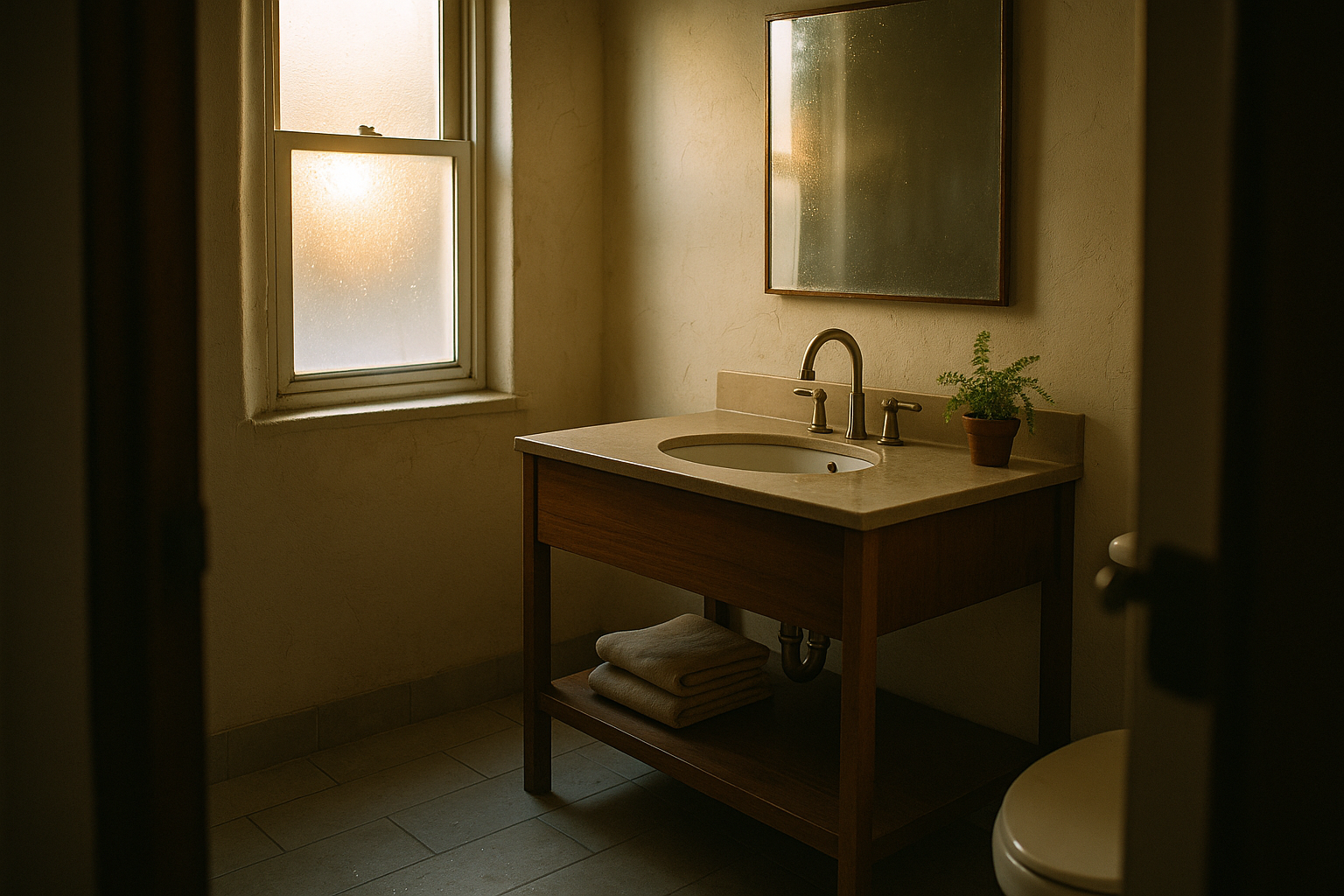
Lighting sets the tone. The goal at sunrise is to move from soft orientation to clear visibility without a jolt. If you have a window, leverage it: translucent shades or frosted glass diffuse glare while keeping privacy. Position reflective surfaces to bounce that glow onto the vanity rather than straight into eyes. For rooms without windows, mimic a dawn gradient by using layered sources you can step through—low-level night guidance, then brighter task light for grooming, then a warm ambient layer that fills shadows.
For mirrors, even, shadow-free illumination improves shaving, makeup, and skincare. Placing fixtures on both sides of the mirror at roughly eye level (about 64–70 inches from the floor for many adults) reduces nose and chin shadows common with a single overhead source. Color quality matters: a high color rendering index (often 90 and above) helps skin tones look true, so you leave the house the way you think you look. For color temperature, a range near 3000–3500 K feels bright yet comfortable pre-coffee; if you prefer a crisp, daylight vibe, 4000 K can work, especially for precise grooming. Consider the light output at the face: around 50–100 foot-candles at the mirror plane supports detail without washout.
Ambient lighting fills the room and lifts mood. An indirect source bouncing off the ceiling or upper wall softens contrast, which can be kind to sleepy eyes. In showers, a dedicated damp-rated source prevents dim corners and early-morning stumbles. Think of controls as part of the design: separate switches let you start low, then layer on brightness as you fully wake. If you adopt a staged routine—nightlight first, then mirror light, then ambient—you reduce the shock of instant daylight in a dark room.
Naturally lit bathrooms also benefit from surface choices. Matte or low-sheen tile cuts glare compared to high-polish finishes, while still reflecting enough light to brighten small footprints. Pale, warm neutrals on walls can make early light feel welcoming; deeper hues can add coziness if task lighting is well considered. Think of light as a material: it shapes how color, texture, and even steam read during those decisive minutes when you’re setting the tone for the day.
Storage That Thinks for You: Clear Counters, Faster Starts
Order is kindness to your morning self. The aim is to reduce hunting, shuffling, and wiping so you can glide from one task to the next. Begin by grouping everything you touch between wake-up and wheels-up. If it doesn’t serve mornings, relocate it. This simple boundary can reclaim surprising square inches of counter and drawer space, which directly translates to fewer delays and less visual noise.
Right-size your capacity. Measure what you actually store: a 24-inch-wide, 20-inch-deep, 30-inch-tall base cabinet offers roughly 8.3 cubic feet before accounting for plumbing and hardware; adding two shallow top drawers increases accessible volume dramatically versus a single deep cavity. Shallow drawers (3–4 inches inside height) are heroes for daily items—razors, floss picks, contact lens cases—because you see everything at a glance. Deep pull-outs or roll-out trays handle tall bottles and hair tools without stacking, which prevents the domino effect where one grab dislodges three neighbors.
Make categories visible and obvious, even when sleepy. Labels can be as simple as a marker on drawer dividers, and color helps: a single tone for “daily,” another for “weekly.” If labels aren’t your style, use position rules. Top left: teeth. Top right: face. Middle: hair. Lower drawer: body. Reserve a small, lidded bin for guests so shared spaces stay predictable. To keep counters clear, add a landing tray the size of a paperback for the few items you touch every single day—after use, everything returns there or to its home.
Use vertical and dead space. A narrow pull-out between vanity and wall can hide a tall canister for brushes. A shelf above the door holds extra tissue without inviting daily reach. Over-toilet shelving can be viable if it doesn’t crowd the head or tangle with lids—leave about 12–15 inches clearance. Shower niches succeed when they are wide and shallow so bottles don’t double-stack. For families, color-coded baskets under the sink prevent mix-ups on tight schedules.
Build a quick-reset habit that takes 90 seconds: wipe splashes, return tools, empty the landing tray, and stage tomorrow’s essentials. Morning you will feel the difference. Storage isn’t about austerity; it’s about trimming the friction points that steal minutes and energy when both are in short supply.
Materials, Surfaces, and Sound: Clean, Quiet, and Safe by Design
Materials determine how the bathroom ages under daily steam, splashes, and toothpaste skirmishes. Porcelain tile is a sturdy choice for floors and walls thanks to very low water absorption (often under 0.5%), which resists staining. On floors, prioritize slip resistance; many wet-area tiles report a dynamic coefficient of friction at or above commonly recommended thresholds for wet use, and a subtle texture or matte finish provides extra grip. In the shower, a smaller tile with more grout lines can improve traction because the grout adds micro-edges underfoot.
Countertops benefit from a balance of hardness and maintenance. Dense engineered stone or sintered surfaces shrug off most morning mishaps and clean with a mild soap; sealed natural stone offers warmth but needs periodic resealing to resist oils and pigments from cosmetics. If you love the character of natural materials, accept small patinas—fine scratches on a metal frame, a faint ring from a mug—as signs of life rather than failures. Select sinks and faucets with smooth transitions and minimal crevices; fewer edges mean faster wipe-downs.
Grout and caulk deserve attention because they guard against moisture creep. Epoxy grouts resist staining and can simplify cleaning, while cementitious grouts are budget-friendly and, when sealed, hold up well with regular care. Elastic sealants at changes of plane help accommodate thermal movement, protecting corners from hairline cracks. Ventilation partners with these choices: efficient exhaust, run during showers and for about 20 minutes afterward, keeps humidity in check and surfaces drier, which cuts down on mildew risk.
Acoustics shape the morning mood. Hard surfaces can bounce sound, so weave in a few soft notes: a cotton bath mat, lined window treatments, or even a fabric shower curtain can dampen clatter. Quiet-close hinges and slides prevent cabinet percussion, and a solid-core door softens noise to the hallway. If your home wakes in layers—early riser, then everyone else—these touches keep peace without whispers.
Temperature also matters. Radiant floor heat, typically around 12–15 watts per square foot when in use, can pre-warm tile during the first hour of the day, taking the edge off cold surfaces. A simple timer or a routine helps ensure it runs only when needed. Meanwhile, insulated exterior walls behind showers or tubs reduce cold spots and condensation. The overall effect is a room that feels welcoming, wipes down in minutes, and remains safe underfoot—quiet confidence, built in.
Sustainability, Ventilation, and Routines: A Practical Wrap-Up
Morning-friendly also means resource-smart and dependable. Water and energy choices add up every week, and in a room you visit first and last each day, payback is tangible. Showerheads rated around 1.8 gallons per minute can trim consumption compared to older 2.5 gpm models, while still feeling satisfying when combined with good spray design and reasonable pressure. Dual-flush toilets typically use around 0.8 gallons for liquid waste and about 1.28 gallons for solids (roughly 3.0 and 4.8 liters, respectively), which can save thousands of gallons per year for a household with regular use patterns.
Ventilation is a quiet hero. Size an exhaust fan to the room’s area (a common rule of thumb is about 1 cubic foot per minute per square foot of floor area at standard ceiling heights), and run it during showers and for 15–20 minutes afterward. If noise discourages use, check the sound rating before buying; a calmer hum encourages longer, more effective ventilation. For windowed baths, a quick cross-breeze after showering accelerates drying, but don’t rely on it alone in humid seasons.
Daily and weekly micro-routines keep the space primed for busy mornings:
– Daily: squeegee glass, wipe the vanity splash zone, and reset the landing tray.
– Every two days: empty the small trash and restock tissue and cotton.
– Weekly: launder towels and mats, clean the mirror, sanitize faucet handles, and run a quick grout check.
– Monthly: inspect caulk lines, test the exhaust fan intake with a tissue to confirm suction, and edit supplies.
Safety and accessibility pay dividends over time. A subtle grab bar that doubles as a towel holder, lever-style handles, and a low-threshold shower are unobtrusive today and essential tomorrow. Choose matte or textured floor finishes in wet zones, ensure night guidance lighting is available, and maintain door clearances for easy movement when hands are full.
Budget realistically with function as your compass:
– Quick refresh (paint, hardware tune-up, organizers, lighting tweaks): often achievable under a modest budget.
– Targeted upgrades (vanity swap, improved ventilation, new mirror lighting, added storage): expect a mid-range spend depending on size and labor.
– Deeper renovation (layout changes, new tile envelope, heated floor): plan for higher costs and contingencies; phase work if needed.
In the end, mornings improve when your bathroom removes friction: a layout that prevents traffic jams, lighting that eases you awake, storage that remembers for you, surfaces that clean swiftly, air that stays fresh, and routines that take minutes, not hours. Build those layers patiently and you’ll craft a space that backs you up every day—no drama, just quiet momentum from first light to the front door.