2-Night Cruise from Newcastle to Edinburgh: What to Expect
A 2-night cruise from Newcastle to Edinburgh turns a short stretch of Britain’s east coast into a compact holiday with a very different rhythm. Instead of racing north by rail in under two hours, you trade speed for sea views, slower mornings, and the pleasure of arriving with your hotel, restaurant, and lounge already in place. For travelers who want a manageable escape rather than a long voyage, this route feels practical, scenic, and easy to fit into a busy calendar. It also offers a smart way to sample cruising without committing to a full week at sea.
1. Outline of the Trip and Why a Short Cruise Has Real Appeal
Before looking at cabins, ports, or packing lists, it helps to understand what a 2-night cruise from Newcastle to Edinburgh is really offering. This is not a long expedition, nor is it designed to replace a full Scottish holiday. Its appeal lies in compression: the route takes a journey many people know from road or rail and reshapes it into a floating city break. You get the novelty of departure day, an evening at sea, overnight accommodation, dining, entertainment, and a Scottish arrival without the usual hassle of changing hotels.
- Day 1 usually focuses on embarkation near Newcastle and departure in the afternoon or evening.
- Night 1 is typically when passengers settle in, dine onboard, and explore the ship.
- Day 2 often combines scenic sailing, relaxation, entertainment, and arrival procedures for the Edinburgh call.
- Night 2 may be spent in port or after departure, depending on the itinerary.
- Final disembarkation takes place according to the cruise line’s schedule and port operations.
That outline sounds simple, and that is part of the route’s strength. A short cruise works well for travelers who want a clear structure with limited planning. There is no pressure to “see everything,” which is often the hidden problem with longer itineraries or city breaks built around packed schedules. The route from Newcastle to Edinburgh is especially interesting because the distance by land is not great. By train, the journey can take roughly 90 minutes. A cruise therefore sells a different idea entirely: not efficiency, but atmosphere.
That distinction matters when deciding whether this trip is right for you. If your goal is the fastest possible arrival in Edinburgh, the train remains the obvious winner. If your goal is to turn the journey into the holiday itself, the cruise becomes attractive. Short cruises also appeal to first-time passengers who want to test how they feel about ship life, meal schedules, cabin space, and open-water motion before booking something longer in the Norwegian fjords, the Mediterranean, or the Canary Islands.
There is also a practical side. For people living in northern England, a Newcastle departure can be easier than traveling south to larger cruise hubs. A two-night itinerary may suit couples looking for a low-stress getaway, groups of friends celebrating a birthday, or older travelers who enjoy organized travel but do not want the demands of constant transfers. In that sense, the route is relevant because it fits modern travel habits: short breaks, modest planning time, and a desire for experiences that feel distinct from everyday transport. A quick look at a map may suggest a simple northbound hop, but on the water the journey feels larger, slower, and unexpectedly cinematic.
2. Embarkation in Newcastle and What the First Evening Onboard Usually Feels Like
Most cruises marketed as departures from Newcastle actually use the Port of Tyne area, typically near North Shields rather than the city center itself. That is an important detail for planning, because travelers arriving by train to Newcastle station or by air to Newcastle International Airport should allow time for the onward transfer. Depending on traffic and the precise terminal arrangements, getting to the port can take a noticeable chunk of the day. Cruise lines usually provide joining instructions well in advance, and these are worth reading carefully rather than skimming on the train.
Embarkation on a short cruise tends to move with decent efficiency, but it still follows airport-like stages: baggage drop, document checks, security screening, and boarding windows. Passport requirements and identification rules vary by itinerary, so even on a domestic-feeling route, passengers should check official documentation guidance rather than assume. Once onboard, the mood changes quickly. The terminal atmosphere is procedural; the ship atmosphere is part orientation, part anticipation. Staff direct guests to key areas, cabins may open later in the day, and public spaces start filling with people trying to get their bearings.
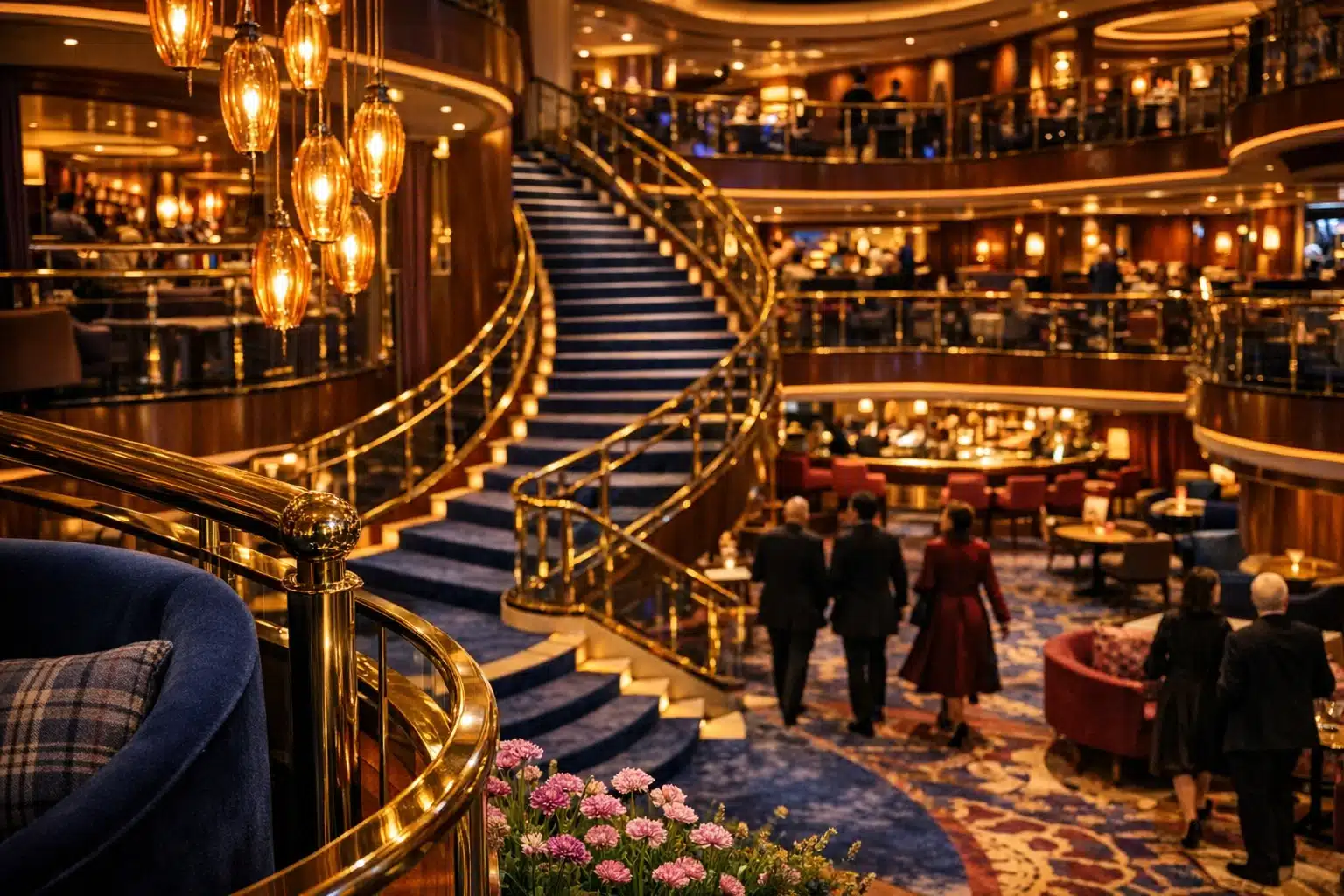
The first few hours are usually when travelers decide whether they enjoy cruising. On a good short sailing, this period feels pleasantly self-contained. You unpack once, find the buffet or café, walk the outer deck, and watch the Tyne slip behind you. Industrial river views can give way to a broader horizon, and that transition is one of the small pleasures of departure. The city is gone, the coast begins to widen, and the weekend suddenly has edges of adventure.
What you do next depends on style and budget. Many passengers use the first evening to sample the ship rather than chase a strict schedule. Typical options include:
- main dining room dinner or buffet dining
- live music in a bar or atrium lounge
- a theatre performance, quiz, or game show
- spa visits or wellness facilities, if included or booked separately
- deck time for sail-away views and photos
Because the cruise is only two nights long, the first evening matters more than it does on a week-long voyage. There is less time to “get around to things later,” so people often make quicker choices about dining upgrades, drinks packages, or entertainment. At the same time, a short cruise can be liberating precisely because it does not demand perfection. You are not trying to optimize seven days. You are simply settling into a moving hotel for a compact escape.
One honest point should be mentioned: the North Sea can feel lively. Some departures are calm, others noticeably brisk, especially outside peak summer. Motion-sensitive travelers may want to choose a mid-ship cabin on a lower deck if possible and bring suitable remedies. That is not a reason to avoid the trip, but it is part of knowing what to expect. When conditions are kind, the first night can feel wonderfully cocooned. When the sea adds a little drama, the route earns its maritime character very quickly.
3. The Voyage North, Coastal Scenery, and Arriving for Edinburgh
A short cruise between Newcastle and Edinburgh rarely claims wilderness-level remoteness, yet the scenery still matters. Britain’s east coast has a restrained kind of beauty that reveals itself best when you are not in a hurry. Instead of mountain amphitheaters or tropical blue water, you get working harbors, long bands of open sea, weather that changes the color of everything, and stretches of shoreline that seem to hover between history and industry. It is a quieter visual story, but on a ship it becomes absorbing.
Much depends on the precise route and timing. Some passengers may spend more of the sailing in open water with the coast at a distance, while others get intermittent glimpses of headlands, beaches, and port approaches. Sunrise or early morning light over the North Sea can be one of the highlights of the whole trip. Decks are usually calmer at that hour, and the atmosphere is less about events and more about watching the day arrive. A mug of coffee in cool air can feel oddly luxurious when nothing on your agenda is more urgent than deciding between breakfast venues.
The Edinburgh portion of the cruise is where expectations need a little realism. “Edinburgh” in cruise language may mean different port arrangements depending on ship size, tides, and scheduling. Some vessels can use Leith more directly, while others may call at South Queensferry or Rosyth, often with transfer considerations. That matters because the experience of visiting the city is shaped not just by arrival, but by how quickly you can reach the center. Travelers expecting to step off the gangway straight onto the Royal Mile may be disappointed; travelers prepared for shuttles or local transport tend to enjoy the stop more.
Once ashore, Edinburgh rewards focus. On a short call, it is wiser to choose one or two meaningful experiences instead of trying to cover the whole city. Good options often include:
- a walk along the Royal Mile
- an exterior or timed visit to Edinburgh Castle
- Princes Street and the gardens below the Old Town skyline
- Leith for a different, more local waterfront atmosphere
- a relaxed café stop rather than a rushed checklist of landmarks
Compared with arriving by train at Waverley, a cruise arrival is less direct but more theatrical. The city is not simply your destination; it is the reward after a night and a day of travel with context. You approach Scotland having watched the coast, the weather, and the sea carry you there. That narrative element gives even a brief visit emotional texture. Still, a cruise stop is not the best way to conduct a deep dive into Edinburgh’s museums, neighborhoods, and food scene. It is better understood as a sampler.
For many passengers, that is enough. A couple of hours in Edinburgh can sharpen the appetite for a future land-based trip, while still delivering the pleasure of saying you arrived by sea. The castle on the hill, the dark stone, the sudden steep streets, the shift from shipboard routine to Scottish city energy, all of it combines into a compact but memorable contrast. This route works because the destination is strong, but also because the approach gives it a different frame.
4. Cabins, Costs, Food, and How a 2-Night Cruise Compares with Other Ways to Travel
Short cruises often look simple when you first see the headline fare, but the real value of the trip depends on what is included and what you actually want from the experience. The basic comparison is not just cruise versus cruise. It is cruise versus train plus hotel, or cruise versus driving plus parking, or cruise versus simply spending two nights in Edinburgh. Once viewed that way, the appeal becomes more nuanced and more honest.
Cabin choice is the first major decision. On a two-night sailing, many travelers find that an inside cabin offers good value because they spend relatively little time in the room. Others feel strongly that a window or balcony matters on a route built around coastal atmosphere. There is no universal answer, but there is a practical one. If your budget is tight and you mainly want the experience of being onboard, an inside cabin can be entirely reasonable. If sea views are central to why you booked the trip, paying more for natural light may improve the experience disproportionately.
Food is often one of the strongest selling points of a short cruise because meals are integrated into the rhythm of the break. Instead of searching for restaurants in an unfamiliar place, you move between included venues and optional extras. The convenience is real, particularly for couples or groups with different appetites and schedules. Even so, passengers should read the fare conditions carefully. Some ships include more drinks, snacks, or specialty options than others. Extras that commonly affect the total bill include:
- drinks packages or individually purchased beverages
- specialty dining restaurants
- service charges or gratuities, where applicable
- Wi-Fi packages
- shore excursions and port shuttles
- parking at the departure port
Compared with rail travel, the cruise is slower, less direct, and usually more expensive than a simple train ticket. However, that is not a fair one-to-one comparison because a train does not include accommodation, entertainment, or multiple meals. Compared with a hotel-based weekend in Edinburgh, the cruise can offer stronger bundled value for travelers who enjoy shipboard life and do not mind limited time in the city itself. Compared with driving, it removes the burden of navigation and lets everyone in the group relax from the moment the ship departs.
There is also the question of mood. A hotel stay in Edinburgh puts the city at the center. A 2-night cruise puts the vessel at the center and the city in a supporting but still important role. For some people, that is a drawback; for others, it is precisely the attraction. The ship gives structure, warmth, food, and entertainment even if the weather turns grey and the wind develops a sharp northern personality. That reliability can matter on a short break, when losing half a day to poor planning feels more significant than it would on a longer holiday.
In practical terms, the best value usually comes when expectations are aligned. Book it as a mini cruise with an Edinburgh element, not as a substitute for a full Scotland itinerary. Do that, and the pricing often makes more sense. You are buying a curated pause in the week, one that combines transport, lodging, atmosphere, and the novelty of arriving somewhere familiar by an unfamiliar route.
5. Who This Cruise Suits Best, What to Pack, and Final Thoughts for Travelers Considering It
A 2-night cruise from Newcastle to Edinburgh is best suited to travelers who enjoy the idea of a break with built-in structure. It works particularly well for people who like easy logistics once onboard, appreciate the social energy of lounges and dining rooms, and do not need a long port stay to feel satisfied. First-time cruisers are an obvious audience because the commitment is small. Couples looking for a compact escape also tend to find these sailings appealing, especially when they want time together without the pressure of designing a full itinerary. Friends traveling for a celebration may enjoy the combination of bars, entertainment, and the novelty of sailing into a Scottish stop.
It may be less ideal for travelers whose priority is deep cultural exploration. If your dream is to spend long hours in Edinburgh’s museums, bookstores, hidden closes, and neighborhoods beyond the center, a land-based trip will almost certainly suit you better. Likewise, if you dislike set dining times, crowded embarkation windows, or even mild sea movement, it is worth thinking carefully before booking. The trip is short, but that can make the experience feel more concentrated rather than less intense.
Packing well makes a noticeable difference on a route like this because weather and onboard environments can shift quickly. A useful approach is to pack for layers rather than one fixed forecast. Consider bringing:
- a light waterproof jacket or coat
- comfortable walking shoes with good grip
- one smarter outfit for dinner or evening entertainment if desired
- medication and motion-sickness remedies if you are prone to them
- a portable charger, travel documents, and any booking confirmations
- a small day bag for time ashore in Edinburgh
It is also wise to think about time rather than just items. On a short cruise, queues and schedules matter more because the trip moves fast. Arrive at the port with margin. Book transport connections with a little flexibility. Do not over-plan your stop in Edinburgh. Leave room for the kinds of moments that actually make a short sailing memorable: standing on deck as the coastline sharpens, lingering over breakfast while the sea shifts from silver to blue-grey, or watching the city appear not as a station stop but as a destination earned slowly.
For the right traveler, that is the real charm of this itinerary. It turns a modest geographical distance into something that feels richer than the map suggests. You are not simply going from Newcastle to Edinburgh; you are exchanging pace for perspective. The sea inserts a pause between departure and arrival, and that pause is the product. If you want the fastest route north, take the train. If you want a short break that blends transport, accommodation, entertainment, and a taste of Scotland into one manageable package, this cruise can be a very satisfying choice.
In conclusion, the route makes the most sense for readers who value experience over efficiency. It is ideal for curious first-time cruisers, busy professionals seeking a compact escape, and travelers in northern England who want an easy departure point without a long trip to a major southern port. Book with realistic expectations, allow for weather and transfer logistics, and treat Edinburgh as a highlight rather than the whole story. Seen that way, a 2-night cruise from Newcastle to Edinburgh is not a rushed shortcut at all, but a neatly scaled holiday with character.