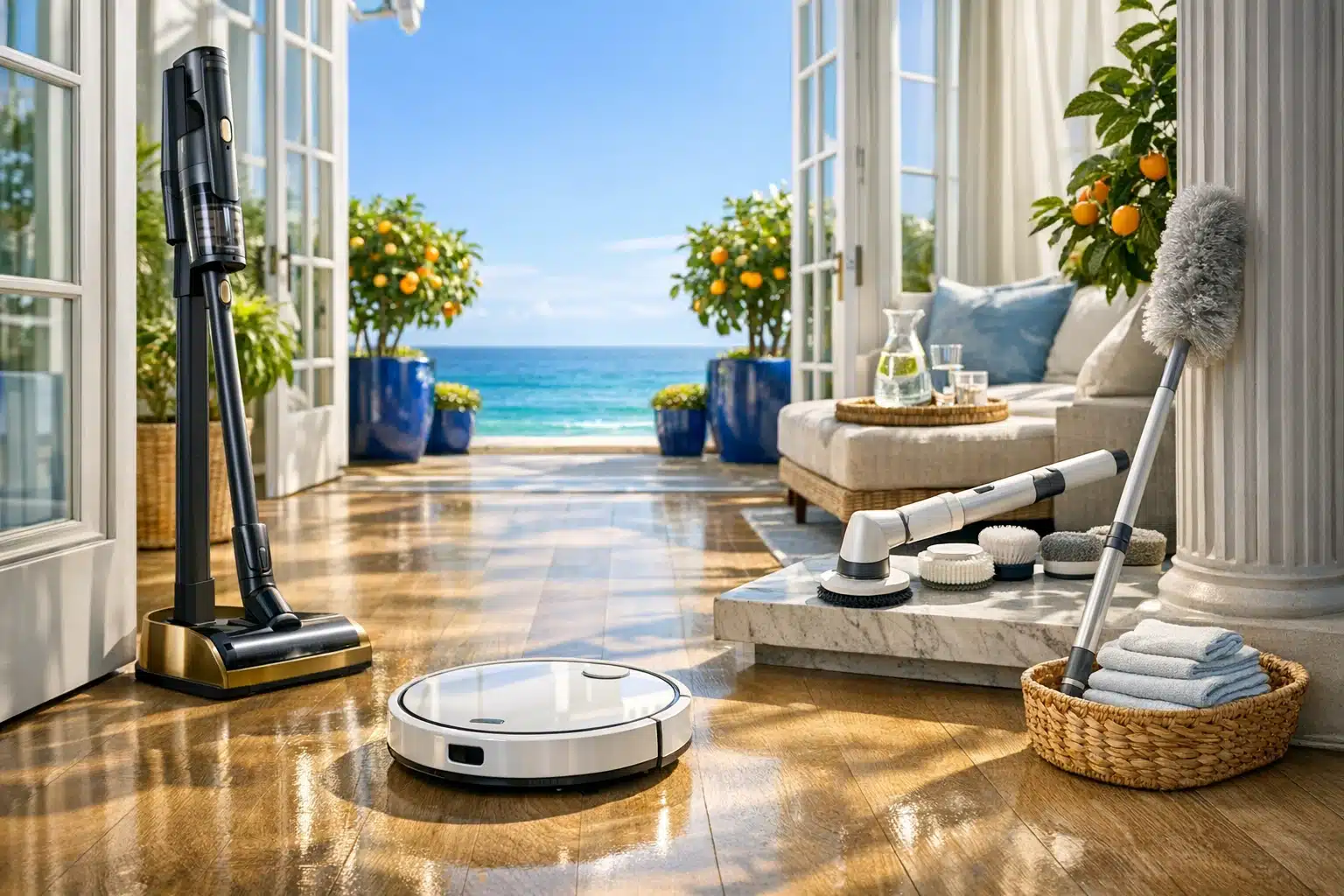
Top 5 Cleaning Gadgets That Make Cleaning Easier for Seniors
Keeping a home clean can become harder with age, not because the desire fades, but because bending, lifting, and repeated scrubbing ask more from the body than they once did. Well-designed cleaning gadgets help shift the effort away from sore knees, stiff backs, and tired hands while still supporting a tidy, comfortable space. The tools in this guide were chosen for their ability to cut strain, save time, and make everyday chores feel more manageable.
Outline
This article begins with a quick roadmap and then explores five cleaning gadgets that can genuinely help older adults. Each section explains what the gadget does, where it works best, how it compares with traditional tools, and what to watch out for before buying.
- Robot vacuum and mop combos for routine floor care
- Lightweight cordless stick vacuums for quick, targeted cleaning
- Electric spin scrubbers for bathrooms, tile, and grout
- Spray mops with microfiber pads for safer hard-floor cleaning
- Long-reach dusters and window tools for high or awkward areas
1. Robot Vacuum and Mop Combos: Everyday Floor Care Without the Heavy Lifting
For many seniors, floors are the most tiring part of housekeeping. Traditional vacuums can be bulky, loud, and stubborn around furniture, while mopping often means carrying a bucket, wringing a pad, and walking carefully on wet surfaces. A robot vacuum, especially a model that also offers light mopping, can take over much of that routine work. It is not a miracle machine, but for day-to-day maintenance, it can be a remarkably useful partner.
Most robot vacuums are designed to move on their own using sensors, cameras, or laser navigation. Many current models can map rooms, avoid furniture, return to their charging dock, and follow a schedule. That means a senior can set the machine to clean every morning while reading the paper or preparing breakfast. In practical terms, this matters because frequent light cleaning is often easier than waiting until dust, crumbs, and pet hair pile up into a larger job.
Compared with an upright vacuum, a robot vacuum removes the pushing, pulling, and twisting that can strain shoulders and wrists. It is especially helpful in homes with:
- Hardwood, laminate, vinyl, or low-pile rugs
- Open floor plans with fewer obstacles
- Pets that shed regularly
- People who want to reduce sweeping frequency
There are limits, and they are worth noting. Robot vacuums do not fully replace deep cleaning. Thick carpets, cords on the floor, tall thresholds, and clutter can interrupt performance. Some models also require a smartphone app for advanced features, which may be inconvenient for buyers who prefer large buttons and simple controls. If ease of use is the priority, it is wise to choose a model with clear manual start buttons, easy-to-empty dustbins, and straightforward scheduling.
Battery life on many models ranges from about 60 to 150 minutes, and some premium versions can empty their own bins into a dock, reducing maintenance even further. That feature costs more, but it can be worthwhile for someone who wants the fewest possible steps. Think of a robot vacuum as a quiet helper moving across the floor while you do something better with your afternoon. It may not scrub corners like a determined human, but it often keeps the home clean enough that bigger chores become less frequent and less exhausting.
2. Lightweight Cordless Stick Vacuums: Fast Cleanup for Real-Life Messes
Robot vacuums are excellent for routine floor maintenance, but they are not ideal for every mess. A spilled trail of cereal near the table, dust on stairs, crumbs under a recliner, or dirt gathered by the door often needs a quick response. This is where a lightweight cordless stick vacuum shines. For many seniors, it offers a practical middle ground between a full-size vacuum and a broom that never quite catches everything.
One of the biggest advantages is weight. A traditional upright vacuum can easily weigh 12 to 18 pounds, and that weight becomes much more noticeable when turning around corners or carrying the machine between rooms. Many cordless stick vacuums weigh roughly 5 to 7 pounds, with some even lighter. That reduction can make a meaningful difference for people with arthritis, limited grip strength, or reduced balance. Instead of wrestling a heavy machine out of a closet, the user can often grab the vacuum with one hand and clean a small area in minutes.
Good design matters more than raw power for this audience. Features worth prioritizing include:
- A handle with a comfortable grip and balanced feel
- A power button that stays on without constant finger pressure
- Easy bin emptying that does not require forceful twisting
- Headlights for seeing dust along baseboards or under furniture
- A wall mount or charging stand that is simple to access
Compared with a canister vacuum, a cordless stick model is usually easier to maneuver because there is no hose dragging behind. Compared with a robot vacuum, it provides more control for corners, stairs, upholstery, and small accidents. Some convert into handheld units, which is useful for sofa cushions or car interiors, although top-heavy models can feel awkward if held for too long. Testing balance is just as important as checking suction claims.
Battery life varies widely. Many models run between 20 and 60 minutes depending on the setting, and the highest power mode drains the battery fastest. For seniors living in smaller homes or apartments, that is often enough. In larger homes, a second battery can be helpful, but only if swapping it is easy.
If the robot vacuum is the steady background player, the cordless stick vacuum is the quick-footed understudy stepping in at exactly the right moment. It turns cleanup into a short task instead of a planned event, and that change alone can make home care feel far less overwhelming.
3. Electric Spin Scrubbers: A Smarter Way to Tackle Bathrooms and Tile
Bathrooms are where cleaning often becomes physically demanding. Soap scum sticks to shower walls, grout lines collect grime, and tubs require awkward reaching that can bother the back, knees, and shoulders. For seniors, these tasks are not simply unpleasant; they can be risky if they involve kneeling on hard floors or leaning into slippery spaces. An electric spin scrubber is one of the most useful gadgets for reducing that strain.
This tool usually includes a motorized brush head and an extension handle, allowing the user to scrub showers, tile, bathtubs, and even some kitchen surfaces while standing more upright. Many models come with interchangeable heads for flat walls, corners, and smaller detail work. Instead of applying heavy elbow grease, the rotating brush does much of the friction work. That does not eliminate effort entirely, but it changes the job from forceful scrubbing to guided cleaning.
For seniors, the extension handle is often the most valuable feature. It reduces bending, crouching, and reaching into hard angles. This is especially helpful for people with arthritis or limited mobility. Common advantages include:
- Less pressure on wrists and finger joints
- Better reach for shower walls and tub surrounds
- Faster cleaning of grout, tile, and textured surfaces
- Lower need to kneel or brace against slippery edges
Several models run for around 60 to 90 minutes per charge, which is more than enough for routine bathroom cleaning. Brush heads typically spin at several hundred rotations per minute, so they can remove buildup faster than a manual sponge or brush. That said, buyers should keep expectations realistic. Spin scrubbers work best when paired with the right cleaner and a little dwell time. If soap scum has been sitting for months, the machine helps, but it still may take repeated passes.
Compared with a handheld scrub brush, the electric version saves energy and improves reach. Compared with a steam cleaner, it is often lighter, simpler, and easier to direct at stubborn lines of dirt. However, delicate natural stone surfaces may require caution, and very cheap models can feel flimsy or poorly sealed against water. A strong locking handle, splash-resistant design, and easy-to-change brush heads are worth paying for.
There is something satisfying about watching a dingy grout line brighten without spending half an hour bent over like a folded lawn chair. For seniors who want a cleaner bathroom without the usual aches, the electric spin scrubber is one of the most practical upgrades available.
4. Spray Mops with Microfiber Pads: Simple Floor Cleaning Without the Bucket
Mopping sounds simple until the process begins. Fill a bucket, carry it across the room, dip the mop, wring it out, move the bucket again, and try not to leave too much water behind. For seniors, each one of those steps can be inconvenient or unsafe. A spray mop with a refillable bottle and reusable microfiber pad is a far easier option for routine hard-floor cleaning.
The appeal is straightforward: the cleaning solution is built into the mop, so there is no bucket to lift or drag. With a squeeze of a trigger or push of a button, a light mist lands in front of the pad, and the microfiber head picks up dirt as the mop moves forward. This design is especially useful for sealed hardwood, vinyl, laminate, and tile floors where a heavy soak is not desirable anyway.
Microfiber deserves special mention because it is more than a soft cloth. Its fine fibers are designed to trap dust, small particles, and light debris effectively, which is why it is widely used in cleaning tools. For seniors, that means fewer passes over the same spot and less scrubbing by hand. Many spray mops also have swivel heads that turn easily around chair legs and under tables, reducing the twisting motion that can irritate the lower back.
Compared with a classic string mop, the spray mop is usually:
- Lighter and easier to carry
- Quicker to set up and put away
- Less likely to leave puddles on the floor
- Simpler to use for small, frequent cleanups
There are a few practical cautions. The user should check that the floor type is compatible with the chosen solution, especially for wood surfaces. Refillable bottles are often preferable to proprietary cleaning cartridges because they cost less over time and allow more flexibility. Washable pads are also a smart choice, since disposable replacements add recurring expense.
A spray mop will not replace deep scrubbing for heavily soiled floors, and it is not designed to handle large spills the way a towel or absorbent mop might. Still, for regular maintenance, it dramatically cuts the effort required. It turns floor cleaning into something that can be done in a few calm minutes rather than an entire chore session. For seniors who value both independence and sensible routines, that is a meaningful improvement.
5. Long-Reach Dusters and Window Tools: Safer Cleaning for High and Awkward Spaces
Some of the most overlooked cleaning tasks are not the dirtiest ones but the hardest to reach. Ceiling fans, blinds, tops of shelves, vents, corners, and interior windows quietly gather dust until the room starts to feel dull. For seniors, these jobs can become risky because they often tempt the use of step stools, stretching, or leaning over furniture. A long-reach duster or telescoping window-cleaning tool can make an enormous difference by bringing those surfaces closer without inviting a fall.
These tools typically include an extendable handle and interchangeable heads. Some use microfiber sleeves for trapping dust, while others include flexible fan cleaners, cobweb brushes, or squeegee attachments for glass. Many poles extend from about 6 feet to well over 10 feet, which can eliminate the need to climb for many indoor tasks. That safety benefit alone makes them worth considering. Falls are a major concern for older adults, and even minor balance mistakes can lead to injuries that are far more serious than a dusty light fixture.
Compared with a disposable hand duster, a long-reach tool offers more control and much better access. Compared with balancing on a chair or step ladder, it is the clearly safer choice. It is especially helpful for:
- Ceiling fan blades and air vents
- High shelves, curtain rods, and door frames
- Blinds and shutters with narrow slats
- Interior windows and glass doors
When shopping, look for a pole that locks securely at different lengths and a head that pivots rather than staying stiff. A washable microfiber cover is also useful because it reduces waste and keeps replacement costs low. Lightweight aluminum poles are often easier to manage than heavier steel versions. For windows, a two-in-one tool with a washable pad on one side and a squeegee on the other can speed up the job without extra reaching.
No tool can make high cleaning effortless if the home has very tall ceilings or delicate fixtures, and some tasks may still be better left to a family member or cleaning service. Yet for routine dusting in ordinary living spaces, these gadgets offer a simple kind of freedom. Instead of ignoring the cobweb in the corner because it feels unsafe to reach, a senior can handle it from the floor with confidence. Sometimes the smartest cleaning tool is the one that quietly removes the most dangerous part of the job.
Conclusion: Choosing the Right Cleaning Help for Comfort and Independence
For seniors, the best cleaning gadget is not always the one with the longest feature list or the highest price. It is the one that removes the hardest motion from a familiar task, whether that means avoiding heavy lifting, reducing bending, or cutting down time spent on tiring chores. A robot vacuum helps with daily floor upkeep, a cordless stick vacuum handles quick messes, a spin scrubber makes bathroom cleaning easier, a spray mop simplifies hard-floor care, and a long-reach duster reduces the need to climb.
If buying only one tool, start with the chore that causes the most discomfort. Pay close attention to weight, grip comfort, button placement, charging method, and how easy the gadget is to clean after use. Small details matter. A machine that is slightly less powerful but far easier to handle may be the better choice in everyday life.
A clean home supports more than appearance. It can improve safety, comfort, and confidence, especially for older adults who want to remain independent in the place they know best. The right gadget does not replace effort entirely, but it can turn cleaning from a draining obligation into a manageable routine, and that is often exactly the kind of help that matters most.