7 Appliances You Must Unplug Before Sleeping
Introduction and Outline
Nighttime is when the house finally goes quiet, but a surprising number of plugged-in appliances keep drawing electricity, holding residual heat, or waiting in standby mode long after you have gone to bed. Most nights pass without drama, yet worn cords, dusty vents, overloaded outlets, and failing batteries tend to become serious problems when nobody is awake to notice them. A short unplugging routine is not about fear; it is a practical way to reduce risk, cut wasted energy, and sleep with one less thing humming in the dark.
Unplugging is not necessary for every device in the house. Refrigerators, medical equipment, alarm systems, and other always-on essentials follow their own safety rules and should be handled according to the manufacturer instructions. The smarter approach is to focus on appliances that create one of three common overnight issues: heat, battery charging, or hidden standby consumption. Energy agencies often estimate that standby power accounts for roughly 5% to 10% of household electricity use, so the tiny indicator lights scattered around a home are not completely innocent. More importantly, appliances with heating elements or aging power supplies deserve extra caution because faults are harder to spot while everyone is asleep.
This article begins with a simple outline and then expands each point in detail. The seven appliances most worth unplugging before bed are not always the biggest ones in the house. In fact, several are small, familiar, and easy to overlook because they live permanently on a counter, nightstand, or bathroom shelf. That is exactly what makes them worth discussing. Convenience can turn into complacency, and complacency is the roommate nobody invited.
- Phone chargers
- Laptop chargers
- Coffee makers
- Toaster ovens
- Space heaters
- Electric blankets or heating pads
- Hair styling tools such as straighteners, curling irons, and hair dryers
Some of these appliances are risky because they create heat on purpose. Others are low-power devices that become riskier through long, unattended use, poor-quality accessories, or damaged cords. A few are not especially dangerous when they are new and used correctly, yet unplugging them still reduces exposure time and removes the chance of a fault happening at the worst possible hour. The goal is not to turn bedtime into a checklist marathon. It is to build one quick habit that protects your home, lowers waste, and makes your evening routine a little smarter.
Phone and Laptop Chargers: Small Devices That Stay on the Night Shift
Chargers are easy to ignore because they look harmless. A phone cable draped over a bedside table and a laptop brick tucked near a desk do not have the visual drama of a glowing oven coil or a roaring heater. Yet chargers spend a remarkable amount of time plugged in, and that long exposure matters. Even when they are not actively charging a device, many adapters continue drawing a small amount of electricity. The amount is usually modest, especially with modern efficient chargers, but the larger issue is not just wasted energy. It is the simple fact that a charger with a damaged cable, loose plug, or low-quality internal components can keep warming up and aging while nobody is paying attention.
Phone chargers deserve attention because they are everywhere and often used in the least ideal conditions. People charge phones on beds, sofas, and other soft surfaces that trap heat. Many modern phones manage charging intelligently, slowing or pausing when the battery is full, so charging overnight is not automatically unsafe. Still, the safety of the full setup depends on more than the phone itself. The cable, wall adapter, power strip, outlet, and surrounding clutter all matter. A frayed cable near a pillow is a very different story from a certified charger plugged into a wall outlet with plenty of airflow. The safest habit is simple: once the phone is charged and you are done using it, unplug the charger rather than letting it stay energized until morning.
Laptop chargers raise the stakes because they usually handle more power and generate more heat. A large charging brick resting on carpet, squeezed behind furniture, or buried under papers can become surprisingly warm. USB-C laptop chargers are more efficient than older models in many cases, but they still work hard when delivering higher wattage. If your laptop remains plugged in every night, the charger gets more hours of use, more dust exposure, and more wear. Over time, bent connectors and cracked insulation can turn a routine setup into a point of failure. Compared with phone chargers, laptop chargers are fewer in number but often more demanding in terms of heat and load.
If you want a practical rule, treat chargers like appliances with a job to do rather than permanent wall decorations. Once the job is done, disconnect them. A few smart habits make a big difference:
- Use certified chargers and replace damaged cables promptly.
- Avoid charging on beds, cushions, or piles of clothing.
- Do not leave charging bricks covered by papers, blankets, or bags.
- Unplug chargers from power strips if the strip sits in a cluttered corner.
Phone chargers may whisper while laptop chargers murmur, but both keep working after you stop noticing them. That is precisely why they belong on a bedtime unplug list.
Coffee Makers and Toaster Ovens: The Kitchen Appliances That Deserve a Hard Stop
The kitchen has a special talent for making danger look domestic. A coffee maker sitting neatly beside a mug rack feels friendly. A toaster oven with its clean glass door looks finished once dinner is over. But these appliances rely on heating elements, switches, timers, and internal wiring that can fail with age, residue buildup, or simple wear. When people think about unplugging before bed, they often focus on the bedroom and forget the countertop. That is a mistake. If there is one room where “off” and “safe” are not always identical, it is the kitchen.
Coffee makers are a strong example. Basic drip machines with warming plates can stay hot for an extended period, while programmable models may remain in standby mode waiting for the next automatic brew cycle. Many newer units include auto-shutoff features, which is helpful, but that should be seen as a backup, not a perfect substitute for unplugging. Older machines can develop faulty thermostats or worn switches, and mineral buildup from hard water may also affect performance over time. If a coffee maker is left plugged in all night every night, it simply has more opportunity to experience a fault while unattended. Compared with a manual pour-over kettle or a French press, an electric coffee maker offers convenience at the cost of more active electrical parts.
Toaster ovens deserve even more respect because crumbs, grease, and residual heat create a risk profile that is very different from a charger. A toaster oven may appear cool on the outside while still holding heat internally, and leftover food particles can char or smoke if the appliance is accidentally activated or if a control fails. Unlike a full-size oven, which is usually hardwired into household routines and noticed quickly, a toaster oven is small enough to blend into the background. That is part of its appeal, and also part of the problem. It is easy to leave it plugged in indefinitely, especially in a busy kitchen where it doubles as a reheating station, bread toaster, and mini broiler.
Between the two, a toaster oven generally presents the higher overnight concern because of its heating intensity and food residue. Coffee makers, however, are often left plugged in more consistently due to clocks, timers, and daily habits. The smart comparison is not which one is evil and which one is innocent. It is which one combines heat, unattended time, and forgetfulness. Both do.
- Empty crumb trays and wipe spills regularly.
- Unplug countertop heating appliances after the final use of the evening.
- Keep cords away from sinks, hot surfaces, and the edge of counters.
- Do not rely entirely on standby lights or auto-off settings.
If the kitchen is the heart of the home, it is also the room where yesterday’s convenience can linger into the night. A clean counter and an unplugged cord are small signals that the day is truly finished.
Space Heaters and Electric Blankets: Comfort Appliances with the Highest Overnight Stakes
If chargers are quiet and kitchen appliances are deceptively ordinary, space heaters and electric blankets are the clear heavyweights on this list. These devices are designed to make you warm, which means they create heat intentionally and often for long stretches. That alone places them in a different category from most other household appliances. Fire safety organizations have repeatedly identified heating equipment as a major factor in residential fires, and while modern designs are safer than older ones, no safety feature erases the fact that heat plus fabric, dust, or poor placement can become a serious hazard.
Space heaters are especially risky at night because they are often used in exactly the situations where people become less alert: cold bedrooms, home offices turned guest rooms, and corners of a house that never seem warm enough. Modern ceramic models may include tip-over switches, overheat protection, and cool-touch exteriors, but these features help reduce risk; they do not eliminate it. A heater placed too close to curtains, bedding, a laundry basket, or a wall can still create dangerous conditions. Dust buildup inside the unit can also affect performance and smell alarming when the heater cycles on. Compared with central heating, a portable heater concentrates warmth in one place, which is efficient for comfort but less forgiving if used carelessly.
Electric blankets and heating pads raise a different set of concerns. They do not warm the room; they warm the person, which makes them feel wonderfully efficient on a cold night. Yet they also sit directly against bedding or the body and may be folded, compressed, or pinched. Older blankets are particularly worth watching because repeated bending can damage internal wires over time. Newer models usually have auto-off functions and improved controls, but leaving them energized all night still increases the window in which a malfunction could occur. Heating pads used for sore backs and shoulders pose a similar issue. Many are intended for temporary relief, not unattended overnight use.
When you compare the two, space heaters create more room-wide hazard because they can affect nearby furniture and clutter. Electric blankets and heating pads create more close-contact concern because they operate against soft materials and skin. In both cases, the easiest rule is also the strongest one: use them to get comfortable, then unplug them before you actually sleep.
- Keep space heaters at least several feet from anything flammable.
- Never dry clothing on or near a heater.
- Replace electric blankets that show hot spots, frayed fabric, or unreliable controls.
- Use warm bedding layers as a safer overnight alternative to active heating devices.
Warmth should feel like a blanket, not a gamble. These appliances earn their place on the list because they deliver comfort by generating heat, and heat is least forgiving when everyone is asleep.
Hair Styling Tools and Summary: Build a Two-Minute Nightly Unplug Routine
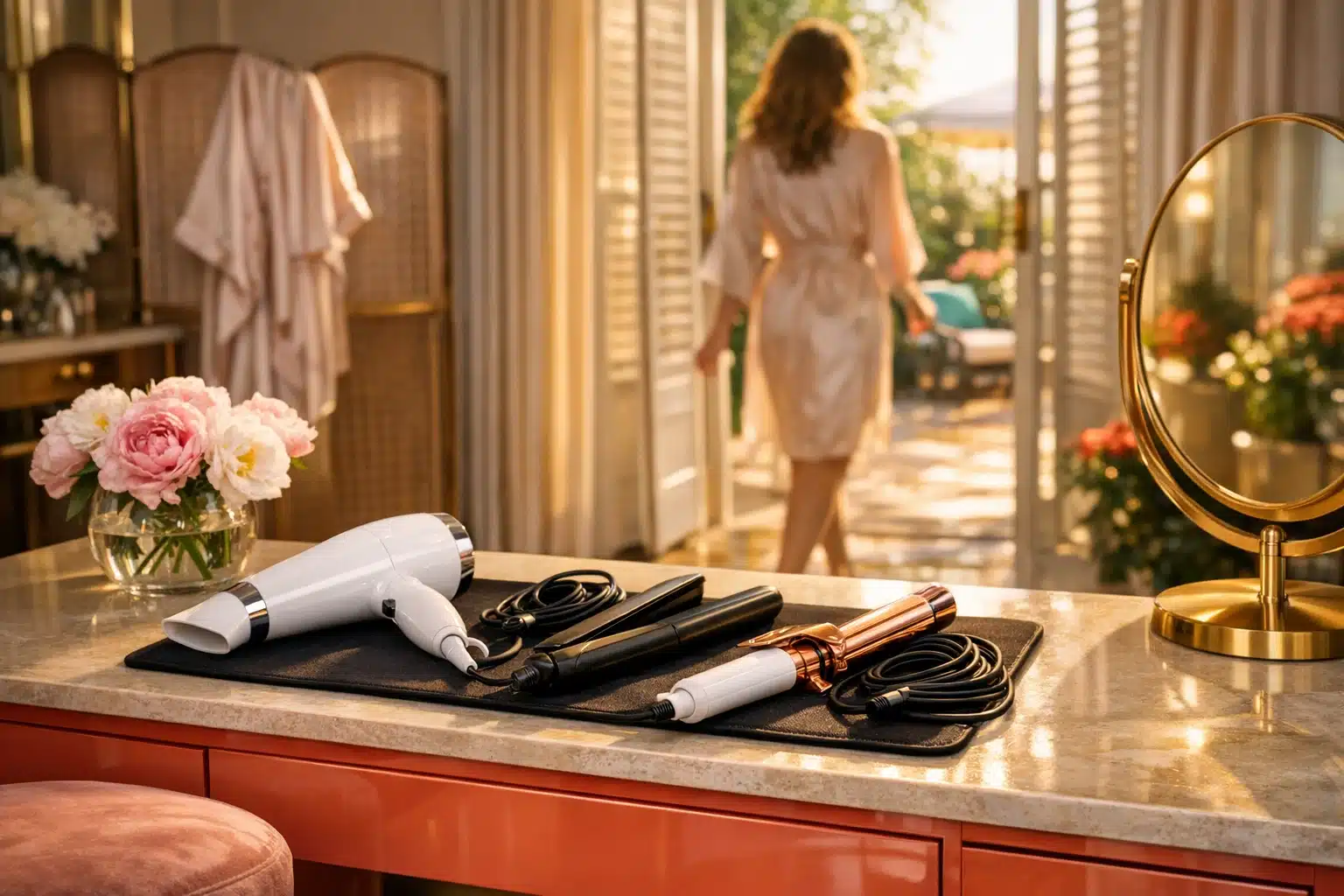
Hair dryers, flat irons, curling irons, and similar grooming tools are the appliances people most often swear they turned off. Sometimes they did. Sometimes they meant to. The problem is that bathroom routines are fast, repetitive, and easy to perform on autopilot. A hair straightener can be set down while still hot, a curling iron can cool slowly on a counter, and a dryer can remain plugged into an outlet near moisture long after the rush of the morning or evening has ended. Many newer styling tools include auto shutoff, which is a genuine improvement, but it is still wiser to unplug them once they are no longer needed. A safety feature is a seat belt, not permission to stop paying attention.
Flat irons and curling irons are particularly important because their heating plates or barrels stay hot after use. Even if the power is switched off, residual heat can still damage surfaces or become risky if the tool is left near towels, tissues, or a crowded drawer. Hair dryers create a different issue. They usually cool down quickly, but bathrooms combine electricity, water, humidity, and sometimes overloaded outlets. In homes with older wiring, that combination deserves extra respect. Compared with kitchen appliances, grooming tools are used for shorter bursts, yet they are often handled while people are distracted, late, or already thinking about the next task. That makes them classic “I probably dealt with it” devices.
The most effective solution is to simplify the nightly routine so it is easy to repeat. Instead of trying to remember seven separate warnings, build one habit around the places where these appliances live. Do a quick pass through the bedroom, desk, kitchen, and bathroom. Look for heat, charging, and standby lights. If an appliance does not need to stay on overnight, give it a clean ending to the day.
- Unplug hair tools after they cool enough to handle safely.
- Store them only when cords are not twisted or pinched.
- Use outlets with proper ground fault protection in bathrooms.
- Consider a smart power strip or a visible checklist if forgetfulness is common.
Conclusion for Homeowners, Renters, Students, and Busy Households
If you live alone, this habit gives you one more layer of protection when nobody else is around to notice a problem. If you share a home, it reduces the number of small risks created by mixed routines, different chargers, and half-finished kitchen tasks. If you are a student or renter, it is a low-cost safety upgrade that does not require new wiring or expensive equipment. Unplugging these seven appliances before sleeping will not turn a home into a fortress, but it does remove several common trouble points with almost no effort. In practical terms, that is what good safety habits look like: modest, repeatable actions that keep minor oversights from becoming major stories by morning.