Second-Hand Rims: What to Check Before You Buy
Introduction and Article Outline
Buying second-hand rims can save serious money, but the wrong set can bring vibration, poor handling, and expensive repairs. A wheel may look clean in a photo yet hide cracks, bends, or measurements that do not match your car. That is why a careful check matters as much as the price tag. This guide breaks the process into practical steps so you can shop with more confidence and fewer surprises.
Used rims attract a wide mix of buyers. Some want an inexpensive spare set for winter tires. Others are replacing a damaged wheel after hitting a pothole. Many enthusiasts simply want a better look without paying full retail. In all of these cases, the appeal is obvious: a used set can cost far less than new wheels, especially if the seller is clearing garage space or parting out a vehicle. Still, wheels are not decorative accessories alone. They are structural parts that directly affect tire seating, braking feel, steering response, and overall road safety.
There is also a language problem that trips up buyers. People often say rims when they really mean complete wheels. Sellers may list a set with incomplete measurements, unclear photos, or vague statements like fits most cars. That phrase should make any careful shopper pause. Wheel fitment is specific, not magical. A five-lug wheel does not fit every five-lug car, and the correct diameter alone does not guarantee brake clearance, offset compatibility, or safe load capacity.
This article follows a simple route so the process feels manageable rather than mechanical. The outline is: • understand fitment and specifications • inspect the rim for structural and cosmetic issues • compare used options against new, refurbished, and OEM choices • finish with seller questions, buying strategy, and a final checklist. Think of it as a flashlight for the used market. Instead of being dazzled by shiny paint or a low asking price, you learn where to point your attention first.
By the end, the goal is not to make every used purchase seem risky. Quite the opposite. A well-chosen second-hand rim can be a practical, durable, and cost-effective buy. The real skill is knowing how to separate a trustworthy wheel from one that only looks good leaning against a wall.
Fitment Comes First: Size, Bolt Pattern, Offset, and Load Rating
If there is one rule that should sit at the very top of the used-rim checklist, it is this: verify fitment before discussing price. A wheel can be attractive, clean, and affordable, but if it does not match your car’s required dimensions, it is not a bargain. It is clutter. Proper fitment affects how the wheel mounts, how the tire sits, whether the brakes clear, and how the suspension behaves over bumps and during cornering.
Start with the core measurements. Diameter and width are usually listed in a format such as 17×7.5, meaning a 17-inch diameter and 7.5-inch width. Next comes the bolt pattern, sometimes called PCD, written like 5×112 or 5×114.3. That tells you the number of lug holes and the circle diameter they form. Then there is offset, often shown as ET35, ET45, and so on. Offset determines how far inward or outward the wheel sits relative to the hub. A small difference may be workable on some cars, but a large one can cause rubbing on suspension parts, poke beyond the fender, or change steering feel.
Center bore also matters. This is the hole in the middle of the wheel that fits over the hub. If the center bore is too small, the wheel will not mount. If it is larger, hub-centric rings may be needed so the wheel centers properly. Without correct centering, vibrations can show up even after balancing. Load rating is another overlooked detail. Every wheel must be strong enough for the vehicle’s weight, including passengers and cargo. A wheel designed for a lighter sedan may not be suitable for a heavy SUV or van.
Before buying, compare the seller’s measurements against your owner’s manual, tire placard, or a reliable fitment database. Useful checkpoints include: • wheel diameter and width • bolt pattern • offset range • center bore • load rating • brake caliper clearance. If the car uses tire pressure monitoring sensors, ask whether the rims support your sensor type or whether additional hardware will be needed.
OEM and aftermarket wheels each deserve a quick comparison. OEM rims are often easier to match because automakers publish clear specifications, and the wheels are designed around factory brakes and suspension geometry. Aftermarket wheels can offer more styles and sizes, but quality varies by brand, and some designs prioritize appearance over durability. Lightweight alloy wheels may improve looks and sometimes reduce unsprung weight, yet they can be more vulnerable to damage from rough roads if the design is thin or heavily stretched across a large diameter.
Here is where the shopping journey becomes almost detective work. A seller’s phrase like came off my old car is not enough. Two cars from the same brand can use different offsets, center bores, or brake packages. Even within the same model line, trim level matters. Performance variants may need larger diameter wheels to clear bigger brakes. The best buyers are not the fastest buyers; they are the ones with the correct numbers written down before the conversation starts.
How to Inspect Second-Hand Rims for Damage, Wear, and Repair Quality
Once fitment checks out, the next step is condition, and this is where a low price can either become a smart find or a warning sign. A used rim lives a hard life. It deals with potholes, curb impacts, road salt, heat from braking, and careless tire changes. Some damage is only cosmetic, while some damage means the wheel should be avoided entirely. Learning the difference saves both money and trouble.
Begin with the outer lip and inner barrel. These areas often show the first signs of trouble after an impact. Curb rash on the outer edge is common and usually cosmetic, though severe gouges can signal a harder hit. The inner barrel deserves even closer attention because bends often appear there and can be missed in casual photos. A bent inner barrel may cause vibration at speed even if the wheel still holds air. If possible, roll the rim on a flat surface or ask for a spin test on a balancer. A wheel that wobbles is telling you a story, and it is not a cheerful one.
Cracks are far more serious than scratches. Look around the spokes, lug holes, bead seat, and barrel. Hairline cracks can be difficult to see under dirt, thick paint, or poor lighting. This is why close-up images matter. Corrosion is another issue, especially with aluminum alloy wheels used in wet or salty climates. Surface oxidation may be manageable, but deep corrosion around the bead seat can affect how the tire seals. On steel wheels, rust around the mounting area or rim flange can become a structural concern if it is extensive.
Pay attention to the lug holes and mounting pad. Elongated lug holes can suggest improper installation or repeated driving while the wheel was loose. Damage around the hub area may indicate poor fitment or stress. If the wheel has been repaired, ask what kind of repair was done. Cosmetic refinishing is one thing. Welding or straightening is more complex. Some professional repairs are done well, but quality varies widely, and not every repaired wheel is a good candidate for daily road use.
A practical inspection checklist can help keep emotion out of the decision: • inspect both faces of the wheel, not just the front • look for bends, cracks, flat spots, and bubbling finish • check bead seats for corrosion • inspect lug holes for distortion • ask whether the wheel ever lost air after impact • request photos in bright light and from multiple angles. If buying in person, run your hand slowly along the inside barrel and the outer lip. Your fingertips often detect irregularities before your eyes do.
Do not let fresh paint fool you. A newly refinished wheel can be perfectly fine, but it can also hide old scars. Ask for before-and-after photos if the rim was refurbished. If the seller cannot explain the work, treat the deal carefully. A polished surface can sparkle like a stage light, yet underneath there may be metal fatigue, poor welding, or filler that does nothing for structural integrity. In used-wheel shopping, shine should never outrank substance.
Comparing Used, Refurbished, OEM, and New Rims: When the Savings Are Real
The used-rim market only makes sense if the savings remain meaningful after all extra costs are counted. This is the point many buyers overlook. They see a low price, imagine a quick upgrade, and later discover they still need refinishing, center caps, sensors, proper lug hardware, shipping, balancing, and perhaps one replacement because a matching rim cannot be found. A bargain is not just the purchase amount; it is the final cost of getting safe, compatible wheels on the car.
Purely as a pricing rule, used rims often make the most sense in three situations. First, when you need one OEM replacement for a damaged wheel and the new dealer price is high. Second, when you want a full spare set for seasonal tires. Third, when you find a clean set from a reputable brand with verified measurements and only minor cosmetic wear. In those cases, used can offer strong value. On the other hand, if the wheels need repair or refinishing, the savings shrink quickly.
Consider the common choices. A used OEM rim usually offers predictable fitment and factory engineering. That makes it attractive for drivers who want low drama and normal road manners. Used aftermarket rims may be cheaper or visually more interesting, but they require more verification. Refurbished rims sit somewhere in the middle. A professionally refinished wheel can be an excellent option if the underlying structure is sound and the seller is transparent about the work performed. Brand-new wheels, of course, cost more, but they remove much of the guesswork and usually include warranty coverage.
It helps to compare total ownership cost rather than sticker price. Items that change the equation include: • shipping costs, which can be significant for heavy wheels • tire mounting and balancing fees • refinishing or powder-coating expenses • new valve stems or TPMS service kits • missing center caps or brand-specific lug bolts • alignment checks if you are changing wheel specs. Suddenly, a very cheap set can become merely average value.
There is also the matter of material and use case. Steel wheels are often heavier but durable and practical for winter use, especially in regions with rough roads. Alloy wheels tend to look better and can be lighter, but they demand closer inspection for cracks and corrosion. If the rims are for a daily commuter, reliability may matter more than style. If they are for a project car or a weekend vehicle, a buyer might accept some cosmetic imperfection in exchange for cost savings. Context shapes value.
One smart comparison is to place the used set beside a decent new budget option. If the price gap is small, new may be the better choice because it reduces risk and often simplifies returns. But when the used set is clearly cheaper, fits correctly, comes from a trusted source, and passes inspection, the savings are real. That is the sweet spot: not the lowest price on the screen, but the best balance between cost, condition, and confidence.
Questions to Ask the Seller and Final Advice for Smart Buyers
By the time you reach the conversation with the seller, you should already know your required specifications and have a short list of condition checks in mind. This makes the discussion far more useful. Instead of asking a vague question like are these good, ask targeted questions that reveal history, compatibility, and honesty. Sellers who know what they have usually answer clearly. Sellers who dodge specifics often create more work than savings.
Start with the wheel’s origin. Ask what vehicle the rims came from, how long they were used, and why they are being sold. Then move into condition and history: Have they ever been bent, cracked, welded, straightened, or refinished? Were they used in winter salt? Did they ever lose air? Are all four wheels the same part number and offset? This last point matters because mixed sets appear more often than many buyers expect, especially when previous owners replaced a damaged wheel with something close rather than identical.
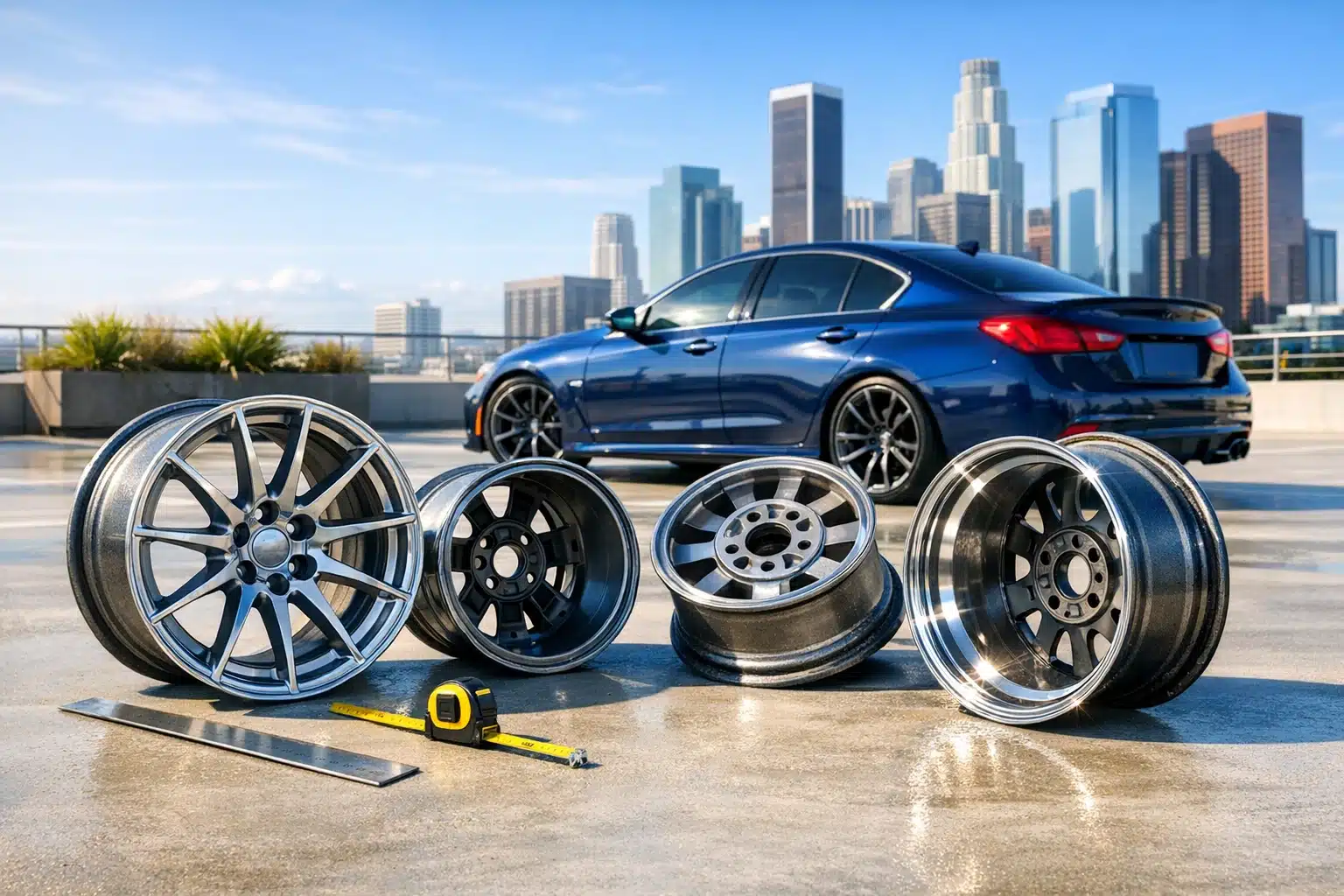
Good sellers should also provide detailed photos. Request images of: • the front face • the inner barrel • the mounting pad • each lug hole • part numbers or stamped sizing information • any visible damage. If possible, ask for a short video showing each rim rotating. In local deals, in-person inspection is best. Meet in daylight and bring a tape measure, a straight edge, and the specifications for your car. It may feel a little meticulous, but that care is cheaper than correcting a mistake later.
Payment and logistics deserve equal attention. For shipped wheels, confirm packaging quality because careless packing can damage a good set during transit. Clarify whether tires are included and, if they are, whether the price reflects their actual remaining life or whether they are simply attached to make the sale sound better. Old tires with low tread or aged sidewalls add weight, not value. If a return is possible, get the terms in writing. Many private sales are final, so your inspection has to do the work that a warranty would normally do.
After purchase, do not rush straight from the trunk to the highway. Have the rims checked by a qualified tire shop before mounting if there is any doubt. Ask for balance readings and a visual inspection on the machine. Replace worn hardware if needed, verify the correct torque specification, and make sure hub-centric rings or proper bolts are used where required. A careful install is part of a successful used purchase, not an optional extra.
For the target reader, the final message is simple. Second-hand rims are worth considering if you want to save money, build a seasonal wheel set, or replace a factory wheel without paying new-retail prices. The best outcomes come from patience, measurement, and clear questions rather than impulse. A used rim can be a practical win, but only when fitment is exact, condition is honestly assessed, and total cost still makes sense. Buy with your eyes open, and the deal can feel satisfying long after the shine of the first photo fades.