Why Seniors Are Switching from Walkers to New Mobility Devices
As people age, mobility support is no longer just about preventing a fall; it is about preserving choice in ordinary moments that shape daily life. The standard walker has helped millions of seniors move more safely, yet many users now find it too slow, too rigid, or too tiring for the way they actually live. Newer mobility devices bring features such as seats, larger wheels, better posture support, and easier maneuvering indoors and outdoors. This article explains why the shift is happening, what these devices offer, and how older adults and families can decide whether a change makes sense.
Outline:
- How traditional walkers helped, and where they can start to feel limiting
- What people usually mean by “new mobility devices,” including rollators and upright walkers
- Why more seniors are making the switch now
- How to compare options based on safety, comfort, and lifestyle
- What seniors and caregivers should keep in mind before buying or changing devices
1. Why the Traditional Walker Is No Longer the Best Fit for Every Senior
For decades, the walker has been one of the most common mobility aids for older adults, and for good reason. It is simple, familiar, and often very effective for people who need steady support while standing and walking. A standard walker can reduce wobbling, offer confidence after surgery, and help someone move around the house with a more controlled gait. In many cases, it is still the right tool. But the important phrase is “in many cases,” not “in every case.”
Mobility needs change over time. A person may begin with a standard walker after a hospital stay, then regain enough strength to walk longer distances but still need help with balance. At that stage, lifting a walker with every step can become frustrating and tiring. Instead of creating a smoother walk, it can interrupt rhythm and increase upper-body fatigue. Many seniors describe the experience in very practical terms: the device feels slow in a fast-moving world. Crossing a parking lot, turning in a grocery aisle, or moving across uneven pavement can suddenly feel like work layered on top of work.
Posture is another issue. Traditional walkers may encourage some users to lean forward too much, especially if the walker is poorly fitted. That stooped position can place extra strain on the wrists, shoulders, neck, and lower back. For a senior who already has arthritis, spinal stiffness, or reduced endurance, that strain adds up. What starts as support may gradually feel like a compromise.
Falls are a major concern in older age. According to the U.S. Centers for Disease Control and Prevention, about one in four adults age 65 and older falls each year. That statistic helps explain why mobility aids matter so much. Yet safety is not only about having a device; it is about having the right device. A walker that is technically stable but practically exhausting may not improve real-life movement as much as families hope.
Common complaints about standard walkers include:
- Needing to lift or reposition the frame repeatedly
- Difficulty handling curbs, thresholds, or uneven outdoor surfaces
- No seat for resting during longer outings
- Limited storage for personal items, water, or medication
- Reduced comfort for people who lean forward or have wrist pain
None of this means walkers are outdated or ineffective. It means they serve one level of need, while many seniors now need something more adaptable. The shift away from traditional walkers is not a rejection of safety. In many cases, it is a search for a better balance between support, movement, and independence.
2. What Seniors Mean by “New Mobility Devices” and How They Compare
When people say seniors are switching from walkers to “this new device,” they are usually not talking about one single invention. More often, they mean a newer generation of mobility aids that includes four-wheel rollators, upright walkers, hybrid walker-transport chairs, and, in some situations, compact powered devices for longer trips. The most talked-about option is often the rollator, especially the upright rollator, because it feels less restrictive than a standard walker while still offering support.
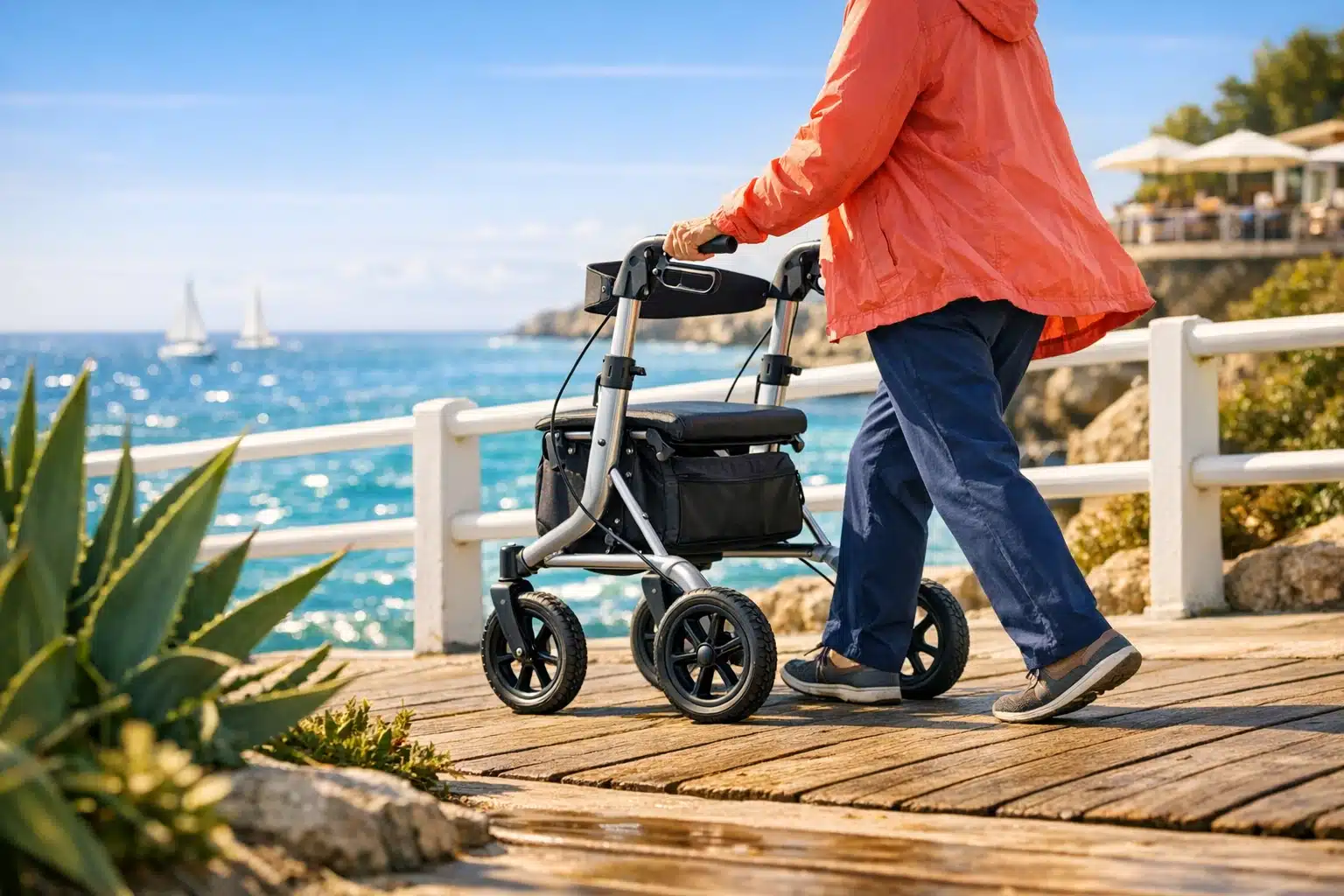
A rollator differs from a traditional walker in a few important ways. Instead of requiring the user to lift the frame, it rolls on wheels and is controlled with hand brakes. Most four-wheel rollators also include a seat and a basket or pouch. That combination matters more than it might seem at first glance. A senior can walk farther, carry essentials, and sit down when fatigue appears instead of pushing past it. For someone who likes to attend appointments, visit neighbors, or spend time outdoors, that is a meaningful upgrade.
Upright walkers go a step further by supporting the forearms rather than relying only on hand grips positioned below the waist. This design can encourage a more natural posture and reduce pressure on the wrists. Many users say the biggest difference is not just physical support but visual perspective. Standing taller changes how a room feels, how a sidewalk feels, even how conversation feels. Eye level matters. It is easier to engage with the world when you are not folded toward it.
Here is a simple comparison:
- Standard walker: best for high stability and weight-bearing support, especially indoors
- Two-wheel walker: slightly easier to move, often used in recovery phases
- Four-wheel rollator: better for endurance, smoother walking, community use, and rest breaks
- Upright walker: useful for users who struggle with stooping, wrist pain, or poor posture
- Hybrid transport chair models: helpful when walking tolerance varies from hour to hour
That said, newer is not automatically safer. A rollator may be a poor choice for someone who needs to lean heavily on the device or who cannot manage the hand brakes reliably. Because rollators move easily, they require enough control to prevent the device from rolling too far ahead. This is why physical therapists and occupational therapists often stress matching the device to the user’s gait, strength, reaction time, and environment.
The appeal of newer mobility devices is easy to understand. They are designed for real life rather than a narrow hallway test. Better wheels, folding frames, adjustable handles, padded seats, and improved storage make a difference. For many seniors, the switch is not about owning something modern. It is about finding a device that keeps up with the pace of daily living.
3. Why More Seniors Are Making the Switch Now
The rise of newer mobility devices is not happening by accident. It reflects changes in design, expectations, and the way older adults want to live. Today’s seniors are often more active, more informed, and more willing to question whether an older solution still fits their needs. Instead of accepting discomfort as the price of aging, many are asking a sharper question: is there a better tool for the job?
One major reason for the shift is lifestyle. Many older adults are staying engaged in community life longer than previous generations. They shop for themselves, attend social events, travel short distances, volunteer, and spend time with grandchildren. A device that works in a bedroom or hallway may not work as well on sidewalks, in pharmacies, at medical campuses, or during longer waits in public places. A rollator with a seat can turn an exhausting outing into a manageable one. That single feature can expand how often a person leaves the house.
Another reason is comfort. Seniors who live with arthritis, shoulder pain, spinal changes, or reduced stamina often find the mechanics of a traditional walker frustrating. Newer devices reduce repeated lifting and may support a more upright posture. That does not cure underlying conditions, of course, but it can lower day-to-day strain. Less strain can lead to more use, and more use can support consistency in movement. In practical terms, a device that feels better is a device people are more likely to use correctly.
There is also an emotional and social side to this shift. Mobility aids are not just pieces of equipment; they shape how people experience independence. Some seniors avoid outings because their current device makes them feel slow, awkward, or visibly uncomfortable. A smoother, more modern device can restore confidence. It may sound like a small change, but confidence is often the hinge on which daily life swings. A person who feels steady is more likely to say yes to lunch, yes to fresh air, yes to one more lap around the garden.
Several factors are driving the trend:
- Better product design and more options than in the past
- Greater awareness of posture, ergonomics, and fall prevention
- More seniors aging in place and trying to stay active at home and in the community
- Online access to reviews, demonstrations, and side-by-side comparisons
- A growing preference for equipment that supports dignity as well as safety
Surveys from organizations such as AARP regularly show that most older adults prefer to remain in their own homes as they age. That goal requires mobility solutions that work in kitchens, driveways, elevators, clinics, and neighborhood sidewalks. The old walker still has its place. But for seniors whose lives stretch beyond the living room, the newer generation of mobility devices often feels less like a luxury and more like a practical next step.
4. How to Choose the Right Device Safely: Features, Fit, and Real-World Use
If a senior is considering a switch from a traditional walker, the decision should begin with function, not fashion. A mobility aid is successful only when it matches the user’s body, walking pattern, environment, and daily routine. That is why the safest approach usually involves an evaluation by a physical therapist, occupational therapist, physician, or other qualified clinician who understands mobility needs. What looks comfortable in a store may behave very differently on carpet, sidewalks, ramps, or tight bathroom turns.
The first factor to consider is support level. Some older adults need a device that can bear significant weight through the arms while they recover strength or cope with instability. In those cases, a standard walker may remain the safest choice. Others can walk fairly well but need help with balance, endurance, and pacing. Those users may do better with a rollator or upright walker. The distinction matters. A device that rolls too freely for one person may be liberating for another.
Fit is just as important as design. Hand grips that sit too low can encourage hunching. Brakes that are hard to squeeze may be unreliable for someone with hand weakness or arthritis. A seat that is too low can make standing difficult. Wheel size also matters more than many buyers realize. Larger wheels typically handle outdoor cracks and uneven surfaces better, while smaller frames may be easier inside compact homes or apartments.
Before buying, it helps to ask practical questions:
- Will this device be used mainly indoors, outdoors, or both?
- Can the user apply and release the brakes consistently?
- Is the frame narrow enough for hallways and bathroom doors?
- Does the user need a seat for resting during errands?
- How much does the device weigh, and can it be folded into a car?
- Is there safe storage for a phone, medication, or water bottle?
Families should also think about training. Even an excellent device can be unsafe if used incorrectly. Seniors may need instruction on turning, parking the brakes before sitting, navigating slopes, and avoiding the temptation to pull on the device while standing up. A few supervised practice sessions can prevent months of bad habits.
Cost is another real-world issue. Basic walkers are often less expensive than advanced rollators or upright models. Coverage for durable medical equipment varies depending on the device, prescription, insurance plan, and documentation. Because of that, families should verify details before purchasing. It may also be worth trying a device through a clinic, rental service, or medical supply provider before making a final decision.
The best choice is rarely the trendiest option. It is the one that helps a senior move with steadiness, less pain, and more confidence in the places where life actually happens.
5. Conclusion for Seniors and Caregivers: Switching Devices Can Be a Smart Step, Not a Setback
For seniors and the people who care about them, changing from a traditional walker to a newer mobility device can feel like a big decision. It may raise questions about safety, cost, pride, and what the change seems to say about aging. But the most useful way to look at it is simple: a mobility aid is a tool, and good tools change when the job changes. If a standard walker no longer supports the way a person moves through daily life, exploring other options is not giving up. It is adapting wisely.
The clearest sign that it may be time to reconsider a walker is not age by itself. It is mismatch. Maybe the device works indoors but makes outdoor trips exhausting. Maybe the user leans heavily forward and ends the day with aching shoulders. Maybe short errands now require long recovery breaks. Maybe social outings are quietly disappearing because the current setup feels too inconvenient. Those are not small inconveniences; they are signals that mobility support may need to evolve.
Families can watch for a few practical clues:
- The senior tires quickly because the walker interrupts a natural walking rhythm
- There is frequent stooping, wrist discomfort, or shoulder strain
- Longer outings are avoided due to lack of a resting place
- Outdoor surfaces, thresholds, or turns feel unusually difficult
- The current device is technically usable but no longer encourages an active life
The goal is not to chase novelty or assume that every new device is better. The goal is to match support with reality. For some people, that will still mean keeping a traditional walker. For others, a rollator, upright walker, or hybrid model can open doors that had started to close. The difference may show up in very ordinary scenes: reaching the mailbox without dread, standing taller in the kitchen, staying longer at a family event, or walking into a clinic without feeling defeated before the appointment even begins.
If you are a senior, think about where your current device helps and where it holds you back. If you are a caregiver, listen closely to the complaints that sound small but repeat often; they usually point to the real problem. A careful fitting, a professional assessment, and a short trial with the right equipment can make the choice clearer. The best mobility device is not the one that looks most impressive. It is the one that lets everyday life feel possible again.