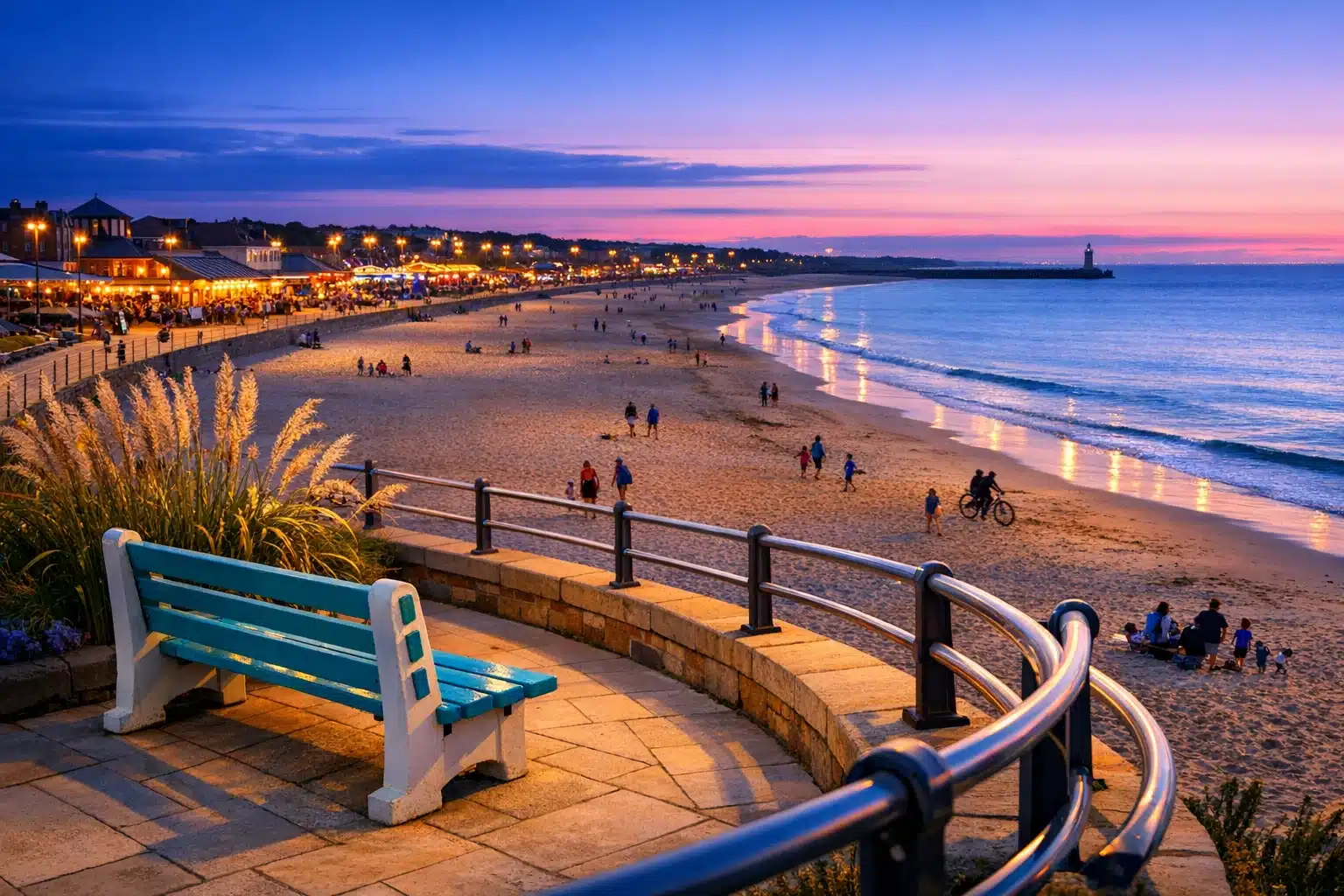
Top 5 Beach Towns to Live in Near Newcastle upon Tyne
Choosing a beach town near Newcastle upon Tyne is not only about finding a lovely view from the promenade; it is about commute times, housing costs, schools, local shops, green space, and whether a place still feels right on a wet Tuesday in January. The coastline around Tyneside offers several strong options, but each one comes with a different rhythm, budget level, and social feel. For buyers, renters, families, retirees, and remote workers, those differences matter more than estate-agent gloss.
Article Outline
- Tynemouth: classic coastal prestige with strong amenities and fast city access
- Whitley Bay: a broad-appeal seaside town with improving stock and family appeal
- Cullercoats: a compact harbour community with calm streets and limited supply
- South Shields: excellent beach quality, stronger value, and a distinct local identity
- Seaham: a Heritage Coast option for buyers wanting scenery and more space for the money
1. Tynemouth: Stylish Coastal Living with a Strong Everyday Offer
Tynemouth is often the first place people mention when the conversation turns to coastal living near Newcastle, and that reputation is not accidental. It combines a handsome historic centre, excellent beaches, reliable transport, and a lively independent food and drink scene in a way that very few towns manage. Longsands gives the area its visual drama, with a wide sweep of sand that attracts surfers, runners, dog walkers, and families in every season. Nearby King Edward’s Bay adds a quieter, more tucked-away charm, while the priory and castle create one of the most recognisable skylines in the North East. It is the kind of place where a morning coffee can easily turn into a walk along the sea wall, and that lifestyle pull is a real part of its market strength.
From a practical point of view, Tynemouth works because it is not cut off from the city. The Tyne and Wear Metro connects the town to central Newcastle in roughly half an hour, which keeps it firmly in commuter territory for office workers, students, and anyone who wants regular access to the city’s restaurants, hospitals, and rail links. The station itself is more than a stop on a map; its well-known weekend market and surrounding businesses add life to the centre and help the town avoid the empty feel that some seaside places develop outside summer. In comparison with South Shields or Seaham, Tynemouth feels more compact and more polished. In comparison with Cullercoats, it offers a larger retail and hospitality scene. Against Whitley Bay, it usually feels a little more expensive and a little more village-like.
That expense is the main trade-off. Property here tends to command a premium by regional standards, particularly for period homes, streets near the front, and well-presented family houses within easy walking distance of the Metro. Renters face a similar pattern, with demand staying firm thanks to the town’s reputation. In return, residents get a place that performs well on several fronts at once:
- strong visual appeal and walkability
- good transport for city commuters
- a busy independent high street and café culture
- excellent access to beaches, coastal paths, and leisure
Tynemouth suits buyers and renters who want lifestyle first without sacrificing daily convenience. For households with the budget to match the postcode, it remains one of the most rounded coastal choices near Newcastle.
2. Whitley Bay: Broad Beaches, Family Appeal, and a Town in Renewal
Whitley Bay has spent the last several years reshaping its image, and the change is easy to see once you spend time there. Older stereotypes about faded seaside glamour have steadily given way to a more balanced reality: restored landmarks, smarter public spaces, a growing independent business scene, and a wider range of housing than many people expect. The seafront remains the town’s great asset. It is long, open, and breezy in the best sense, with the sea always close enough to define the day. Spanish City, once a nostalgic emblem, now acts as a focal point for the promenade and gives the area a recognisable civic centrepiece. On bright mornings the whole place can feel wide awake before breakfast, as if the North Sea itself has switched the lights on.
For people weighing up where to live, Whitley Bay’s strength lies in balance. It offers faster access to Newcastle than Seaham, more housing variety than Cullercoats, and often slightly better value than Tynemouth for those who still want a classic coast-and-city lifestyle. Metro services make commuting relatively straightforward, and the town centre provides useful day-to-day convenience rather than forcing every errand into a car trip. Families often look closely at Whitley Bay because of the combination of beach access, parks, schools in the wider area, and the feeling that children can grow up with both space and activity around them. Compared with Tynemouth, the atmosphere is generally less boutique and a bit more mixed. Compared with South Shields, the housing market can feel more established and more tightly tied to North Tyneside demand.
The property stock is one of Whitley Bay’s big advantages. Buyers can find flats near the coast, terraces on quieter residential streets, and larger semis or detached homes in surrounding neighbourhoods. That breadth makes it easier for people to stay in the town through different stages of life instead of treating it as a short stop. Key reasons residents keep it high on their shortlist include:
- a broad and attractive seafront for everyday use
- good Metro access into Newcastle and nearby centres
- more diverse housing stock than smaller coastal villages
- a sense of regeneration without losing local character
Whitley Bay is especially appealing for households that want a beach town with room to grow. It may not have Tynemouth’s cachet or Cullercoats’ harbour intimacy, but as an all-round place to live, it makes a very convincing case.
3. Cullercoats: Small-Scale Charm for Buyers Who Value Calm and Character
Cullercoats is the kind of place people discover on a walk and then quietly start checking property listings that same evening. Tucked between Tynemouth and Whitley Bay, it has a smaller footprint than either neighbour, yet that compactness is exactly what many residents love. The bay, harbour, and sloping streets give it a visual softness that feels different from the broader, more open seafronts nearby. Historically linked to fishing and famous for its artists and lifeboat heritage, Cullercoats still carries a sense of shelter and locality that can be hard to manufacture elsewhere. You do not need a grand list of attractions to understand the appeal; one look at the crescent of sand beneath the cliffs usually explains it better than any brochure could.
Living here is less about having everything on your doorstep in the retail sense and more about quality of setting. The town has its own Metro station, which is a major advantage for commuters and anyone who wants to keep a strong link with Newcastle without driving every day. Journey times into the city are practical, and neighbouring towns add extra shopping, dining, and leisure options within a short walk or quick stop on public transport. In that respect, Cullercoats works best when viewed as part of a connected coastal strip rather than as a self-contained service hub. Compared with Tynemouth, it is quieter and less commercially busy. Compared with Whitley Bay, it is more intimate and often more limited in housing choice. Compared with South Shields, it feels more village-like and usually more expensive per square foot because supply is tight.
That limited supply is an important point. Homes in Cullercoats rarely feel abundant, and scarcity tends to support prices. Buyers looking for period character, sea views, or streets close to the bay may find competition strong. On the other hand, people who secure the right home often stay for a long time, which says plenty about day-to-day satisfaction. Cullercoats tends to suit:
- remote workers who want beauty and quiet between meetings
- downsizers seeking walkable surroundings with personality
- professionals who value the Metro but dislike heavy urban bustle
- buyers who care more about place quality than about having a large town centre
If your idea of coastal living involves gentler noise, shorter streets, and a harbour that seems to slow the clock, Cullercoats is a serious contender. It is not the easiest market to enter, but its charm is durable rather than fashionable, which is why it stays so desirable.
4. South Shields: Excellent Beach Access, Solid Value, and a Strong Local Identity
South Shields deserves far more attention from people searching for a beach town near Newcastle, especially those who care about value as much as scenery. Sandhaven Beach is one of the area’s biggest natural assets: long, open, sandy, and well used by locals rather than treated as a backdrop for weekend photos alone. The town also benefits from a seafront that supports ordinary life, with cafés, amusements, parks, and walking routes that make the coast part of a resident’s routine rather than a once-a-month excursion. There is a groundedness to South Shields that sets it apart. It feels like a place people live in first and market second, which for many buyers is a point in its favour.
Transport is another reason it remains competitive. The Metro gives direct access towards Newcastle, and the wider road network helps drivers reach both the city and other parts of South Tyneside without excessive complication. The Shields Ferry, linking South Shields to North Shields on the opposite bank, adds a distinctive local connection that few towns can match. In comparison with Tynemouth and Cullercoats, South Shields often offers more space for the money. Compared with Whitley Bay, it can feel less overtly polished in some areas, but that comes with a lower barrier to entry for buyers and renters. Street-by-street variation matters here, perhaps more than in some smaller coastal markets, so local knowledge is useful when narrowing down where to live.
Housing choice is broad, ranging from flats and terraces to larger family homes in residential districts away from the seafront. That gives South Shields a flexibility that suits different budgets and life stages. For families, the town offers beach access, parks, and practical amenities. For first-time buyers, it can open doors that feel firmly closed in Tynemouth. For commuters, it keeps Newcastle within reach without demanding the same premium. Common advantages include:
- one of the strongest beaches in the wider Newcastle area
- better value than several high-profile North Tyneside alternatives
- good public transport links and decent road access
- a strong sense of local identity and year-round activity
South Shields is ideal for people who want the sea to be part of everyday life but need their budget to stretch further. It may not carry the same prestige label as some northern neighbours, yet as a practical place to build a life, it offers a lot of substance.
5. Seaham: Heritage Coast Scenery and More Space for the Money
Seaham sits a little farther from Newcastle than the other towns on this list, but for some movers that extra distance is exactly what makes it attractive. Set on the Durham Heritage Coast, it offers a striking mix of sea views, cliffs, harbour scenery, and a sense of openness that feels different from the denser urban coastline around Tyneside. The town has changed significantly over time, moving beyond its industrial history and investing in a cleaner, more visitor-friendly waterfront. The marina, seafront walks, and dramatic coastal stretches nearby create a landscape that can feel almost cinematic on clear days, with light bouncing off the water and old stone meeting a wide horizon. If Tynemouth is polished and Cullercoats is intimate, Seaham is spacious and windswept in a memorable way.
As a place to live, Seaham appeals strongly to people who are willing to trade a little proximity for better value and a different pace. Rail links can make Newcastle reachable in around half an hour or a little more depending on the service, while the A19 also supports road commuting. That means Seaham remains plausible for hybrid workers or city-based professionals who do not need to be in central Newcastle every single day. Compared with Whitley Bay or South Shields, it generally offers a more detached coastal experience and often more house for the money. Compared with Tynemouth, it lacks the same concentration of boutiques, cafés, and premium demand, but that is precisely why some buyers look harder at it. The town’s housing market can be more accessible, especially for families seeking extra bedrooms, gardens, or a first step into ownership near the coast.
Daily life in Seaham is not built around constant bustle. It suits people who enjoy walks, sea air, and a slightly slower local rhythm. Amenities are present, but the town does not try to imitate a larger urban centre. That makes it a better match for some households than others. It is especially worth considering if you value:
- strong coastal scenery with a less crowded feel
- more space for the budget than many Tyne coast hotspots
- rail and road routes that still keep Newcastle achievable
- a calmer lifestyle with access to the wider Durham coast
Seaham will not suit everyone, particularly those who want a Metro stop outside the door or a busy high street packed with choice. Still, for buyers who want sea views, relative value, and breathing room, it can be the smartest move on the list.
Conclusion: Which Coastal Town Best Fits Your Life?
If you are choosing with your heart and your budget is flexible, Tynemouth remains the standout for polished coastal living with strong city access. If you want a more adaptable all-rounder with family appeal, Whitley Bay is hard to ignore. Cullercoats is the choice for people who want character, calm, and a smaller community feel, even if that means accepting limited stock and premium pricing. South Shields makes the strongest case for value-conscious buyers who still want a major beach and practical transport links. Seaham, meanwhile, is the option for those prepared to sit a little farther out in exchange for scenery, space, and a gentler cost profile.
For commuters, the Metro towns usually offer the simplest routine. For remote workers, atmosphere and home size may matter more than shaving ten minutes off a journey. For families, school catchments, street feel, and housing type should be checked as carefully as the view from the promenade. The right answer depends less on which town is fashionable and more on how you actually want your week to work. Visit in different weather, walk beyond the seafront, and picture a normal Monday instead of a summer afternoon. That is usually when the best choice becomes clear.