10-Night Cruise from Australia to Thailand: What to Expect
A 10-night cruise from Australia to Thailand matters because it turns a simple transfer into a layered journey across climates, cultures, and coastlines. Instead of rushing from airport gate to hotel lobby, travelers get time to settle into the pace of the sea and arrive in Southeast Asia feeling oriented rather than hurried. For Australians comparing flights, cruises, and hybrid holidays, understanding the route, costs, and practical trade-offs can make the difference between a smart booking and an expensive mismatch.
Outline: this article looks at the likely route and port pattern, what daily life on board usually feels like, how fares and cabin categories compare, which practical details deserve attention before departure, and which kinds of travelers are most likely to enjoy a 10-night sailing to Thailand.
Outline: Route Patterns, Timing, and What a 10-Night Itinerary Usually Looks Like
One of the most important things to understand before booking is that a 10-night cruise from Australia to Thailand is not a standard commuter route. It is usually a repositioning, seasonal, or crossover itinerary, which means the exact structure can vary far more than a typical round-trip holiday cruise. Some sailings may begin in Western or Northern Australia, where the distance to Southeast Asia is more manageable, while departures from the east coast can include more sea days and fewer stops. That alone changes the rhythm of the trip.
In practical terms, many 10-night versions include a mix of extended sailing time and a handful of port calls rather than a stop-every-day schedule. Cruise ships commonly travel at around 18 to 22 knots, so the route must be designed carefully. A shorter voyage cannot cover a vast stretch of ocean and still offer several long land visits. For that reason, travelers should expect a pattern like this: • embarkation in an Australian port • multiple sea days to settle into the ship • one or two Indonesian or regional stops on the way • arrival in Thailand at a port such as Phuket or, on some longer regional connections, a gateway port linked to onward land travel.
The starting port matters more than many first-time cruisers realize. A departure from Fremantle or Darwin can make a 10-night run to Thailand feel balanced, because the geography supports a better blend of cruising and shore time. A departure from Sydney or Brisbane on a trip of the same length may be possible only with many more sea days or a very selective route. That does not make it worse, but it does make it a different product. Travelers who imagine a port-heavy itinerary may feel disappointed if they do not check the map first.
Port access itself can also differ. Large ships do not always dock directly beside city centers. In Thailand, an arrival might bring you close to beach areas and resort zones, or it might require transfers to reach major urban attractions. The same is true for intermediate stops. A glamorous pin on the itinerary map can translate into a bus ride, a tender boat, or a shorter-than-expected window ashore.
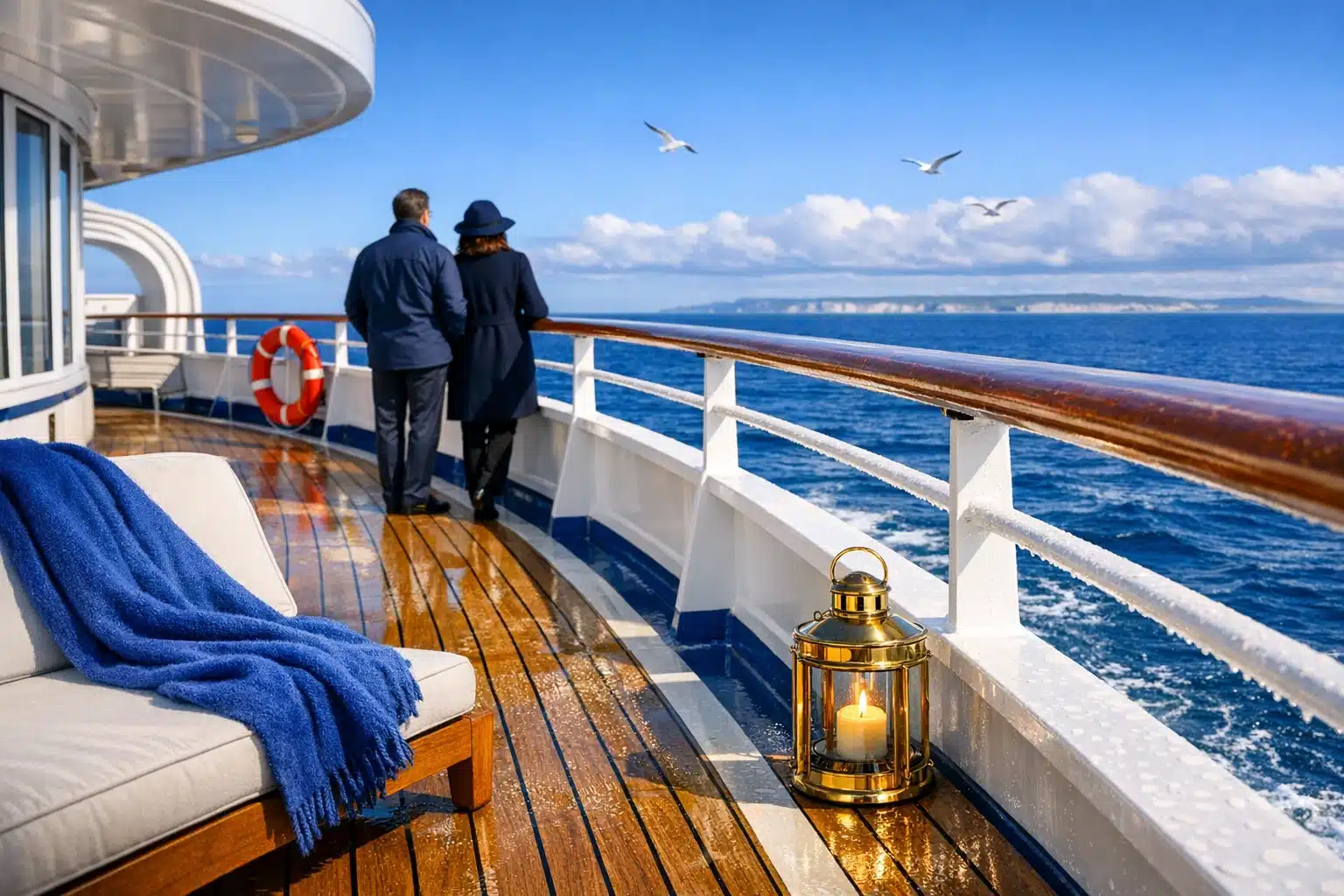
The best mindset is to treat the route as part of the story, not just a line between two countries. This is a voyage where the sea is not empty space; it is the main stage. When the ship leaves Australia and the horizon widens into a clean blue arc, the trip begins to feel less like transport and more like a slow turning page.
Life on Board: Sea Days, Entertainment, Dining, and the Real Daily Rhythm
If the route is the skeleton of the journey, life on board is the heartbeat. A 10-night cruise to Thailand often includes several sea days, and these can be either the best part of the trip or the moment when travelers discover cruising is not their preferred style. The difference usually depends on expectations. People who want nonstop sightseeing every waking hour may find the pace too gentle. Those who enjoy structure without pressure often find it deeply relaxing.
A typical sea day starts quietly. Breakfast can stretch across a buffet venue, a café, or a main dining room, and there is no need to race anywhere. After that, the ship opens into a series of choices rather than obligations. You might join a talk on regional destinations, sit by the pool, read on a promenade deck, or test your discipline against the dessert station. Cruise lines vary in tone, but most larger ships offer a predictable mix of activities: • trivia and game sessions • fitness classes and gym access • live music in lounges • spa treatments • family programming or teen spaces on ships built for multigenerational travel.
Dining is one of the biggest quality markers. Most fares include core meals, but not every venue is equal. Included dining can be reliable and varied, especially over 10 nights, while specialty restaurants usually charge extra and offer a more polished atmosphere. Travelers should check whether the ship uses fixed dining times, flexible dining, or app-based reservations. That detail sounds small, yet it shapes the evening rhythm. Some travelers love the old-school routine of dressing for dinner and seeing familiar staff each night. Others prefer the freedom to eat late after a show.
Entertainment also matters more on a route with long stretches at sea. Ships heading toward Thailand may feature production shows, comedians, cinema nights, cultural demonstrations, and live bands. The quality can range from pleasantly amateur to surprisingly professional, depending on the line and the ship’s size. Internet access, by contrast, is often less glamorous than the brochure suggests. Satellite-based connections have improved, but speeds can still vary, and premium packages can feel expensive if your goal is constant video streaming or full remote work capability.
What many travelers remember most is not a single headline attraction but the accumulated texture of shipboard life: the smell of coffee near the atrium in the morning, the light changing over open water in late afternoon, the odd joy of realizing that dinner, entertainment, and your bed are all a short elevator ride away. The ship becomes a floating neighborhood, and by the middle of the voyage, even a simple walk around the deck can feel companionable and strangely cinematic.
Budget, Cabin Choices, and What Your Fare Usually Does and Does Not Cover
Pricing is where romance meets arithmetic. A 10-night cruise from Australia to Thailand can look attractively simple at first glance because one fare appears to bundle transport, accommodation, and meals. In many ways, that bundled structure is a real advantage. Compared with booking flights, hotels, intercity transfers, and restaurant meals separately, cruising can be easier to cost out. Still, the headline fare is only the beginning, and travelers who do not break down the extras may underestimate the final total.
The biggest price driver is usually cabin category. Inside cabins are the entry point and often provide the best raw value for travelers who plan to spend most of their time elsewhere on the ship. Ocean-view cabins add natural light, while balcony cabins become much more appealing on itineraries with many sea days. When there is a lot of open-ocean cruising, private outdoor space can feel less like a luxury and more like a meaningful part of the experience. Suites add more room, better locations, and often extra perks, but the price jump can be substantial.
It helps to think about value in layers. The fare commonly includes: • your cabin • standard dining venues • basic entertainment • access to pools, gyms, and many public spaces. It often does not include: • specialty restaurants • alcoholic drinks and many premium beverages • gratuities or daily service charges on some lines • shore excursions • spa treatments • Wi-Fi packages • laundry • travel insurance • port transfers before or after the cruise.
Cabin location is another underappreciated factor. Midship cabins on lower or middle decks are often preferred by travelers sensitive to motion, while cabins under busy pool decks or entertainment venues may carry more noise. A cheaper fare can become poor value if sleep quality suffers for 10 nights. Beverage packages are another area where assumptions go wrong. For some travelers, a drinks package simplifies spending and works well. For others, especially moderate drinkers or port-focused travelers, paying as they go is more economical.
There is also the question of pre- and post-cruise costs. Few travelers live next door to the embarkation port, so domestic flights, airport hotels, and transfer arrangements can meaningfully change the budget. Smart planners compare the total trip cost, not just the cruise fare. When viewed that way, the best deal is not always the cheapest cabin or the loudest sale. It is the booking that matches your habits. If you love quiet mornings, budget for the balcony. If you treat the cabin as a place to sleep and shower, save the money for excursions in Thailand.
Practical Planning: Documents, Weather, Packing, Health, and Shore-Day Strategy
Good cruise experiences are often built on unglamorous preparation. Before you get anywhere near the gangway, a few practical details deserve close attention. The first is documentation. Passports generally need adequate validity beyond the travel dates, and many travelers use the six-month rule as a safe benchmark, though exact requirements depend on nationality and current border policy. Visa rules for Thailand and any transit or intermediate ports can also change, so official government and cruise-line guidance should always take priority over forum posts or old blog comments.
Weather is the next major variable. A route from Australia to Thailand can cross several climate zones, and that affects both comfort and port conditions. Thailand typically sees its most popular dry-season travel window from around November to February, while hotter months and rainy periods appear at other times of the year. Northern Australia can be affected by wet-season patterns and cyclonic risks, especially from late spring through early autumn. Indonesian transit areas may feel hot and humid year-round. None of this makes the cruise a bad idea, but it does mean travelers should check seasonal context rather than assuming “tropical” means uniform weather.
Packing works best when it is realistic instead of aspirational. For most travelers, the useful list looks something like this: • lightweight breathable clothing • one or two smarter outfits for evening dining • a light layer for aggressively air-conditioned indoor areas • comfortable walking shoes • sun protection • swimwear • any needed medications in original packaging • a small day bag for shore visits. Laundry options on board vary, so overpacking is not always necessary, but essential items should travel in carry-on luggage in case checked bags are delayed at embarkation.
Health planning matters too. Motion sensitivity, dehydration, sun exposure, and travel fatigue are more common than dramatic medical issues, yet they are what most often spoil a trip. Travelers prone to seasickness should choose cabin location carefully and consider approved remedies before departure. Drinking water, pacing activity levels on hot port days, and building in some rest can go a long way. Insurance is especially important on cruise trips because onboard medical care, while available on many ships, is not the same as ordinary domestic healthcare and can be expensive.
Finally, be strategic about shore days. Not every port visit is an invitation to do everything. Sometimes the smartest choice is one major excursion and a relaxed lunch rather than trying to squeeze in every temple, beach, market, and viewpoint. Thailand rewards unhurried attention. Even a short call can feel rich if you choose one or two meaningful experiences instead of treating the day like a checklist race.
Who This Cruise Suits Best: Comparing It with Flying and Final Thoughts for Travelers
A 10-night cruise from Australia to Thailand is not automatically the right option for every traveler, and that is exactly why it deserves careful comparison. If your top priority is reaching Bangkok, Phuket, or another Thai destination as quickly as possible, flying remains the obvious winner. Direct or connecting flights compress the travel time dramatically and free up more days on land. But speed is not the only measure of value. A cruise offers a different promise: less logistical friction, a built-in hotel, and a gradual change of scene that can feel luxurious in a very practical way.
This style of trip tends to suit travelers who enjoy the journey itself. Couples often like it because decision fatigue drops once the voyage begins. Older travelers may appreciate the convenience of unpacking once and avoiding repeated airport routines. First-time visitors to Southeast Asia sometimes find a cruise reassuring because it introduces the region in manageable steps rather than all at once. It can also work well for travelers celebrating an anniversary, a retirement, or a milestone holiday, because the ship creates a natural sense of occasion without demanding constant planning.
On the other hand, some travelers should think twice. If you want deep immersion in Thai neighborhoods, long evenings in local restaurants, or the freedom to change cities on a whim, a land-based itinerary will almost certainly be more rewarding. Likewise, families with very young children should examine sea-day density carefully, because not every ship’s programming will match their needs. Independent travelers who love spontaneous detours may find the fixed schedule constraining. The question is not whether cruising is better. It is whether cruising fits the kind of holiday you actually enjoy when nobody is trying to sell it to you.
A useful comparison is this: flying gives you access, while cruising gives you transition. Flying is efficient. Cruising is immersive in a softer, slower sense. If your idea of a good trip begins with movement, deck views, easy dinners, and waking up somewhere new without repacking, the cruise has real appeal. If your dream starts with street food at ground level on day one, book the flight and use the extra days on land.
For Australian travelers weighing the choice, the smartest approach is to read the itinerary line by line, cost the extras honestly, and match the voyage to your own travel temperament. Done well, a 10-night cruise to Thailand can feel like a holiday that starts the moment you board rather than the moment you arrive. That is its real strength, and for the right traveler, it is a very convincing one.