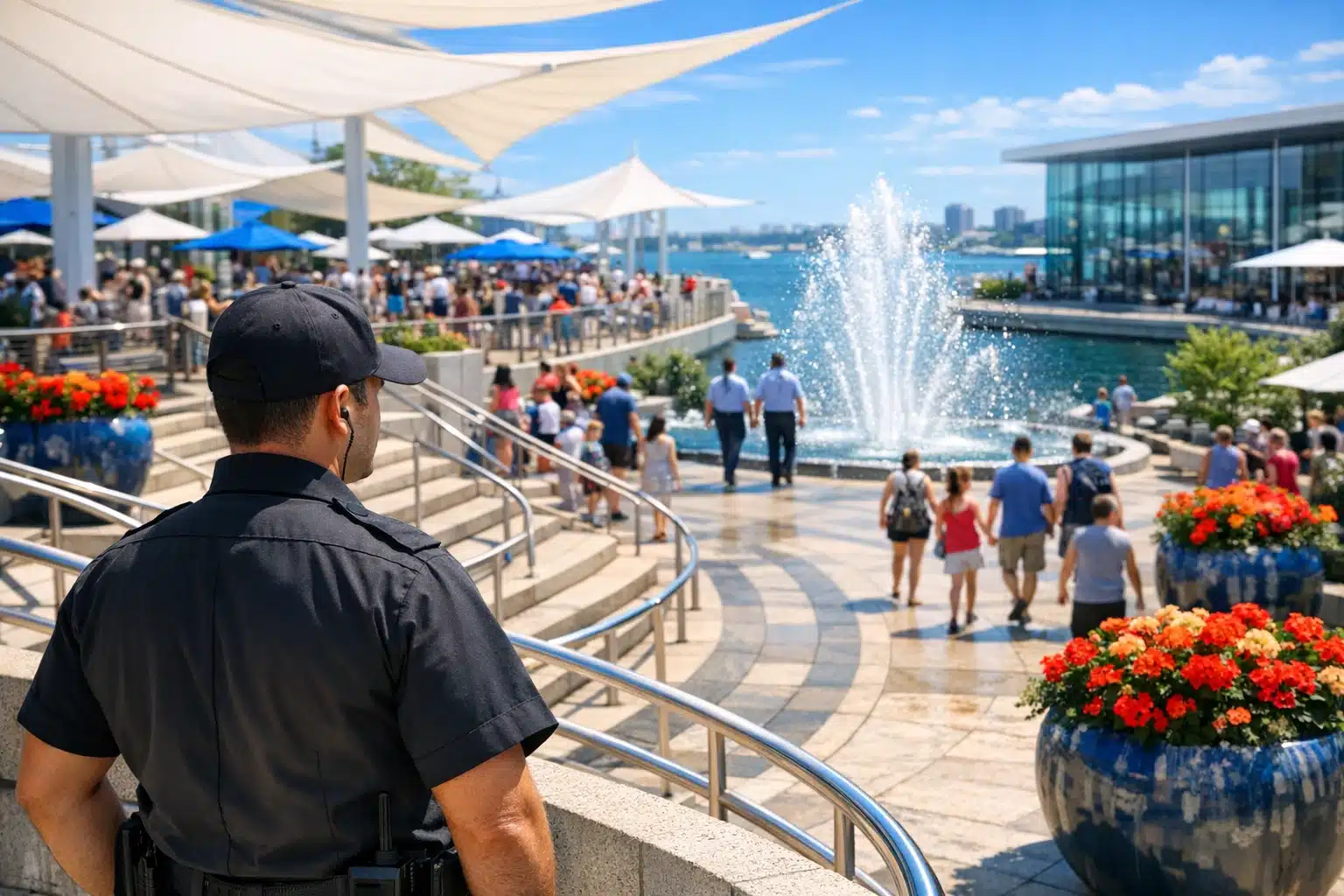
A Broad Introduction to Working in Security Services
Security services sit at the crossroads of safety, customer care, risk management, and technology, which is why the field attracts far more people than those who picture only a guard at a front desk. From hospitals and office towers to festivals, warehouses, and transport hubs, security work helps daily life keep moving when pressure rises. For job seekers, it offers accessible entry points, specialized routes, and a profession where calm judgment can matter as much as physical presence.
Article Outline
- What security services include and why they matter
- The main roles, sites, and work environments in the industry
- Training, licensing, skills, and entry routes for new workers
- The daily realities of the job, including ethics and technology
- Career growth, pay considerations, and who is likely to thrive
1. What Working in Security Services Really Means
When people hear the phrase security services, they often imagine a narrow job description: a uniformed guard, a fixed post, a clipboard, and a quiet lobby. In reality, the field is much wider. Security services are designed to reduce risk, protect people and property, maintain order, and support safe operations in places where disruption can become costly or dangerous. That means the job can involve visible deterrence, access control, patrol work, incident reporting, emergency response, surveillance monitoring, customer interaction, and coordination with managers, emergency teams, or public authorities.
A useful way to understand the industry is to think of it as a layer of organized prevention. In many workplaces, security is not there because disaster happens every day. It is there because preparation changes outcomes. A guard who notices a blocked fire exit, an unsecured loading bay, or a visitor without authorization may prevent a much larger problem later. In that sense, security work is often quiet when it is done well. The calm scene many people notice is often the result of planning, routine checks, and professional presence.
Security services can be split into broad categories. Some workers are employed by contract security firms and assigned to client sites. Others work in-house for a company, hospital, university, or industrial facility. Some roles are general and entry-level, while others are highly specialized.
-
Static guarding focuses on access points, reception areas, and regular observation.
-
Mobile patrol work involves checking multiple locations, often during evenings or overnight shifts.
-
Event security helps manage crowds, tickets, restricted zones, and emergency procedures.
-
Loss prevention in retail emphasizes theft reduction, observation, and evidence documentation.
-
Control room roles monitor alarms, CCTV feeds, and communication systems.
It is also important to compare security work with law enforcement, because the two are often confused. Security officers usually operate under company policy and local law, not broad public authority. Their purpose is typically preventive and protective rather than investigative in the criminal justice sense. They may observe, report, de-escalate, document, and alert police or emergency services when necessary, but they are not simply a smaller version of the police. In many workplaces, the best security professionals are part safety guide, part risk observer, part customer-facing representative, and part reliable witness.
This mix is what makes the industry more interesting than its stereotypes suggest. One hour may involve checking credentials and helping a visitor find the right department. The next may require writing a clear incident report, handling a fire alarm, or calming an angry customer before a tense moment turns into a dangerous one. Security services are broad because modern organizations face broad risks, and that is exactly why the field continues to matter.
2. Roles, Sites, and Work Environments Across the Industry
No two security jobs feel exactly the same, because the site often shapes the role as much as the employer does. A security officer at a luxury office building, for example, may spend much of the day handling visitor management, access badges, delivery protocols, and professional front-of-house communication. By contrast, an officer at a warehouse may focus more on vehicle checks, perimeter control, key management, and after-hours patrols. The same job title can hide very different daily demands.
Retail security is one of the most visible branches of the industry. Here, officers or loss prevention staff often work in busy, public-facing spaces where observation matters more than appearance alone. They may watch for shoplifting patterns, assist staff during difficult customer interactions, respond to medical incidents, and write statements after theft-related events. A shopping center can feel like a stage where hundreds of small interactions happen at once, and the security team has to read the room without becoming the story.
Healthcare security is another world entirely. Hospitals and clinics are open, stressful, and unpredictable environments. Officers may help manage visiting hours, protect restricted treatment areas, respond to emotionally charged disputes, support staff during mental health crises, and assist with missing person procedures or emergency lockdowns. Compared with a corporate site, healthcare security usually demands stronger de-escalation skills and a calm manner under pressure.
Industrial and logistics sites tend to emphasize procedures and physical risk awareness. These locations may include hazardous materials, expensive equipment, restricted loading zones, and complex shift changes. Security workers here often need to understand site rules in detail, because a minor breach can have serious operational consequences. A simple missed check can mean stolen goods, safety violations, or downtime that affects an entire supply chain.
Other common work settings include:
-
Residential communities and apartment buildings, where service-minded communication matters greatly
-
Schools and universities, where safeguarding, visitor control, and incident sensitivity are essential
-
Events and venues, where crowd flow, queue management, and rapid response define the shift
-
Transport hubs, where vigilance, coordination, and public-facing professionalism are critical
-
Control centers, where alert monitoring and accurate communication replace foot patrols as the core task
There is also a meaningful difference between contract and in-house employment. Contract security often offers wider site experience because officers may work across multiple clients over time. That can be valuable for learning quickly and building flexibility. In-house security roles, on the other hand, can provide deeper familiarity with one organization’s culture, systems, and long-term risk profile. Some workers prefer the variety of contract assignments; others value the stability and identity that often come with being part of one company’s permanent team.
The lesson for newcomers is simple: do not judge the whole profession by one site. A slow reception desk, a fast-paced hospital corridor, a night patrol route, and a festival gate can all belong to the same industry while requiring different strengths. Understanding the environment is often the first step toward finding the right fit.
3. Skills, Training, Licensing, and How People Enter the Field
One reason security services attract many job seekers is that the field often has accessible entry points. In a number of regions, entry-level roles do not require a university degree, and employers may hire candidates with customer service, military, hospitality, retail, or facilities experience. That said, easy entry should not be confused with easy work. Even basic security positions carry responsibility, and most reputable employers expect professionalism from the first day onward.
The exact requirements depend on local law and the nature of the role. Many jurisdictions require licensing, background checks, minimum training hours, and sometimes fingerprinting or identity verification before a person can legally work in private security. Specialized roles may require additional certifications, such as first aid, fire safety awareness, CCTV operation credentials, or conflict management training. Sites with higher risk profiles may demand stronger physical readiness, detailed report-writing ability, or previous experience.
For newcomers, the most valuable skills are often not the ones highlighted in films. Physical presence can matter, but employers consistently value dependability, observation, and communication. A person who arrives on time, follows procedure, documents incidents clearly, and stays composed during tense moments can be more useful than someone who looks impressive but acts impulsively.
-
Observation: noticing unusual behavior, safety hazards, and changes in routine
-
Communication: speaking clearly with staff, visitors, emergency services, and supervisors
-
Report writing: recording facts accurately, objectively, and in the correct sequence
-
De-escalation: lowering tension without adding ego or unnecessary force to a situation
-
Judgment: knowing when to intervene, when to monitor, and when to call for help
A common misunderstanding is that security work is suitable only for people with police or military backgrounds. Those experiences can help in some roles, but they are far from mandatory across the industry. Many strong security officers come from hotels, airports, retail operations, front-desk administration, or customer support roles, where patience, politeness, and procedural discipline are already well developed. In fact, security employers often prefer people who understand that professionalism includes courtesy. The officer who can calm a frustrated visitor and protect site rules at the same time is often worth more than the one who treats every conversation like a confrontation.
Training quality also matters enormously. A short licensing course may be enough to meet legal minimums, but it rarely builds deep skill on its own. The best development happens when classroom basics are reinforced by site induction, mentoring, scenario practice, and feedback after real incidents. Learning how to use radios, access systems, alarm procedures, visitor logs, and escalation protocols takes repetition. Good security work is built on routines until those routines become reliable under stress.
For people considering the field, the smartest approach is to treat the first role as a foundation, not a final destination. An entry-level posting can teach observation, shift discipline, professional writing, and emergency response habits that later support supervisory jobs, control room work, investigations support, compliance roles, or specialist assignments. The ladder often begins with simple duties, but it rarely ends there.
4. The Realities of the Job: Pressure, Ethics, Technology, and Daily Discipline
Security work is often described as boring by people who have never done it and stressful by people who have done it for years. Both views contain a piece of the truth. A shift may include long quiet periods, repetitive patrols, routine badge checks, and uneventful monitoring. Then, without warning, a small issue can become urgent: a medical emergency, a forced door alarm, a heated argument, an evacuation, a missing child at an event, or a safety violation near machinery. The challenge is not constant drama. The challenge is staying alert enough during ordinary hours to respond well during uncommon ones.
This is where daily discipline becomes central. Security professionals are expected to maintain standards even when nobody appears to be watching. That means following patrol routes, checking equipment, testing communication devices, logging visitors correctly, noting unusual details, and writing reports that are factual rather than emotional. An officer who cuts corners on a quiet day may be the same officer who misses a critical clue before an incident. In many workplaces, consistency is the hidden backbone of safety.
Technology has also changed the job. Modern security teams often work with integrated systems rather than simple keys and notebooks. Depending on the site, officers may use digital access control, body-worn devices, CCTV platforms, visitor management software, incident reporting tools, alarm dashboards, and real-time communication apps. These tools can improve speed and traceability, but they do not replace human judgment. A camera can show movement; it cannot always explain intent. An access system can record entry; it cannot calm a panicked crowd or reassure a distressed patient.
Several pressures define the job in practical terms:
-
Shift work, including nights, weekends, and holidays
-
Long periods of standing, walking, or outdoor exposure
-
The need to stay polite during confrontational situations
-
Detailed documentation after incidents, even when tired
-
Balancing vigilance with respect for privacy and dignity
Ethics are especially important in this profession because security staff often work close to people’s routines, property, and personal information. A good officer must understand boundaries. Observing is not the same as invading privacy. Enforcing rules is not the same as humiliating someone. Professional conduct means applying policy consistently, avoiding unnecessary escalation, and keeping reports honest. It also means knowing legal limits and site authority. Overstepping those limits can create liability for both the worker and the employer.
There is also an emotional side that outsiders may overlook. Security workers sometimes see people on difficult days: a family rushing into an emergency department, an employee being dismissed, a store manager dealing with theft, or a visitor who is lost, angry, or frightened. The role requires steadiness. Not coldness, but steadiness. Like a lighthouse in bad weather, the security worker does not control the storm, yet others may rely on that fixed point to navigate it safely.
This combination of routine, responsibility, technology, and human tension is what gives the field its distinctive character. It is not glamorous most of the time. It is useful. And useful work, especially under pressure, tends to reveal who can stay clear-headed when it counts.
5. Career Growth, Pay Factors, and Who Tends to Succeed in Security Services
For many people, the first question about security work is whether it can become a real career rather than a temporary job. The answer depends on how the worker approaches the field and what part of the industry they enter. Some roles are indeed short-term stepping stones, especially in basic site guarding. However, the wider industry offers progression into supervision, operations, control room management, investigations support, risk coordination, compliance, training, executive protection support, account management, and specialist site leadership. What begins at a gate or a lobby can, over time, lead to a desk with broader responsibility.
Pay in security services varies widely. Location, licensing requirements, risk level, client sector, shift pattern, and employer quality all influence earnings. A standard day-shift position at a low-risk site may pay modestly, while in-house roles, unionized environments, critical infrastructure sites, and specialized assignments can offer more competitive compensation. Overtime can significantly affect total income, which is one reason some workers find the field financially workable even when base rates are not exceptional. Still, anyone entering the industry should look at the full picture rather than hourly pay alone.
-
Base wage or salary
-
Night shift, holiday, or weekend premiums
-
Training support and certification reimbursement
-
Benefits such as healthcare, retirement plans, or paid leave
-
Advancement pathways into supervisory or specialist roles
Advancement usually follows competence, not image. Employers notice the officer who writes clean reports, handles visitors professionally, follows escalation procedures, and can be trusted with keys, logs, or alarm responses. Supervisory roles often go to people who have shown reliability over time, because leadership in security is not just about telling others what to do. It is about assigning posts fairly, coaching newer staff, reviewing incidents, maintaining standards, and communicating with clients or senior management when something goes wrong.
The future of the field will likely be shaped by technology, but not in a way that makes people irrelevant. Automated alerts, analytics, and remote monitoring are expanding, yet organizations still need trained staff who can interpret context, make lawful decisions, communicate clearly, and respond physically when required. In many cases, technology shifts the job upward. Instead of removing the worker, it demands a worker who can manage systems and think critically.
So who tends to do well in security services? Usually, it is not the loudest person in the room. It is the person who is punctual, observant, emotionally controlled, willing to learn procedure, and able to speak with respect even when others do not. Security rewards practical maturity. It also rewards patience. Some days will feel repetitive, and some employers will be better than others. But for people who want structured work with visible responsibility and room to specialize, the industry can offer more substance than its public image suggests.
If you are exploring the field, ask grounded questions before accepting a role. What training is provided? What is the site like at night? How often do incidents occur? Is the job mostly patrol, reception, control room, or customer-facing support? What are the promotion routes? A well-chosen first job can teach habits that open doors later. A poorly chosen one can make the whole industry seem smaller than it really is. The difference often lies in site culture, leadership, and the seriousness with which the employer treats the profession.
Conclusion for Readers Considering a Career in Security Services
Working in security services is broader, more human, and more skill-based than many people expect. It blends safety, observation, communication, procedure, and technology in ways that change from one site to another. For newcomers, the field can provide a practical entry point into stable work, especially if they choose employers that value training and professionalism rather than simply filling shifts.
If you are dependable, calm under pressure, and willing to learn how prevention works in the real world, security services may be worth serious consideration. The role is not built on constant action or movie-style heroics. It is built on judgment, consistency, and the quiet ability to keep situations from becoming worse. For the right person, that is not just employment. It is a useful and respected kind of responsibility.