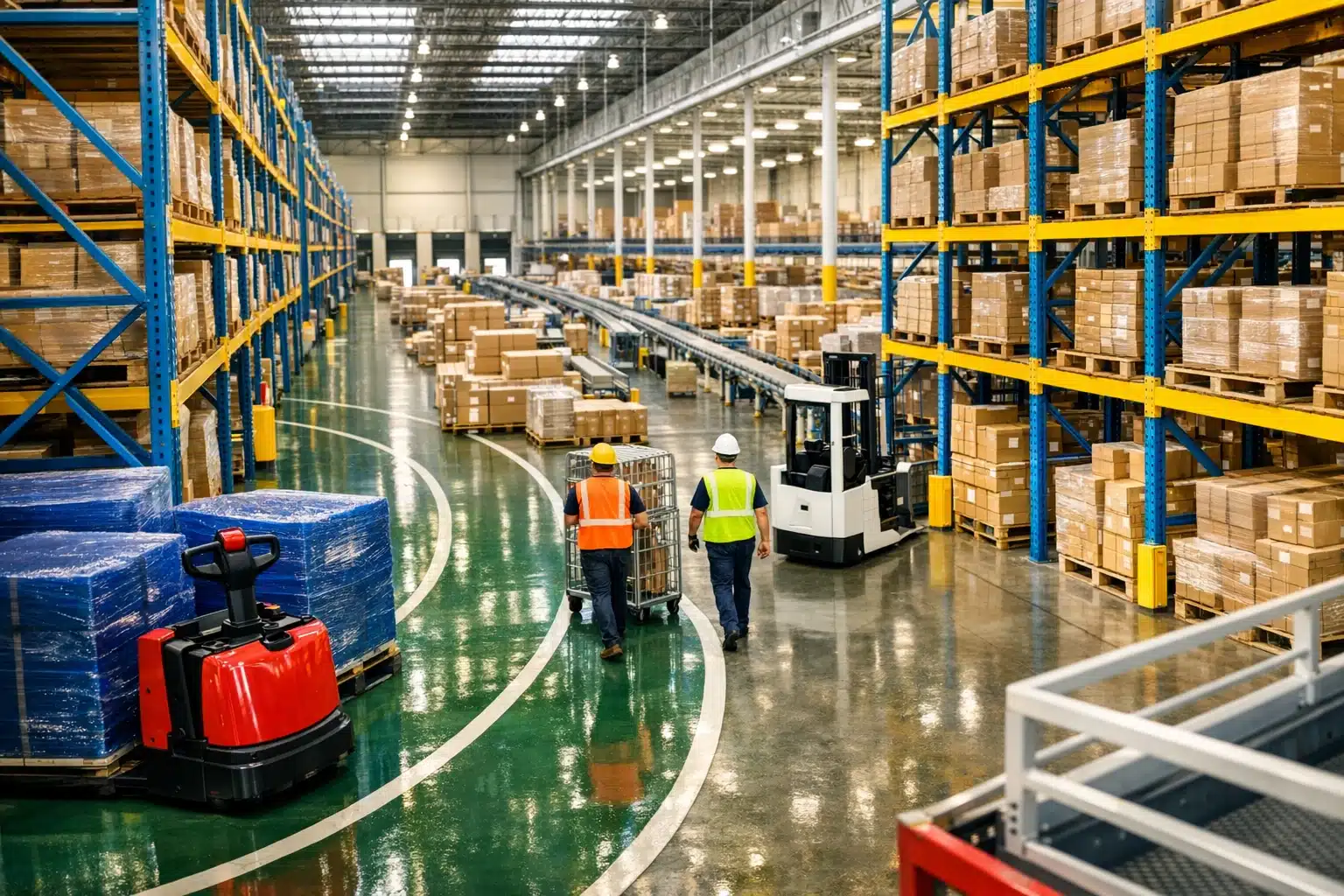
Warehouse Staff Job Opportunities
Warehouse work sits at the crossroads of retail, manufacturing, and transport, so demand for dependable staff stays closely tied to how modern business operates. When stock is received accurately, orders are picked quickly, and vehicles leave on schedule, companies save money and customers notice the difference. For job seekers, that makes warehouse employment a practical route into steady work, transferable skills, and long-term career growth.
Outline
- Why businesses regularly recruit warehouse staff and which sectors create the strongest demand
- The main responsibilities, essential skills, and workplace expectations attached to warehouse roles
- How pay, shifts, contracts, and promotion paths differ across employers and facilities
- Practical ways to find openings, prepare applications, and perform well during interviews or assessments
- Final guidance for job seekers deciding whether a warehouse position matches their goals, stamina, and schedule
1. Why Warehouse Staff Are in Demand and What These Jobs Really Cover
The phrase “warehouse staff wanted” appears so often because warehousing sits behind almost every part of the goods economy. A supermarket cannot refill shelves, an online store cannot deliver next-day parcels, and a factory cannot keep production moving unless inventory is stored, tracked, and handled correctly. That makes warehouse hiring less of a passing trend and more of a recurring business need. Demand rises especially during peak retail periods, promotional events, harvest cycles, and year-end shipping surges, but many employers recruit all year because turnover, expansion, and changing order volumes create constant movement in staffing levels.
It also helps to understand that “warehouse staff” is not one single job. A small local distributor may need a general operative who unloads vans, scans cartons, and prepares pallets. A large fulfillment center may split tasks into receiving, put-away, replenishment, picking, packing, returns, and dispatch. Cold-chain sites handling food or pharmaceuticals may require staff who can work in temperature-controlled areas. Manufacturing warehouses often prioritize accuracy and timing because one missing component can slow an entire line. In other words, two jobs with the same headline can feel very different once you step through the loading-bay doors.
Common roles often include:
- Picker or picker-packer
- Goods-in or receiving assistant
- Loader or unloader
- Forklift operator
- Inventory or stock control clerk
- Returns processor
- Shift lead or team leader
Location matters as well. Job opportunities tend to cluster around ports, airports, industrial estates, motorway corridors, and major urban delivery zones. E-commerce has widened the field further because businesses now promise faster dispatch windows and tighter delivery commitments. That means many sites track performance using measurable indicators such as pick rate, order accuracy, damage rate, and on-time dispatch. Those numbers are not just management jargon; they shape how many people a warehouse hires and what kind of worker stands out.
For job seekers, this matters because a warehouse role can be either a short-term source of income or the start of a career in logistics. Some people enter through seasonal work and stay because they discover strengths in organization, speed, reliability, or equipment handling. Others use warehouse experience to move into transport planning, procurement support, inventory analysis, or operations supervision. The job ad may look simple, but the working world behind it is far broader than many first imagine.
2. Skills, Qualifications, and the Day-to-Day Reality on the Warehouse Floor
One reason warehouse hiring attracts a wide range of applicants is that many roles do not require an advanced degree. Even so, employers rarely hire on attitude alone. They look for people who can follow instructions, work safely, maintain pace, and stay accurate when the shift gets busy. The daily routine may involve scanning products, moving stock to locations, checking delivery notes, labeling cartons, wrapping pallets, or preparing orders for collection. Some tasks are repetitive, but repetition in a warehouse is not mindless. Each scan, count, and label helps prevent the costly chain reaction that begins with one misplaced item and ends with a delayed order or unhappy customer.
Physical readiness often matters, though the exact level depends on the site. A picker in a fast-moving consumer goods warehouse may spend most of the day walking, bending, lifting, and reaching. A forklift operator will need sharper spatial awareness and formal certification where required. An inventory clerk may do less heavy handling but more counting, system updates, discrepancy reporting, and communication with supervisors. This is why job seekers should read vacancy details carefully. The pace, temperature, noise level, and manual handling demands can vary a great deal between employers.
The most valued skills usually combine practical ability with dependable workplace habits:
- Timekeeping and attendance
- Attention to detail
- Basic numeracy and document checking
- Comfort with scanners, tablets, or warehouse management systems
- Safe lifting and awareness of site procedures
- Teamwork during busy loading or dispatch periods
- Calm problem-solving when stock or labels do not match
Safety deserves special attention. Warehouses are structured environments filled with moving vehicles, stacked goods, loading docks, shrink-wrap machines, and foot traffic. Employers therefore value candidates who treat rules seriously. Wearing the correct personal protective equipment, keeping aisles clear, reporting damaged pallets, and separating pedestrian paths from vehicle routes are not optional details. They are part of professional competence. Someone who works quickly but ignores safety signs is usually seen as a liability, not a star.
There is also a growing digital side to the role. Many facilities use barcode systems, handheld scanners, voice-picking tools, and real-time stock software. You do not need to be a programmer to succeed, but basic confidence with simple devices helps. In a modern warehouse, the best workers are often the ones who combine steady hands with a switched-on mind. They do not merely move boxes; they keep a live information system honest. That blend of physical effort and procedural accuracy is what turns a basic warehouse vacancy into a role with real operational value.
3. Pay, Shifts, Benefits, and Career Progression in Warehouse Employment
Pay in warehouse jobs can look straightforward at first glance, yet several factors shape what workers actually earn. Region is one of the biggest. Sites near major cities or transport hubs may pay more because competition for staff is stronger and living costs are higher. Shift pattern matters too. Night work, weekend coverage, freezer environments, and roles involving machinery or specialist handling often attract premiums. A general operative on a daytime schedule may start at a lower hourly rate than a reach-truck driver or a worker covering late dispatch windows. This is why two ads with similar titles can produce very different weekly totals.
Contract type is another major point of comparison. Some people enter through temporary agencies because those routes can be fast and flexible. Agency roles may suit workers who want immediate income or short-term assignments, especially in seasonal peaks. Direct employment with the warehouse operator may provide greater stability, clearer benefits, and a stronger path to promotion. Neither route is automatically better. It depends on whether the applicant values flexibility, regular hours, training investment, or long-term progression.
When reviewing an offer, it helps to look beyond the base rate. Useful questions include:
- Is overtime available, and is it paid at a higher rate?
- Are breaks paid or unpaid?
- Is there a shift allowance for nights or weekends?
- Does the employer provide training for equipment licenses?
- Are attendance bonuses, meal subsidies, or transport support offered?
- How often are pay reviews carried out?
Career growth is often underestimated in this field. A reliable entry-level worker can move into roles such as inventory controller, quality checker, forklift operator, returns specialist, team leader, shift supervisor, or warehouse administrator. In larger organizations, the ladder can continue into operations planning, transport coordination, health and safety support, and site management. Progress usually depends less on flashy credentials and more on three practical signals: consistency, accuracy, and willingness to learn systems and processes.
There is, however, no point painting warehouse work as effortless money. Shifts can start early, finish late, or change with seasonal demand. Peak periods may be intense. Targets can be demanding, especially in fast-moving e-commerce facilities where order cut-off times drive the whole rhythm of the building. Yet for many workers, the trade-off is worthwhile because the job offers a visible connection between effort and output. At the end of a shift, there is a satisfying clarity to the work: pallets moved, errors prevented, vans dispatched, stock counted. That sense of tangible progress is one reason many people stay and build careers where outsiders only expected short-term jobs.
4. How to Find Warehouse Openings and Stand Out During the Hiring Process
Finding warehouse job opportunities is rarely difficult in active logistics areas, but finding the right one takes more care. Openings appear on major job boards, company career pages, local recruitment agencies, community employment centers, and sometimes even signage outside industrial units. The easiest mistake is applying to every vacancy with the same generic resume. Employers can usually tell when an applicant has taken no time to match their experience to the role. A better approach is to tailor the application to the site’s real needs, whether that is order picking, goods-in processing, stock control, forklift driving, or shift flexibility.
A strong warehouse resume does not need fancy language. It needs relevance. If you have experience with scanners, manual handling, stock counts, pallet wrapping, delivery intake, or fast-paced shift work, say so clearly. If you worked in retail, hospitality, construction, or manufacturing, highlight transferable strengths such as stamina, timekeeping, teamwork, and customer-order accuracy. Numbers can help. For example, mentioning that you handled daily deliveries, maintained inventory records, or worked to hourly targets gives hiring managers something concrete to assess.
Before applying, it helps to prepare a short checklist:
- Use the job title and keywords that appear in the vacancy
- State whether you can work the listed shift pattern
- Mention any license or certification only if it is current and valid
- Include your location and transport options if the site is remote
- Keep the resume readable, direct, and free of avoidable errors
- Be honest about availability, lifting limits, and prior experience
Interviews for warehouse roles are often practical rather than theatrical. Employers may ask how you handle repetitive tasks, what you would do if stock labels do not match a picking note, or how you stay focused during a busy dispatch period. Some businesses include site tours, simple assessments, right-to-work checks, or short trial shifts. None of this should be intimidating. It is simply their way of confirming that the person behind the application can function reliably in a structured environment.
One smart tactic is to ask thoughtful questions of your own. Find out how performance is measured, what training is provided, how quickly new starters are expected to reach full productivity, and whether there is room for progression. That signals seriousness and helps you avoid walking blindly into a poor fit. A warehouse may promise plentiful hours, but if turnover is high because the site lacks organization or support, that matters. The best applicants are not just eager; they are observant. They understand that getting hired is only half the task. Joining the right operation is what turns a vacancy into a stable opportunity.
5. Choosing the Right Warehouse Opportunity: Final Thoughts for Job Seekers
If you are considering warehouse employment, the most useful question is not simply “Are they hiring?” but “Does this role match the kind of working life I can sustain?” That question deserves an honest answer. Warehouse jobs can reward discipline, endurance, and reliability, yet they are not identical in pace or pressure. A calm stockroom serving a local wholesaler feels very different from a high-volume fulfillment center racing against carrier deadlines. Neither environment is automatically better. The better one is the one that aligns with your energy, commute, schedule, and long-term plans.
Start by thinking about practical fit. Can you handle standing and moving for long periods? Are rotating shifts manageable alongside family responsibilities or study? Would you rather join a small team where everyone does a bit of everything, or a larger site with clearer specialization and promotion ladders? These are not minor details. They shape whether you settle in and grow or leave after a few exhausting weeks. A job can pay well on paper but still be a poor choice if the travel time, working temperature, or overtime demands wear you down.
Before accepting an offer, try to confirm:
- Exact shift times and break structure
- Expected physical demands and lifting requirements
- Training period and supervision for new starters
- Attendance expectations during peak seasons
- Opportunities to gain certifications or move up
- Whether the contract is temporary, temp-to-perm, or permanent
For many applicants, warehouse work is a sensible doorway into the broader logistics sector. It offers immediate relevance in an economy built on movement, timing, and fulfillment. It can teach habits that employers value almost everywhere: punctuality, procedural discipline, stock accuracy, and calm execution under pressure. Those are sturdy skills. They travel well from one workplace to another.
So if you keep seeing “warehouse staff wanted,” read that phrase less as a generic advertisement and more as an invitation to investigate a wide field of real opportunities. Some roles will be basic stopgaps. Others can become the foundation of a solid working future. The smartest next step is simple: choose carefully, ask direct questions, and apply where your strengths genuinely fit. When the match is right, a warehouse is not just a place where goods move. It becomes a place where careers begin to take shape.