Chevrolet’s New Traverse Model Is Absolutely Stunning
The Chevrolet Traverse has long occupied one of the toughest corners of the market: the three-row family SUV, where buyers demand space, safety, comfort, and value all at once. The newest model steps into that pressure with a bolder design, upgraded technology, and a more purposeful personality. For shoppers weighing school runs against weekend escapes, this redesign matters because it changes how the Traverse feels both on the driveway and on the road.
Outline:
• Why the redesign matters in today’s midsize SUV segment
• Exterior styling and the visual shift from the previous Traverse
• Cabin comfort, digital features, and family practicality
• Performance, towing, and how the new powertrain changes the driving experience
• Competitive comparisons and a final verdict for likely buyers
A Redesign That Gives the Traverse Real Street Presence
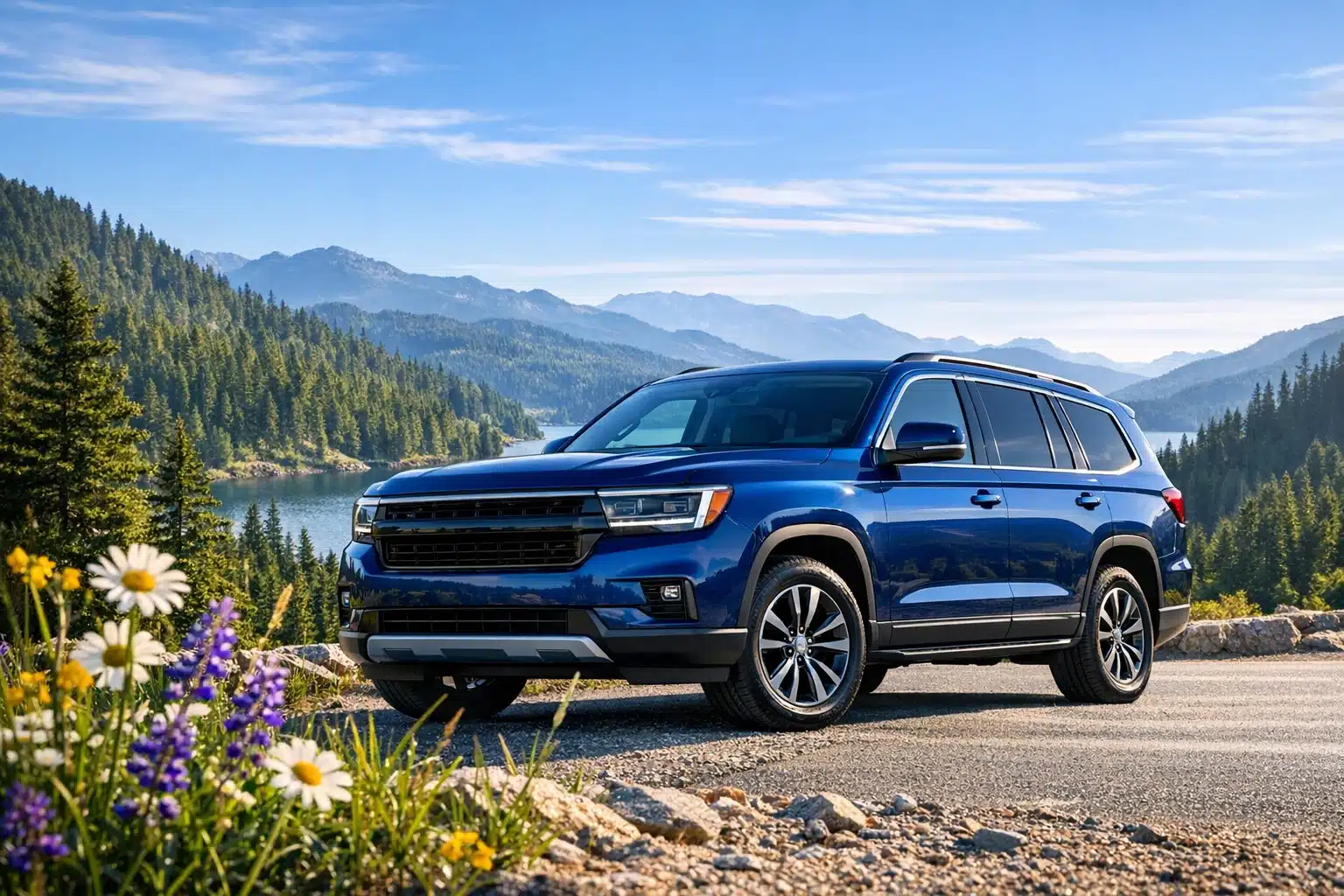
The most immediate reason people are reacting so strongly to the new Chevrolet Traverse is simple: it no longer fades into the background. Earlier versions of the Traverse were practical and roomy, but the styling leaned heavily toward softness. This generation changes course with a more upright stance, sharper edges, broader shoulders, and a front end that looks deliberate rather than anonymous. In a segment packed with highly recognizable rivals such as the Kia Telluride, Honda Pilot, and Toyota Grand Highlander, that shift matters. Design is not just about vanity in this class; it influences how buyers perceive value, confidence, and even long-term ownership satisfaction.
Chevrolet’s updated approach gives the Traverse a more rugged and modern face. The grille is larger and more assertive, the lighting signatures are cleaner, and the overall body shape feels less rounded than before. Instead of appearing like a tall family wagon, it now projects more SUV character. That difference becomes especially noticeable from the side, where the straighter beltline and more squared roof profile create a stronger silhouette. Even parked, the new Traverse seems to have better posture. It looks like it is ready to leave the suburban parking lot and head toward a mountain road, even if its next destination is simply a grocery store.
Several details help explain why the redesign lands so well:
• A boxier front fascia gives the nose a tougher expression
• More defined fender forms add visual width
• Distinct trim treatments allow sportier or more adventurous looks depending on configuration
• The cleaner surfacing makes the vehicle appear more premium than the older model
The trim strategy also plays a role in the Traverse’s appeal. Chevrolet has made sure that shoppers can choose a version that fits their taste instead of settling for a single personality. Sport-focused trims lean into dark accents and larger wheels, while the Z71-flavored model adds cues that suggest trail-ready confidence. These styling variations are important because many three-row SUVs end up feeling visually similar once you move beyond the brochure. The Traverse avoids that trap by giving each trim a stronger point of view.
Compared with the previous Traverse, the new one feels more carefully composed. It is not trying to shock anyone with extreme design, yet it is far from bland. That balance is a strength. Family buyers often want something handsome and current without wandering into gimmick territory. Chevrolet appears to understand that audience. The result is a vehicle that looks bigger in attitude, fresher in execution, and much more memorable than the model it replaces. For many shoppers, that first impression will be enough to prompt a test drive, and in a crowded market, earning that second look is half the battle.
An Interior That Feels Smarter, More Spacious, and Better Suited to Real Life
If the exterior pulls people in, the cabin is where the new Traverse has to prove it is more than a striking shell. Fortunately, this is one of the areas where Chevrolet made the clearest leap forward. The dashboard design is more horizontal, the screen presentation is more contemporary, and the control layout feels built for modern expectations rather than yesterday’s habits. A large central touchscreen, paired with a digital instrument display, immediately changes the atmosphere. Instead of looking like a leftover from a previous cycle, the cabin finally feels aligned with what buyers now see in recently redesigned competitors.
One of the headline features is the expansive infotainment display, which stretches dramatically across the center of the dash and gives the Traverse a high-tech focal point. Chevrolet’s newer interface design generally emphasizes large icons, cleaner menus, and faster access to commonly used functions. For families, that matters in practical ways. Navigation, media selection, phone pairing, and camera views should not require a scavenger hunt through layers of menus. A well-executed system reduces daily frustration, especially during school drop-offs, road trips, and busy errands where convenience matters more than novelty.
The Traverse continues to make its case as a family-focused vehicle by offering generous room across multiple rows. Seating for up to eight is available depending on configuration, while other layouts prioritize second-row comfort with captain’s chairs. The third row is especially important in this class because many vehicles advertise seven- or eight-passenger capacity without truly delivering usable space. The Traverse has historically been one of the more accommodating choices for passengers in the back, and the redesigned model builds on that reputation with a cabin shape that appears to preserve headroom and accessibility.
Daily usability often decides whether an SUV feels successful after six months of ownership, so details matter:
• Multiple cupholders and storage areas help the cabin manage family clutter
• Flexible seating layouts make it easier to switch between passengers and cargo
• Modern connectivity features support phones, streaming, and charging needs
• Available safety technology adds peace of mind for routine commuting and long trips
Materials and trim presentation have also improved. While buyers shopping luxury-adjacent models may still find richer finishes in higher-priced alternatives, the new Traverse appears more polished and more intentional than the one before it. That is an important distinction. A cabin does not need open-pore wood or boutique leather to feel appealing; it needs coherence, comfort, and surfaces that support frequent use without feeling cheap. Chevrolet seems to have focused on exactly that formula.
There is also a quieter emotional benefit here. A successful family vehicle should reduce stress rather than advertise sacrifice. The new Traverse does a better job of hiding its practical mission behind a cleaner design, better technology, and a more inviting environment. It still carries the tools of family life, but it no longer feels defined by compromise. That makes the interior one of the strongest reasons to pay attention to this redesign.
Turbocharged Power, Everyday Composure, and Capability That Makes Sense
The mechanical story of the new Traverse is just as important as the visual overhaul, because Chevrolet did not simply restyle the old formula. The latest model adopts a 2.5-liter turbocharged four-cylinder engine that produces 315 horsepower and 317 lb-ft of torque, paired with an eight-speed automatic transmission. Those figures are notable not because they are outrageous, but because they change the character of the vehicle. The previous Traverse relied on a naturally aspirated V6 with solid horsepower but less torque. The new engine offers a stronger midrange punch, which is exactly where a large SUV spends much of its real-world time.
That torque advantage should matter in daily driving. Pulling away from traffic lights, merging onto highways, and climbing grades with passengers aboard all benefit from readily available low-end and midrange thrust. In plain language, the new Traverse should feel less sleepy when it is loaded with people, bags, sports gear, or a week’s worth of warehouse shopping. On paper, 317 lb-ft gives it a competitive edge against several three-row rivals that still rely on V6 engines with lower torque outputs. The Honda Pilot, for example, offers less torque from its V6, while many buyers looking at the Ford Explorer’s turbo engine will notice Chevrolet is now playing more aggressively in that part of the market.
Towing remains part of the Traverse conversation as well. When properly equipped, it can tow up to 5,000 pounds, which keeps it useful for smaller campers, boats, and utility trailers. That number will not replace a full-size truck for heavy-duty work, but it is meaningful for families who want one vehicle that can handle vacations, home projects, and the occasional recreational load without complaint. Capability in this class is often less about extremes and more about flexibility, and Chevrolet understands that balance.
What buyers should pay attention to during a test drive:
• How smoothly the transmission handles stop-and-go traffic
• Whether the turbo engine feels relaxed at highway speeds
• How composed the suspension remains over rough pavement
• If the steering inspires confidence without feeling overly heavy
The addition of the Z71-oriented version adds another layer to the lineup. Rather than pretending the Traverse is a rock-crawling machine, Chevrolet uses that trim to broaden the SUV’s personality. It suggests that buyers who venture onto gravel roads, trailheads, snowy routes, or uneven campsites have not been forgotten. That is smart positioning. Most owners will never attempt extreme off-roading, yet many appreciate an SUV that feels ready for imperfect surfaces and changing weather.
Overall, the new Traverse appears to offer a more relevant performance package than the outgoing model. It is still tuned first for family duty, but it now brings stronger torque, useful towing, and a more contemporary mechanical identity to the table. In a segment where many vehicles prioritize smooth competence, that extra sense of energy can make a meaningful difference.
How the New Traverse Compares with Today’s Strongest Three-Row Rivals
No three-row SUV exists in a vacuum, and the new Traverse enters one of the most competitive corners of the automotive world. Buyers considering it will almost certainly cross-shop the Honda Pilot, Kia Telluride, Hyundai Palisade, Toyota Grand Highlander, and Ford Explorer, among others. That context matters, because the Traverse is no longer trying to win solely on size and name recognition. Chevrolet has clearly aimed for a more complete package, one that can stand up on styling, technology, and driving character as well as practicality.
Against the Honda Pilot, the Traverse offers a bolder digital presentation and a powertrain that looks stronger on torque. The Pilot still has a reputation for balanced road manners and a clean, sensible cabin, but Chevrolet’s redesign gives the Traverse more visual drama and, arguably, a fresher dashboard environment. Against the Telluride and Palisade, which helped redefine expectations for value and interior richness, the Traverse counters with a more truck-like SUV stance and a cabin that appears significantly improved over its predecessor. Those Korean rivals remain strong benchmarks, especially on perceived interior polish, yet Chevrolet is now much closer to the conversation than before.
The Toyota Grand Highlander presents another interesting comparison because it emphasizes spaciousness and offers hybrid variants that may attract efficiency-minded households. Chevrolet does not answer with a hybrid option here, which could matter for some buyers, but it does fight back with stronger styling identity and a turbo engine that makes the Traverse feel more contemporary than older naturally aspirated formulas. The Ford Explorer, meanwhile, still appeals to drivers who want rear-drive-based dynamics, but its interior presentation has been criticized by some shoppers for feeling less cohesive than newer rivals. On that front, the redesigned Traverse has a real opportunity.
For buyers trying to narrow the field, a simple framework helps:
• Choose the Traverse if exterior presence and a roomy, tech-forward cabin rank high on your list
• Look harder at the Grand Highlander if hybrid availability is essential
• Consider the Telluride or Palisade if you prioritize a near-upscale ambiance at the price point
• Keep the Pilot on the list if you value conservative design and proven family-road-trip manners
Where the Traverse seems especially convincing is in the middle ground. It does not lean too far into luxury imitation, nor does it settle for anonymous practicality. It offers a more distinctive visual identity than many mainstream rivals, while still keeping the core mission clear: move people comfortably, carry a lot of cargo, and remain easy to live with. That combination should resonate with shoppers who want an SUV that feels current without becoming complicated.
In other words, the Traverse now makes a stronger emotional case alongside its functional one. That is important because many purchases in this segment are rational on paper but emotional in the showroom. Chevrolet’s latest effort looks prepared to compete in both arenas, which is exactly what it needed to do.
Conclusion: Who Should Put the New Traverse on the Shortlist
The new Chevrolet Traverse is aimed squarely at people who need genuine family functionality but are tired of vehicles that treat practicality as an excuse for forgettable design. If you regularly carry several passengers, need a usable third row, and want enough cargo flexibility for sports equipment, luggage, shopping runs, or home-improvement errands, this SUV deserves a serious look. It feels especially relevant for growing households moving up from a two-row crossover, because it offers a clearer sense of occasion without stepping into luxury-brand pricing territory.
What makes the Traverse appealing is not one single feature but the way several improvements arrive together. The styling is more confident, the interior is more modern, the technology looks more competitive, and the new turbocharged powertrain gives the vehicle a stronger everyday response. None of those changes alone would transform the model. Combined, they create a much more persuasive package. That is why the new Traverse feels important in Chevrolet’s lineup. It is not merely refreshed transportation; it is a vehicle trying to reclaim attention in a segment where buyers have plenty of good alternatives.
Potential buyers should still shop carefully. If fuel economy is your dominant concern, you may want to compare hybrid-equipped competitors. If you place the highest possible value on premium cabin materials, certain rivals may still have an edge depending on trim and price. And if your driving involves narrow city parking every day, it is worth spending extra time evaluating size, visibility, and maneuverability. Those are not flaws unique to the Traverse, but they are real considerations in this class.
For the right audience, though, the recipe is compelling:
• Families who need honest space rather than occasional-use seating
• Drivers who want an SUV with stronger visual personality
• Buyers seeking modern screens and connectivity without entering luxury territory
• Households that appreciate towing ability and all-weather confidence
The final takeaway is straightforward. Chevrolet has given the Traverse a much-needed injection of style, relevance, and substance. It looks sharper, feels more contemporary, and presents a better answer to today’s three-row SUV buyer than the model that came before it. If your next vehicle must handle daily logistics while still making you glance back at it in the parking lot, the new Traverse belongs on your shortlist.