Clip-In Teeth for Missing Teeth: Options, Pros, and Considerations
Missing a tooth can change more than a smile; it can affect speech, chewing comfort, confidence, and even the way the lips are supported. Clip-in teeth draw interest because they seem to offer a fast, removable way to fill a gap without jumping straight into surgery or a permanent prosthetic. Still, the phrase is broad and can refer to several very different appliances with different strengths, costs, and limits. Knowing what these devices can realistically do makes it far easier to choose wisely and avoid disappointment.
This article follows a practical outline:
- What people usually mean when they say clip-in teeth
- How the main removable options compare
- The real benefits and the common drawbacks
- How fitting, cleaning, and candidacy work
- When to choose a clip-in option and when to consider alternatives
What People Mean by “Clip-In Teeth”
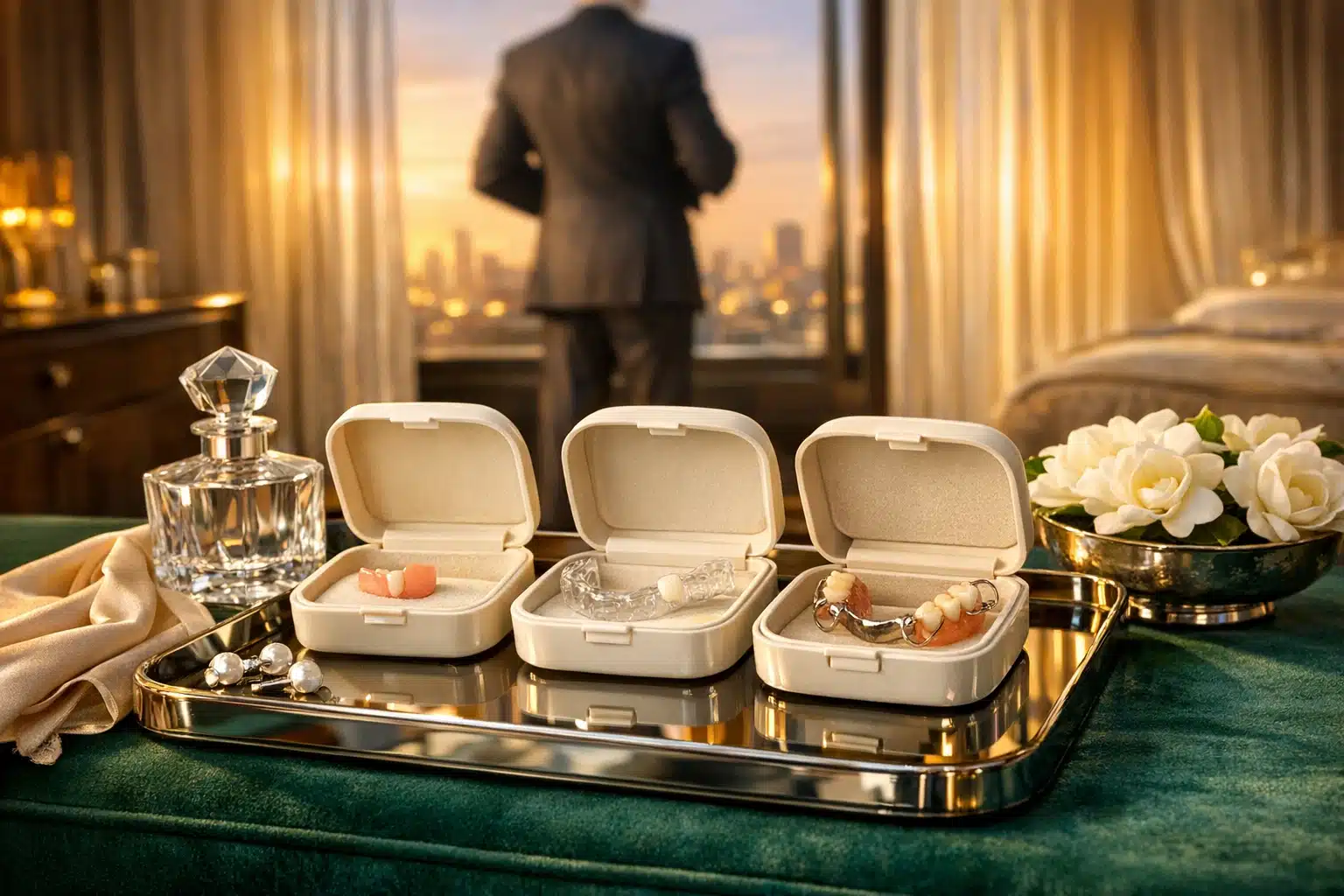
The phrase “clip-in teeth” sounds simple, but in dental conversations it is more of a casual umbrella term than a precise clinical label. Most people use it to describe a removable appliance that fills the space left by one or more missing teeth. In practice, that can include a dental flipper, a clear retainer with an artificial tooth attached, a removable partial denture, or a cosmetic snap-on style cover designed mainly to improve appearance. Each works differently, and that difference matters.
A person who loses a front tooth often feels the change immediately. Words with sharp consonants may sound slightly different. Biting into food can become awkward. Smiling in photos may suddenly feel like a strategic exercise. That is why removable options are so appealing: they can often be made more quickly than a bridge or implant, and they do not usually require surgery. For someone waiting for healing after an extraction, saving money for future treatment, or simply needing a temporary cosmetic solution for an upcoming event, a clip-in option can serve a very practical role.
Still, removable does not always mean interchangeable. A flipper is commonly a lightweight acrylic appliance with one or more replacement teeth. It is often used as a short-term solution. A retainer-style replacement, sometimes made from clear plastic, can hold a single false tooth in place and tends to look discreet from a distance. A removable partial denture is usually more robust and may be built to restore several missing teeth with better support. Cosmetic snap-on appliances may improve the look of a smile, but many are not designed for strong chewing.
Here is the key idea: clip-in teeth are best understood as a category of removable gap-covering solutions, not a single product. Some are mainly cosmetic. Some are temporary but functional for light use. A few are sturdy enough for longer wear when designed carefully by a dentist or prosthodontist. Knowing which type you are actually considering is the first step toward making a sensible choice, because the difference between “looks okay in a photo” and “works well at lunch” can be surprisingly large.
Comparing the Main Types of Clip-In Teeth
Once the broad label is unpacked, the comparison becomes much clearer. The most common removable options for missing teeth are not identical in purpose, feel, or durability. Choosing between them is less like picking a color and more like choosing between a folding chair, an office chair, and a dining chair: they all let you sit, but they are built for very different situations.
A dental flipper is one of the best-known options. It is usually made from acrylic and replaces one or a few teeth. Dentists often recommend it as a temporary appliance after an extraction or while a patient waits for an implant or bridge. Its advantages are speed and relatively low upfront cost compared with fixed treatments. Its trade-offs are equally important: flippers can feel bulky, may move slightly during speech or eating, and can be fragile if dropped. They are often helpful during a transition period rather than being the final chapter of treatment.
A clear retainer with a replacement tooth attached is another common choice, especially when one front tooth is missing. It can be visually subtle because the base material is transparent. For someone who mainly wants to preserve appearance in social settings, this style can be appealing. However, it is not usually the best tool for heavier chewing. Clear plastic also tends to wear, stain, or warp over time if not cared for properly.
Removable partial dentures sit in a different category. They are often more substantial and can replace multiple teeth. Some use metal clasps; others rely more on acrylic. Because they are more structured, they can offer better function than very lightweight temporary options. They are often better suited to people missing several teeth, including back teeth that matter for chewing balance.
A simplified comparison helps:
- Flipper: commonly temporary, quick to make, light, but less stable
- Clear retainer with tooth: discreet look, often best for front-tooth cosmetics, limited chewing strength
- Removable partial denture: more functional for multiple missing teeth, usually bulkier, often better for longer use
- Cosmetic snap-on appliance: may improve appearance, but function can be limited and fit quality varies widely
If one central incisor is missing and the goal is to look natural in conversation, a retainer-based option may be enough for the short term. If two molars are absent and chewing has become uneven, a more supportive partial denture is usually a more sensible direction. In other words, the “best” clip-in tooth depends less on marketing language and more on where the gap is, how long the solution is needed, and whether the priority is appearance, function, or both.
Benefits, Limitations, and the Everyday Reality of Wearing One
The strongest advantage of clip-in teeth is straightforward: they can restore the appearance of a missing tooth quickly without immediate surgery. For many people, that is not a minor benefit. A missing front tooth can feel like a spotlight that turns on every time a person laughs, speaks, or orders coffee. A removable appliance can reduce that self-consciousness and provide breathing room while longer-term decisions are made.
Another benefit is flexibility. Because these appliances are removable, they can be adjusted, remade, or replaced more easily than fixed restorations. They can also work well in situations where a dentist wants the gums or extraction site to heal before a permanent treatment begins. For younger patients whose jaws are still developing, removable options may be more practical than implants, which are usually delayed until growth is complete. They can also serve people who cannot pursue surgery right away for medical, financial, or scheduling reasons.
Yet the limitations deserve equal attention. Clip-in teeth do not usually feel exactly like natural teeth. Some wearers notice extra bulk against the tongue or palate. Speech may require a short adjustment period, especially with sounds such as “s,” “th,” or “f.” Chewing can be limited, particularly with lighter temporary appliances. Sticky foods, very hard foods, and wide bites into crusty bread or whole apples can test the stability of the device.
There are also biological considerations. Removable appliances replace visible tooth structure, but they do not replace the root in the jaw. That means they generally do not prevent the bone changes that can follow tooth loss. An implant, by contrast, sits in the bone and can help preserve that stimulation. This does not mean clip-in teeth are a poor choice; it simply means they solve a different problem.
In practical terms, people often weigh these points:
- Pros: quicker access, lower initial cost, non-surgical, reversible, useful as a temporary measure
- Cons: possible movement, cleaning demands, limited chewing power, breakage risk, periodic adjustments
Comfort also varies with fit quality. A well-made appliance designed from accurate impressions or digital scans tends to perform better than a generic or poorly fitted one. That is why professional evaluation matters. The real everyday experience of clip-in teeth is usually neither miracle nor disaster. It is a compromise, and for the right person at the right time, a smart one.
Fitting Process, Cleaning, and Who Is a Good Candidate
Getting a clip-in tooth through a dental professional usually begins with an exam, because the missing tooth is only part of the story. The dentist also looks at the health of the gums, the condition of nearby teeth, the bite pattern, and the amount of space available. If a tooth was recently removed, the shape of the healing tissue matters as well. A gap is visible to the patient, but to the dentist it is part of a larger mechanical and biological picture.
After the exam, the next step is often an impression or a digital scan. That record is used to design the appliance so it sits against the mouth with reasonable stability and matches surrounding teeth as closely as possible. Shade selection can be more nuanced than patients expect; natural teeth are rarely one flat color. A good replacement tooth often needs the right brightness, shape, and edge contour to blend in. Sometimes there is a try-in or an adjustment visit, especially if speech or pressure points need refinement.
Good candidates often include:
- People missing one or a few teeth who need a temporary or transitional option
- Patients waiting for implant placement, bone grafting, or healing after extraction
- Those who want a lower-cost removable solution before committing to fixed treatment
- Teenagers or young adults who are not yet ready for permanent implant timing
Less suitable candidates can include people with untreated gum disease, active tooth decay affecting support teeth, severe gag reflex issues, pronounced teeth grinding, or unrealistic expectations about chewing ability. A person who wants a removable cosmetic appliance to function exactly like a natural molar under heavy bite pressure may simply be asking the wrong tool to do the wrong job.
Care is another major part of success. Most removable appliances need daily cleaning to reduce plaque buildup, odor, and staining. Dentists commonly advise gentle brushing with non-abrasive products or specific cleaning solutions, depending on the material. Hot water should generally be avoided because it can distort plastic appliances. Some are removed overnight; others may have different wear instructions, so individualized advice matters. Regular follow-up visits are important too, because the mouth changes over time. Tissue can shrink after extraction, clasps can loosen, and a once-snug fit can become a wobbly annoyance if it is not reviewed.
In short, candidacy is not just about whether a person has a gap. It is about oral health, expectations, lifestyle, and the intended time frame. When those pieces line up, clip-in teeth can be a practical bridge between problem and longer-term plan.
Costs, Alternatives, and How to Make a Smart Decision
Cost is often the quiet engine behind the clip-in teeth conversation. Many patients first explore removable options because they need something more affordable than an implant or a fixed bridge, at least for now. In many dental markets, a simple temporary appliance costs hundreds rather than thousands of dollars, while implant treatment for one tooth can run much higher because it involves surgery, component parts, laboratory work, and multiple visits over time. Exact fees vary widely by location, materials, and complexity, but the broad difference in investment is real.
That lower entry cost can make clip-in teeth a sensible starting point. Still, price should not be judged in isolation. A cheap appliance that breaks often, fits poorly, or must be remade repeatedly may not feel economical in the long run. Meanwhile, a better-designed removable partial may cost more up front but offer stronger function and a longer useful life. The most honest question is not simply “What is cheapest?” but “What gives the best value for my goals and timeline?”
The main alternatives are worth comparing clearly:
- Dental bridge: fixed in place, often stronger for function, but usually requires work on neighboring teeth
- Dental implant: closest to replacing the root and crown together, often durable, but higher cost and longer treatment pathway
- No replacement: avoids treatment expense now, but may affect appearance, chewing balance, and sometimes tooth movement over time
- Removable partial or flipper: lower upfront barrier, useful for transition, but less permanent and often less natural in feel
Decision-making improves when patients ask specific questions. For example:
- Is this meant to be temporary, long term, or purely cosmetic?
- Will I be able to chew normally, or only lightly?
- How visible will clasps or support components be?
- How often does this type of appliance usually need adjustment or replacement?
- If I choose this now, does it preserve good options for a future bridge or implant?
It also helps to think about context. Someone preparing for a wedding, job interview season, or a public-facing role may prioritize appearance and speed. Someone missing several back teeth may care more about stability at meals. Someone healing from an extraction may simply need a reliable temporary solution for a few months. These are not competing priorities; they are different maps leading to different choices.
The smartest decision usually comes from matching the appliance to the purpose. Clip-in teeth can be extremely useful when expectations are realistic. They are rarely the end of every dental story, but they are often a meaningful chapter in it.
Conclusion for Readers Considering Clip-In Teeth
If you are exploring clip-in teeth for a missing tooth, the main takeaway is simple: the idea is practical, but the details matter. Some removable options are best for short-term cosmetic confidence, while others offer better support for daily function. The right choice depends on where the tooth is missing, how long you need the solution, your budget, and how much chewing ability you expect. A dentist or prosthodontist can help translate the broad phrase “clip-in teeth” into a treatment that actually fits your mouth and your plans. Going into that conversation with informed expectations is the best way to find a solution that feels useful rather than disappointing.