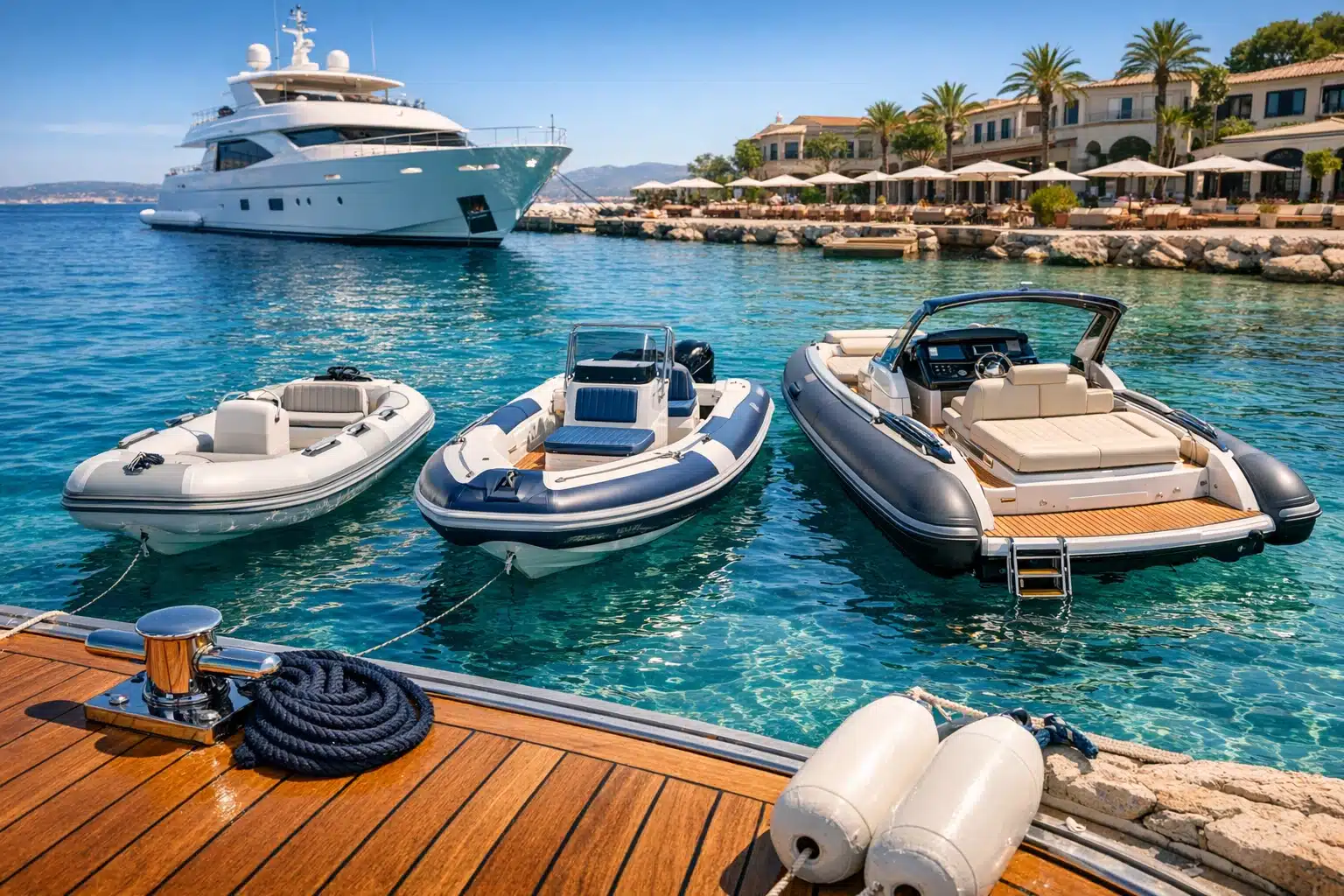
Inflatable Yacht Pricing Guide for 2026
Inflatable yachts have come a long way from being simple support craft, and in 2026 they occupy a broad market that runs from compact luxury tenders to high-spec rigid inflatable cruisers. Prices differ sharply because hull design, tube material, propulsion, electronics, and customization all change the final number. This guide shows what buyers are really paying for, where good value usually sits, and how to avoid overspending on features that look impressive but add little on the water.
Price Overview and 2026 Market Outline
Before diving into the numbers, it helps to sketch the map. The phrase inflatable yacht is used loosely in the market, and that is one reason buyers get confused so quickly. Some sellers apply it to premium tenders designed to sit behind a larger yacht. Others use it for rigid inflatable boats, often called RIBs, that can function as standalone leisure craft with serious engines, rich upholstery, and navigation systems. A few even stretch the term toward cabin-equipped performance models that are inflatable in structure but decidedly yacht-like in finish and purpose.
Here is a practical outline for understanding 2026 pricing:
- Entry-level and value models for casual day use
- Mid-range packages with stronger materials and better engines
- Premium and luxury models with advanced layouts and electronics
- Hidden ownership costs beyond the listed sticker price
- Buying strategies for first-time owners and seasoned yacht buyers alike
In broad terms, 2026 pricing commonly falls into these bands in the United States and much of Europe before taxes and optional upgrades:
- Small inflatable leisure craft and basic soft-bottom packages: roughly $3,000 to $12,000
- Compact RIB tenders and better-equipped inflatables: about $12,000 to $35,000
- Larger premium RIBs and serious family day boats: around $35,000 to $120,000
- Luxury yacht tenders, jet tenders, and cabin-style performance RIBs: $120,000 to $400,000 and beyond
What changed in 2026 is not just the upper limit, but the spread between tiers. Material choices remain a major divider. PVC is still the affordable route, while CSM or Hypalon-type fabrics typically command a meaningful premium because they resist heat, UV exposure, and abrasion better over time. Engine costs remain elevated relative to pre-2020 expectations, especially in higher horsepower classes. Electronics packages have also become more common, which sounds convenient until a standard display, transducer, VHF, lighting package, and upgraded battery system add several thousand dollars to a quote.
The market also reflects lifestyle. Marina users, yacht owners needing a tender, coastal day cruisers, and charter operators are not buying the same boat even when the length looks similar on paper. That is why price alone can mislead. The tag on the bow is only the opening sentence; the real story sits in the fabric weight, hull geometry, tube diameter, engine output, rigging quality, and after-sales support.
Entry-Level and Value-Focused Price Bands
For buyers entering the market without the intention of chasing prestige, the lower price tiers can offer surprisingly solid value. In 2026, basic inflatable packages usually begin around $3,000 for smaller leisure models and climb toward $15,000 or slightly more for better-built compact RIBs with modest engines. At this level, buyers are usually choosing between soft-bottom inflatables, air-deck boats, and smaller rigid-hull packages in the 9-foot to 14-foot range. These craft often serve as family runabouts, fishing companions, beach shuttles, or practical tenders for sailboats and smaller motor yachts.
The key to understanding this band is that low price does not automatically mean poor usefulness. It usually means simpler construction, fewer included features, and lower engine power. A basic package might include aluminum oars, a bench seat, inflation pump, storage bag, and a small outboard or recommended horsepower range. A better value-focused RIB may add a fiberglass or aluminum hull, steering console, integrated fuel tank, and upholstered seating. The difference in feel on the water can be dramatic. A soft-bottom inflatable is portable and forgiving, but a rigid hull usually planes faster, tracks better, and handles chop with more confidence.
Typical 2026 ranges in this segment often look like this:
- Small soft-bottom inflatables: $3,000 to $7,000
- Air-deck or heavy-duty portable inflatables: $5,000 to $10,000
- Compact RIB packages with modest outboards: $8,000 to $18,000
Why do some 12-foot boats cost twice as much as others? Three reasons dominate. First, tube material matters. PVC is widely used and sensible for seasonal users, but CSM-grade tubes often raise the price significantly. Second, the hull build changes both cost and behavior. Aluminum RIBs can be lighter and rugged, while fiberglass often looks more refined and rides differently. Third, the engine package alters the total more than new buyers expect. Jumping from a 15 hp to a 40 hp outboard can meaningfully increase not only purchase price, but fuel use, insurance, and service cost.
This is also the tier where buyers can make the most expensive cheap mistake: purchasing for looks instead of use. Glossy upholstery, stainless accents, and a designer steering wheel may be appealing, but if the boat will spend its life as a tender between anchorage and shore, storage weight, easy lifting points, and tube durability usually matter more. For a first-time buyer, the sweet spot in 2026 is often a compact RIB package with a reputable outboard, realistic seating, and quality tubes rather than a bare-bones hull dressed up by cosmetics.
Mid-Range Inflatable Yachts: Where Features Start to Matter
The mid-range is where the inflatable yacht category becomes truly interesting. This is the part of the market where buyers stop asking whether the boat will float and start asking how it will live. In 2026, this segment commonly runs from about $20,000 to $85,000, though some heavily optioned packages land closer to $100,000. Boats here are often between 14 and 24 feet, and they may serve as premium tenders, resort shuttle craft, diving platforms, fishing-friendly day boats, or stylish coastal cruisers for owners who want the speed and practicality of a RIB without stepping into full luxury pricing.
What buyers gain at this level is not just size. They gain capability. Hull designs are more refined, seating layouts are more comfortable, hardware quality improves, and engine choices become serious enough to change the personality of the boat. A 19-foot RIB with a 90 hp outboard is a different animal from a 12-foot tender with a small portable motor. It planes earlier, carries more people, and opens the door to watersports, longer coastal hops, and rougher conditions. This is the segment where many people first understand why experienced owners willingly pay more for the right hull.
Typical cost drivers in the mid-range include:
- CSM or premium-grade tube construction
- Fiberglass or deep-V aluminum hull design
- Center console or dual-console layout
- Larger outboards, often 60 hp to 200 hp
- Integrated fuel systems and hydraulic steering
- Navigation electronics, stereo, lighting, and bathing platforms
It is common in 2026 for the engine alone to represent roughly 20 to 35 percent of the total package price in this bracket, depending on horsepower and brand. Electronics can add another $1,500 to $10,000. Upholstery upgrades, SeaDek-style decking, sunpads, bimini systems, ski poles, and freshwater showers push the number further. Suddenly a boat advertised at $44,000 becomes a delivered package near $58,000.
This is also the zone where comparisons need real discipline. One manufacturer may quote a base hull price without trailer, battery, electronics, or commissioning. Another may show a nearly water-ready package. On paper, the cheaper option wins. In practice, the better quote may simply be more honest. Think of this segment as the tailored jacket of the inflatable world: it still needs to be functional, but the cut, material, and details start to define whether it feels ordinary or quietly excellent. Buyers who use their boats often, keep them for several seasons, or operate in strong sun and saltwater conditions usually find the mid-range offers the best balance between upfront spend and long-term satisfaction.
Premium and Luxury Models: What Drives Six-Figure Prices
Once you move into the premium and luxury end of the market, the term inflatable yacht starts to feel less like marketing language and more like a category of its own. In 2026, prices above $100,000 are no longer unusual for high-end jet tenders, elegant yacht support boats, and large performance RIBs with custom finishes. Some compact luxury tenders fall in the $40,000 to $90,000 range, especially when paired with premium jet propulsion and polished design. Larger, cabin-equipped, or highly customized models can easily extend from $150,000 to $400,000 or more.
At first glance, these numbers can seem excessive for a boat with inflatable tubes. But this tier is driven by engineering, finish quality, weight management, and integration with larger vessels. A premium tender designed to fit a yacht garage may require exact dimensions, careful balance, corrosion-resistant hardware, teak-style decking, hidden boarding ladders, sophisticated upholstery, and propulsion that delivers strong performance without compromising storage constraints. In other words, the owner is not merely buying an inflatable boat. The owner is buying a solution.
Common features that lift a model into the luxury bracket include:
- Jet propulsion systems or high-output premium outboards
- Custom tube colors, upholstery schemes, and deck finishes
- Advanced navigation displays, digital switching, and premium audio
- Integrated refrigeration, shower systems, or sun lounge arrangements
- Cabin space, enclosed heads, or overnight-capable layouts in larger RIBs
- Brand-specific fit requirements for mothership yachts and davit systems
Jet tenders deserve special mention because they regularly confuse buyers on price. Their compact size can make them appear less expensive than a larger outboard RIB, but jet systems often carry a considerable premium due to packaging, engineering, and perceived luxury appeal. In many cases, a premium jet tender can cost 30 to 70 percent more than an outboard-driven alternative of similar passenger capacity. Maintenance access, specialized parts, and brand positioning can widen the gap further.
Another hidden force at this level is finish consistency. Premium builders spend more time on small details: seams, latch quality, bilge access, switch placement, upholstery stitching, and the way hardware ages after seasons in salt spray. Those details rarely sell themselves in a spec sheet, yet they are exactly what separate a flashy purchase from a refined one. A six-figure inflatable boat is rarely about one giant leap in capability. It is usually about dozens of smaller improvements that make the boat quieter, cleaner, tougher, and easier to live with. For yacht owners, that polish may justify the price. For general leisure users, it may not.
Conclusion: Building a Smart 2026 Budget Before You Buy
If there is one lesson from the 2026 inflatable yacht market, it is this: the purchase price is only the front door. The real budget includes transport, storage, commissioning, servicing, insurance, safety gear, accessories, and the upgrades that sellers casually call optional even when most owners consider them necessary. A buyer who plans carefully can avoid the classic marina surprise, where a “good deal” quietly becomes a much bigger spend by the time the boat is actually ready for use.
Here are the costs many buyers underestimate:
- Trailer or launch trolley: often $2,000 to $8,000 depending on size and region
- Commissioning and dealer prep: commonly $500 to several thousand dollars
- Electronics and battery upgrades: from modest add-ons to five-figure packages
- Safety equipment, covers, dock lines, and fenders
- Annual engine service, tube care, winterization, and storage fees
- Insurance, registration, taxes, and possible import duty or VAT
New versus used is another major decision. In 2026, the used market can still offer value, especially for reputable brands with documented service history and good tube condition. However, buyers should inspect seams, valves, transom integrity, floor bonding, UV wear, and engine hours with unusual care. A low-priced used inflatable yacht can become expensive very quickly if the tubes are aging poorly or the engine has been neglected. When in doubt, a professional marine survey and compression check are money well spent.
So who should buy what? First-time owners and practical leisure users are often best served by well-built entry or mid-range packages that prioritize durability and service access. Yacht owners seeking a garage tender or stylish guest shuttle may find real value in premium compact models, but only if the dimensions, lifting setup, and propulsion match the mothership. Frequent coastal cruisers should focus on hull quality, weather tolerance, and fuel efficiency before chasing luxury trim.
Ultimately, the smartest inflatable yacht purchase in 2026 is not the cheapest and not the most glamorous. It is the one that fits your actual use, your realistic maintenance appetite, and your full ownership budget. Buy for the water you will run, the passengers you will carry, and the years you hope to keep the boat. Do that, and the price begins to make sense.