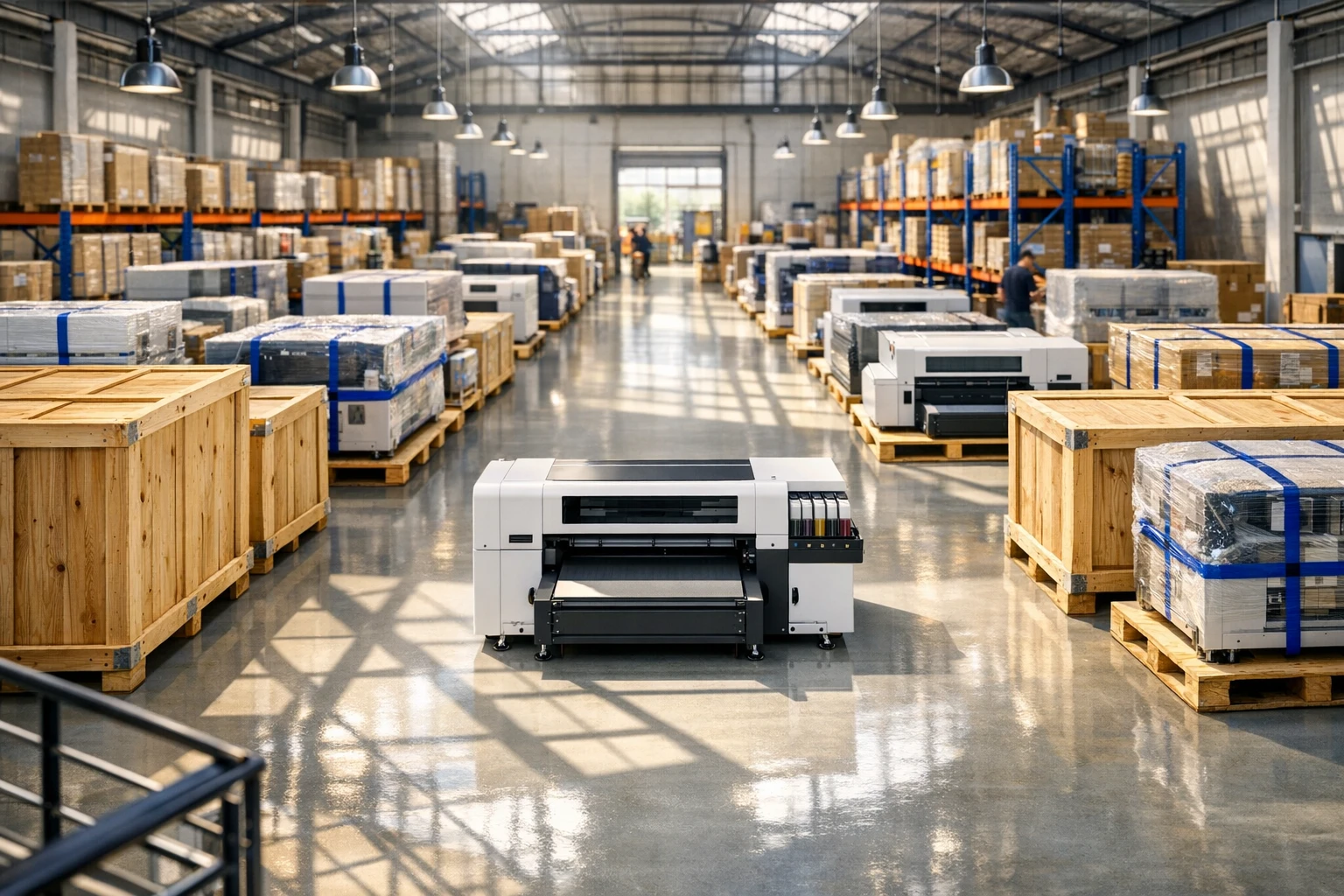
What Happens to Unsold DTF Printers After Big Promos?
A big promotion can make the DTF printer market look like a festival of disappearing inventory, yet the real story often begins after the banners vanish. Not every unit finds a buyer, not every preorder sticks, and not every distributor wants to carry the same models into the next quarter. Knowing where unsold machines go matters because those decisions influence future discounts, warranty terms, support quality, and the resale value buyers may see months later.
Article Outline
• Why large promotions still leave DTF printers unsold
• The common routes unsold machines take after a sales campaign
• How value changes when printers move from new stock to open-box, refurbished, or liquidation channels
• The wider effects on dealers, suppliers, and small print businesses
• A practical conclusion for buyers comparing post-promo offers
Why Big Promotions Still Leave DTF Printers Behind
At first glance, a major DTF printer promotion seems designed to empty a warehouse. Flash discounts, bundled supplies, financing offers, and countdown timers all suggest one thing: everything is moving, and moving fast. In reality, sales campaigns rarely produce perfect sell-through. DTF, short for direct-to-film, is a specialized category that attracts several kinds of buyers at once, from hobbyists testing apparel customization to established print shops replacing older equipment. Their timelines, budgets, and confidence levels are very different, so not every interested visitor becomes a customer.
There are several practical reasons why stock remains after a big promo. Some printers are reserved but never fully paid for. Some buyers cancel when they calculate shipping, maintenance, ventilation needs, ink consumption, or staffing requirements. In other cases, suppliers forecast demand too aggressively. A distributor may order more units than the market absorbs because a promotion was expected to ride seasonal demand, trade show attention, or social media buzz. When that wave loses energy, the remaining machines stay put.
Promotions also tend to spotlight a narrow group of models. If one printer size or configuration gets most of the attention, adjacent models can linger. A shop that wants a particular print width, white ink circulation system, or software bundle may ignore everything else. This creates an uneven inventory picture where the advertised hero product sells well, but supporting models, accessory bundles, or premium packages lag behind.
Another factor is buyer caution. DTF printers can open real opportunities, especially for short-run garment decoration, but they also require learning. Print head care, humidity control, adhesive powder handling, curing consistency, and workflow integration all affect outcomes. A machine can look attractive in a promotion yet still feel like a serious operational commitment. For many businesses, the discount is not the only question; the real calculation is whether the printer will earn its place on the floor.
That is why unsold inventory should not be seen as proof that a machine is flawed. More often, it reflects timing, cash flow, model overlap, uncertain demand, or logistics. In business terms, leftover stock is less a scandal than a traffic jam. The road is still open, but some units take a different exit once the bright lights of the promotion have dimmed.
Where Unsold DTF Printers Usually Go After the Promotion Ends
When the campaign clock hits zero, unsold DTF printers do not all meet the same fate. Companies usually sort them by condition, age, packaging status, regional demand, and support cost. A sealed unit with current firmware and full accessory kits may stay in normal inventory. A demo machine shown at an event or used for video content may move into an open-box or lightly used category. A returned printer that needs inspection can be repaired, cleaned, tested, and later offered as refurbished stock.
One common path is simple warehousing. If the model is still current and the manufacturer expects steady demand, the printer may remain in stock for the next sales cycle. This is often the least disruptive option, but it ties up capital. Warehousing also creates carrying costs, which may include storage, insurance, inventory tracking, and the risk of aging parts or packaging wear. For that reason, companies rarely want printers sitting untouched for too long.
Another route is dealer redistribution. A unit that did not sell in one channel may be transferred to a reseller with a different customer base. For example, a national online seller may move inventory to a regional equipment dealer whose buyers prefer in-person demonstrations, local training, or installation help. The machine itself has not changed, but the sales context has. In industrial equipment, that context can matter a great deal.
Unsold stock may also be repackaged into a new offer. Instead of cutting the sticker price again, sellers sometimes adjust the value equation:
• include extra ink, film, or powder
• add remote setup assistance
• extend technical support for a limited period
• bundle a shaker, oven, or RIP software training session
• position the printer as part of a starter package for a small apparel business
If inventory becomes older or less attractive, liquidation channels come into play. Liquidators, auction platforms, closeout specialists, or business-to-business resellers may acquire units at reduced margins. That does not automatically make the deal bad, but the buyer often needs to check what is included. Original warranty coverage may be shorter, support may shift to the reseller rather than the manufacturer, and some accessories may be missing unless clearly listed.
In the most practical cases, parts harvesting is another possibility. A printer with shipping damage or an uneconomical repair may be broken down for usable components, especially if compatible models remain in service. It is not the most glamorous ending, but in equipment markets it is a familiar one. A machine that does not return to full retail life can still help keep other systems running.
New, Open-Box, Refurbished, or Liquidated: How the Value Really Changes
Once a DTF printer leaves the clean category of brand-new retail stock, the label attached to it starts to matter almost as much as the hardware itself. Buyers often focus on price first, but the more revealing questions concern condition, service history, support access, and the cost of bringing the unit into reliable production. A cheaper machine can become expensive if it arrives incomplete, clogged, poorly packed, or unsupported.
A new unit is usually the easiest to evaluate. It should include standard accessories, full packaging, current documentation, and the seller’s normal warranty terms. For a small shop, that predictability has value beyond the base price. Installation tends to be smoother, replacement parts are easier to source, and troubleshooting begins from a known baseline. If the printer is current in the lineup, software compatibility and consumables availability are usually less stressful as well.
Open-box machines occupy a middle ground. These units may have been unsealed for showroom display, product photography, training, or a canceled shipment. Sometimes they are barely touched. Sometimes they have been powered on, moved several times, or partially assembled. The phrase sounds simple, but the condition can vary widely. A good seller should explain:
• whether the machine printed before resale
• whether ink was loaded into the system
• whether all manuals, cables, and maintenance items are present
• whether cosmetic wear exists
• who provides support after delivery
Refurbished printers require even more careful reading. In the best cases, refurbishment includes inspection, replacement of worn parts, cleaning, test prints, firmware checks, and documented calibration. In weaker cases, the word is used loosely to mean little more than “not new, but functioning.” That difference is critical. A responsibly refurbished DTF printer can suit a cost-conscious buyer, especially if the reseller provides setup help and a clear return policy. A vaguely described unit may expose the buyer to downtime, part sourcing problems, and immediate maintenance work.
Liquidation is a different animal altogether. It can offer low entry pricing, but it often reduces certainty. Inventory may be sold as-is, support may be limited, and the seller may know less about the machine’s history than a specialist dealer would. Some experienced technicians or production shops can manage that risk because they already understand print heads, dampers, pumps, and routine service procedures. Beginners may find the savings less impressive after transport, replacement components, and learning-curve losses are added up.
The lesson is straightforward: the category stamp on the listing should guide your expectations. Price is only one line in the story. The real total sits in the fine print, the parts drawer, and the hours required to turn the printer from a bargain into a dependable production tool.
How Leftover Inventory Affects Dealers, Manufacturers, and Print Shops
Unsold DTF printers do more than occupy shelves. They influence pricing strategy, dealer relationships, customer expectations, and even how future promotions are designed. For manufacturers and distributors, slow-moving hardware ties up cash that could otherwise be used for newer models, consumables, training staff, or regional support. In a category where technology, workflow software, and print reliability steadily improve, aging stock can become harder to position with each passing quarter.
Dealers feel this pressure directly. If they discount too aggressively, they may train the market to wait for the next sale rather than buy at standard pricing. If they hold firm, the inventory may become less competitive compared with updated packages or rival brands. That balancing act often shapes how unsold printers are reintroduced. Instead of public price cuts, sellers may prefer quieter tactics such as dealer-only offers, bundled training, seasonal package refreshes, or limited regional promotions. It protects headline pricing while still helping stock move.
For print shops, leftover inventory can create opportunities and confusion at the same time. A newer business may see a post-promo printer and assume it is a hidden gem. Sometimes that is true. Sometimes the machine is simply mismatched to their workload. A shop producing occasional transfers for local teams has different needs from a business handling daily garment runs or operating multiple finishing stations. A lower purchase price does not erase throughput limits, maintenance routines, or the cost of operator time.
There is also a downstream effect on the used market. When a wave of unsold promotional inventory gets remarketed at lower prices, it can soften resale values for comparable units already in the field. Owners planning an upgrade may receive less for their current machine if buyers can access open-box or refurbished alternatives with some support attached. On the other hand, a broader pool of lower-cost equipment can expand the market by bringing in startups that would not buy new at full price.
From a market perspective, unsold inventory often acts like a quiet signal. It may suggest that demand was overestimated, that the product mix needs refining, or that buyers care more about support and reliability than about headline discounts. In that sense, the warehouse becomes a teacher. Stacked cartons do not speak, but they reveal patterns: which models attracted confidence, which bundles fell flat, and which promises looked good in an ad yet felt less convincing on the shop floor.
For anyone watching the DTF space, these patterns matter. They influence future availability, financing terms, service investments, and the rhythm of promotions that follow. What remains unsold today can shape tomorrow’s market more than the flashy campaign that tried to sell it.
Conclusion for Buyers: How to Read a Post-Promo DTF Printer Deal
If you are the kind of buyer who watches big promotions and wonders whether the real bargains arrive afterward, the answer is often yes, but with conditions. Unsold DTF printers can become smart purchases when the seller clearly explains condition, included items, software access, and support responsibilities. They can also become expensive distractions when low pricing hides missing parts, unclear service history, weak training, or limited warranty protection. The difference usually appears in the details, not the banner headline.
A useful way to evaluate a post-promo offer is to think beyond the machine itself. Ask what it will take to make the printer productive within your actual workflow. Consider print volume, maintenance tolerance, operator experience, and the availability of consumables. A beautifully discounted unit is still the wrong buy if it is oversized for your order mix, difficult to service in your region, or dependent on support you cannot easily access.
Before committing, buyers should verify a few practical points:
• Is the printer new, open-box, refurbished, or liquidation stock?
• Has it printed before, and if so, how was it cleaned and tested?
• What warranty remains, and who honors it?
• Are setup, RIP software, and training included or sold separately?
• Can the seller provide current photos, test prints, or a documented checklist?
• Are replacement parts and consumables easy to obtain in your market?
This is where patience often pays off. The best post-promo deals are rarely the loudest ones. They are the offers where the paperwork is clear, the support path is realistic, and the machine matches the buyer’s production goals. Think of it less like grabbing the last item on a sale table and more like choosing a work partner for the next phase of your business.
For small print shops, apparel startups, and side-hustle creators, the main takeaway is simple. Unsold DTF printers do not vanish into a mystery tunnel. They are usually warehoused, repackaged, redistributed, refurbished, liquidated, or broken down for parts depending on value and demand. Knowing that journey helps you separate a meaningful opportunity from a rushed purchase. When you understand what happened after the promotion ended, you are in a much stronger position to decide whether the printer in front of you is a leftover problem or a genuinely useful deal.