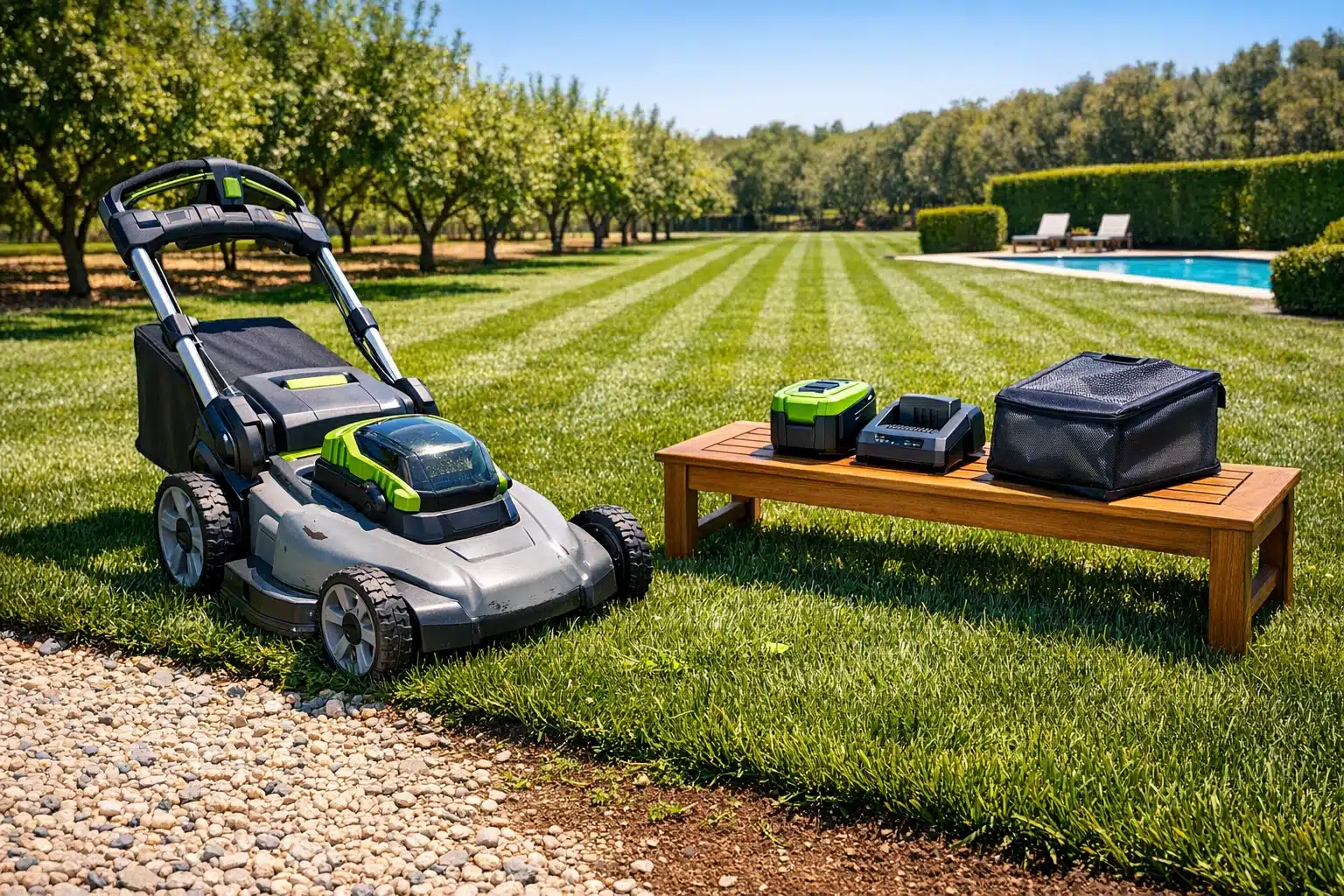
 Artificially generated image
 A Guide to Home Depot Scratch-and-Dent Lawn Mowers
Buying a lawn mower is rarely a small decision, especially when prices jump quickly from basic push models to feature-rich machines. Scratch-and-dent units at Home Depot can look like an appealing shortcut to savings, but the real value depends on condition, warranty terms, and the kind of yard you maintain. This guide explains how these discounted mowers are typically sold, what to inspect before paying, and which trade-offs deserve a second look.
This article starts with a simple outline so you know where the road goes before the grass gets tall. First, it explains what scratch-and-dent really means in a lawn equipment setting. Next, it shows how to locate and inspect discounted units in a Home Depot environment. Then it compares mower categories, breaks down the main risks and hidden costs, and closes with a practical decision framework for homeowners who want savings without regret.
- What scratch-and-dent lawn mowers are and how they differ from new or refurbished units
- How to inspect a discounted mower in store and what questions to ask
- Which mower types tend to offer the best value when marked down
- Common risks involving missing parts, warranty limits, and repair costs
- Who should buy one, who should skip one, and how to decide confidently
What “Scratch-and-Dent” Means for Lawn Mowers at Home Depot
When shoppers hear the phrase scratch-and-dent, they often picture a perfectly good product with a tiny scuff and a generous markdown. Sometimes that picture is accurate. Sometimes it is not. In the lawn mower aisle, a scratch-and-dent unit usually refers to equipment that cannot be sold as untouched retail stock because of cosmetic damage, packaging damage, display wear, or a return that has been checked and approved for resale. The exact label can vary by store, by brand, and by the condition of the machine, so it helps to treat the phrase as a starting point rather than a guarantee.
For lawn mowers, cosmetic issues may include chipped paint on the deck, a dented handle tube, scrapes on plastic shrouds, scuffed wheels, or torn packaging. A display mower that spent weeks under bright store lights and eager hands may still be mechanically fresh, even if it looks a little less polished than the boxed unit beside it. That kind of discount can be attractive because mowing is practical work, not a museum exhibit. A few surface marks may matter very little once the mower meets its first stick, pebble, or edge of a garden bed.
The more important question is whether the damage stops at the surface. On a mower, structural issues can turn a bargain into a repair project. A bent deck can affect cut quality. Misaligned wheels can make the mower track unevenly. Missing accessories can erase the markdown if you later have to buy a bagger, side discharge chute, charger, or battery separately. With riding models, concerns become even bigger: steering components, seat switches, blade engagement systems, and tires deserve close attention.
It also helps to separate scratch-and-dent from other categories that sound similar. A new-in-box mower is standard retail stock. An open-box unit may have been opened but not meaningfully used. A refurbished model is usually one that has been inspected or repaired after a return or defect, often under a formal process. Scratch-and-dent sits in a more flexible middle area. That flexibility creates opportunity, but it also places more responsibility on the buyer.
Why does this matter at Home Depot specifically? Because big-box retailers often carry a wide range of mower types, from compact battery push mowers to large riding machines, and each category ages differently on the sales floor. Cosmetic marks on a steel deck may be harmless. A questionable battery pack, damaged control cable, or incomplete hardware kit is another story. The smartest shopper does not ask, “Is it discounted?” but rather, “What exactly am I giving up, and what am I keeping?” That single shift in mindset turns a tempting markdown into a reasoned purchase decision.
How to Find, Inspect, and Evaluate a Discounted Mower Before You Buy
Finding a scratch-and-dent mower at Home Depot is part timing, part observation, and part willingness to ask direct questions. These units are often not presented with the same tidy predictability as standard stock. You may see them on a clearance end cap, near the outdoor power equipment area, beside assembled floor models, or in a corner where seasonal products gather their last chance at attention. Online listings may show some open-box or clearance inventory, but in many cases the best opportunities are discovered in person, where the machine and its flaws are visible rather than described in broad terms.
Season matters. Spring usually brings the widest selection of fully priced mowers because demand is high and fresh inventory is arriving. By late summer or during seasonal resets, stores may mark down floor models or aging inventory to free up space. After storms, box damage can also create unusual markdowns, though availability is unpredictable. If you are not in a rush, patience can be useful. If your grass already looks like it belongs in a nature documentary, availability may matter more than timing the perfect deal.
Once you spot a discounted mower, slow down and inspect it carefully. The price tag alone tells only a fraction of the story. Use your eyes, hands, and questions. A solid inspection should include the following:
- Check the deck for bends, cracks, or uneven edges
- Look at the wheels for wobble, mismatched height settings, or damaged hubs
- Confirm that the handle folds, locks, and adjusts correctly
- Inspect control cables, safety bars, and self-propel levers for smooth movement
- Verify that the grass bag, side chute, mulch plug, charger, and battery are included if the model originally came with them
- Look for fuel residue, oil leaks, or heavy debris that might suggest prior use
- Ask whether the mower has been registered, serviced, or returned before
Battery mowers deserve extra attention. Cosmetic wear may be acceptable, but the health of the battery pack matters far more than a scuffed shell. Confirm that the battery and charger are both present and compatible with the exact model. If the store can demonstrate charging or power-on behavior safely, that is worth requesting. For gas models, ask whether the engine has been fueled or started. A mower that was only assembled for display is different from one that was used and then returned.
Do not forget the paperwork side of the purchase. Ask about the return window, whether the item is sold as clearance, and whether the manufacturer warranty still applies from the date of purchase. Policies can vary by item condition, store practice, and brand. A quick conversation with an associate or department supervisor can be more valuable than ten minutes of guesswork. The mower may be discounted because it has a scratched side panel, or it may be discounted because the box is missing critical parts. Good inspection turns uncertainty into information, and information is what makes a markdown useful instead of merely exciting.
Comparing Mower Types: Where Scratch-and-Dent Value Is Strongest
Not every discounted mower offers the same kind of value. A scratch-and-dent deal that makes sense for one category can be risky in another. The key is to match the type of mower to both the nature of the damage and the size of your yard. If you are comparing options at Home Depot, it helps to think in three broad groups: walk-behind gas mowers, battery-powered walk-behind mowers, and larger riding machines.
Gas walk-behind mowers are often easier to evaluate because their systems are familiar and relatively straightforward. If the engine housing, deck, and controls appear intact, a cosmetic markdown can be meaningful. New gas walk-behind models commonly range from the low hundreds into higher price brackets depending on width, self-propel systems, and engine brand. A visible discount on a mechanically sound unit can therefore save a noticeable amount without forcing you into a lower-performance model. The caution here is structural damage. A bent blade adapter area, leaking fuel system component, or deck deformation can affect safety and cut consistency, which quickly reduces the appeal of the lower price.
Battery mowers have become much more popular because they are quieter, easier to start, and simpler to store. For many suburban homeowners, they are the most interesting scratch-and-dent candidates. Why? Because a display model with a scuffed deck may still deliver excellent day-to-day use if the electronics are intact and the battery is healthy. However, battery platforms come with one large caveat: replacement power packs are expensive. In some cases, the battery represents a significant share of the mower’s total cost. If the charger is missing or the pack shows signs of age, swelling, or inconsistent charging, the markdown may not be large enough to compensate.
Riding mowers and lawn tractors can produce the biggest headline discounts, but they also carry the biggest inspection burden. A dented fender is not the same as a damaged steering linkage, worn belt, or deck engagement issue. Even minor transport damage can matter more on a larger machine because repairs, pickup, and parts are more expensive. If you are looking at a riding model, be prepared to ask more questions and spend more time evaluating the unit. A thousand-dollar discount sounds dramatic, but large equipment also gives problems more room to hide.
Here is a simple way to think about relative value:
-
Best fit for many buyers: battery or gas walk-behind mowers with obvious cosmetic flaws but complete accessories
-
Good value for handy owners: self-propelled models needing minor noncritical replacement parts that are easy to source
-
Higher-risk opportunity: riding mowers with unclear history, missing attachments, or signs of rough handling
The best scratch-and-dent mower is not the one with the largest markdown. It is the one whose remaining life, included parts, and suitability for your lawn still line up after the discount is applied. A small yard may not justify a complicated repair gamble. A larger property may demand reliability that rules out anything questionable. When the mower type matches the damage profile, the savings can feel smart rather than speculative.
Warranty Questions, Hidden Costs, and the Risks That Change the Deal
A discounted lawn mower can look wonderfully simple on the sales tag and surprisingly complicated once you examine the fine print. This is where many shoppers either protect their budget or accidentally blow past it. The main issue is that the selling price is only one layer of cost. Warranty coverage, return terms, missing components, transport, and future repairs all influence whether a scratch-and-dent mower is truly a bargain.
Start with the warranty. Some scratch-and-dent units may still carry a manufacturer warranty from the date of purchase, while others may have limited coverage depending on how the item is classified. Clearance, open-box, floor model, and previously returned equipment can be handled differently. Since store policies and brand terms may change, the safest move is to ask for the exact status before you buy. If the mower includes a serial number and original documentation, confirm whether registration is possible and whether any prior registration exists. A lower price feels less impressive if a major defect appears later and no coverage remains.
Then consider the hidden costs that often sit quietly in the background:
- Replacement batteries for cordless systems can be costly
- Missing chargers, bags, mulch plugs, or side discharge chutes add up quickly
- Blades, belts, spark plugs, oil, and filters may be due sooner if the mower was used before resale
- Home delivery or trailer rental can reduce the savings on larger units
- Assembly help or repair labor may be necessary if a part is bent or incomplete
There is also the matter of time. A fully new mower usually offers a cleaner, faster buying experience. You choose the model, pay, assemble if needed, and get to work. A scratch-and-dent purchase often asks more from you. You may need to compare the floor sample against the parts list, confirm compatibility of accessories, inspect control functions, and track down a missing manual online. For some buyers that effort is perfectly worthwhile. For others, especially those who want a dependable machine immediately, the extra friction can outweigh the discount.
One practical risk is assuming that visible damage is the only damage. A cracked plastic battery cover is obvious. A wheel height adjuster that slips under load may not be. On a gas mower, rough handling can affect cables, pull starts, or blade balance. On battery models, storage conditions matter; electronics dislike heat, moisture, and neglect. With riding mowers, the list gets longer: deck level, tire condition, seat safety switch, belts, and steering response all deserve attention.
Keep your receipt, take photos of the condition at purchase if needed, and verify what the store will accept if a problem appears quickly. Good deals survive inspection from every angle: price, policy, parts, and practicality. When any one of those pieces is missing, the discount becomes less like a shortcut and more like a puzzle you did not plan to solve.
Conclusion: Who Should Buy a Home Depot Scratch-and-Dent Lawn Mower?
For the right buyer, a Home Depot scratch-and-dent lawn mower can be a sensible middle path between paying full retail and gambling on an unknown secondhand listing. It works best for homeowners who are comfortable inspecting equipment, asking questions, and accepting a few visual flaws in exchange for savings. If your main goal is value, not vanity, a scuffed deck or dented panel may be easy to live with. After all, a lawn mower earns its keep in dust, clippings, and uneven ground, not under soft showroom lighting.
The strongest candidates are usually shoppers with a clear understanding of their yard size and mowing habits. If you have a small to medium lawn and want a straightforward machine, a discounted walk-behind mower can be an efficient buy. If you already own tools or batteries within a compatible cordless platform, a marked-down battery mower may be especially appealing. If you are handy enough to replace a simple part and patient enough to verify completeness, the pool of good options grows larger.
On the other hand, some buyers are better off walking past the discount tag. If you need maximum reliability with minimal inspection, full warranty confidence, and no uncertainty about parts, a brand-new unit may be the better choice. The same is true for buyers considering riding mowers without the time or experience to evaluate them carefully. Bigger machines bring bigger stakes. A price cut is helpful, but it does not magically erase the cost of a bad fit.
Before you decide, run through a final checklist:
- Is the damage mostly cosmetic rather than structural?
- Are all original parts and accessories included?
- Do the return terms and warranty status make sense for the discount offered?
- Does the mower match your lawn size, terrain, and storage space?
- Would you still feel comfortable with the purchase if a minor fix were needed?
That final question matters more than people expect. A smart purchase should feel calm, not rushed. If the mower passes inspection, the markdown is meaningful, and the machine fits the work you actually do, a scratch-and-dent unit can be a practical win. For budget-conscious homeowners, first-time buyers, and careful DIY-minded shoppers, it can be one of the better ways to cut grass without cutting corners.