Security Guard Opportunities for Seniors: Roles, Requirements, and Tips
Security work is not only for the young or newly trained; for many older adults, it can be a practical way to earn steady income, stay active, and bring years of judgment into a role that values calm decision-making. Seniors often shine in positions where patience, reliability, and strong people skills matter more than speed. From front-desk posts to patrol duties, the field offers several paths with different physical demands. Understanding the options, requirements, and trade-offs can turn a broad idea into a realistic next step.
Article Outline
1. Why security work can be a strong fit for seniors. 2. The main roles available, from concierge-style posts to patrol and gate access duties. 3. Licensing, background checks, training, and physical expectations. 4. Pay, schedules, benefits, and how different employers compare. 5. Practical tips for getting hired, succeeding on the job, and deciding whether this path fits your goals.
Why Security Guard Work Can Be a Good Match for Seniors
Security guard opportunities attract many older adults for one simple reason: the job often values qualities that grow stronger with age. Employers regularly look for people who show up on time, stay calm in public-facing situations, follow procedures, and communicate clearly with staff, visitors, residents, or customers. Those are not minor traits. In many security settings, they are the center of the job. A senior who has spent decades in customer service, transportation, education, facilities, military service, public administration, retail, or office operations may already have habits that transfer naturally into security work.
Another reason the field appeals to seniors is flexibility. Security is not a single type of job. Some roles involve sitting at a front desk, checking visitor badges, watching camera feeds, and reporting unusual activity. Others include regular walking rounds in an office park, apartment complex, warehouse, hospital, museum, or school. In practical terms, that means older workers can look for assignments that suit their comfort level. Someone who wants a quiet overnight desk post may pursue one path, while another person who enjoys movement and routine may prefer a daytime patrol position.
There is also an emotional fit that people sometimes overlook. Security work can provide structure after retirement or semi-retirement. For many seniors, the appeal is not just income. It is the value of having a reason to get up, dress professionally, interact with people, and contribute to a safe environment. A calm lobby at sunrise, a checklist completed with care, a problem defused before it grows louder than it should; these small moments give the work a quiet sense of purpose.
Compared with physically demanding occupations such as warehouse loading, construction, or delivery driving, many entry-level security jobs are more manageable for older adults. That does not mean every post is easy. Some assignments require long periods of standing, outdoor exposure, or quick response in emergencies. Still, the range of assignments is broad enough that seniors can target positions with lower physical strain.
Common advantages for seniors include:
• Employers often appreciate maturity and reliability.
• Communication and observation skills can outweigh speed or heavy physical strength.
• Part-time, full-time, evening, and overnight options are widely available.
• The work can support a second career, bridge retirement income, or provide social connection.
In short, security work can fit seniors not because age is ignored, but because age can bring exactly the steadiness the role requires. The best outcomes usually come when applicants match their abilities and preferences with the right type of site and schedule.
Common Security Roles for Seniors and How They Compare
When people hear the term security guard, they often picture one generic job. In reality, the field includes a wide menu of roles, and that variety matters a great deal for older applicants. The first major split is between customer-facing posts and more mobile patrol posts. A front-desk or lobby security officer may spend much of the shift greeting visitors, verifying credentials, answering basic questions, coordinating deliveries, and documenting incidents. This type of role often resembles a blend of security, reception, and building operations. Seniors with polished communication skills usually do well here.
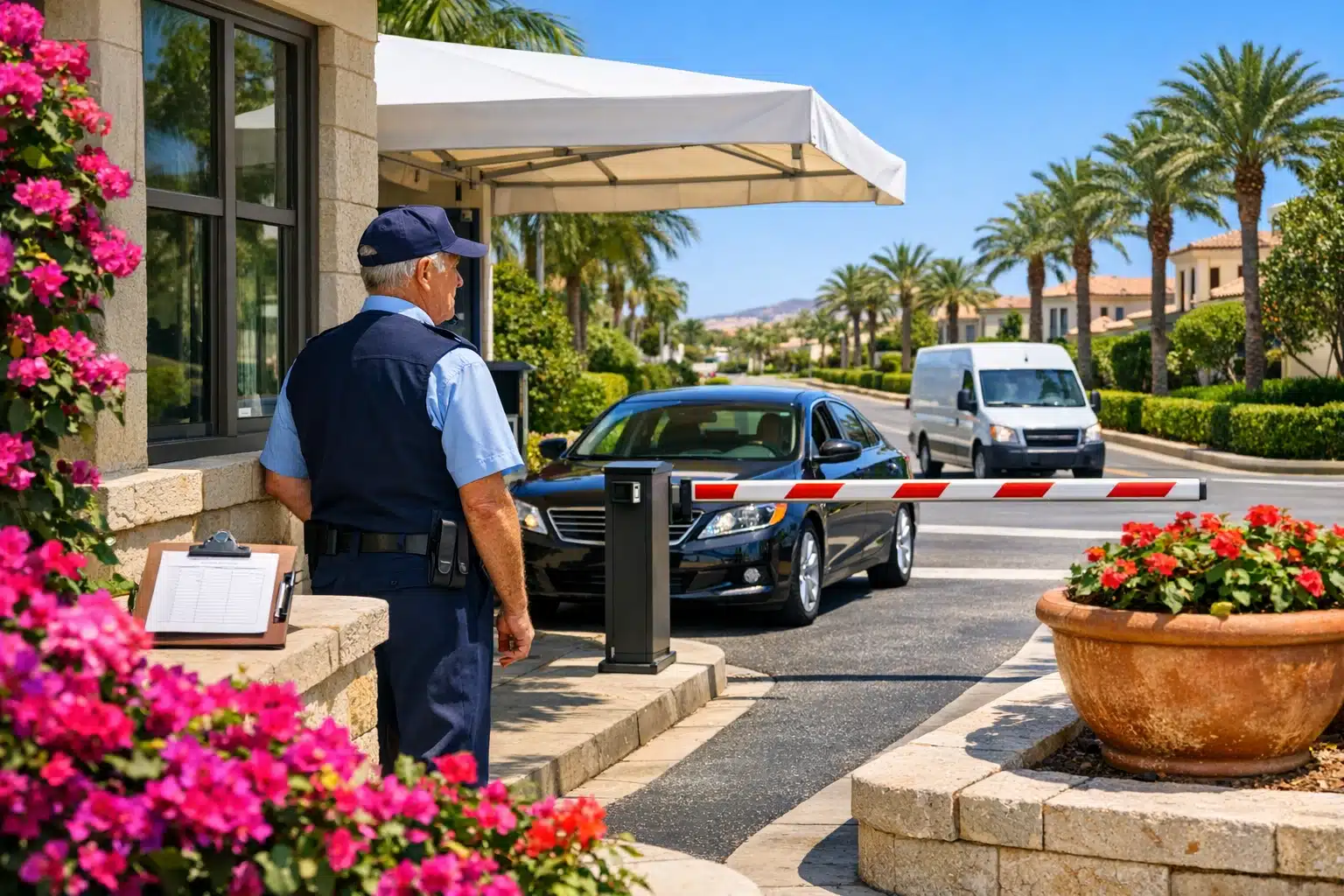
Another common role is access control at a gate, loading entrance, staff entrance, or private community checkpoint. These jobs focus on checking IDs, logging vehicles, monitoring who enters and exits, and following site rules. The work is repetitive in a useful way. For someone who likes routine and clear procedures, access control can be a strong fit. Compared with a busy retail security post, it may involve fewer unpredictable public interactions.
Patrol work is different. A patrol guard may walk or drive through a property, look for hazards, lock doors, inspect alarm points, and respond to incidents. This can suit seniors who want to stay physically active, but it also requires honest self-assessment. A large warehouse, hospital, or campus route may involve more walking than expected. On the other hand, some patrol roles are light-duty and mainly focus on visible presence, documentation, and periodic checks.
There are also specialized environments. Residential security in apartments or senior living communities often emphasizes visitor management, package control, and resident assistance. Corporate office security may be more procedural and polished, with strong expectations around professionalism and reporting. Museum or library security can be quieter and more observational. Hospital security tends to be faster paced and may involve more stressful situations, so it is not ideal for everyone. Retail loss prevention can include standing for long periods and dealing with tense moments, making it a mixed option depending on the employer.
A useful comparison for seniors looks like this:
• Concierge or lobby security: lower physical demand, higher customer interaction.
• Gate or access control: routine-driven, moderate attention demand, often predictable.
• Foot patrol: more movement, more site familiarity needed, can be tiring over long shifts.
• Vehicle patrol: less walking, but requires alert driving and rapid reporting.
• Hospital or transit security: higher stress, faster response expectations, often less ideal for beginners.
The best role depends on what you want from the job. If you enjoy conversation and order, front-desk security may be ideal. If you prefer a checklist and a controlled environment, access control may suit you better. If staying active matters most, patrol work may feel rewarding. The key is not to ask, “Can I do security?” but rather, “Which kind of security fits me best?”
Requirements, Licensing, Training, and Physical Expectations
Before applying, seniors should understand that security work is regulated differently depending on location. In many places, unarmed security guards need a license, registration, or certification issued by the state, province, or local authority. Employers may help with the process, but applicants usually need to meet basic standards such as legal work authorization, a background check, and a minimum age requirement. Some jobs also require fingerprinting, a short training course, or both. Because rules vary, checking the official licensing agency in your area is smarter than relying on job-board rumors.
For older applicants, the encouraging news is that most entry-level unarmed roles do not require a military or law enforcement background. Employers commonly value dependability, reading comprehension, report-writing ability, and the capacity to follow instructions. If you can observe carefully, write a clear incident note, use a phone or tablet, and remain professional under pressure, you already hold many of the foundations the job needs.
That said, there are real requirements that should not be minimized. Security guards may need to stand for extended periods, walk rounds, climb a few stairs, work outdoors in some weather, or stay alert during quiet shifts. Even desk-heavy roles can become tiring if the site expects long hours with limited breaks. Seniors should ask direct questions during interviews, such as how much walking the shift involves, whether the post is seated or standing, how often patrol rounds happen, and whether emergency response duties include physical intervention. A clear answer is better than a surprise on day one.
Training quality also varies. Some employers give basic orientation and move on quickly. Others provide stronger site-specific preparation, including radio use, report writing, de-escalation, fire panel basics, access control software, and emergency procedures. The best employers understand that prevention is the heart of security. They teach guards to notice patterns early, communicate clearly, and escalate concerns through proper channels rather than trying to play hero.
Skills that strengthen a senior applicant include:
• Clear written reports with accurate times, names, and observations.
• Comfort with basic technology, such as email, badge systems, and digital logs.
• Conflict de-escalation and professional communication.
• Reliability with schedules, uniforms, and procedures.
• Honest awareness of physical limits and willingness to choose the right post.
Armed security is a different category and generally involves stricter screening, more training, and higher legal responsibility. For most seniors entering the field, unarmed security is the more accessible and sensible starting point. It allows room to learn the industry, understand site expectations, and decide whether long-term advancement makes sense. In this line of work, preparation is not glamorous, but it is what turns a hopeful applicant into a trusted hire.
Pay, Schedules, Work Settings, and What to Look for in an Employer
One of the most practical questions seniors ask is whether security work pays enough to be worth the effort. The honest answer is that pay varies widely by region, employer, shift, union status, site risk, and whether the position is in-house or through a contract security company. Entry-level unarmed jobs often sit on the lower to middle end of hourly wage scales, while specialized posts, overnight assignments, union environments, or high-responsibility locations may pay more. In many markets, the difference between one employer and another can be more important than the difference between one job title and another.
In-house positions, where you work directly for a hospital, office complex, residential community, or institution, may offer better benefits, more stable expectations, and stronger site training. Contract security firms, by contrast, hire guards and assign them to client locations. These companies can be easier to enter because they hire in volume and cover many types of posts. The trade-off is that site assignments may change, and quality can vary. Some contract firms are well managed and professional. Others struggle with scheduling, turnover, or limited support. Seniors should judge the actual employer, not just the category.
Scheduling is another major factor. Security is a 24-hour industry, which creates opportunities for retirees, semi-retired workers, and people who want nontraditional hours. Part-time evening shifts, weekend posts, overnight desk assignments, and relief work are common. This can be a blessing if you want flexibility. It can be frustrating if you want a fixed Monday-to-Friday routine and the employer mainly needs coverage for nights and holidays. During the hiring process, ask how predictable the schedule is, whether overtime is mandatory, how breaks are handled, and whether the site has frequent last-minute call-ins.
When comparing employers, focus on more than hourly pay. Consider:
• Is the site close enough to make commuting manageable?
• Does the job require heavy standing, outdoor work, or constant patrols?
• Are uniforms provided, and are there extra costs?
• Is paid training included?
• Does the supervisor seem organized and respectful?
• Are incident reporting tools simple and well explained?
• Is there a realistic path to a better post after you prove yourself?
A quiet but important issue is job quality. Some sites feel orderly, respectful, and safe; others feel understaffed and chaotic. Seniors should not hesitate to ask what a typical shift looks like. If the answer sounds vague, rushed, or evasive, that tells you something. A good employer can explain the role clearly. In the end, security work can provide useful income and structure, but the right post matters enormously. In this industry, the work setting often shapes your daily experience more than the title on the badge.
Getting Hired, Succeeding on the Job, and Final Advice for Seniors
For seniors interested in entering security, the hiring process often begins with a mindset shift. You do not need to present yourself as someone trying to outmatch a 25-year-old on speed or physical intensity. You need to present yourself as dependable, observant, calm, and ready to represent the site professionally. That means your resume should highlight transferable strengths: customer service, building operations, transportation experience, military service, supervisory work, emergency awareness, documentation, conflict resolution, and attendance reliability. Even jobs that seem unrelated, such as receptionist work or school administration, can translate well because security relies heavily on routine, communication, and accountability.
Interview performance matters. Employers want to know whether you can stay composed when something unusual happens. Be ready with examples of times you handled a difficult customer, followed procedures in a regulated environment, noticed a problem early, or documented events clearly. If you are returning to the workforce after retirement, frame that positively. You might explain that you want part-time structure, meaningful work, and a role where professionalism counts. That sounds stronger than simply saying you are looking for “anything.”
Once hired, success usually comes from consistency rather than drama. Good security guards are rarely the loudest people in the room. They are the ones who notice the side door that did not latch, the visitor badge that does not match the log, the delivery that arrived outside normal procedure, or the resident who seems confused and may need help. Much of the work is quiet, but quiet does not mean unimportant. In many settings, prevention is built on ordinary discipline.
Helpful habits for seniors entering the field include:
• Arrive early enough to receive a clear shift handoff.
• Keep notes organized and factual.
• Learn the property layout thoroughly.
• Ask questions when procedures are unclear.
• Wear comfortable approved footwear and pace your energy on longer shifts.
• Be friendly without becoming casual about rules.
Finally, evaluate the role against your actual goals. If you want extra income without intense strain, aim for desk, lobby, residential, cultural, or access-control posts. If you want movement and variety, light patrol may suit you. If you dislike unpredictable confrontation, avoid roles known for frequent conflict until you have experience. Security can be a practical second act for older adults, especially when chosen thoughtfully. The target audience for this path is not just “retirees needing work,” but seniors who still have sharp judgment, steady habits, and a desire to contribute in a visible, trusted role. For the right person, a security post is more than a job at a doorway; it is a useful, dignified way to stay engaged while turning experience into everyday value.