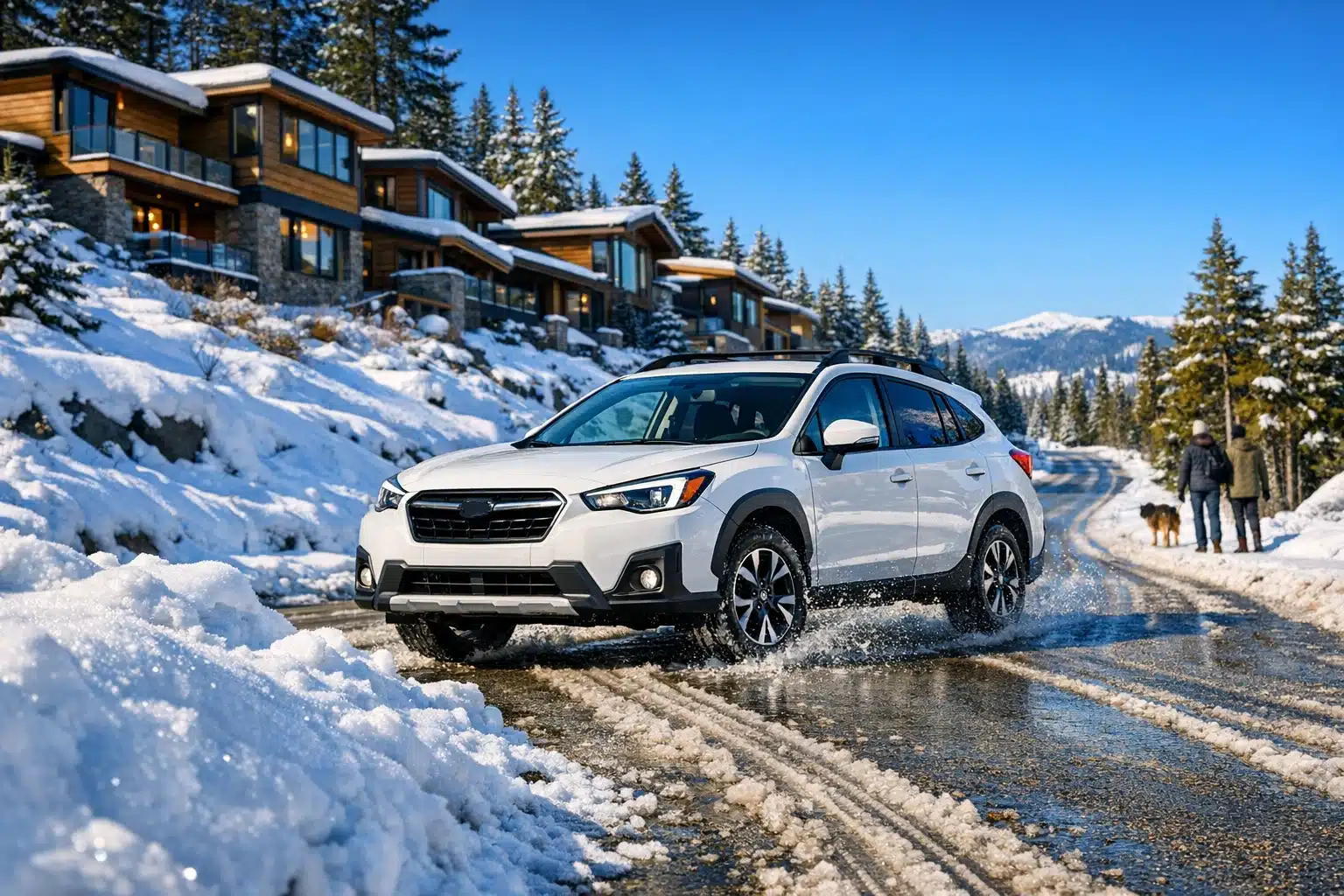
Practical Compact 4×4 Driving Solutions
Compact 4x4s have become the sweet spot for drivers who need real traction without living with the size, fuel use, and parking stress of a full-size SUV. They work well in crowded cities, narrow rural lanes, snowy suburbs, and rough weekend routes where a simple two-wheel-drive setup starts to feel limited. This guide focuses on practical solutions, not showroom hype, so you can understand what actually helps in daily driving and occasional adventure use.
Outline: this article covers five main areas: understanding compact 4×4 layouts, matching the vehicle to your lifestyle, choosing useful features and upgrades, improving driving technique, and building a smart buying and ownership plan. Each part expands the outline into clear, real-world guidance so readers can separate genuine capability from marketing language.
1. Understanding the Compact 4×4 Landscape
The phrase compact 4×4 sounds simple, but it covers several very different machines. At one end of the spectrum, you have compact crossovers with on-demand all-wheel drive, systems that spend most of their time driving two wheels and send power rearward when slip is detected. At the other end, you have smaller, more rugged SUVs built with stronger underbody protection, better articulation, and sometimes low-range gearing. Both can wear a similar badge, yet their behavior on wet pavement, broken gravel, and rocky climbs can differ dramatically.
Size is one of the biggest reasons the category matters. A compact 4×4 is easier to park, lighter on fuel, and less tiring to place on narrow roads than a larger truck-based utility vehicle. That smaller footprint also helps off-road in ways many first-time buyers do not expect. A shorter wheelbase can improve breakover angle, tighter dimensions reduce the chance of scraping body panels on trail obstacles, and lighter curb weight can help keep the vehicle from sinking as quickly into mud or soft sand. In simple terms, a well-designed smaller vehicle often feels more nimble, less clumsy, and more approachable.
The key is understanding the drivetrain types. Broadly speaking, buyers will run into three common setups:
• On-demand AWD, best for rain, light snow, and mixed-road driving
• Full-time AWD, better for stable traction and smoother power distribution
• Part-time 4WD with low range, intended for more serious loose-surface or slow-speed off-road use
These systems solve different problems. On-demand AWD is often ideal for families, commuters, and drivers who want confidence in changing weather. It usually adds little drama to the driving experience, quietly working in the background. Part-time 4WD, by contrast, is for people who regularly drive on deep snow, washboard trails, rutted access roads, or steep dirt climbs where gear reduction and locked torque delivery matter more than everyday refinement.
Ground clearance, tire choice, and electronic traction software often influence real capability as much as the number of driven wheels. A compact 4×4 with average clearance and road-biased tires may struggle on a muddy forest road, while a simpler vehicle with better tires and well-calibrated traction control can move confidently through the same section. That is why the smartest way to judge this class is not by brochure language, but by how the vehicle is engineered for the surfaces you actually drive.
2. Matching a Compact 4×4 to the Way You Really Drive
A practical 4×4 solution begins with honesty. Many buyers imagine river crossings and mountain passes, yet spend 95 percent of their time in school traffic, supermarket parking lots, and motorway lanes. There is nothing wrong with that. In fact, choosing a compact 4×4 that fits your real routine is usually the difference between lasting satisfaction and expensive regret. The right vehicle for a city commuter in a snowy climate is not necessarily the right choice for a surveyor driving remote access roads every week.
For urban and suburban drivers, the best solution is often a compact crossover with an efficient AWD system, decent visibility, and modern driver-assistance features. These vehicles usually return better fuel economy than heavier off-road-focused models, often landing in the broad range of mid-20s to mid-30s mpg depending on engine size, hybrid support, wheel choice, and tire type. They also ride more comfortably because their suspension is tuned for pavement first. If your biggest challenge is winter weather, wet roundabouts, slushy inclines, and unplowed side streets, this kind of layout is often enough.
For rural households, outdoor professionals, and drivers who regularly travel beyond maintained roads, the equation changes. You may need stronger suspension components, shorter overhangs, higher clearance, and better cooling for prolonged low-speed work. In those cases, a more robust compact 4×4 with selectable drive modes, descent control, and underbody protection starts to make financial sense. Not because it looks adventurous in photos, but because it can deal with repeated impacts, axle-deep ruts, loose shale, and steep access tracks without constant anxiety.
A useful buying filter is to ask these questions before comparing badges:
• How often do I drive in snow, mud, loose gravel, or on steep dirt grades?
• Do I need confidence in bad weather, or genuine off-road ability?
• Will I tow, carry heavy cargo, or mount bikes, skis, or recovery gear?
• Is fuel cost a major concern over five years?
• Do I value quiet motorway comfort more than trail durability?
Another practical issue is tires. A road-focused AWD crossover on low-profile highway tires may underperform compared with a less powerful vehicle wearing quality all-weather or all-terrain rubber. Tires are the handshake between the machine and the ground, and they shape braking, steering, and traction more than many buyers realize. Likewise, wheel size matters. Larger wheels can look sharp, but smaller wheels with taller sidewalls usually ride better and resist damage more effectively on poor surfaces.
The smartest compact 4×4 is not the toughest one on paper. It is the one that solves your most common problems without burdening you with capability you rarely use, maintenance you do not need, or fuel costs that quietly drain the ownership experience.
3. Features and Upgrades That Solve Real Problems
Once you have chosen the right type of compact 4×4, the next step is figuring out which features genuinely improve the vehicle and which ones mostly decorate it. This is where many owners overspend. Marketing often pushes dramatic accessories, oversized wheels, or adventure-themed trim packages, while the most useful upgrades are often quieter, cheaper, and far more effective in the real world.
The first and most important upgrade is almost always tires. If you drive in snow, a proper winter tire can transform braking and turning performance. If you use gravel roads, forestry tracks, or rough rural routes, a sensible all-terrain tire adds sidewall strength and bite on loose surfaces. The gain is immediate because tires affect every input: acceleration, braking, cornering, and comfort. By contrast, many cosmetic accessories do little for actual traction or durability.
Ground clearance comes next, but it needs context. A small increase in clearance can be useful for snow depth, erosion ruts, or rocky tracks. However, more height alone does not guarantee better performance. Suspension geometry, shock control, axle articulation, and center of gravity all matter. A vehicle with moderate clearance and strong traction control may feel more stable than a taller model with poor damping and highway-oriented tires. Practical capability is a system, not a single number.
For drivers who leave the pavement often, the following features are usually worth serious attention:
• Front and rear recovery points that are easy to access
• Skid plates for the engine, transmission, and fuel tank
• Hill descent control for steep, slippery drops
• A spare tire sized for real use, not a temporary space-saver
• Underbody cameras or parking cameras that help place the wheels accurately
There are also upgrades that sound useful but depend heavily on your actual routine. Roof racks and cargo boxes add flexibility, yet they can reduce fuel efficiency and increase wind noise if left on full-time. Light bars are popular, but many owners would benefit more from better standard headlights and cleaner lenses. Locking differentials can be valuable in technical terrain, though they are unnecessary for drivers whose roughest challenge is a snowy driveway and a muddy campsite entrance.
Interior practicality matters too. Easy-clean flooring, durable seat materials, configurable cargo space, and usable tie-down points can make a compact 4×4 far more effective for work and travel. It is the difference between a vehicle that looks outdoorsy and one that quietly handles wet boots, muddy tools, dog crates, camping gear, or emergency winter supplies.
In other words, the best feature set is not the most dramatic. It is the one that reduces risk, saves time, protects key components, and makes the vehicle more capable on the exact surfaces you deal with most often.
4. Driving Techniques That Make a Compact 4×4 Work Better
Even the best compact 4×4 cannot rescue poor technique. Four driven wheels improve traction when moving off and climbing, but they do not rewrite physics. A vehicle with AWD or 4WD can still slide during braking, wash wide in a corner, or sink into soft terrain if the driver carries the wrong speed. This is why good technique is one of the most practical driving solutions available: it costs nothing, protects the vehicle, and often matters more than expensive hardware.
On pavement, smoothness is the first rule. In heavy rain or snow, abrupt throttle inputs can confuse traction systems and upset the chassis. Steering gently, accelerating progressively, and allowing longer braking distances gives the drivetrain time to do its job. Many drivers feel overconfident in bad weather because the vehicle pulls away cleanly. The trap is that stopping distances are still governed by grip, tire compound, and road condition. A compact 4×4 can launch confidently from a slushy junction, then discover halfway to the next bend that momentum is a stubborn travel companion.
Off pavement, momentum needs careful management. Too little speed in sand or deep mud can leave the vehicle bogged down. Too much speed on rocks or ruts can damage suspension components, wheels, or sidewalls. The art lies in measured progress. Pick a line, keep your eyes up, and let the vehicle settle rather than bouncing it through obstacles. If your model has terrain modes, use them. They often alter throttle mapping, braking intervention, and torque split in ways that make the vehicle calmer and easier to control.
Some simple habits deliver outsized results:
• Reduce tire pressure only when appropriate for the terrain and reinflate afterward
• Use engine braking or descent control on steep loose slopes
• Cross obstacles slowly and diagonally when possible to reduce underbody strikes
• Check surface depth before entering water, mud, or snowdrifts
• Travel with a basic recovery kit, gloves, and a charged phone or radio
It is also wise to know when not to continue. Compact 4x4s are capable, but capability has edges. Deep water can threaten electronics and intake systems. Hidden rocks can puncture tires or damage differentials. Clay-heavy mud can overwhelm tread blocks and turn a simple lane into a skating floor. Experienced drivers often look impressive because they are skilled, but just as often, they look impressive because they stop early, walk the route, and make calm decisions before the trouble starts.
The beauty of a compact 4×4 is that it can feel easy and light-footed when used well. With good tires, smart line choice, and patient inputs, a small vehicle often glides through difficult conditions like a hiker stepping from stone to stone across a cold stream: careful, balanced, and always aware of what lies underfoot.
5. Conclusion: Choosing the Right Compact 4×4 for Long-Term Value
If you are shopping for a compact 4×4, the most useful mindset is to think beyond the test drive. The right choice is not just about how capable the vehicle feels on a dealer route or how rugged it looks in pictures. It is about how well the machine fits your climate, your daily mileage, your storage needs, and the kind of roads that actually fill your week. For many drivers, the smartest solution is a comfortable AWD crossover with excellent tires and strong safety tech. For others, especially those who regularly leave maintained roads, a tougher small 4×4 with better protection and lower-speed control is money well spent.
Long-term ownership costs deserve close attention. Compact 4×4 systems add weight, mechanical complexity, and service requirements. Transfer cases, differentials, electronic couplings, and specialized tires all influence running costs. That does not make these vehicles a poor value; it simply means the best buying decision includes maintenance planning. Regular fluid changes, tire rotations, alignment checks, brake inspections, and rust prevention matter more than dramatic accessories. A neglected 4×4 becomes expensive far faster than a carefully maintained one.
When evaluating a used model, pay special attention to signs of hard use. Look for uneven tire wear, damaged underbody panels, mismatched tires, noisy wheel bearings, leaking shocks, and dents around the sills or suspension mounting points. Ask whether drivetrain fluids have been serviced and whether any warning lights have appeared intermittently. A compact 4×4 can hide a rough past behind clean paint, so the mechanical story matters more than glossy surfaces.
A practical ownership checklist looks like this:
• Buy for your most common conditions, not your rarest fantasy trip
• Prioritize tires, visibility, and drivetrain calibration over flashy trim
• Keep up with fluid service and tire rotations
• Do not overload the roof or cargo area without checking limits
• Learn basic recovery and winter-driving habits before you need them
For the target audience of this topic, the takeaway is simple. If you need one vehicle to handle weekday errands, changing weather, and occasional rough-road escapes, compact 4x4s remain one of the most sensible solutions on the market. They deliver usable traction, manageable dimensions, and a broad range of capability without forcing every owner into the compromises of a large truck or full-size SUV. Choose carefully, equip wisely, drive with technique, and a compact 4×4 can feel less like a compromise and more like a well-packed tool kit on wheels.