11-Night Greek Islands Cruise from Marseille
For travelers in southern France, Marseille offers a practical gateway to the Greek world without the usual airport shuffle, baggage limits, and added transfer stress. An 11-night sailing also hits a useful middle ground: long enough to include real sea time and several rewarding stops, yet manageable for people who cannot disappear for three full weeks. Before comparing cabins, budgets, and shore plans, it helps to see how this kind of cruise is usually built.
Outline of the article
- Why departing from Marseille changes the feel and logistics of a Greek islands cruise
- What a typical 11-night itinerary can include, and how to read port schedules realistically
- How life onboard works, from cabins and dining to sea days and practical comfort
- What to budget, when to go, and how this option compares with flying and island-hopping independently
- Which travelers benefit most from this format, plus final planning advice and a clear conclusion
Why an 11-Night Greek Islands Cruise from Marseille Appeals to Modern Travelers
An 11-night Greek islands cruise departing from Marseille appeals to a very specific kind of traveler: someone who wants a Mediterranean holiday with variety, but without the constant effort of repacking, checking timetables, and coordinating ferries or flights. Marseille is one of the major cruise ports in France, and that alone changes the planning equation. If you live in France or nearby in western Europe, boarding in Marseille can be simpler than flying to Athens or another Mediterranean embarkation point. Even for international visitors, arriving in Marseille a day early may feel easier than stitching together several transport segments before the vacation has truly begun.
The length matters too. Eleven nights is not a rushed sampler, yet it is not an ultra-long voyage reserved only for retirees or remote workers. In practical terms, this duration usually allows for a better rhythm: a few sea days to settle in, multiple island calls, and enough time onboard to enjoy the ship as part of the holiday rather than merely as transport. That balance is one reason this format remains attractive. A short cruise can feel like a sequence of alarms, gangways, and quick photos. An 11-night itinerary has more breathing room.
There is also a psychological advantage to sailing from Marseille. The trip unfolds gradually. You leave the busy French port behind, cross the western and central Mediterranean, and watch the scenery, pace, and even the light begin to shift. By the time the ship reaches Greek waters, the journey already feels earned. It is a small but meaningful contrast with air travel, where one moment you are at security screening and the next you are standing in a transfer queue.
Several traveler profiles often find this especially appealing:
- Couples who want a mix of relaxed sea days and culturally rich ports
- Families seeking convenience, predictable accommodation, and bundled meals
- First-time Mediterranean cruisers who want variety without planning every detail themselves
- Travelers who enjoy waking up in a new destination without changing hotels
Another strength is the built-in flexibility. A cruise to the Greek islands can introduce you to several regions in one trip, perhaps touching the Cyclades, the Dodecanese, Crete, or mainland gateways depending on the route. That makes it a useful “survey journey” before a future land-based return. One island may win your heart for beaches, another for archaeology, another for food or harbor life. In that sense, the cruise is not just a holiday; it can also be a reconnaissance mission for future travels.
Understanding the Itinerary: Ports, Sea Days, and What You Actually Experience
Not all 11-night Greek islands cruises from Marseille are identical, but they usually follow a similar logic. Because Marseille sits in the western Mediterranean and the Greek islands lie much farther east, the schedule commonly includes a combination of transit days and destination days. This is worth understanding before booking. A route that looks dazzling on paper may include several short port calls, while another with fewer stops may offer more meaningful hours ashore. Reading the itinerary carefully is one of the smartest things a traveler can do.
A typical route may include one or more of the following: a stop in Italy on the way east, a sea day to cover distance, then several calls in Greek destinations such as Santorini, Mykonos, Rhodes, Crete, Corfu, or a mainland access point like Piraeus for Athens. Some itineraries also add a Turkish port, though that depends on the operator and current routing decisions. The key point is that the phrase “Greek islands cruise” can cover different regional experiences. The Cyclades feel different from the Ionian islands, and both differ again from the Dodecanese.
Each port offers a different travel style:
- Santorini: dramatic caldera views, cliffside villages, and iconic white architecture, but often large crowds in peak season
- Mykonos: stylish harbor atmosphere, beaches, boutique shopping, and easy scenic wandering
- Rhodes: medieval streets, layered history, and a stronger sense of fortified urban heritage
- Crete: a broader island identity with archaeology, mountain landscapes, and regional cuisine
- Corfu: greener scenery, Venetian influence, and a softer, more relaxed visual mood
Port time matters as much as port names. A call from 8:00 to 18:00 gives you a very different experience from one that begins late afternoon and ends at night. Tender ports, where passengers transfer by smaller boats rather than walking directly off the ship, can also affect timing. Santorini is a classic example where logistics may shape your day as much as the scenery does. If your ship arrives with several others, queues for cable cars, buses, and viewpoints can influence how much you enjoy the stop.
Sea days deserve more respect than they sometimes get. They are not empty filler. On a longer itinerary, they become reset points between busy cultural visits. You might read on deck, attend a destination talk, enjoy a long lunch, or simply look out at open water and do nothing ambitious at all. That still counts as travel, and often it becomes the most restorative part of the trip. The strongest itineraries combine standout ports with enough transit time to prevent the holiday from becoming a checklist with a wake-up call attached.
Life Onboard: Cabins, Dining, Atmosphere, and the Value of the Ship Itself
One of the most common mistakes travelers make when choosing a cruise is focusing only on ports and ignoring the ship. On an 11-night itinerary from Marseille to the Greek islands, the vessel is not just your transport; it is your hotel, restaurant district, lounge, viewing platform, and daily routine. Because the sailing includes meaningful time at sea, onboard comfort matters more than it would on a very short coastal itinerary.
Cabin choice is the first big decision. Inside cabins are usually the most budget-friendly and can work well for travelers who treat the room mainly as a place to sleep and shower. Ocean-view cabins add natural light, which many people appreciate on longer sailings. Balcony cabins cost more, but they also change the emotional texture of the trip. Morning coffee with open air, a private sunset, or a quiet moment while approaching an island can feel surprisingly valuable when the cruise lasts nearly two weeks. Suites add more space and service, though they are not essential for enjoying the route.
Dining is another part of the equation. Most mainstream cruise fares include core meals, but the style varies by line. Some ships lean toward buffet flexibility, others emphasize scheduled dining rooms, and many combine both. For a Greek islands itinerary, food becomes part of the Mediterranean mood even if the menu itself is international. Fresh salads, grilled fish, olive-based dishes, fruit, and lighter lunches often suit the climate and pace better than heavy, winter-style dining.
Onboard life typically includes:
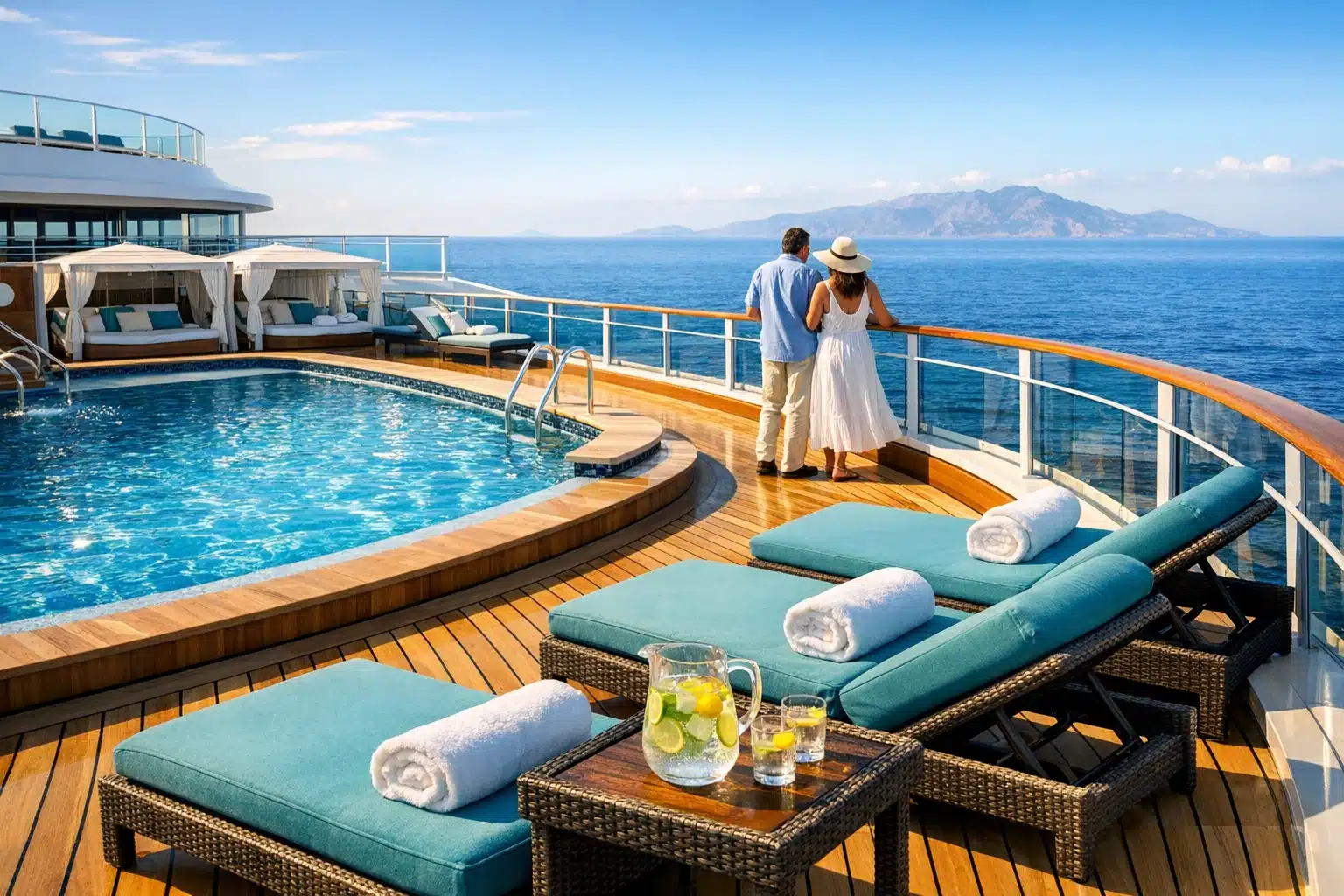
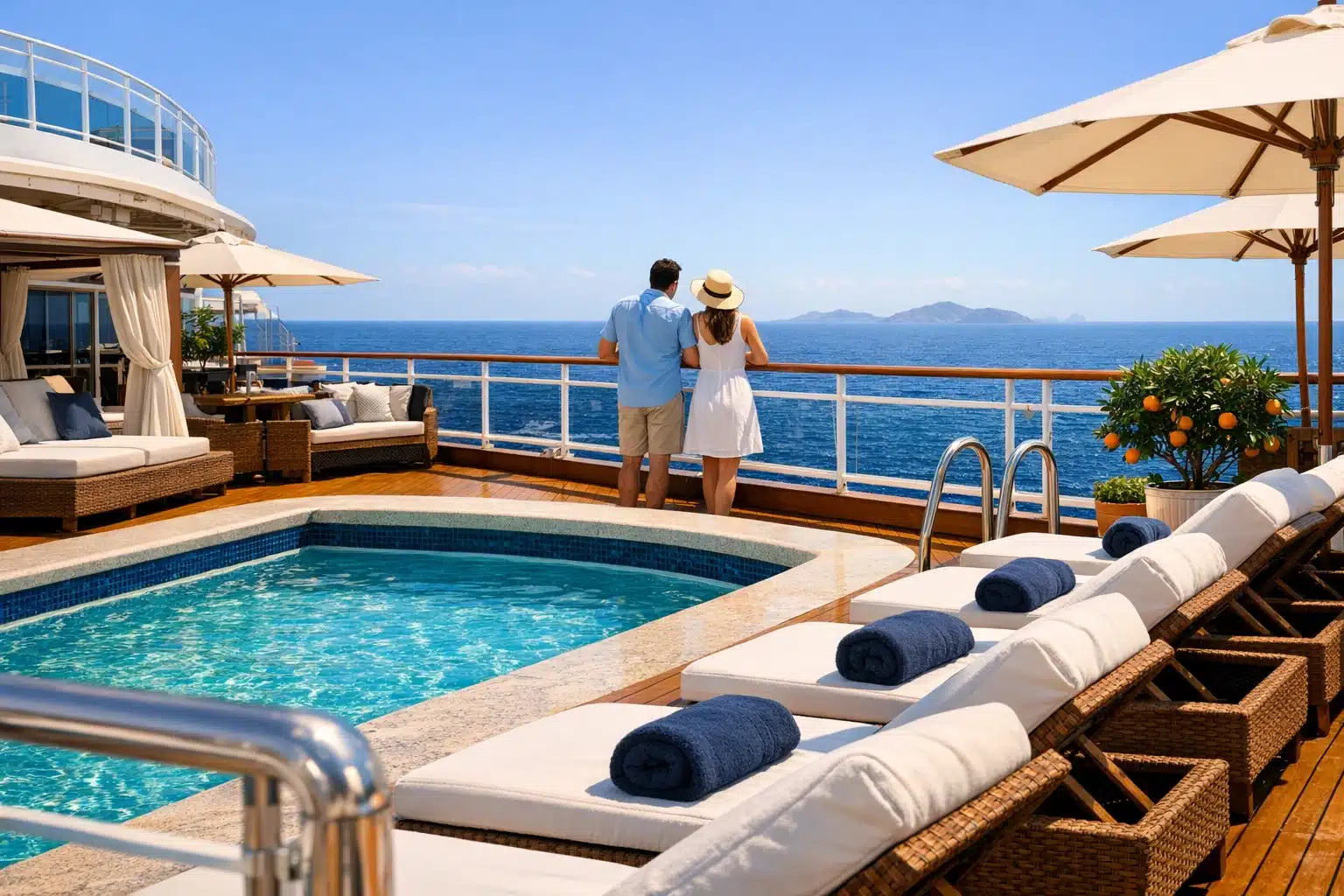
- Pool decks and sun loungers for slow sea days
- Theaters, live music, or small-scale evening shows
- Fitness rooms, spas, and wellness classes
- Kids’ clubs or family activities on larger ships
- Bars, cafes, and observation areas where people naturally gather
The atmosphere depends greatly on ship size and branding. Larger ships provide more facilities, broader dining options, and more entertainment, but they can feel busier at embarkation, meals, and pool areas. Smaller ships may offer a calmer environment and easier logistics, although fewer onboard choices. There is no universal winner here. Travelers who want endless options may prefer the energy of a big ship, while those seeking a more measured pace may value intimacy over spectacle.
Sea days reveal whether the ship fits your style. If you enjoy a quiet deck chair, a book, and time to watch the horizon erase every unnecessary thought, you may value space and atmosphere above flashy attractions. If you travel with children or like constant activity, slides, games, structured entertainment, and multiple dining venues could matter more. Either way, the best cruise experience happens when the ship supports the route rather than competing with it. Ideally, you step ashore curious and return onboard relieved, as if both halves of the holiday are working together.
Budget, Best Season, and How This Cruise Compares with Flying and Island-Hopping
Budgeting for an 11-night Greek islands cruise from Marseille requires looking beyond the headline fare. The advertised price may appear attractive, especially when compared with booking separate hotels, ferries, and flights across several islands. Still, the final cost depends on cabin type, sailing season, drink packages, shore excursions, gratuities, specialty dining, Wi-Fi, and spending in port. A realistic comparison is more useful than a simplistic one.
For many travelers, the greatest financial advantage of cruising is bundling. Your room, transport between destinations, and a large share of meals are wrapped into one booking. That creates predictability, which is helpful for families and for travelers who dislike expense creep. By contrast, an independent trip across Greece may offer more freedom, but it can also bring fluctuating ferry prices, hotel rate spikes, baggage fees, and the occasional expensive last-minute transfer when schedules do not line up neatly.
That said, cruises also come with optional extras that add up quickly. Common budget categories include:
- Travel to Marseille and a pre-cruise hotel night if needed
- Port taxes and service charges, if not included in the quoted fare
- Excursions such as archaeological tours, beach transfers, or guided city walks
- Drinks beyond basic offerings, especially cocktails, wine packages, and specialty coffee
- Internet access, spa treatments, photos, and premium restaurants
Season makes a major difference. Late spring and early autumn often provide the best balance of weather, pricing, and crowd levels. July and August bring classic beach conditions and longer daylight, but also stronger heat and more crowded famous ports such as Santorini and Mykonos. Shoulder-season sailings can feel more comfortable for travelers interested in walking, ruins, museums, and long lunches rather than peak-summer beach intensity.
Compared with flying directly to Greece, cruising from Marseille is slower but more immersive. A flight gets you there quickly, which can be ideal if your main goal is staying on one island for a full week. A cruise, however, offers range. You trade depth in a single destination for breadth across several. Compared with independent island-hopping, a cruise is easier logistically but less flexible. You do not choose your own ferry times, linger an extra day in a favorite harbor, or swap islands spontaneously because the weather looks better elsewhere.
The right choice depends on travel priorities. If you value convenience, inclusive structure, and sampling several destinations in one trip, the cruise often makes strong practical sense. If you want to rent a house, eat in neighborhood tavernas every night, and build your days around local rhythms rather than ship schedules, independent travel may suit you better. Neither is inherently superior; they simply answer different travel desires.
Who This Cruise Suits Best, Smart Planning Tips, and a Final Takeaway
An 11-night Greek islands cruise from Marseille suits travelers who enjoy contrast. One day you may be walking through a sunlit old town, tracing layers of Venetian, Ottoman, or classical history. The next day you are back at sea, watching the wind roughen the water while lunch appears without any reservation drama. This format works especially well for people who like variety but not constant logistical effort. It is also a strong choice for travelers who want to experience Greece as a sequence of introductions before deciding where to return for a longer land-based holiday.
The cruise is often a good fit for:
- First-time visitors to the Greek islands who want a broad overview
- Couples looking for a balanced mix of relaxation and discovery
- Multigenerational groups that need simple logistics and shared accommodation patterns
- Travelers departing from France who want to avoid an extra flight if possible
- Busy professionals who prefer one well-structured booking over many separate reservations
A few planning habits can improve the trip significantly. Arrive in Marseille at least a day early if possible, especially if you are coming from another country. It lowers stress and protects you from delays. Study port timings before booking excursions; a glamorous destination with only a few short hours ashore may not justify an expensive full-day tour. Pack for both heat and movement: breathable clothes, comfortable walking shoes, sun protection, and a light layer for evenings or breezy decks. If one or two ports matter deeply to you, research whether the ship docks directly or uses tenders, and whether major attractions require advance planning.
It also helps to set expectations well. A cruise is not the same as “doing Greece in depth.” It is a curated passage through several places, and each stop is a glimpse, not a residency. Yet glimpses can be powerful. A harbor seen at dawn, a blue-domed church above white stone, the smell of grilled fish near the waterfront, the mild exhaustion of returning to the ship after a hot afternoon ashore, these moments accumulate into something memorable precisely because the journey keeps moving.
Conclusion for prospective travelers: if you want a Mediterranean holiday that combines manageable planning, comfortable pacing, and a wide-angle introduction to the Greek islands, this itinerary deserves serious consideration. Departing from Marseille adds convenience for many travelers in France and nearby regions, while the 11-night format offers enough time for both discovery and rest. Choose it if you value simplicity, scenic progression, and the pleasure of unpacking once. Skip it only if your main goal is deep immersion in one island community, because this kind of voyage is built for range, rhythm, and a steadily unfolding sense of place.