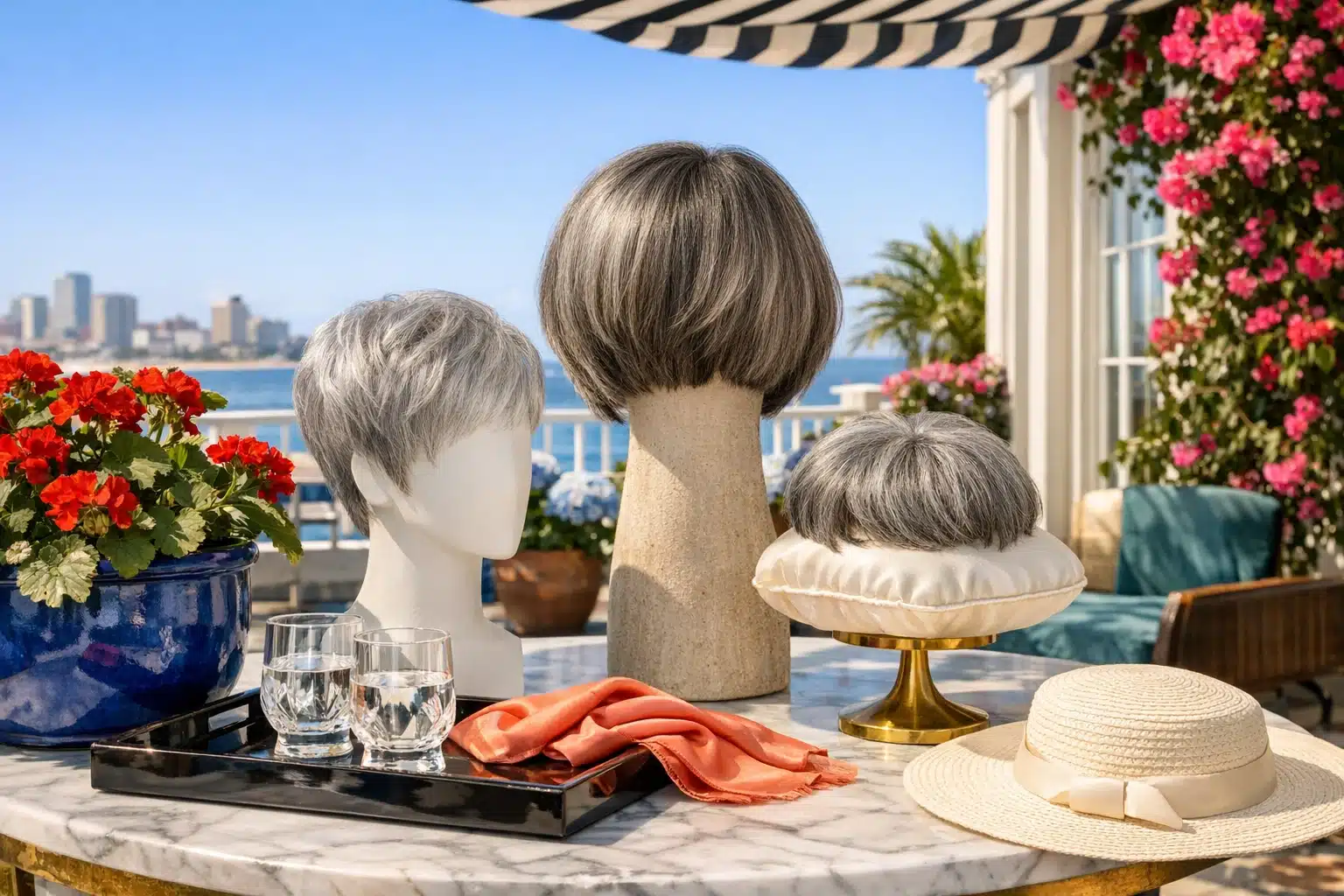
 Artificially generated image
 A Guide to Top-Rated Wigs and Toppers for Senior Women
Introduction and Article Outline
Finding the right wig or topper later in life is rarely about vanity alone; it is often about comfort, self-recognition, and the freedom to face the day without fuss. Hair can change after menopause, medication use, illness, or simple aging, so the smartest choice balances realism with easy wear. This guide looks at highly rated options through the lens that matters most to senior women: softness, lightness, secure fit, flattering color, and manageable upkeep.
For many women, hair is part memory and part routine. It is the way a familiar silhouette appears in the mirror, the frame around the face in family photos, and sometimes the finishing touch that makes an ordinary Tuesday feel pulled together. As women age, however, hair often becomes finer, drier, less dense, or slower to grow. Clinical hair specialists regularly note that female pattern thinning becomes more common after menopause, and many women also notice changes related to health conditions, stress, or medication. That does not mean style has to shrink; it simply means the criteria for a good hairpiece become more practical and more personal.
When shoppers search for top-rated wigs and toppers, they are not only looking for glamour shots or dramatic before-and-after images. They are usually looking for solutions that work in real homes, under real weather, and during long real days. A highly rated style tends to succeed because it is comfortable for hours, believable in daylight, easy to maintain, and suitable for mature features. It also helps when color choices include silver, rooted gray, warm white, soft brunette, and blended tones that do not look flat or overly shiny.
This article is organized in five parts:
• why the subject matters and how to think about ratings
• the features that separate a comfortable piece from an expensive disappointment
• wig styles and constructions that often suit senior women particularly well
• topper options for light, moderate, and more visible thinning
• practical advice on buying, fitting, caring for, and wearing these pieces with confidence
The goal is not to declare one universal winner. Instead, it is to explain which categories tend to perform best, who they suit, and where the trade-offs lie. Sometimes the best choice is a breezy synthetic pixie. Sometimes it is a hand-tied bob with a lace front. Sometimes, especially when a woman still has enough natural hair around the sides and back, a topper does the job with less cost and less coverage. The rest of this guide will help make those decisions clearer, calmer, and more grounded in everyday life.
What Makes a Wig or Topper Truly Top-Rated?
A top-rated wig or topper earns its reputation through a blend of comfort, realism, durability, and ease of use. Ratings from customers are helpful, but they mean more when you know what people are actually praising. A five-star review from someone who wears a wig once a month to dinner is not the same as praise from a daily wearer with a sensitive scalp. Senior women often benefit from looking past marketing language and focusing on the structure of the piece itself.
The first major comparison is fiber. Synthetic hair remains popular because it is relatively affordable, light in weight, and often keeps its style after washing. That matters if you want a bob to stay a bob or a curled style to stay softly waved without daily restyling. Heat-friendly synthetic offers more flexibility but can require extra care, because repeated heat may shorten the life of the fiber. Human hair usually offers the most natural movement and can be styled more freely, but it tends to cost significantly more and needs more routine work. In many retail ranges, synthetic wigs often begin around the lower hundreds, while premium hand-tied human hair styles can move into much higher price brackets.
Construction matters just as much as fiber. Here are the features most often linked with strong long-term satisfaction:
• lace front for a softer, more natural-looking hairline
• monofilament top for the look of hair growing from the scalp
• hand-tied cap for flexibility and reduced bulk
• open wefting for ventilation and lighter airflow
• adjustable straps and secure ear tabs for fit
Density is another overlooked factor. Mature faces are often flattered by moderate density rather than very thick, dramatic volume. Hair that is too full can overwhelm delicate features or appear less believable beside fine eyebrows and softer skin texture. Color also plays a large role. The most convincing shades usually contain dimension, such as rooted colors, lowlights, or gray blends, rather than a single flat tone. A softly mixed silver can look far more natural than a solid white that lacks depth.
Finally, a top-rated piece should fit your routine, not just your reflection. Ask simple but revealing questions. Can you put it on in a few minutes? Will it stay comfortable through errands, appointments, and lunch with friends? Does it require special styling tools every morning? A beautiful piece that stays in a box is not top-rated for your life, no matter how pretty it looked online. The best choice is the one that quietly solves problems while letting you get on with your day.
Wig Styles and Constructions That Usually Work Best for Senior Women
Among senior women, the most consistently well-reviewed wigs are usually those that combine flattering shape with low daily effort. A short pixie remains one of the strongest performers in this group. It is light, easy to wear, and often particularly comfortable in warm weather. Because the fibers are shorter, they are less likely to tangle at the collar, and many women appreciate the tidy profile around the neck and ears. A pixie can also look elegant rather than severe when it includes soft texture at the crown and gentle movement around the face.
The classic bob is another standout category. Chin-length or slightly longer bobs often strike a useful balance between polish and practicality. They frame the face cleanly, work well with glasses, and can be found in straight, softly curved, or lightly layered versions. A lace-front bob with a monofilament top often photographs beautifully because it gives a believable hairline and natural parting. The trade-off is that longer front pieces may require a little more positioning, and collar-length styles can show friction sooner if worn daily under scarves or coats.
Layered shags and softly feathered cuts are especially appealing for women who want movement without excessive upkeep. These wigs usually disguise fiber placement well, which makes them forgiving for first-time wearers. They can also create a youthful lift around the cheekbones without depending on heavy teasing or oversized volume. Shoulder-length wigs sit in a different category: they offer versatility and softness, but they do ask more from the wearer in terms of detangling, storage, and maintenance. For some women, that is a welcome trade. For others, it becomes a chore by week two.
Highly rated wig categories for mature wearers often include:
• short textured pixies for maximum ease
• chin-length bobs for structure and everyday polish
• layered shags for softness and built-in movement
• softly waved mid-length styles for women who enjoy more styling variety
• petite-size or petite-average caps for smaller head measurements
Color selection can elevate any of these silhouettes. Soft gray blends, silver rooted shades, ash blonde with lowlights, and warm brunettes with dimension tend to look more natural than solid, uniform color blocks. Many senior women also prefer a slightly lighter shade around the face because it reflects light more gently. If your priority is realistic appearance in close conversation, choose cap construction first and style second. If your priority is speed, choose a forgiving cut with minimal length. In short, the best wig is not the one with the most hair; it is the one that harmonizes with your features, your routine, and the version of yourself you still recognize with pleasure.
Toppers That Add Coverage Without Taking Over Your Routine
Toppers are often the quiet heroes of the hairpiece world. For senior women who still have enough natural hair along the sides and back, a topper can add coverage exactly where thinning shows most: at the part line, crown, or front. Instead of replacing all of the hair, it supplements what is already there. That can make a topper feel lighter, cooler, and less overwhelming than a full wig, especially for women who are new to alternative hair.
The first thing to understand is base size. Smaller toppers, often around 2 by 5 or 3 by 5 inches, are typically used to disguise a widening part or early crown thinning. Mid-size toppers, such as 5 by 5 or 6 by 6, can cover broader diffuse loss and usually provide more volume. Larger bases, sometimes 7 by 8 or bigger, are better for more advanced thinning across the top. Choosing too small a base is a common mistake. If the piece barely covers the area of concern, it can be harder to blend and may place tension on fragile anchor hair.
Attachment method matters as much as coverage. Many toppers use pressure-sensitive clips, which are simple and secure for women with enough healthy bio hair. Yet clips are not ideal for everyone. If the remaining hair is very fine or the scalp is tender, clips can feel uncomfortable over time. In that case, a consultation with a wig specialist can help identify gentler options, including alternative placements, different base designs, or the possibility that a lightweight wig may actually be the easier route.
Well-reviewed topper categories often include:
• part-line toppers for subtle early thinning
• crown toppers for diffuse volume loss
• front-focused pieces that soften a sparse hairline
• topper-with-bangs designs for women who want easy blending
• human hair toppers for those who enjoy heat styling and color flexibility
Fiber choice follows the same logic as wigs. Synthetic toppers usually hold their style and require less daily effort, while human hair toppers offer the most styling freedom at a higher cost and with more maintenance. Density is especially important here. A topper that is too thick can sit on fine natural hair like an obvious extra layer. The best ones echo the wearer’s existing texture and volume. Think of a topper less as a transformation and more as a careful finishing brushstroke. When the size, density, and color are chosen well, people often notice that you look fresher or more put together without immediately identifying why. For many senior women, that subtlety is not a compromise; it is exactly the appeal.
Conclusion: How to Choose With Confidence and Keep It Looking Good
Buying a wig or topper becomes much easier when you begin with the right question. Instead of asking, “What is the most popular piece?” ask, “What problem am I trying to solve?” If the concern is thinning only at the crown, a topper may be more comfortable, lower in cost, and easier to blend. If the concern includes overall sparseness, patchy coverage, or the desire for a ready-to-wear hairstyle, a wig often makes more sense. Clarity at this stage saves time, money, and frustration.
Before purchasing, measure carefully and think honestly about your routine. Head circumference, front-to-nape length, and ear-to-ear measurements matter for wigs, while toppers require a realistic look at the size of the thinning area and the amount of hair available for attachment. Color matching should happen in natural light whenever possible. A shade that looks rich indoors can appear too dark outside, while a cool gray may read far more natural than a bright silver under daylight. If you wear glasses, test how the ear tabs and side volume feel beside the frames. Small practical details often determine whether a piece becomes a favorite or a forgotten expense.
Good maintenance protects both appearance and value. A few habits make a visible difference:
• store the piece on a stand or in its box so the shape is preserved
• use products formulated for wigs or alternative hair
• wash after several wears or when buildup becomes noticeable
• detangle gently, starting at the ends on longer styles
• keep friction in mind, especially at the nape, collar, or shoulders
There is also wisdom in starting simple. Many first-time buyers do best with a moderate density, a familiar color family, and a style close to what they have worn before. Once comfort grows, experimentation becomes easier. An ultra-glamorous style can be fun, but confidence usually begins with recognition. The mirror should not feel like a costume rack; it should feel like home.
For senior women, the best wig or topper is the one that supports daily life without demanding constant attention. Look for comfort first, realism second, and versatility third. A well-chosen piece can soften the stress of hair loss, shorten the getting-ready routine, and restore a sense of ease that has nothing to do with chasing youth. It is not about becoming someone new. It is about meeting yourself each morning with a little more assurance and a little less effort.