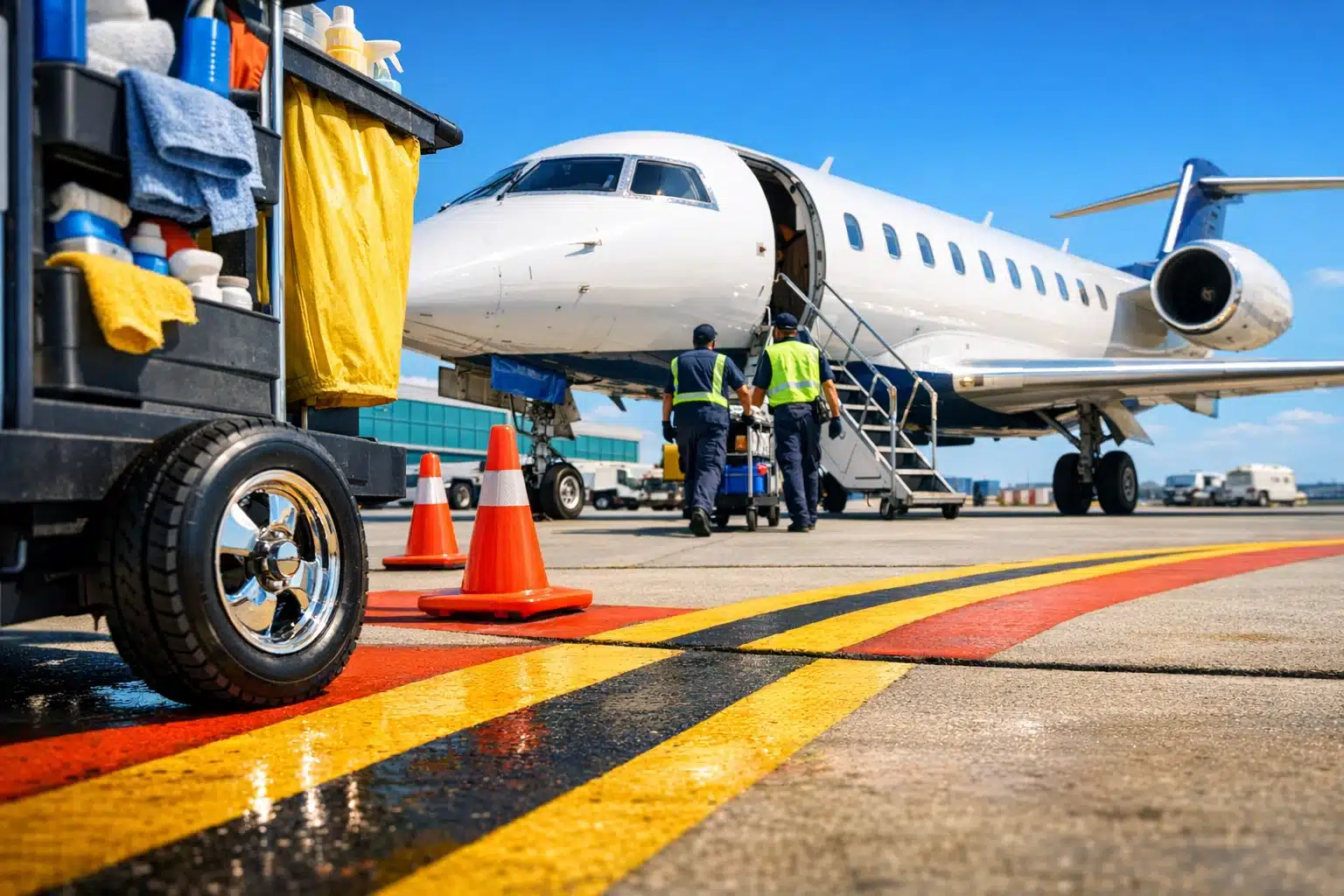
A Guide to Airplane Cleanup Crew Careers
When a plane lands, the spotlight usually follows pilots, cabin crews, or the stream of passengers rushing to baggage claim. Yet before that aircraft can greet its next set of travelers, a cleanup crew steps in to reset the cabin with speed, care, and precision. Their work supports hygiene, safety, turnaround times, and the first impression an airline gives, making this role one of the quiet engines that keeps modern air travel moving.
If you are exploring airport jobs, this path offers a direct route into aviation for people who prefer active work over desk routines. The outline below maps the article from the basics of the role to duties, qualifications, working conditions, and future opportunities.
- What airplane cleanup crews do and why their work matters
- What a shift looks like, from boarding gate access to final cabin check
- Skills, hiring requirements, and training expectations
- Pay, scheduling patterns, benefits, and common challenges
- Career growth, long-term options, and whether the role fits your goals
1. What Airplane Cleanup Crews Do and Why the Role Matters
Airplane cleanup crew members are responsible for restoring aircraft cabins to a clean, usable, and passenger-ready condition. That sounds simple until you picture the environment: dozens or hundreds of travelers leave behind food wrappers, drink spills, newspapers, blankets, fingerprints, overflowing seat pockets, and sometimes more demanding sanitation issues in lavatories or aisles. In the narrow window between one flight and the next, the cabin must move from lived-in to orderly again. It is less like casual housekeeping and more like a carefully timed pit stop.
The importance of the role reaches well beyond appearance. Clean cabins support passenger comfort, reduce unpleasant odors, help limit the spread of germs on high-touch surfaces, and contribute to safety by removing debris that could block aisles, seat mechanisms, or emergency pathways. Airlines also rely on cleanup teams to protect turnaround performance. At busy airports, domestic aircraft may be scheduled to depart again within 30 to 60 minutes after arrival, so every minute counts. If the cabin is not ready on time, the delay can ripple across gates, crews, and connecting passengers.
There are usually two broad styles of aircraft cleaning:
- Turnaround cleaning, which focuses on speed and visible readiness between flights
- Deep or overnight cleaning, which allows more detailed work on carpets, tray tables, galley areas, and hard-to-reach surfaces
The job can also differ by aircraft size. A regional jet with fewer seats may need a compact team and a fast pass through the cabin, while a wide-body international aircraft demands more time, more workers, and more coordination. Lavatory servicing, seat-back screen wiping, blanket collection, and galley trash removal become larger tasks when the plane itself is larger.
In many ways, cleanup crews shape the first silent conversation between airline and passenger. Travelers notice sticky tray tables, unemptied seat pockets, and stained armrests immediately. They also notice when the cabin smells fresh and feels cared for. That difference may not earn applause, but it affects brand perception, customer reviews, and repeat business. For anyone considering the job, it helps to understand that this is not “just cleaning.” It is operational support, customer experience work, and time-sensitive teamwork wrapped into one practical aviation role.
2. A Typical Shift: Daily Tasks, Tools, Pace, and the Airport Environment
A typical shift begins long before a worker reaches an aircraft door. Employees usually check in, confirm assignments, review gate information, and move through airport security or staff access areas using an airport badge. From there, the rhythm of the day depends on flight schedules, weather disruptions, aircraft type, and staffing levels. Some shifts feel like a steady drumbeat. Others feel like a stopwatch with wings.
Once a plane arrives and passengers deplane, the cleanup team boards with equipment and starts a tightly organized routine. Many crews divide the cabin into zones so the work can happen quickly without confusion. One group may collect trash from seats and overhead spaces, another may wipe tray tables and armrests, and another may focus on lavatories or galley areas. Efficiency matters because the aircraft may already be on a countdown to refueling, catering, boarding, and pushback.
Common tasks often include:
- Removing trash from seats, aisles, bins, and seat pockets
- Wiping tray tables, armrests, seat belts, and touch points
- Cleaning lavatories, mirrors, sinks, and flooring
- Vacuuming visible debris or spot-cleaning carpets
- Restocking paper goods or basic supplies where required
- Reporting damage, spills, sharp objects, or forgotten items
The tools are practical rather than glamorous: gloves, approved cleaning chemicals, cloths, mops, compact vacuums, trash bags, grabber tools, and sometimes carts stocked for rapid turnaround work. Employers generally train workers to use products correctly because aircraft interiors contain specialized materials. A cleaner that is fine in a hotel may not be suitable for an airplane surface, electronic screen, or sealed cabin space.
The environment itself can be physically demanding. Workers spend hours standing, bending, lifting bags of waste, reaching overhead compartments, and moving quickly through narrow rows. Noise levels may rise near the ramp, temperatures can vary depending on the season and aircraft conditions, and overnight shifts may test stamina. Even so, many people enjoy the routine because it is active, visible, and tangible. At the end of each assignment, the result is right in front of you: a cabin transformed from cluttered to composed.
There is also an element of unpredictability that makes the role feel alive. A spilled drink takes a minute. A heavily used long-haul cabin can take much longer. A weather delay can compress the entire schedule. On some days, the job resembles a relay race. On others, it is careful detail work done while the airport hums in the background like a giant machine that never truly sleeps.
3. Skills, Qualifications, Hiring Requirements, and Training
One reason airplane cleanup work attracts a wide range of applicants is that it is often accessible without a specialized degree. Many employers do not require prior aviation experience, and some positions are open to candidates with only a basic educational background. What matters more is reliability, physical readiness, attention to detail, and the ability to follow procedures in a secure environment. Airports are highly regulated spaces, so trust and consistency matter as much as speed.
Most employers look for a mix of practical and professional qualities. These often include punctuality, the ability to work on your feet for long periods, comfort with lifting and repetitive movement, and willingness to work nontraditional hours. Airlines and contractors may run operations early in the morning, late at night, on weekends, and during holidays. Flights do not pause because it is Saturday, and the work does not disappear because the sun has gone down.
Typical requirements may include:
- Legal authorization to work in the country
- Background screening and identity verification
- Eligibility for an airport security badge or airside pass
- Basic communication skills for following instructions and reporting issues
- Ability to meet physical demands such as bending, lifting, and walking quickly
Training usually happens on the job. New hires often learn safety procedures, chemical handling rules, waste disposal practices, aircraft-specific cleaning standards, and how to identify hazards such as broken glass, biohazard materials, or damaged cabin equipment. Some employers provide instruction on bloodborne pathogen procedures, personal protective equipment, emergency reporting, and the chain of communication when an item is found onboard. Lost property handling is especially important, since forgotten passports, phones, medication, and wallets are not rare in fast-moving airport operations.
Soft skills deserve more attention than people sometimes expect. Cleanup crews work around supervisors, gate staff, flight attendants, maintenance workers, caterers, and baggage teams. That means clear communication helps prevent mistakes and delays. If a seat is broken, if a lavatory leak is discovered, or if a suspicious item is found, the worker must know whom to tell and how quickly to escalate the issue.
For job seekers, the hiring process can move faster if you show up prepared. A simple, clean résumé that highlights attendance, warehouse work, janitorial experience, hospitality service, or any job requiring pace and reliability can be useful. Interviewers often value candidates who understand the schedule reality and do not romanticize the airport. The strongest applicants tend to say, in effect, “I know this is hard work, I know timing matters, and I can be counted on.” In aviation support roles, that sentence carries real weight.
4. Pay, Scheduling, Benefits, and the Real Pros and Cons of the Job
Compensation for airplane cleanup crew jobs varies widely by country, airport size, union presence, employer type, and shift timing. In many markets, these roles start near local entry-level wage ranges, then increase through experience, night differentials, overtime, seniority systems, or collective bargaining agreements. Some workers are hired directly by an airline, while others are employed by ground service contractors. That difference can affect pay structure, benefits, training resources, and promotion opportunities.
Scheduling is one of the biggest lifestyle factors to understand before applying. Airports operate around the clock, and cleaning teams are often placed where flight demand is highest rather than where a typical office schedule would be most convenient. A worker may start before dawn, finish after midnight, or rotate through changing rosters. Split shifts and overtime can happen during peak travel seasons, irregular operations, storms, or holiday surges.
Potential advantages of the job include:
- A relatively accessible entry point into the aviation industry
- Active work for people who dislike sitting all day
- Experience in a large operational environment with clear procedures
- Possible shift differentials, overtime, or transportation-related benefits
- Pathways into team lead, supervisory, or other airport roles
Common challenges include:
- Physical fatigue from repetitive, fast-paced movement
- Exposure to late nights, weekends, and holiday schedules
- Pressure during tight turnarounds and delay-heavy periods
- Work in noisy, temperature-variable, or high-security environments
- The fact that the role is essential but not always publicly recognized
Comparisons can help put the career in perspective. Relative to hotel housekeeping, airplane cleaning is often faster, more tightly timed, and more security-sensitive. Compared with ramp handling, it may involve less exposure to heavy machinery but more confined indoor work in narrow spaces. Compared with office-based entry-level jobs, it can be more physically demanding, yet some people find it more satisfying because every task produces an immediate result.
Benefits depend on the employer. Some positions include paid training, uniforms, health coverage, retirement plans, holiday pay, or employee travel perks. Others, especially contract roles, may offer a more limited package. Asking informed questions during the hiring process matters. A candidate should understand whether the job is full-time or part-time, whether shifts are fixed or variable, whether overtime is common, and whether the employer provides advancement training.
The honest picture is this: airplane cleanup work is not effortless, but it can be steady, practical, and surprisingly strategic for someone trying to enter airport operations. For workers who value visible results, teamwork, and a dynamic setting, the trade-off can make sense. For those seeking highly predictable hours and low physical strain, another path may be more suitable.
5. Career Growth, Long-Term Options, and Final Takeaways for Job Seekers
One of the smartest reasons to consider airplane cleanup work is that it can serve as more than a standalone job. In a large airport, one role often leads to another because employers value people who already understand badge rules, ramp safety, scheduling systems, and the tempo of aviation operations. A dependable worker who learns quickly can move into lead positions, quality inspection, cabin services coordination, training, or broader ground operations support. What begins with a trash bag and a checklist can, over time, open the door to a long airport career.
Possible next steps may include:
- Lead cleaner or shift coordinator
- Cabin appearance inspector or quality control role
- Trainer for new hires and safety procedures
- Operations support or dispatch-adjacent administrative work
- Transfers into ramp service, customer service, facilities, or airline station operations
Advancement often depends on attendance, safety record, communication style, and willingness to take responsibility during busy periods. Supervisors tend to notice workers who do not panic under pressure, who document issues properly, and who can help newer teammates without slowing the operation. In other words, technical skill matters, but dependability is often the real currency.
If you are trying to decide whether this career fits you, ask practical questions rather than idealized ones. Do you prefer movement over sitting still? Can you handle structured rules and strict timing? Are you comfortable working when many other people are off? Do you like finishing a shift with clear evidence that your effort changed something? If the answer is yes, this role may feel more rewarding than its job title suggests.
There is also value in understanding what success looks like on day one. Arrive early, wear the required gear correctly, listen carefully during briefings, and learn the sequence of tasks instead of improvising. Good workers build speed after they build accuracy. In aviation, shortcuts that ignore procedure can create bigger problems than slow work.
For readers interested in entering the airport workforce, airplane cleanup crew careers offer a realistic path with immediate relevance. The job teaches discipline, teamwork, time awareness, and operational habits that transfer well across transportation settings. It may not be the most visible role on the airfield, but it is one of the roles that keeps everything else on schedule. If you want honest work inside a complex industry, this is a career worth exploring with open eyes and steady expectations.