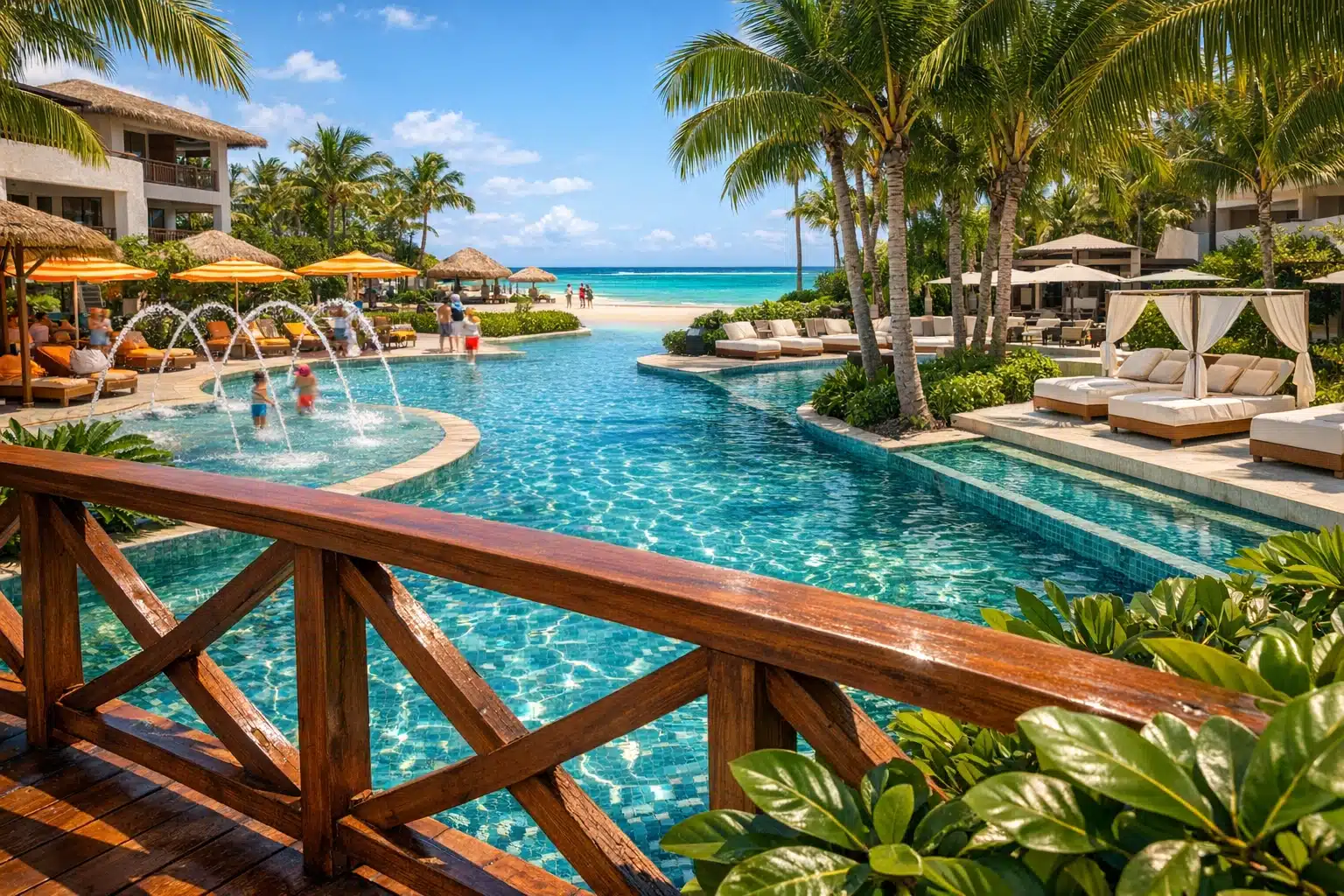
 Artificially generated image
 A Guide to All-Inclusive Resorts in Punta Cana
Punta Cana has become shorthand for the kind of trip many travelers want most: warm water, long beaches, simple logistics, and a resort bill that is mostly settled before takeoff. That appeal matters because not all all-inclusive vacations are built the same. In this corner of the Dominican Republic, small differences in location, dining quality, beach conditions, and resort style can shape the entire stay, so choosing well is less about chasing labels and more about matching the property to the traveler.
Outline: This guide begins with why Punta Cana works so well for the all-inclusive model, then compares the main resort categories, explains what rates usually cover and what often costs extra, reviews the key resort areas and travel seasons, and closes with practical advice for couples, families, groups, and first-time visitors.
Why Punta Cana Became an All-Inclusive Powerhouse
Punta Cana did not become a major resort destination by accident. It sits on the eastern edge of the Dominican Republic, where long stretches of sand, easy beach access, and a tourism-focused infrastructure created ideal conditions for large resort developments. For many international visitors, the convenience starts before the vacation even begins. Punta Cana International Airport is one of the Caribbean’s main gateways, which means many travelers can arrive on direct flights instead of stitching together a complicated route through several islands. That accessibility matters, especially for families with children, wedding groups, and travelers who value simplicity over airport roulette.
The all-inclusive model also fits Punta Cana unusually well. Resorts here are often designed as self-contained environments with multiple pools, restaurants, bars, entertainment venues, spas, and organized activities. In a destination where many visitors want to spend most of their time by the beach or pool, the formula is efficient. You unpack once, settle into a rhythm, and the days begin to flow: breakfast under a ceiling fan, a walk across warm sand, a lazy afternoon shaded by palms, then dinner in a different restaurant without ever needing to negotiate transport. That kind of predictability is a major part of the appeal, and it helps explain why Punta Cana remains a first choice for people who want a Caribbean vacation without constant planning.
Another reason the area stands out is value. Compared with some other tropical destinations, Punta Cana often offers more rooms, more amenities, and more package options at a broader range of price points. A traveler can find everything from sprawling mid-range resorts with water parks to premium beachfront properties with butler service and adults-only wings. That variety supports different budgets without turning the destination into a one-size-fits-all package.
Several conditions make Punta Cana especially strong for all-inclusive travel:
- Direct air access from many North American and European cities
- A large inventory of resorts across multiple price tiers
- Wide beaches and warm weather that support year-round demand
- Packages that appeal to couples, families, and groups alike
Compared with urban Caribbean breaks or island-hopping itineraries, Punta Cana is less about movement and more about immersion. It is built for travelers who want their vacation to feel easy from day one. That is not a flaw; it is the product. When expectations are set correctly, Punta Cana delivers exactly what many guests are searching for: comfort, sunshine, and a low-friction escape.
Understanding the Main Types of All-Inclusive Resorts
One of the biggest mistakes travelers make is treating all-inclusive resorts as interchangeable. In Punta Cana, they are not. Two resorts may share a five-star marketing label and still deliver very different experiences. The key is to understand the categories that shape the stay. Family-friendly resorts, adults-only properties, luxury compounds, and value-driven mega-resorts all serve different needs, and a smart choice starts with honesty about the kind of trip you actually want.
Family-oriented resorts are built around convenience and motion. These properties often feature kids’ clubs, splash zones, scheduled entertainment, casual dining options, and large room inventories that can absorb school-holiday demand. For parents, the biggest advantage is not just child-friendly programming; it is the removal of daily friction. Meals are easy, snacks are everywhere, and there is usually a pool option for every age group. The trade-off is energy. These resorts can be lively, noisy, and crowded at peak times, especially near buffets and main pools.
Adults-only resorts aim for a different mood. They are usually quieter, more design-conscious, and more focused on couples, friend groups, and honeymooners. You are more likely to find swim-up suites, spa circuits, cocktail bars with a calmer atmosphere, and restaurants that lean harder into ambiance. That does not automatically mean better food or better service, but it often means a more consistent sense of escape. If your dream vacation includes a book, a daybed, and a horizon uninterrupted by inflatable toys, adults-only is often the better lane.
Luxury all-inclusives raise the ceiling on service and detail. These resorts may offer larger suites, improved room service, stronger beverage programs, better-maintained beach areas, and more personalized support. In many cases, the upgrade is felt less in flashy extras than in smoother operations: shorter waits, better reservation management, more thoughtful housekeeping, and dining that feels less transactional. By contrast, value-focused resorts often win on price and activity volume, but they may rely more heavily on buffets, large crowds, and upselling for premium experiences.
A useful way to compare resort styles is to think in priorities:
- Choose family resorts for convenience, child-friendly features, and a busy social atmosphere.
- Choose adults-only resorts for peace, romance, and a slower daily rhythm.
- Choose luxury properties for service, dining, and refined design.
- Choose budget-friendly large resorts for strong value and plenty of on-site activity.
There is no universally best option, only the best fit. A honeymoon couple may dislike a resort that a family of five considers perfect, while a multigenerational group may love a large property with something for everyone. Punta Cana rewards travelers who look past glossy aerial photos and focus instead on mood, audience, and the practical details that shape each day.
What All-Inclusive Usually Covers and What Often Costs Extra
The phrase all-inclusive sounds absolute, but in practice it works more like a tiered promise. Most Punta Cana resorts include accommodation, standard meals, house beverages, pool access, beach loungers, basic entertainment, and a rotating schedule of activities. Many also include non-motorized water sports such as kayaks or paddleboards, a fitness center, and evening shows. For travelers who mainly want to eat, swim, rest, and repeat, that package can represent very good value. Yet the fine print still matters, because the cost of a vacation can shift quickly once premium add-ons enter the picture.
Dining is one of the most misunderstood parts of the all-inclusive concept. Buffets are almost always included, and several à la carte restaurants usually are too, but access may depend on reservations, dress codes, or length of stay. A resort may advertise six or eight restaurants while making only a few easy to book at popular hours. Premium wines, specialty seafood nights, private beach dinners, or chef’s table experiences are often separate charges. None of this makes a resort dishonest, but it does mean the most attractive brochure image is not always the most relevant detail.
Drinks follow a similar pattern. Standard cocktails, beer, and local spirits are commonly included, while top-shelf labels, certain wines, and upgraded minibar items may fall into a club or premium category. Room location can matter too. Entry-level rooms may be perfectly comfortable, but upgraded categories sometimes include better views, quieter zones, private check-in, exclusive pools, or access to a lounge with higher-end beverages and snacks. The value of those upgrades depends on your habits. If you spend all day on the beach and sleep soundly anywhere, they may not matter much. If you care about a peaceful wing, faster service, or a more polished food offering, they can be worth considering.
Common extras at Punta Cana all-inclusives include:
- Airport transfers, unless bundled in a package
- Spa treatments and hydrotherapy access
- Golf fees and equipment rentals
- Motorized water sports and boat trips
- Excursions such as island tours, cultural day trips, or adventure parks
- Private cabanas, upgraded wine lists, and premium dining experiences
The smartest approach is to read the resort’s inclusions page the way you would read a contract before signing it. Look for reservation rules, minibar policies, beach service details, and whether room service is included around the clock or only during limited hours. When comparing rates, consider the total cost of the stay rather than the headline price. A cheaper resort that charges for transfers, better dining, and most activities may end up costing more than a property with a higher nightly rate but fewer surprises. In Punta Cana, value is rarely about the lowest sticker price; it is about how closely the package matches the vacation you want to have.
Choosing the Right Area and the Best Time to Go
Punta Cana is often spoken about as if it were one continuous beach, but the experience can change noticeably depending on where your resort is located. Bávaro is the area many travelers picture first. It is well known, busy, and lined with a large concentration of resorts. The advantages are clear: broad beach access, plenty of excursion pickups, and a central feel that suits travelers who want options nearby. The atmosphere can be energetic, which appeals to many first-time visitors and group travelers.
Uvero Alto, by contrast, tends to feel more removed. Resorts there are often spread out along a quieter stretch of coast, and the setting can feel more secluded. That added distance creates a calmer mood, but it may also mean longer transfer times from the airport and fewer off-resort conveniences. Cap Cana usually occupies the more polished, upscale end of the spectrum, with a planned feel, refined properties, and easy access to the airport area. Cabeza de Toro can attract travelers looking for gentler water conditions in certain pockets, while areas closer to Macao may feel less built-up and slightly wilder at the edges. None of these zones is universally superior; each creates a different version of Punta Cana.
Season matters just as much as geography. The most popular months are generally from December through April, when many travelers seek dry, sunny weather and a break from northern winters. Rates are usually higher during this period, and the best room categories can sell out early. Shoulder months often offer a useful balance of lower prices and good conditions, though brief showers can be more common. Late summer and early autumn may bring attractive deals, but also more heat, humidity, and a higher chance of weather disruptions during the Atlantic hurricane season.
When timing a trip, keep these practical points in mind:
- High season often means the best weather, the highest prices, and the busiest resorts.
- Shoulder periods can deliver stronger value with fewer crowds.
- Seaweed conditions vary by beach, season, and weather patterns, so recent traveler reviews are more useful than old assumptions.
- Families should compare school-holiday dates with resort occupancy before booking.
If beach quality is your top priority, zoom in on the exact resort rather than the broader destination label. Two neighboring properties can have different beach maintenance standards, wave exposure, and shoreline width. If nightlife is important, a central area may suit you better. If you want silence broken only by wind through the palms and the soft percussion of surf after dark, a more remote resort can feel like a better match. Punta Cana rewards specific choices, not generic ones.
Final Advice for Couples, Families, Groups, and First-Time Visitors
If there is one guiding principle for booking an all-inclusive resort in Punta Cana, it is this: do not ask which resort is best in the abstract; ask which resort is best for your kind of trip. The answer changes depending on who is traveling, how much time you will spend in the room, whether dining matters deeply to you, and how much structure you want around each day. A romantic anniversary escape, a multigenerational reunion, and a spring break with friends may all belong in Punta Cana, but they do not belong in the same property.
Couples should usually begin with atmosphere. Look for adults-only resorts or mixed resorts with quiet club-level areas if privacy and calm matter more than constant entertainment. Families should focus on room configuration, shade at the pools, children’s programming, and whether dining works at realistic hours for younger kids. Groups often benefit from larger resorts that have multiple bars, varied restaurants, and enough activity to keep different personalities occupied without forcing everyone into the same schedule. First-time visitors, meanwhile, are often happiest with a well-reviewed, centrally located property that offers strong beach access and straightforward service rather than a resort that promises every luxury trend at once.
Before booking, compare recent reviews with a practical eye. Look for patterns rather than dramatic one-off complaints. If dozens of guests mention slow restaurant reservations, seaweed issues, or noisy hallways, pay attention. If reviews consistently praise beach upkeep, staff warmth, and room cleanliness, that is useful information too. Also consider package structure. Flights, transfers, insurance, and room category upgrades can change the real cost of a supposedly affordable deal. A cheaper base rate is not necessarily the smarter purchase.
A few final habits can make the trip smoother:
- Book earlier if you are traveling during winter or major holidays.
- Pack light but include sun protection, swimwear rotation, and one or two dinner-ready outfits.
- Reserve specialty restaurants soon after arrival if the resort uses a booking system.
- Leave room in the schedule for rest instead of trying to consume every activity on offer.
For the target audience most drawn to Punta Cana, the destination works best when expectations are clear. It is ideal for travelers who want beach time, easy budgeting, and a contained vacation rhythm with minimal logistical stress. It may be less satisfying for people who crave constant independent exploration or highly local, city-style dining every night. Yet for sun seekers, busy parents, honeymooners, and groups that want convenience without sacrificing scenery, Punta Cana remains a reliable choice. Pick the right resort, read the details, and the trip can unfold exactly as hoped: not as a fantasy sold by a brochure, but as a genuinely restful holiday that feels easy from arrival to departure.