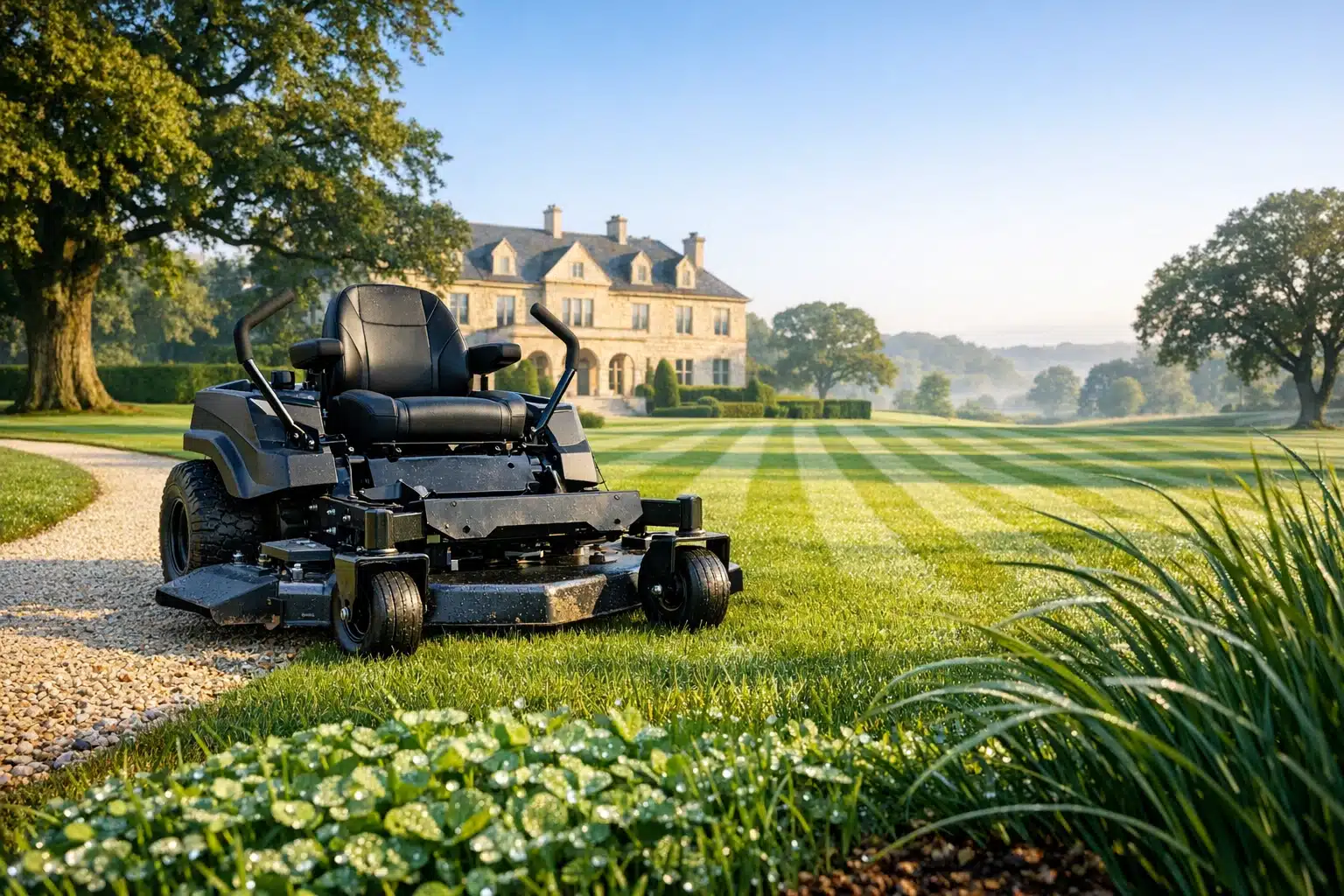
A Guide to Bank-Owned Lawn Mowers: What Buyers Should Know
Introduction
Bank-owned lawn mowers sit in an unusual corner of the equipment market, where repossessions, lease returns, and recovered collateral create deals that many buyers overlook. For homeowners and small contractors, that can mean access to stronger machines without paying full showroom prices. The catch is that condition, maintenance history, and selling terms are rarely as polished as a dealer listing. Understanding the process turns a tempting bargain into a sensible purchase instead of an expensive surprise.
Article Outline
1. What bank-owned lawn mowers are and how they enter the market. 2. Which mower types appear most often and how to match them to the job. 3. How bank-owned equipment compares with dealer-used, auction, and private-party options. 4. The inspection steps, paperwork checks, and hidden costs that matter before buying. 5. Where to find these machines and how different buyers can decide whether the deal is truly worth it.
What “Bank-Owned” Really Means in the Lawn Mower Market
When people hear the phrase bank-owned, they often picture houses and cars, not mowing equipment. Yet lawn mowers are financed all the time, especially riding models, zero-turn units, and commercial machines used by landscaping businesses. If the borrower stops making payments, the lender may repossess the mower or take ownership after a default. That is how a bank, credit union, or finance company ends up with a piece of turf equipment sitting in a yard, warehouse, auction lane, or liquidation listing.
The route into bank ownership usually follows one of a few patterns:
– a homeowner finances a riding mower and falls behind on payments
– a landscaping company closes, defaults, or restructures debt
– a lease agreement ends badly and the equipment is recovered
– collateral tied to a small business loan is seized and sold
What makes this category interesting is that the lender is rarely trying to become an equipment dealer. Its main goal is to recover money, reduce storage costs, and move the asset along. That can create opportunity for buyers, because the seller may price the mower to sell rather than hold out for top retail value. At the same time, banks usually do not clean, repair, refurbish, or warranty equipment to the same standard as a dealer that depends on repeat service business. In plain terms, a repossessed mower can be a practical find, but it can also be a machine with an unfinished story.
Bank-owned does not automatically mean neglected, nor does it guarantee a bargain. Some units come from operators who maintained them well until cash flow collapsed. Others have had hard commercial use, deferred service, or long periods of sitting still, which can be just as tough on belts, batteries, fuel systems, and seals as heavy mowing hours. A mower that looks sharp in a listing photo may still hide a bent deck, weak hydrostatic drive, worn spindle bearings, or a patchwork repair under fresh paint.
That is why context matters. Ask where the machine came from, how long it has been off the field, whether it runs, and what documentation is available. If the lender cannot answer much, assume you are buying with limited history. Think of bank-owned inventory less as a magical discount shelf and more as a value market where careful research is the real currency.
Types of Bank-Owned Lawn Mowers and How to Match One to Your Needs
Not every bank-owned mower fits the same buyer. Some are basic riding tractors meant for suburban lawns, while others are wide-deck commercial zero-turns designed to eat up acreage with the appetite of a goat and the speed of a small utility vehicle. Knowing which category you are looking at matters as much as the asking price, because a cheap machine that does not suit your property or workload is still money poorly spent.
The most common types you may encounter include:
– walk-behind mowers, usually 21 to 30 inches wide, suited to smaller spaces
– lawn tractors, often with 36 to 54 inch decks, built for residential use
– garden tractors, heavier than basic riders and better for attachments or rougher ground
– zero-turn mowers, commonly 42 to 72 inches wide, favored for speed and maneuverability
– stand-on or commercial walk-behind units, popular with professional crews that need efficiency and durability
Bank-owned inventories often lean toward higher-value equipment because larger financed purchases are more likely to be recovered. That means you may see a surprising number of commercial-grade zero-turn mowers. These machines can be appealing to homeowners with large properties, but there is a catch: commercial performance also brings commercial maintenance expectations. Heavier frames, stronger transmissions, and larger decks are excellent when supported by regular service, fresh blades, correct tire pressure, and prompt repairs. Neglect one part of that equation, and costs can stack up quickly.
To match the mower to the job, start with acreage, terrain, and obstacles. A relatively flat half-acre with gates, flower beds, and narrow passages may favor a compact rider or even a quality walk-behind. A two-acre open property may justify a zero-turn because time savings become meaningful. Hilly ground demands extra caution. Some mowers have lower traction or stability on slopes than buyers expect, and a fast machine is not always the safest choice.
Buyer profile matters too. A homeowner mowing once a week may prioritize easy starting, simple parts sourcing, and moderate deck size. A side-hustle lawn service may care more about fuel capacity, cut speed, and frame strength. A professional crew leader should be especially selective, because downtime costs more than the difference between a cheap unit and a dependable one. In other words, the right bank-owned mower is not simply the one with the biggest discount. It is the one whose design, hours, and serviceability fit the work you actually need done.
Price, Value, and How Bank-Owned Mowers Compare with Other Buying Options
The biggest reason people look at bank-owned lawn mowers is simple: price. New mowing equipment has become expensive, particularly in the zero-turn and commercial segments, where durable transmissions, larger engines, reinforced decks, and suspension features can push retail pricing into serious territory. A recovered machine may enter the market well below the cost of a new equivalent. That sounds attractive, and sometimes it is. Still, price alone is only the front gate. Real value sits farther down the driveway, where condition, support, and total ownership cost wait to be measured.
Compared with a dealer-used mower, a bank-owned unit often has a lower starting price but fewer assurances. Dealers may inspect, service, sharpen blades, change filters, replace worn parts, and offer a short warranty or at least some post-sale guidance. A bank or liquidation seller usually offers the machine as-is. That difference can be decisive if you are not mechanically confident or if you need the mower to start earning its keep immediately.
Compared with a private-party sale, bank-owned inventory may feel more structured. There is often a bill of sale, a formal auction process, or a business office handling payment. That can reduce some of the uncertainty that comes with meeting a stranger in a parking lot. On the other hand, private sellers may know the machine’s history in far greater detail. A lender rarely knows whether the carburetor was cleaned last spring, the deck belt was changed, or the transmission began whining after the last heat wave.
A simple comparison looks like this:
– bank-owned: lower entry price, limited history, usually no warranty
– dealer-used: higher price, more preparation, possible support after sale
– private seller: mixed pricing, variable honesty, potentially better firsthand knowledge
– public auction: fast-moving, competitive, exciting, and easy to overpay in
The smartest way to judge value is to calculate a realistic all-in number. Add purchase price, buyer fees if any, taxes where applicable, transport, initial maintenance, missing accessories, and a repair reserve. Even routine catch-up work can include oil, air and fuel filters, blades, belts, battery replacement, grease, tires, and spindle or pulley repairs. Suddenly the cheapest listing is not always the cheapest mower. The best deal is the one that still looks sensible after you account for the things the photos never show.
Inspection, Paperwork, and the Hidden Costs That Separate a Bargain from a Burden
If bank-owned mowers reward anything, they reward patience. An inspection is not a formality here; it is the moment when your wallet and reality are introduced to each other. Because many recovered machines are sold as-is, the buyer carries much of the risk. That means you should inspect with the calm attitude of a mechanic, even if you are not one. Listen more than you assume, look underneath, and do not let a shiny hood distract you from the deck, drivetrain, or signs of rough use.
Start with the basics. Check the hour meter if present, but do not rely on it as the whole truth. Hours help, yet condition tells the fuller story. A mower with moderate hours and poor care can be worse than one with heavier use and disciplined maintenance. Look for oil leaks around the engine, wet spots near hydraulic components, cracked fuel lines, brittle tires, bent steering parts, and excessive rust on the deck shell. Spin the blades by hand only when it is safe and the machine is fully shut down; you are listening for rough bearings, wobble, or resistance that suggests trouble.
A strong inspection checklist includes:
– cold start behavior and how quickly the engine fires
– smoke at startup or under throttle
– unusual knocking, rattling, or grinding sounds
– deck cracks, weld repairs, and deep corrosion
– blade condition and whether the deck cuts level
– hydrostatic response in forward and reverse
– brake function, safety switches, PTO engagement, and seat controls
– battery age, charging behavior, and electrical issues
– tire wear, spindle noise, and front caster play
If possible, ask to see the mower run under load or make a short test pass on grass. A machine that idles nicely can still vibrate badly at mowing speed or lose power when the blades engage. Pay attention to the transmission as it warms up. Some hydro systems feel acceptable for a minute, then show weakness once fluid temperature rises. That matters a great deal on used zero-turns.
Paperwork deserves equal attention. Confirm that the serial number on the machine matches the sale documents. Ask whether there is a lien release or other proof that ownership can transfer cleanly. Make sure keys, manuals, spare parts, and discharge chutes are included if they were shown or implied. Hidden costs often live beyond the machine itself. You may need a trailer, ramps, tie-downs, or paid transport. You may also need immediate service after purchase, especially if the mower has sat through a season. Before bidding or agreeing to a price, set a hard ceiling that includes these extras. Discipline is what keeps a promising purchase from becoming a garage ornament with an engine.
Where to Find Bank-Owned Lawn Mowers and How Different Buyers Can Buy Smarter
Finding bank-owned lawn mowers takes more effort than visiting a big-box store, but the search is not mysterious once you know where lenders and liquidators tend to move equipment. Many units appear through regional auction houses, repossession resellers, farm and equipment auction platforms, local classified liquidation listings, and notices posted by banks or credit unions with collateral to dispose of. Some small lenders never advertise widely at all; they simply work with a local auctioneer or equipment broker. That means a buyer willing to make a few phone calls can sometimes discover inventory before it reaches a broader audience.
Good places to check include:
– local and regional auction companies that handle repossessions
– bank or credit union asset-disposal pages
– equipment liquidators and commercial asset resellers
– local classified platforms listing recovered or lender-owned machinery
– dealers that buy distressed inventory in bulk and resell it
Once you find a candidate, research the exact model before you chase the deal. Look up the owner’s manual, deck size, engine brand, common service issues, and current parts availability. This step matters more than many buyers think. A low-priced mower with scarce parts or an unpopular transmission can turn into a frustrating project. By contrast, a widely supported model from a known manufacturer may remain practical even if it needs catch-up maintenance. Availability of blades, belts, spindles, filters, tires, and hydro components should influence your bid just as much as cosmetic appearance.
Timing helps as well. Buyers often get more active in spring, when grass starts growing and urgency rises. Looking in late fall or winter can improve your negotiating position because demand is calmer and sellers may be more motivated to clear inventory. That said, off-season shopping also means you must inspect carefully, since a quick mowing test may be harder to arrange.
Different buyers should approach the market differently. A homeowner with a modest yard should favor simplicity and parts support over maximum deck width. A part-time lawn-care operator can justify more machine, but only if downtime will not wreck the schedule. A full-time commercial crew should think hardest of all: if daily reliability is non-negotiable, paying more for dealer-prepared equipment may be wiser than gambling on a vague repossession listing. The smart play is not to chase the lowest number. It is to buy the mower that fits your work, your repair tolerance, and your budget after the dust settles.
Conclusion: What Buyers Should Take Away
Bank-owned lawn mowers can make sense for shoppers who like doing homework and are comfortable judging value beyond a headline price. They are especially worth considering if you want more capability than your budget allows in the new-equipment aisle, or if you have the skills to handle minor repairs and routine service. The key is to treat every listing like a business decision, not a treasure hunt fueled by optimism. For homeowners, that means choosing a machine sized for the yard rather than the ego. For small operators, it means calculating downtime, parts access, and transport before calling anything a bargain. When you combine careful inspection, realistic budgeting, and a clear idea of your needs, a bank-owned mower can be a useful purchase. Without that discipline, the same deal can turn into an avoidable expense with very sharp blades.