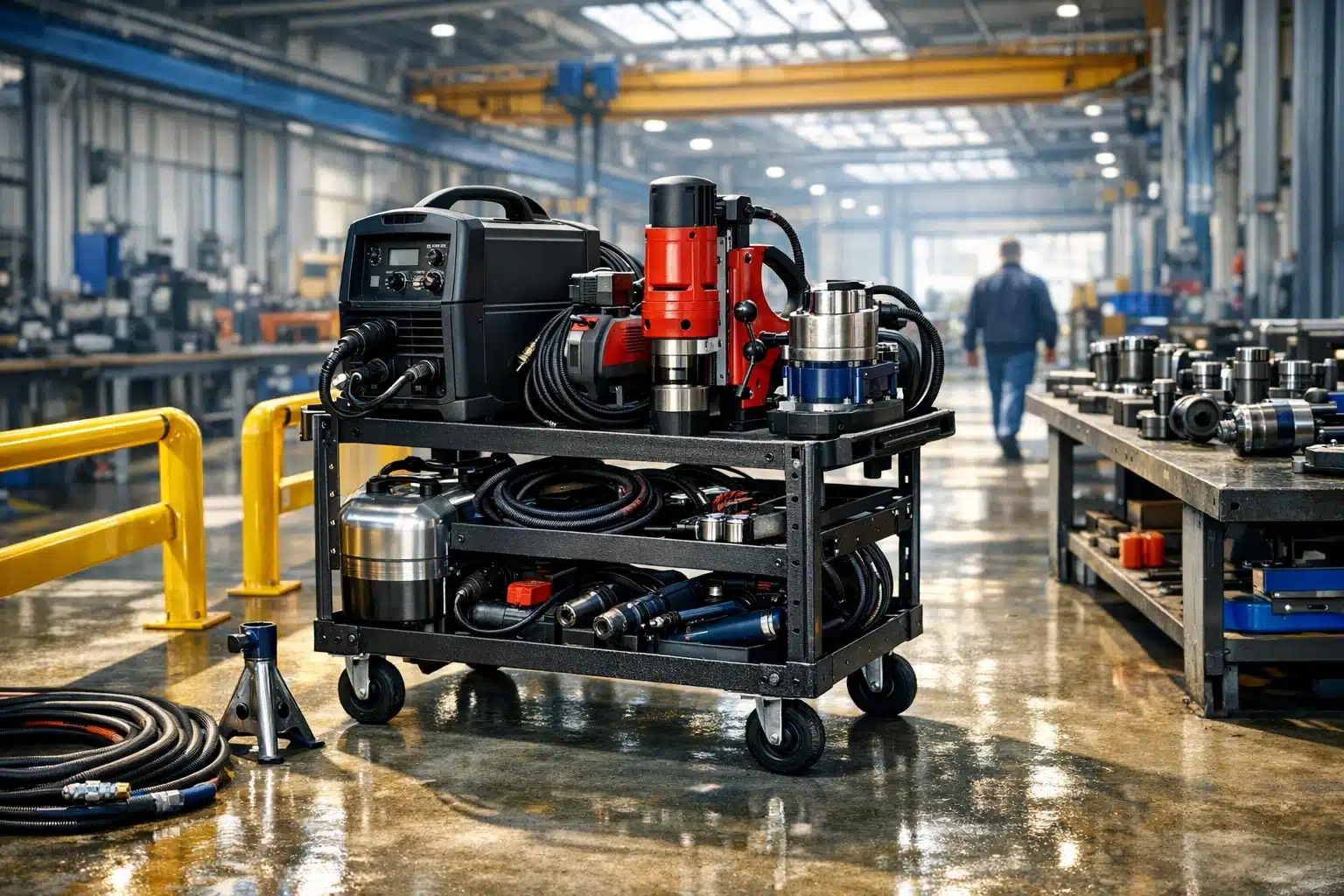
A Practical Guide to Buying Used Industrial Tools
Used industrial tools sit where budget discipline meets production reality, which is why they reward careful buying more than impulsive bargain hunting. A solid second-hand machine can expand capacity, shorten waiting time, and conserve cash for labor or materials. A poor choice can bring hidden wear, incomplete guarding, or repair bills that erase the initial savings. This article maps out the market, the inspection process, the main tool categories, and the buying habits that reduce unpleasant surprises.
Outline
- Why used industrial tools remain relevant for workshops, maintenance teams, and growing manufacturers
- How to inspect condition, safety, documentation, and remaining service life before money changes hands
- Which tool categories usually perform well on the second-hand market and which ones require extra caution
- Where to buy, how pricing works, and how to negotiate a fair deal based on total landed cost
- What happens after the purchase, from transport and setup to maintenance planning and return on investment
Why Used Industrial Tools Still Matter in a Cost-Conscious Market
The market for used industrial tools exists for a simple reason: many businesses need capability faster than they need novelty. A new machine or heavy-duty power tool may arrive with the comfort of a warranty, spotless paint, and the pleasant smell of untouched packaging, but it also arrives with a bigger invoice. For many shops, especially small manufacturers, repair contractors, fabricators, and maintenance departments, the practical question is not “Is it new?” but “Will it do the job safely, reliably, and at a cost that makes sense?” That question is where used equipment earns its place.
In broad terms, second-hand industrial tools can range from portable magnetic drills and hydraulic crimpers to welders, compressors, torque tools, shop presses, and metalworking accessories. Some are sold because a plant closed, others because a contractor upgraded fleets, and many because a production line changed direction. That variety gives buyers access to equipment that may otherwise be out of reach. In many real-world transactions, used industrial tools sell for roughly 30 to 70 percent less than comparable new units, depending on age, hours, maintenance history, brand reputation, and tooling included in the deal. For a growing shop, that price gap can mean the difference between delaying a project and starting it next week.
Used tools also matter because lead times for new equipment can be long. Specialized industrial products may take weeks or months to arrive, especially when accessories, calibration, or installation support are involved. A company facing an urgent production deadline may not have the luxury of waiting. A well-chosen used tool can restore capacity almost immediately, which is sometimes more valuable than the cosmetic perfection of a new purchase.
However, the savings are real only when the tool fits the task and retains meaningful service life. Bargains turn sour when a buyer ignores wear patterns, missing safety components, or obsolete parts. That is why good buyers compare the purchase price with the total cost of ownership, not the sticker alone.
- Used tools often make sense for backup capacity, secondary operations, seasonal demand, and training environments.
- They can be especially attractive when the tool design is mature and replacement parts remain available.
- They are less attractive when a task requires strict calibration, digital integration, or guaranteed uptime from day one.
There is also a financial logic beneath the shop-floor logic. When businesses preserve cash by buying used, they may free capital for other needs such as inventory, hiring, process improvements, or preventive maintenance. In a competitive market, that flexibility matters. The smartest buyers do not romanticize second-hand machinery, but they do recognize its strategic role. A sturdy used tool is not merely an old asset with a lower price tag. In the right setting, it becomes a practical bridge between budget limits and productive work.
How to Inspect Condition, Safety, and Remaining Service Life
Inspecting a used industrial tool is where cautious buyers separate themselves from hopeful gamblers. Photos can flatter a machine the way warm lighting flatters a restaurant meal, but real condition lives in the details: noise, vibration, leaks, play, missing guards, rough repairs, and inconsistent operation under load. Whether you are evaluating a handheld tool or a large floor-mounted unit, the goal is the same. You are trying to answer three questions: Is it safe, does it function as intended, and how much useful life is likely left?
Start with identification. Confirm the model number, serial plate, power requirements, capacity, and any visible signs of modification. If the seller cannot clearly identify the unit, that is a warning sign. Next, inspect the structure itself. Look for cracks, bent frames, corrosion, sloppy weld repairs, damaged fasteners, worn handles, and evidence of impacts. On powered tools, check cords, plugs, switches, air fittings, hoses, hydraulic lines, and seals. On rotating equipment, listen for bearing noise and feel for heat or excessive vibration during operation. On tools that depend on precision, such as torque equipment or measuring instruments, ask for calibration records or plan to have them tested immediately after purchase.
A proper live test is far better than an idle spin. A motor that sounds smooth without load may reveal chatter, slipping, or power loss when it actually works. For welding equipment, verify arc stability and controls. For compressors, assess pressure build time, leakage, and moisture management. For drill presses or milling accessories, examine spindle play and runout. For hydraulic tools, look for slow creep, pressure loss, or uneven motion. If possible, bring a technician or experienced operator. One careful inspection can save weeks of frustration later.
- Check for intact guards, emergency stops, labels, and safety interlocks where applicable.
- Ask for service logs, repair invoices, manuals, and spare parts lists.
- Confirm that wear items and replacement parts are still sold in the market.
- Inspect included accessories, because missing chucks, dies, clamps, or hoses can materially change value.
- Look for nonstandard modifications that may complicate repair or compliance.
Documentation is not glamorous, but it is often the hidden line between a smart purchase and a troublesome one. A clean maintenance record suggests disciplined ownership. A vague story such as “worked fine when removed” tells you very little. Buyers should also examine the environment the tool came from. Equipment from a controlled indoor shop may have aged gracefully, while similar equipment from a wet, dusty, or corrosive site may carry deeper wear than its appearance suggests.
Finally, price must reflect uncertainty. If a tool cannot be powered up, inspected under load, or traced through service history, the buyer should treat it as a higher-risk asset. That does not automatically make it a bad deal, but it does mean the discount should be meaningful enough to cover inspection gaps, likely repairs, and the possibility of unpleasant surprises. Good used buying begins with curiosity and ends with proof.
Choosing the Right Tool Category for Your Shop or Project
Not every category of industrial tool behaves the same way in the used market. Some tools age gracefully, especially when their design is simple and their wear is easy to spot. Others hide problems behind sealed electronics, overstressed components, or neglected calibration. A practical buyer learns to distinguish between categories that are typically good second-hand candidates and those that deserve extra caution.
Handheld electric and pneumatic tools are often among the easiest items to assess. Heavy-duty grinders, drills, impact tools, nibblers, and riveters can represent good value when housings are intact, bearings sound healthy, and controls respond properly. Pneumatic tools have the advantage of mechanical simplicity, but they still need inspection for internal wear, air leakage, and abuse. Electric tools deserve closer scrutiny around motors, brushes, switches, and cords. If the application is occasional or secondary, a used handheld tool can be an efficient purchase. If the job is critical and nonstop, the case for new equipment becomes stronger.
Hydraulic tools occupy a middle ground. Crimpers, cutters, pumps, and torque systems can be excellent used buys, particularly when they come from professional fleets that followed maintenance schedules. Yet hydraulic systems can also conceal trouble in seals, hoses, valves, and pressure consistency. A low purchase price loses its charm quickly if pressure drift undermines the work. For these tools, test performance and inspect fluid condition carefully.
Welding and cutting equipment require category-specific judgment. Traditional transformer-based equipment is often robust and serviceable, while advanced inverter units may be more sensitive to electrical issues and board failures. Plasma systems, positioners, and gas equipment can still be worthwhile, but buyers should confirm duty cycles, consumable availability, and compatibility with local power. It is usually wise to compare the used price not only against a new premium unit, but also against reliable mid-market alternatives that include support.
Machine shop accessories and support equipment often present strong used value. Vises, rotary tables, workholding systems, manual presses, tool cabinets, carts, benches, and some drill presses can serve for years if maintained. Measuring tools, however, require more care. A used micrometer or torque wrench may look excellent while drifting out of tolerance. In production settings where measurements drive quality, verification is not optional.
- Usually good used candidates: workbenches, vises, carts, manual presses, basic air tools, material racks, non-precision fixtures.
- Buy cautiously: electronic controls, battery platforms with aging packs, high-precision measurement tools, heavily used cordless fleets, specialized machines with obsolete parts.
- Best bought with proof: torque systems, hydraulic equipment, compressors, welders, and anything tied to safety-critical output.
The matching process matters as much as the category itself. A tool that is perfect for a maintenance department doing weekly repairs may be unsuitable for a fabrication line running two shifts. Think in terms of duty cycle, precision needs, operator skill, and backup options. Industrial buying is rarely romantic, but there is a certain elegance in finding the exact tool that solves a real production problem without straining cash flow. That is where used equipment moves from being merely affordable to being genuinely useful.
Where to Buy, How Pricing Works, and How to Negotiate Without Guesswork
The source of a used industrial tool can be nearly as important as the tool itself. Two identical machines may carry very different risk profiles depending on who is selling them, how much information is available, and whether inspection is possible. Buyers generally encounter five common channels: specialized used-equipment dealers, industrial auctions, plant liquidation sales, peer-to-peer transactions, and online marketplaces. Each one offers advantages, but none should be approached blindly.
Dealers tend to provide the most structure. They may clean, test, or lightly refurbish equipment, and some offer short warranties or return windows. That support usually raises the price, but for many buyers the added transparency is worth the premium. Auctions and liquidations can produce attractive pricing, especially when a facility is closing and assets must move quickly. The tradeoff is speed and uncertainty. Items may be sold as-is, where-is, with limited testing and strict removal timelines. Peer-to-peer sales, including transactions between shops or contractors, often provide the richest informal history because the seller may have operated the tool directly. Online marketplaces offer the widest selection, but they require disciplined vetting because descriptions vary wildly in quality.
Pricing should begin with replacement cost, not the seller’s asking number. Find the current price of a comparable new tool, then adjust for age, condition, included accessories, hours of use, service history, and market demand. A lightly used common tool with documentation may reasonably command a substantial share of new cost, while an older unit with unknown history should trade at a much deeper discount. Obsolescence matters too. A robust machine is less valuable if parts, consumables, or software support are becoming scarce.
- Ask what accessories are included, because missing components can change the real cost quickly.
- Factor in freight, rigging, taxes, setup, inspection, calibration, and immediate repairs.
- Request videos of operation if an in-person visit is not possible.
- Clarify who loads the equipment and whether pallets, crates, or lifting points are provided.
- Get the condition statement in writing, even for informal deals.
Negotiation works best when it is grounded in evidence. If you can point to missing tooling, worn hoses, outdated controls, or the cost of calibration, your offer sounds rational rather than opportunistic. Sellers are often more flexible when buyers are organized, responsive, and prepared to move quickly. That said, the cheapest sticker can become the costliest cartload if the landed cost grows through transport damage, missing parts, or emergency repairs. Always calculate the full number before shaking hands.
One practical approach is to build a simple cost sheet. List the asking price, estimated freight, immediate service items, consumables, replacement accessories, and downtime risk. Compare that total with the price and lead time of a new equivalent. When a used tool still delivers meaningful savings after these additions, the purchase is on firmer ground. A disciplined buyer does not chase every bargain. They chase value that survives arithmetic.
Conclusion for Buyers and Operations Teams: Turning a Used Tool into a Smart Asset
Buying the tool is not the finish line. It is the handoff between acquisition and performance. Once a used industrial tool enters your shop, the real objective becomes predictable service. That means planning the transport, unloading, installation, testing, operator familiarization, and preventive maintenance before the equipment ever touches the floor. A used purchase often succeeds or fails in these first steps. Even a well-bought machine can become troublesome if it is wired incorrectly, run without inspection, or pushed into production before basic checks are complete.
Start ownership with a baseline review. Clean the equipment thoroughly, inspect wear components again, change fluids where appropriate, verify lubrication points, and document any existing defects. If the tool affects product quality, schedule calibration or performance verification early. If it affects operator safety, confirm that guards, labels, switches, and emergency features are working exactly as intended. This is also the moment to order spare consumables and common service parts, especially if lead times are unpredictable. A modest shelf of belts, seals, filters, tips, and fittings can protect uptime far better than a dramatic last-minute scramble.
Total cost of ownership should guide the final verdict on whether the purchase was truly wise. Consider a simple example. If a shop buys a used metalworking saw for 8,000 dollars, spends 1,500 on freight and setup, and adds 700 in immediate repairs, the landed cost becomes 10,200. If a comparable new machine would cost 18,000 and require a ten-week wait, the used purchase may still represent strong value, provided reliability is acceptable. On the other hand, if hidden faults add several thousand more and the machine disrupts production, the apparent discount was smaller than it looked. This is why a realistic post-purchase budget matters.
For maintenance managers, used tools can be a smart way to build backup capacity without stretching the annual budget. For small manufacturers, they can accelerate expansion when cash must be balanced across materials, payroll, and delivery commitments. For contractors, they can add specialized capability for occasional jobs without tying up too much capital. The key is to buy with a process rather than a hunch.
In the end, the best used industrial tool is not the oldest machine with the biggest markdown or the shinier unit with the loudest sales pitch. It is the one that matches the work, passes inspection, lands at the right total cost, and can be maintained with confidence. Buyers who stay methodical tend to avoid expensive surprises. They also discover something satisfying in the process: a second-hand tool, chosen well, can still have a very productive future ahead of it.