Disabled Home Adaptation Grants in the UK: A Practical Guide
A home can feel welcoming until stairs, narrow doors, or an awkward bathroom turn ordinary routines into tiring obstacles. In the UK, adaptation grants exist to help disabled residents make practical changes that support safety, dignity, and day-to-day independence. The process, however, often involves assessments, local authority rules, and waiting periods that are not always easy to understand. Learning the basics before you apply can make the journey calmer and far more strategic.
Outline: Why Disabled Home Adaptation Grants Matter and What This Guide Covers
Disabled home adaptation grants sit at the meeting point of housing, health, social care, and everyday practicality. That sounds technical, but the real issue is deeply personal. It is about whether someone can get upstairs without fear, wash safely without needing risky improvised solutions, or move around their own kitchen without feeling trapped by the layout. For many households, the home is not simply where life happens; it is the environment that either supports independence or quietly chips away at it.
This topic matters because disabled people, older residents, and unpaid carers often face costs that arrive long before any building work begins. There may be travel for assessments, repeated phone calls, time off work, or the stress of managing a property that no longer suits the person living there. A well-designed adaptation can reduce falls, make personal care easier, support hospital discharge, and help people remain in familiar surroundings for longer. That has obvious human value, but it also makes sense from a public policy perspective. Preventing avoidable accidents and delays in care can reduce pressure on health and social care services.
This guide follows a practical route through the subject. It begins with the broad picture, then moves into the detail that usually shapes an application. The article covers:
- how disabled home adaptation funding works across England, Wales, Scotland, and Northern Ireland
- who may be eligible and when a means test may apply
- the role of local councils, housing bodies, and occupational therapists
- which adaptations are commonly funded and which requests may fall outside the rules
- how to manage delays, cost gaps, landlord consent, and additional sources of help
Think of the grant process as less like a simple purchase and more like a carefully assembled plan. Money is only one part of the picture. Evidence, timing, professional recommendations, and property constraints all influence the outcome. A stairlift that seems obviously necessary may still require formal assessment. A bathroom conversion that looks straightforward on paper may be harder in a small terrace with awkward drainage. These details matter, and they explain why two households with similar needs may experience very different routes to approval.
The aim here is not to promise a quick fix. It is to offer a realistic, grounded guide for disabled people, relatives, tenants, homeowners, and carers who need clearer footing before taking the next step.
Understanding the Main Grant Schemes Across the UK
The phrase most people hear first is Disabled Facilities Grant, often shortened to DFG. In practice, that term is used most prominently in England and Wales, while Scotland and Northern Ireland operate through different systems and local arrangements. This is important because many online guides speak about “the UK” as if the rules were uniform. They are not. The overall goal is similar across the nations, but the route, the labels, and the financial tests can vary.
In England, the Disabled Facilities Grant is a mandatory grant administered by local councils for eligible applicants who need major adaptations. For adults, a means test usually applies, while applications relating to a disabled child are generally treated differently and are not normally subject to the same financial test. In England, the maximum mandatory amount is commonly cited as £30,000, although councils may in some situations offer discretionary help above that through separate local powers and budgets.
Wales also operates a Disabled Facilities Grant system, and the upper funding limit is higher than England’s, commonly stated as £36,000. Scotland does not use the same DFG framework; instead, help is generally delivered through the local authority Scheme of Assistance, which may include grants, loans, or other support depending on circumstances. In Northern Ireland, assistance may come through the Northern Ireland Housing Executive or related arrangements, depending on tenure and the nature of the work.
A simple comparison helps:
-
England: Disabled Facilities Grant through local councils; adult means test often applies; major adaptations may be funded up to the national limit.
-
Wales: Disabled Facilities Grant through local authorities; rules are similar in spirit but not identical to England.
-
Scotland: support usually comes through the Scheme of Assistance rather than a DFG model.
-
Northern Ireland: assistance may involve the Housing Executive or local housing arrangements, with different processes depending on tenure.
Eligibility is often wider than people expect. Homeowners can apply, but tenants in private rented housing, housing association properties, and some other tenures may also be eligible. The catch is that tenants usually need the landlord’s permission before major work can proceed. If the landlord refuses, the adaptation may stall even where the clinical need is clear.
The legal tests also matter. In many cases, the proposed works must be considered both necessary and appropriate for the disabled person’s needs and reasonable and practicable for the property. That second phrase can be frustrating. It means a council may accept that the person needs a certain change, yet still question whether the building can sensibly accommodate it. A steep cottage staircase, a cramped bathroom, or structural limitations can all affect the final recommendation.
For that reason, the first and most useful rule is simple: always check the process with your own local authority rather than relying on a general article alone. The principles are national; the experience is local.
How the Application Process Works, Step by Step
The application process is rarely a single form sent off in one afternoon. More often, it unfolds in stages. Some stages move quickly; others seem to pause in silence while departments pass information between housing, social care, technical officers, and finance teams. Knowing the sequence can make the system feel less mysterious.
The journey often starts with an enquiry to the local council, social services, housing adaptations team, or a home improvement agency working in partnership with the council. In many cases, the next key step is an assessment by an occupational therapist, usually called an OT. The OT’s role is central. They look at how the disability affects daily living and what changes to the home might remove or reduce those barriers. Their recommendation often becomes the backbone of the application.
A typical pathway looks like this:
- initial contact with the council or relevant housing team
- referral for an occupational therapy assessment
- discussion of possible solutions, including whether minor or major works are needed
- submission of financial information if a means test applies
- technical checks, plans, or builder quotations
- formal approval before work starts
- completion of the works and payment arrangements
One of the most common mistakes is starting work too early. Many applicants are understandably tempted to move fast, especially when washing, toileting, or entering the home has become difficult. Yet beginning the project before formal approval can create problems with reimbursement. In many cases, the council needs to approve the work, the cost, and the scope before the grant can be used.
Another point that catches people off guard is the difference between need and evidence. You may know perfectly well that your current bath is unsafe. A family member may have witnessed slips, near falls, or painful transfers. But the application still needs evidence that fits the official process. That may include OT recommendations, income details, proof of property ownership or tenancy, landlord consent, and quotations from contractors. Bureaucracy is rarely poetic, but it does like paperwork.
Timing varies widely. Some councils move faster than others, and pressure on services can lengthen waits. In England, councils are generally expected to decide a valid Disabled Facilities Grant application within six months, but that does not necessarily mean the whole journey from first enquiry to finished work will be brief. Delays can happen before an application becomes “valid,” especially if assessments or supporting documents are outstanding.
Applicants can improve their chances of a smoother process by keeping a written record of contacts, sending documents promptly, and asking clear questions such as:
- Who is handling my case?
- Has my application been logged as complete?
- Do you need quotations, drawings, or landlord permission at this stage?
- Is there any temporary support available while I wait?
That last question matters more than many people realise. If a major bathroom conversion will take months to arrange, there may be interim measures, equipment, or minor adaptations that reduce risk in the meantime.
What the Grant Can Cover and How Councils Judge Adaptations
Home adaptation funding is usually aimed at practical changes that make it easier for a disabled person to access essential parts of the home and use them safely. The focus is functional, not decorative. In plain terms, the grant is there to help a home work better, not simply look better.
Commonly funded adaptations include:
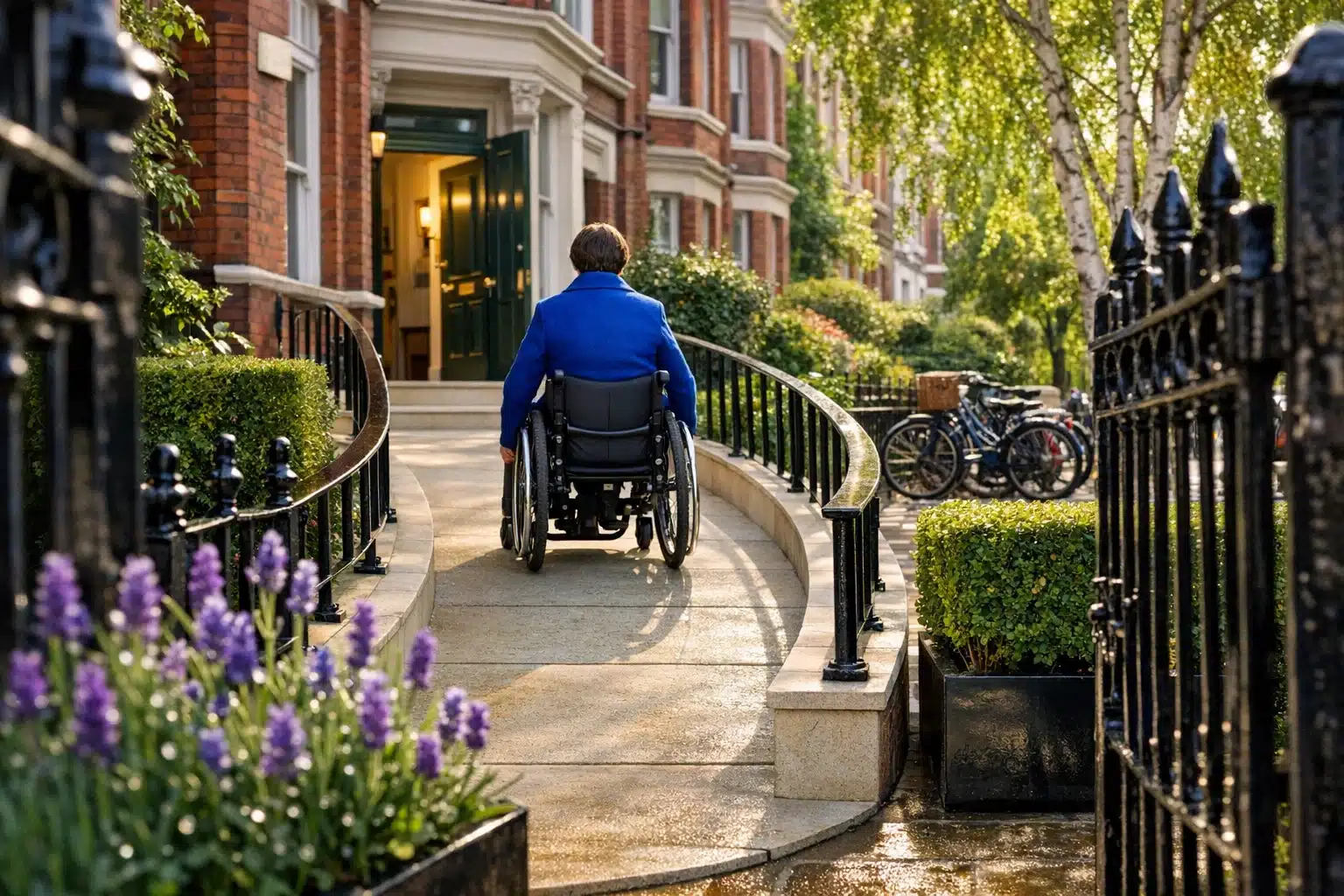
- ramps, handrails, and improved access to the main entrance
- widened doorways for wheelchair use
- stairlifts or, in some homes, through-floor lifts
- level-access showers or adapted bathrooms
- toilet facilities on a usable floor of the home
- adapted kitchens, lowered worktops, or easier-to-reach controls
- improved lighting, heating controls, or safety-related adjustments
- room reconfiguration where needed for access and essential care
What links these examples is necessity. Councils are not usually asking whether the adaptation would be nice to have. They are asking whether it is needed to meet the disabled person’s assessed requirements. That creates a practical test. A level-access shower may be supported because climbing into a bath has become unsafe. A widened hallway may be funded because a wheelchair cannot pass through the current space. The adaptation should solve a real barrier in daily living.
There is also a second test: is the proposal reasonable and practicable for the property? This is where cases become more nuanced. Imagine two people with the same mobility needs. One lives in a modern ground-floor flat with enough space for a wet room. The other lives in a small upper-floor flat in a building with structural constraints. The need is equally genuine, but the building itself may limit what can be done. Councils may then look at alternative layouts, different forms of equipment, or whether moving to more suitable housing is the better long-term answer.
Funding can sometimes extend beyond the obvious visible item. For example, major adaptations may involve design work, surveys, installation, and making good associated areas after construction. A bathroom conversion is not only about the shower tray or floor drainage; it may also require plumbing changes, wall finishes, electrical adjustments, and safe access in and out of the room.
It also helps to understand the difference between minor and major adaptations. Minor works or equipment, such as grab rails or small access aids, may be arranged more quickly through social care or community equipment services. Larger structural changes usually require the fuller grant route. That distinction matters because some households expect the same speed for both and are disappointed when a stairlift or extension takes much longer than a simple rail installation.
What tends not to be funded? Purely cosmetic upgrades, general home renovation, and changes that are not directly linked to the assessed disability-related need. If a bathroom is old but functionally usable, the grant is unlikely to cover a full modernisation simply because it would be more attractive. The adaptation must be tied to accessibility, safety, or essential daily living.
In short, the strongest applications connect three things clearly: the person’s needs, the barrier in the home, and the specific work that would remove or reduce that barrier.
Costs, Delays, Extra Help, and Smart Planning Beyond the Grant
Even when a grant is approved, applicants may still face practical hurdles. The approved amount may not cover the full cost of the preferred scheme. Specialist contractors can be busy. Landlords may respond slowly. Technical problems can emerge once walls are opened or old plumbing is exposed. The grant is a major support tool, but it does not erase the need for planning.
One useful step is to ask early whether there are additional funding routes. Depending on location and circumstances, support may come from discretionary council assistance, charitable grants, housing associations, or local welfare and community programmes. Home improvement agencies, where available, can be especially valuable because they often help with paperwork, contractor coordination, and project oversight. For households already juggling care needs, that practical support can be almost as important as the money itself.
Other forms of financial relief may also matter. Some building work and equipment for disabled people can qualify for VAT relief under specific conditions. Benefits such as Personal Independence Payment, Attendance Allowance, or related disability benefits do not replace a home adaptation grant, but they may help a household manage extra living costs while the project is underway. These forms of support sit in different boxes, yet for the applicant they are all part of the same reality: making a home usable without collapsing the family budget.
A sensible planning checklist includes:
- ask your council whether the grant is mandatory, discretionary, or mixed in your situation
- confirm whether a means test applies
- keep copies of every letter, email, quote, and assessment note
- obtain landlord consent in writing if you rent
- ask whether temporary measures can reduce risk while you wait
- check whether VAT relief, charity support, or top-up funding is available
- do not assume the cheapest quote is the only factor; suitability and compliance matter too
Delays are one of the biggest emotional strains in this area. When someone cannot bathe safely or sleep in a room that supports proper care, each week feels longer than the calendar suggests. This is where persistence helps. Follow up politely, ask for timelines, and request explanations when progress stalls. If you believe the process has gone wrong, use the council’s complaints procedure and, where relevant, seek advice from advocacy organisations, disability charities, or housing advisers.
Tenure also shapes strategy. Homeowners may have more control over works but still face financial assessments and building complications. Private tenants need cooperation from landlords. Housing association tenants may have access to internal adaptation teams or property-specific procedures. Nobody should assume that the same script fits every household.
The most effective approach is to treat the adaptation as a project with three pillars: evidence, communication, and contingency. Evidence shows why the work is needed. Communication keeps the application moving. Contingency prepares you for the ordinary surprises that come with funding and construction. For disabled households and carers, that mindset turns the process from a maze into a route map.
Conclusion for Disabled Households and Carers
If you are living in a home that no longer works for your body, your energy, or your care needs, disabled home adaptation grants can be a meaningful route to safer and more independent living. The process may involve forms, assessments, waiting lists, and local rules, but it is designed to support practical change where a property creates real barriers. The key is to begin early, gather clear evidence, and stay in close contact with the relevant council or housing body. For carers, relatives, tenants, and homeowners alike, the best next step is often a simple one: make the first enquiry, ask what system operates in your area, and build the case from there. A more accessible home rarely arrives all at once, but with the right information and steady follow-through, it can move from wish to workable plan.