Electric Bike for Adults: A Practical Buying Guide
Electric bikes have moved from novelty to everyday transport for adults who want a simpler way to commute, run errands, and keep riding longer. They soften headwinds, shorten stubborn hills, and make cycling more accessible without removing the pleasure of pedaling. At the same time, the market is full of confusing specs, broad price swings, and features that sound important but may not suit your routine. This guide sorts through the noise so you can choose an e-bike that fits your roads, your body, and your budget.
Outline
- Why electric bikes have become a practical choice for adult riders
- The main e-bike styles, motor systems, batteries, and essential specifications
- How to evaluate fit, comfort, safety, maintenance, and long-term ownership costs
- Which features matter most for commuting, leisure rides, cargo use, and fitness goals
- How adult buyers can narrow the field and make a confident final decision
1. Why Electric Bikes Matter for Adult Riders
An electric bike for adults is, at its core, a bicycle with a motor that assists the rider rather than replacing the ride altogether. That distinction matters. A well-designed e-bike still asks you to pedal, steer, balance, and make choices about pace, route, and effort. What changes is the threshold. Distances that once felt inconvenient become realistic. Hills lose some of their drama. A twenty-minute ride to work can feel less like a workout and more like a calm transition between home and office. For many adults, that shift is the whole point: an e-bike expands what cycling can do in normal life.
Adult riders are often balancing more than recreation. They may be commuting, carrying groceries, meeting family responsibilities, or returning to cycling after years away. In those situations, the value of pedal assistance becomes practical rather than flashy. Someone with a longer route can arrive less fatigued. Someone with knee sensitivity may still enjoy regular rides with a moderate assist level. A rider who lives in a windy or hilly area may finally stop avoiding the bike altogether. In city neighborhoods, e-bikes can also reduce short car trips, parking stress, and fuel costs, especially for errands within a few miles of home.
There is also a broad accessibility advantage. Adults come to cycling with different levels of fitness, confidence, and mobility. A traditional bike can be wonderfully simple, but it can also be unforgiving when the route is steep or the rider is carrying a backpack, laptop, or child seat. Pedal-assist systems narrow that gap. A good e-bike can feel like a steady tailwind that shows up on time. It does not make every ride effortless, but it makes more rides possible, and that often leads to more frequent use.
When comparing models, buyers should also understand the legal and functional basics. In many U.S. markets, e-bikes are grouped into classes, though local rules vary:
- Class 1: pedal assist only, with assistance up to 20 mph
- Class 2: throttle-equipped models that can assist up to 20 mph
- Class 3: pedal assist up to 28 mph, often aimed at faster commuting
These categories affect where you can ride, whether a helmet is required, and how welcome the bike will feel on local paths. For adults, the smartest view is not simply asking, “How powerful is it?” but asking, “Will this help me ride more often, more comfortably, and more safely in the places I actually go?” That question turns a crowded market into something far easier to navigate.
2. Understanding E-Bike Types, Motors, Batteries, and Core Specs
The biggest mistake many buyers make is starting with power numbers alone. Motor wattage matters, but it is only one piece of the riding experience. The style of bike, the placement of the motor, the size of the battery, the sensor system, the tires, and the frame geometry all shape how the bike feels beneath you. A commuter e-bike with a modest motor can outperform a more powerful but poorly matched model if your goal is smooth daily travel on pavement. In other words, the spec sheet is useful, but context is king.
The first choice is usually bike style. Adult riders commonly encounter several broad categories:
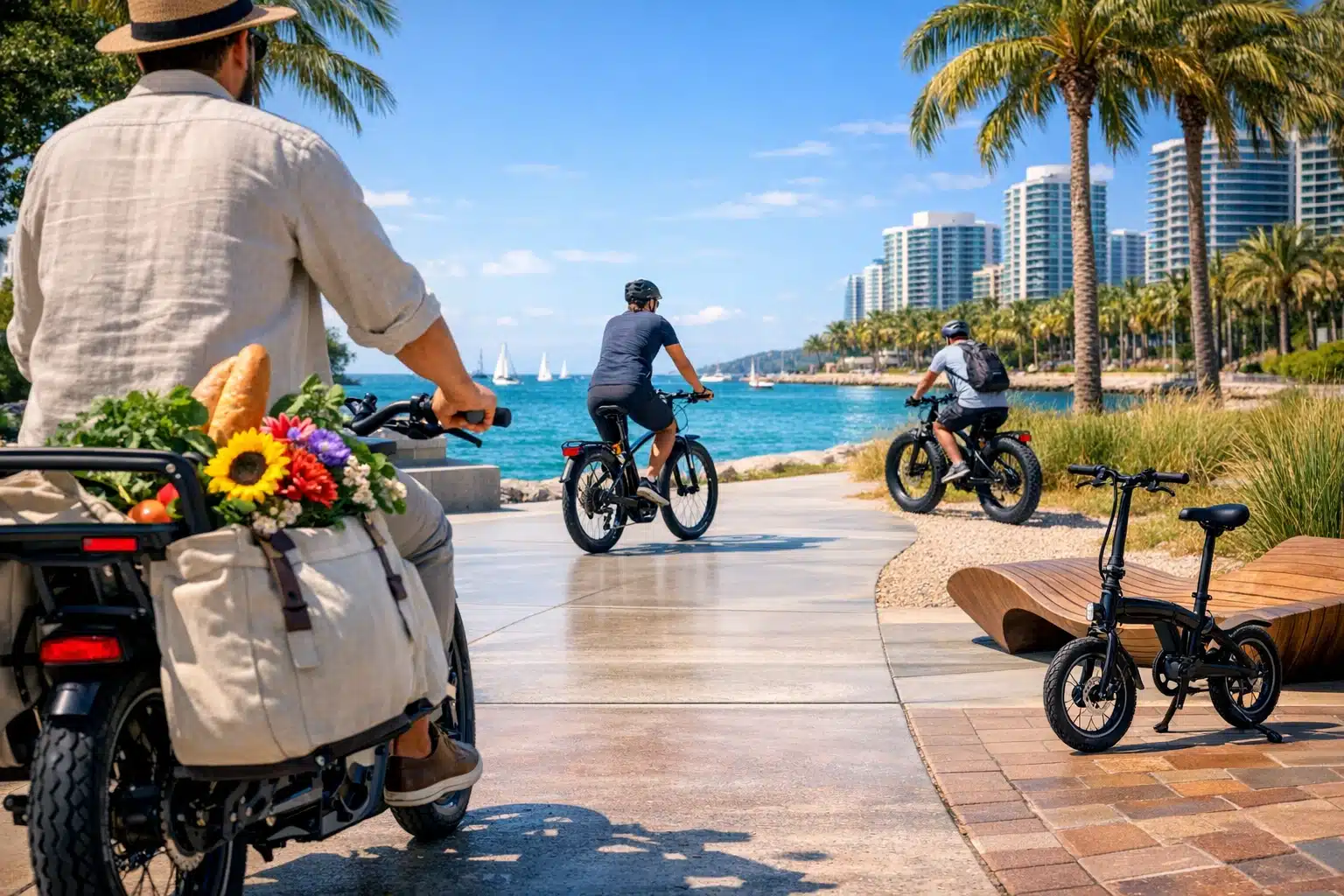
- Commuter or city e-bikes, built for pavement, fenders, lights, racks, and practical daily use
- Hybrid e-bikes, which blend comfort and versatility for mixed paths and casual fitness
- Folding e-bikes, suited to small apartments, RV travel, or multi-modal commuting
- Cargo e-bikes, designed to carry children, groceries, or larger loads with greater stability
- Mountain or trail e-bikes, built for rough terrain, stronger brakes, and off-road control
- Cruiser or comfort e-bikes, focused on upright posture and relaxed leisure riding
After type, pay close attention to the motor system. Hub-drive motors sit in the front or rear wheel and are common on affordable bikes. They can feel simple and effective, especially on flatter urban routes. Mid-drive motors are mounted near the crank and usually provide a more natural pedaling feel because they work through the bike’s gears. They tend to climb better and distribute weight more centrally, but they often raise the price. Riders in hilly areas or those carrying cargo often appreciate the control and efficiency of a mid-drive setup.
Battery capacity is another core factor, usually measured in watt-hours, or Wh. A battery around 400 to 500Wh may suit shorter commutes and weekend rides, while 600 to 700Wh or more can offer extra range for longer trips, heavier loads, or stronger assist settings. Real-world range varies a lot. Rider weight, wind, tire pressure, stop-and-go traffic, temperature, terrain, and chosen assist mode all matter. That is why claims like “up to 70 miles” should be read as maximum scenarios, not guaranteed outcomes. A more realistic approach is to ask how far the bike can go in your conditions, with a buffer left at the end.
Sensor type also deserves attention. Cadence sensors turn assistance on when you pedal, often creating a simple but sometimes abrupt feeling. Torque sensors respond to how hard you push on the pedals, which usually feels smoother and more intuitive. Add in hydraulic disc brakes, puncture-resistant tires, integrated lights, and a quality drivetrain, and the difference between a merely functional e-bike and a genuinely satisfying one becomes clear. The best choice is not the model with the longest feature list. It is the one whose design decisions make sense for the kind of roads, speed, and comfort level you expect every week.
3. Fit, Comfort, Safety, Maintenance, and the Real Cost of Ownership
Buying the right electric bike is not just about performance. It is also about how the bike fits your body and your routine. Adults often keep a bike longer when it feels easy to mount, stable at low speed, and comfortable after thirty or forty minutes in the saddle. Frame shape matters here. Step-through frames make frequent stops, work clothes, and limited hip mobility easier to manage. Step-over frames can feel stiffer and sportier, which some riders prefer. Neither is automatically better; the key is whether the design supports how you actually ride. A test ride tells you more in ten minutes than a catalog can tell you in ten pages.
Comfort starts with sizing and contact points. The right frame size improves control, reduces strain, and makes longer rides more enjoyable. Adults should look at handlebar reach, saddle shape, standover height, and riding position rather than focusing only on wheel size. Upright bikes suit casual riding and commuting, while a slightly forward position may help on longer trips or faster routes. Suspension can add comfort on rough pavement, but large tires often provide a simpler, lighter solution for many urban riders. Sometimes the quiet luxury is not extra technology, but a bike that does not leave your wrists and back arguing with you the next morning.
Safety deserves equal weight in the decision. E-bikes are often heavier and quicker off the line than standard bicycles, which makes braking quality especially important. Hydraulic disc brakes generally offer better stopping power and control than basic mechanical systems, particularly in wet weather. Bright integrated lights, reflective tires or details, a bell, and a stable kickstand all add practical value. For daily use, some accessories are worth treating as essentials rather than optional extras:
- A properly fitted helmet
- A strong lock or two-lock system for urban areas
- Fenders for wet roads
- A rear rack or panniers instead of carrying weight on your back
- Front and rear lights even if the bike already includes them
The cost of ownership extends beyond the purchase price. Batteries eventually age, brake pads wear, tires need replacement, and tune-ups are part of responsible use. A low sticker price can become less attractive if the bike uses hard-to-find parts or lacks dealer support. Buyers should ask about warranty length, battery replacement cost, service access, and whether the brand offers spare parts locally. Insurance and theft protection may also be worth considering in urban areas. A sensible budget includes room for maintenance, security, and comfort upgrades. That fuller view helps adults choose a bike that remains enjoyable after the honeymoon period, when the first excitement fades and everyday ownership begins.
4. Comparing E-Bikes by Use Case: Commuting, Leisure, Cargo, and Fitness
The smartest way to compare electric bikes is to start with the ride you expect most often. A buyer with a flat five-mile commute has different needs from someone carrying groceries, climbing long hills, or riding mixed gravel paths on weekends. Too many comparisons stay trapped in generalities, but good buying decisions come from use case. If you know your main purpose, the field narrows quickly, and features that once seemed equally important begin to sort themselves into necessities, conveniences, and marketing noise.
For commuting, reliability and practicality usually matter more than maximum power. Adult commuters tend to benefit from integrated lights, fenders, a rack, puncture-resistant tires, and a battery large enough to handle several trips without constant charging anxiety. Class 1 and Class 3 models are common choices, depending on local rules and preferred speed. If your route includes train connections or apartment stairs, a folding e-bike may win on convenience even if it compromises slightly on ride feel. If your roads are rough and your stops are frequent, a relaxed geometry and predictable braking can matter more than chasing the highest top speed.
For leisure riding and casual weekend use, comfort tends to lead the conversation. Cruiser and hybrid e-bikes with upright positioning, wider saddles, and stable handling work well for scenic paths, park rides, and social cycling. Range is still relevant, but not always in the dramatic way advertisements suggest. Many leisure riders do not need the largest battery on the market; they need a bike that feels pleasant for an hour or two and is simple to charge and store afterward. This is the category where a calm, confidence-building design often outshines aggressive specifications.
Cargo and family use deserve a separate lens. Carrying children, groceries, or work gear changes everything about braking, frame stiffness, and low-speed balance. Long-tail and front-load cargo e-bikes can replace a surprising number of short car trips, but they also require storage space and careful consideration of total weight limits. Here, strong brakes, a sturdy kickstand, and a refined motor system matter more than flashy styling. Fitness-focused riders, meanwhile, may want a lighter bike with responsive torque sensing and a natural pedaling feel. For them, the motor should complement effort rather than dominate it.
A useful shortlist often looks like this:
- Choose commuter-focused features if the bike will serve workdays more than weekends
- Choose comfort and simplicity if the goal is regular relaxed riding
- Choose cargo stability and load capacity if errands or family transport are central
- Choose a lighter, more responsive setup if exercise and ride feel matter most
When buyers compare options through the lens of real use, the decision becomes more grounded. The best e-bike is rarely the one that impresses in isolation. It is the one that quietly fits your routes, your storage space, and the little demands of ordinary life.
5. Conclusion for Adult Buyers: How to Make a Smart Final Choice
If you are an adult shopping for an electric bike, the best final decision usually comes from balancing three things: your typical trip, your desired comfort level, and your total budget after accessories and upkeep. That sounds simple, yet it is often more useful than comparing endless specifications. Start by defining your main purpose in one sentence. Are you commuting to work, replacing short car trips, riding for recreation, carrying cargo, or getting back into cycling with less strain? Once that purpose is clear, every major choice becomes easier to judge, from frame style to battery size.
A wise buyer also resists the urge to overbuy. More motor, more battery, and more features are not always better if they add weight, cost, or complexity that you do not need. A manageable, comfortable e-bike that you ride four times a week is more valuable than a high-powered machine that feels awkward to lift, store, or service. This is where test rides become decisive. Pay attention to low-speed stability, braking feel, mounting and dismounting, and how natural the assist feels when you start pedaling. A bike can look excellent on paper and still feel wrong within the first block.
Before purchasing, it helps to run through a short practical checklist:
- Does the bike suit your most common route, not just your ideal weekend ride?
- Can you charge and store it easily at home or work?
- Is there local service support or reliable access to replacement parts?
- Do the brakes, tires, and fit inspire confidence right away?
- Have you budgeted for a lock, helmet, lights, and routine maintenance?
For many adults, an electric bike is not a toy or a luxury item. It becomes a daily tool, a quiet time-saver, and sometimes the reason cycling feels possible again. That is why the smartest purchase is rarely the most glamorous one. It is the bike that makes ordinary trips easier, invites regular use, and feels trustworthy month after month. If you keep your focus on fit, function, and real-world support, you are far more likely to end up with an e-bike that earns its place in your life rather than gathering dust in a corner. Buy for the roads you ride, the loads you carry, and the body you have now, and the result will usually be a far better match than buying for hype alone.