Guide to the 10 Best Cell Phones
Choosing a cell phone in today’s market is less about finding a device that simply works and more about finding one that fits the way you live, shoot photos, travel, game, message, and manage work. Modern phones can look almost identical on a store shelf, yet they differ sharply in camera tuning, battery endurance, screen quality, software support, repairability, and price. This guide sorts through that noise and highlights ten standout options with clear, practical context.
Article Outline and the Rules Behind This List
Before diving into individual recommendations, it helps to define what “best” really means. There is no single phone that wins every category for every person. A traveler may care most about battery life and roaming reliability, a parent may want point-and-shoot camera consistency, a gamer may chase sustained performance, and a student may simply need a dependable device that will still feel current in three years. So rather than treating this as a rigid one-size-fits-all ranking, think of it as a carefully built shortlist of ten excellent phones that each earn their place for different reasons.
The article follows a simple outline. First, it explains the criteria used to judge the phones. Next, it covers the flagship leaders that aim to do nearly everything well. After that, it looks at the more adventurous designs, including foldables and camera-first hardware. Then it shifts to phones that win through value, gaming power, or personality. Finally, it ends with a practical conclusion designed to help different buyers choose faster and with fewer regrets.
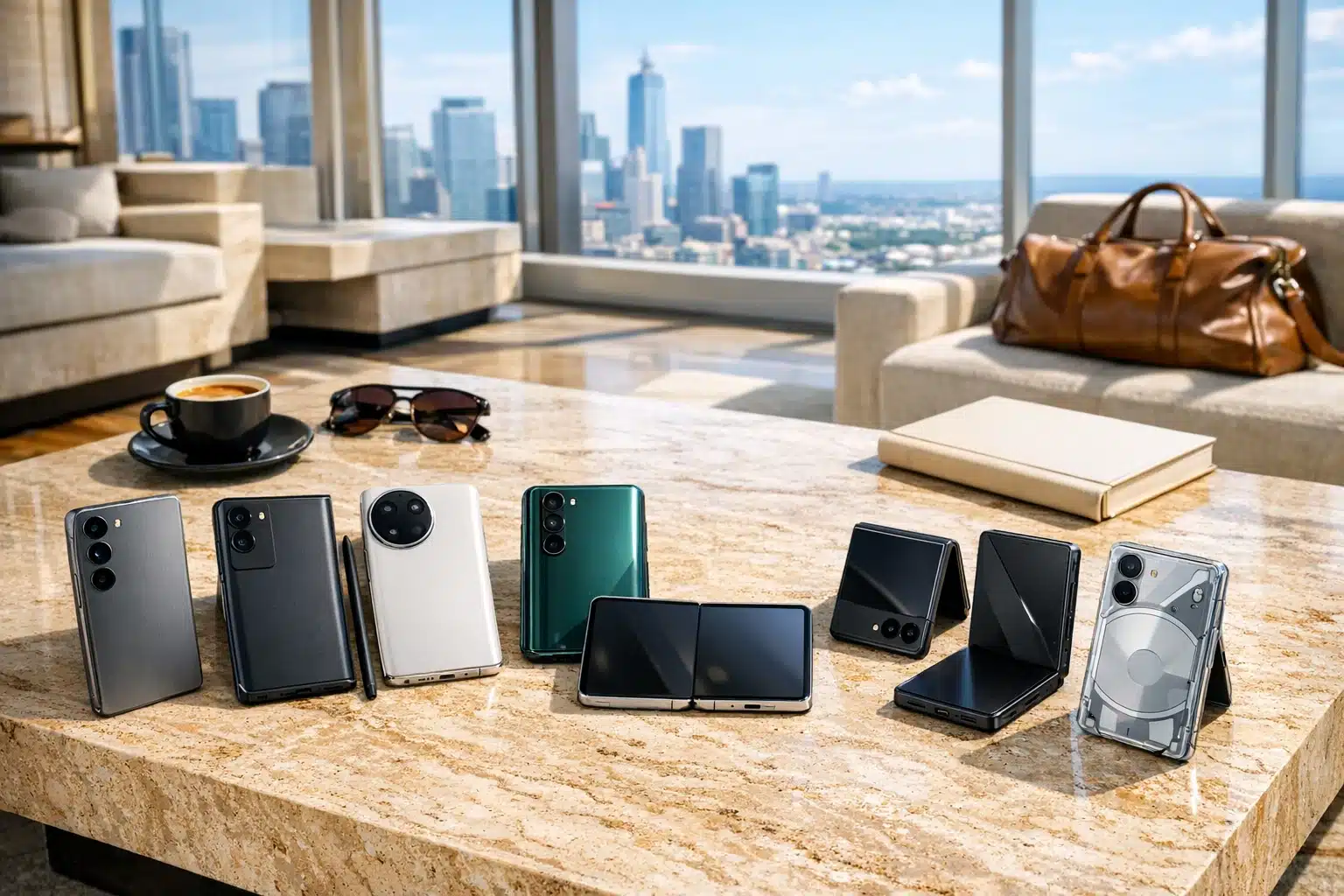
Here are the ten phones featured in this guide:
• 1. Apple iPhone 15 Pro Max
• 2. Samsung Galaxy S24 Ultra
• 3. Google Pixel 8 Pro
• 4. OnePlus 12
• 5. Samsung Galaxy Z Fold5
• 6. Samsung Galaxy Z Flip5
• 7. Xiaomi 14 Ultra
• 8. ASUS ROG Phone 8 Pro
• 9. Google Pixel 8a
• 10. Nothing Phone 2
The selection criteria are grounded in real-world use rather than raw specification sheets alone. A fast chip matters, but so does how well the phone handles heat. A high-megapixel camera sounds impressive, but the final image depends just as much on lens quality, image processing, and shutter speed. Bright displays are useful outdoors, yet comfort, color balance, and refresh behavior also affect how a screen feels in the hand. Software support is another major factor. A phone that gets many years of updates can offer better long-term value than one with a shorter support window, even if the shorter-term performance looks similar on launch day.
In other words, this guide treats a smartphone as what it really is: a pocket-sized control room for work, maps, photos, payments, entertainment, and the tiny logistics of everyday life. With that frame in place, the next sections break down where the current standout models separate themselves from the crowd.
The Premium All-Rounders: iPhone 15 Pro Max, Galaxy S24 Ultra, Pixel 8 Pro, and OnePlus 12
If you want a high-end phone that covers almost every need without obvious weaknesses, this is the group to watch. These four models approach excellence in different ways, which makes the comparison more interesting than a simple “faster is better” argument. The Apple iPhone 15 Pro Max remains one of the strongest choices for buyers who value polished video capture, premium build quality, smooth app optimization, and long-term performance consistency. Its titanium frame reduces weight compared with older Pro Max models, the A17 Pro chip is extremely capable, and the 5x telephoto camera adds useful reach without turning the phone into a niche photography tool. It is especially appealing to users already invested in Apple services, watches, tablets, or laptops. The trade-offs are familiar: charging is not class-leading, customization is more limited than on Android, and pricing sits firmly in flagship territory.
The Samsung Galaxy S24 Ultra takes a different route. It feels like a phone built for people who want maximum versatility in one slab of glass and metal. The large display is excellent for media and multitasking, the integrated S Pen makes note-taking more practical than many people expect, and Samsung’s camera setup gives users a flexible mix of wide, ultra-wide, and zoom options. In many markets, the Snapdragon 8 Gen 3 helps it deliver top-tier performance, while Samsung’s seven-year update commitment strengthens its long-haul value. Still, it is a big device, and its image processing can look punchier than some users prefer. If you love choice, tools, and screen space, it is easy to admire. If you want simplicity and a lighter hand feel, it may be more phone than you need.
Google’s Pixel 8 Pro is the quiet overachiever in this company. It does not always lead on brute-force gaming benchmarks, yet it often wins people over with camera intelligence, clean software, and smart call handling features. Pixel phones have long been strong at producing attractive, natural-looking photos with minimal effort, and the 8 Pro continues that tradition. Google also promises seven years of updates, which is a serious advantage for buyers who keep a phone longer than a typical upgrade cycle. The weaker point is raw sustained power compared with the fastest Snapdragon rivals, especially under heavier workloads. For photography, daily fluidity, and software elegance, though, it remains one of the most balanced choices available.
The OnePlus 12 is the value-minded flagship in this section. It offers a sharp display, strong battery capacity, very fast charging that varies by region, and flagship-grade performance at a price that is often easier to justify than the cost of its biggest rivals. It feels like the phone for someone who wants speed without ceremony. Its cameras are good and often very good, but for the most demanding buyers, Apple, Samsung, and Google still tend to offer more refined camera systems overall. A quick way to think about these four is this:
• Choose the iPhone 15 Pro Max for video, ecosystem strength, and all-around polish.
• Choose the Galaxy S24 Ultra for versatility, zoom options, and productivity extras.
• Choose the Pixel 8 Pro for photography, clean software, and long support.
• Choose the OnePlus 12 for performance-per-dollar and charging convenience.
Innovation and Flexibility: Galaxy Z Fold5, Galaxy Z Flip5, and Xiaomi 14 Ultra
This part of the market feels a bit like standing on the edge of tomorrow while still keeping one foot in the present. These phones are not just about raw specifications; they are about shape, use case, and the kind of daily experience you want to have. Samsung’s Galaxy Z Fold5 is the clearest example. Closed, it behaves like a narrow smartphone. Open, it becomes a small tablet with a large inner display that suits split-screen apps, document review, reading, streaming, and multitasking that genuinely goes beyond novelty. For people who answer email, edit notes, join video calls, and manage files from a handset, the Fold5 can feel less like a luxury toy and more like a portable workstation. The downside is obvious: it is expensive, bulkier than a standard flagship, and its battery life, while respectable, does not usually define the class. Foldables also ask buyers to accept compromises in durability and camera value relative to similarly priced traditional phones.
The Galaxy Z Flip5 is the more playful sibling, but calling it playful should not be confused with calling it unserious. Its compact folding design makes it easy to carry in smaller pockets and bags, and the large outer display is useful for quick replies, widgets, and camera previews. That last point matters because a flip phone lets you use the stronger rear cameras for selfies, which can produce better results than typical front-facing sensors. It is a stylish device, though style is not its only talent. The Flip5 suits buyers who want something practical, distinctive, and more compact than the average flagship. Its limitations are mostly tied to physics: smaller foldables often make tougher compromises on battery capacity and long-session camera endurance than larger conventional phones.
Then there is the Xiaomi 14 Ultra, a phone that approaches greatness through camera ambition. It is one of the most photography-focused smartphones in the premium market, built for users who care deeply about hardware, lens variety, and more advanced imaging control. Xiaomi’s top camera phones have earned attention for strong sensor choices and a more enthusiast-leaning approach to mobile photography. The 14 Ultra is especially compelling if you like the idea of a phone that tries to blur the line between handset and compact camera. It also offers very fast charging and flagship-level performance. Yet there are practical considerations. Availability can vary by region, warranty support may be less convenient than with locally dominant brands, and software taste is personal.
If you reduce this group to buyer types, the picture gets clearer:
• Pick the Z Fold5 if you want serious multitasking in your pocket.
• Pick the Z Flip5 if compact carry and design charm matter most.
• Pick the Xiaomi 14 Ultra if photography hardware is your north star.
All three are impressive, but each serves a distinct vision of what a premium phone should be.
Performance, Value, and Personality: ASUS ROG Phone 8 Pro, Pixel 8a, and Nothing Phone 2
Not everyone wants a phone that tries to be a boardroom accessory. Some people want speed, some want sensible pricing, and some want a device with actual character in a market full of polished rectangles. This section covers three phones that stand out for those reasons. The ASUS ROG Phone 8 Pro is the obvious choice for mobile gamers who care about sustained performance, control options, and a hardware design tuned for longer, heavier sessions. ASUS has spent years refining the gaming phone formula, and the ROG line is known for high refresh rates, excellent responsiveness, strong cooling strategies, and features like shoulder-style controls. The ROG Phone 8 Pro also looks more restrained than older gaming phones, which broadens its appeal. It is still a specialty flagship, though. If gaming is not central to your routine, its strengths may feel too specific for the price.
The Google Pixel 8a is almost the mirror image of that idea. It is not trying to dominate a benchmark chart or look dramatic on a café table. Instead, it focuses on the things many people actually notice day after day: a dependable camera, clean Android software, useful smart features, manageable size, and unusually long software support for its price class. That seven-year update promise is a major point in its favor because it changes the value conversation from “what is fastest today” to “what will still feel safe and current years from now.” The Pixel 8a may not charge as quickly as some competitors, and heavy gamers can find stronger silicon elsewhere, but as a practical recommendation for the average buyer, it is one of the easiest phones to suggest.
Nothing Phone 2 takes a completely different path. It succeeds by giving people a reason to care about design again. The transparent styling and Glyph interface make it visually distinctive, yet the appeal is not purely cosmetic. Nothing pairs that identity with a relatively clean take on Android, good day-to-day speed, and a user experience that feels deliberate rather than cluttered. This phone is especially appealing to buyers who are tired of generic hardware and want something modern without jumping straight to ultra-premium pricing. Its cameras are competent and sometimes better than expected, but the very best camera phones still sit above it. Long-term support also is not as expansive as the seven-year promises from Google and Samsung.
These three phones serve different goals:
• The ROG Phone 8 Pro is for players who want elite gaming hardware.
• The Pixel 8a is for value-focused buyers who still care about camera quality.
• The Nothing Phone 2 is for users who want style, simplicity, and solid performance.
Together, they prove that a “best phones” list should not be ruled only by the most expensive models.
Conclusion: Which of These 10 Phones Should You Actually Buy?
If you have made it this far, the most useful takeaway is simple: the best cell phone is the one that fits your priorities with the fewest painful compromises. That sounds obvious, but it is the detail many buyers lose when marketing turns every launch into a parade of superlatives. A great phone for a filmmaker, a commuter, a parent, a student, and a competitive gamer will not look identical. The trick is to identify the two or three things you care about most and ignore the noise around everything else.
For a premium all-rounder, the shortlist is clear. The iPhone 15 Pro Max is excellent for buyers who want outstanding video, dependable performance, and close integration with other Apple devices. The Galaxy S24 Ultra is ideal for power users who want a big display, zoom flexibility, and productivity features such as the S Pen. The Pixel 8 Pro is a smart choice for people who love strong computational photography and clean software, while the OnePlus 12 offers some of the best flagship value if fast charging and top-tier speed are high on your list. If your interest leans toward new form factors, the Z Fold5 and Z Flip5 bring very different folding experiences, and the Xiaomi 14 Ultra targets mobile photography enthusiasts with unusual seriousness.
For more specialized needs, the path is just as readable. The ASUS ROG Phone 8 Pro is the obvious gaming-first pick. The Pixel 8a is the value champion for many mainstream users because it combines a good camera, modern performance, and years of updates. The Nothing Phone 2 works well for someone who wants personality without sacrificing daily usability. Here is a fast matching guide:
• Choose power and versatility: Galaxy S24 Ultra
• Choose video and ecosystem polish: iPhone 15 Pro Max
• Choose smart photography and long support: Pixel 8 Pro or Pixel 8a
• Choose charging speed and flagship value: OnePlus 12
• Choose productivity on a folding screen: Galaxy Z Fold5
• Choose compact style: Galaxy Z Flip5
• Choose camera hardware ambition: Xiaomi 14 Ultra
• Choose gaming focus: ASUS ROG Phone 8 Pro
• Choose distinctive design: Nothing Phone 2
For the target audience of this guide, namely buyers who want a clear and honest path through a crowded market, the safest final advice is this: set your budget first, think about how long you will keep the phone, and decide whether camera quality, software life, gaming power, or portability matters most. Once those answers are in place, the field narrows quickly. That is when shopping becomes less exhausting and far more satisfying.