Innovative Cool Gadgets for Women
Great gadgets are no longer just flashy extras; they can make busy days smoother, safer, and a lot more enjoyable. For women balancing work, travel, fitness, home routines, and personal style, the smartest devices solve small frustrations before they grow into time-wasting hassles. From elegant wearables to compact power tools for everyday life, today’s tech is more personal, practical, and design-conscious than ever. This guide explores standout gadget categories, explains what really matters before buying, and helps readers choose tech that feels useful instead of gimmicky.
Outline
1. Wearable wellness, safety, and communication gadgets that blend fashion with function.
2. Beauty and personal care devices that save time while offering better control and convenience.
3. Smart home and lifestyle gadgets that simplify routines, improve organization, and add comfort.
4. Travel, work, and on-the-go tech essentials that support mobility, focus, and preparedness.
5. Conclusion: how women can choose gadgets that truly match their lifestyle, priorities, and budget.
Wearable Gadgets That Support Wellness, Safety, and Everyday Convenience
Wearable technology has moved far beyond counting steps. Today’s most useful wearables for women combine health tracking, communication tools, and subtle safety features in designs that are lighter, slimmer, and easier to wear all day. A good smartwatch can track heart rate, sleep stages, workouts, menstrual cycles, stress patterns, and even skin temperature trends depending on the model. That does not turn it into a medical device, but it can help users notice patterns in energy, rest, and activity that might otherwise slip through the cracks of a packed week.
One important distinction is the difference between smartwatches, smart rings, and safety-focused wearables. Smartwatches typically offer the widest feature set: GPS, app notifications, voice assistants, contactless payments, and emergency SOS tools. Smart rings, by contrast, are more discreet and usually excel at sleep and recovery tracking, often with much longer battery life. Many watches need charging every one to three days, while rings can sometimes last close to a week. If someone wants a device for training, maps, and calls, a watch usually wins. If she values comfort, minimalist style, and less screen time, a ring may feel more natural.
Safety gadgets deserve special attention because they add reassurance without demanding much effort. Wearable personal alarms, smart jewelry with emergency alerts, and watches with fall detection or live location sharing can be especially valuable for commuters, students, solo travelers, and runners. These features work best when setup is simple and contacts are added in advance.
Useful features to compare include:
• Battery life in real-world use, not just advertised standby time
• Water resistance ratings such as IP67, IP68, or swim-friendly certification
• GPS accuracy for outdoor movement
• App privacy controls and data sharing settings
• Comfort during sleep, workouts, and long workdays
The smartest wearable is not always the most expensive one. A lightweight watch with reliable notifications, a clear display, and a strong battery may be more helpful than a premium model packed with features that never get used. Think of wearable tech as a quiet assistant on your wrist or finger: it should support your routine without constantly trying to take over the room.
Beauty and Personal Care Gadgets That Feel Modern, Practical, and Worth the Counter Space
Beauty gadgets have become one of the most interesting corners of consumer tech because they sit at the crossroads of self-care, convenience, and design. The best ones are not trying to perform miracles. Instead, they improve consistency, reduce guesswork, and make everyday routines easier to manage. That difference matters. A well-made tool that saves ten minutes each morning or protects hair from excess heat can deliver more real value than a device with dramatic claims and little substance.
Hair tools are a strong example. Modern stylers often include smart heat control, ceramic or titanium plates, ionic technology, and sensors that regulate temperature dozens of times per second. These features are not marketing fluff when used correctly. More stable heat can reduce the risk of hot spots, and adjustable settings are especially helpful for different hair textures. Fine or color-treated hair usually benefits from lower temperatures, while thicker hair may need more power. A basic straightener that simply gets very hot is no longer the standard to aim for; precision matters more than raw heat.
Facial cleansing brushes, microcurrent devices, and LED skincare masks are also widely discussed. Their usefulness varies. Cleansing tools can help some users with a more thorough wash, especially when makeup or sunscreen is part of the daily routine, but overuse may irritate sensitive skin. LED masks are popular because they feel futuristic and spa-like, though results depend on consistent use, device quality, and individual skin needs. They should be approached as supportive skincare tools, not instant transformations. For concerns such as persistent acne, pigmentation, or irritation, professional guidance still matters more than a glowing gadget on the bathroom shelf.
Practical categories worth comparing include:
• Temperature-controlled hair tools for styling consistency
• Rechargeable facial devices that are easy to clean
• Smart mirrors with adjustable lighting for makeup application
• Portable trimmers or epilators for quick grooming
• Compact storage gadgets that reduce clutter while keeping tools protected
There is also an underrated point: design affects whether a gadget gets used. Devices that are too bulky, too loud, or too fussy often end up forgotten in drawers. The best beauty tech blends into real life. It feels intuitive, looks appealing on a vanity, and turns a routine task into something slightly smoother, slightly faster, and maybe even a little more enjoyable on sleepy mornings.
Smart Home and Lifestyle Gadgets That Make Daily Routines Feel Lighter
Some of the coolest gadgets are not worn or carried at all. They live in the background, quietly removing friction from home life. For women managing busy schedules, family logistics, creative projects, or simply the endless parade of daily tasks, smart home and lifestyle devices can offer a rare luxury: fewer tiny decisions. That may sound modest, but it has a real effect. When gadgets reduce clutter, automate repetitive actions, or improve organization, they free up attention for bigger priorities.
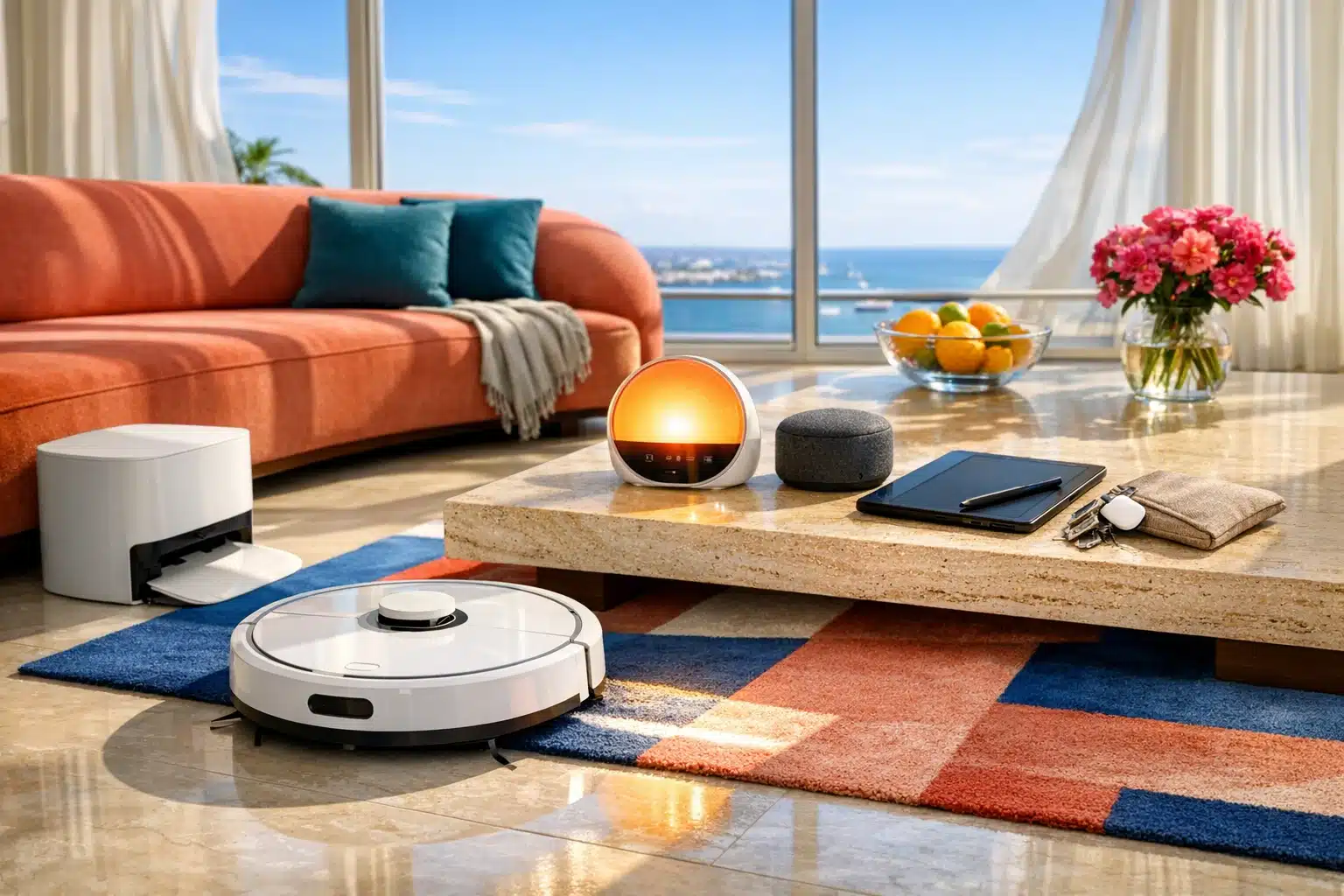
Robot vacuums are a classic example of convenience technology that has genuinely matured. Early versions wandered around with the confidence of a lost shopping cart. Newer models often include room mapping, no-go zones, scheduled cleaning, obstacle detection, and self-emptying stations. They are not a replacement for all cleaning, especially in homes with stairs, thick rugs, or tight corners, but they are useful for maintenance between deeper sessions. For pet owners or anyone who dislikes visible dust by noon, they can make a home feel more under control with very little effort.
Other strong lifestyle gadgets include sunrise alarm clocks, smart speakers, digital note devices, Bluetooth trackers, and portable label printers. A sunrise alarm can make waking up less abrupt by gradually increasing light before the alarm sounds. Smart speakers help with timers, grocery lists, music, and reminders, while screen-equipped versions are useful in kitchens for recipes and video calls. Bluetooth trackers are a small miracle for people who routinely lose keys, wallets, or bags five minutes before leaving the house. One beep later, the mystery is solved.
Helpful features to look for include:
• Cross-platform compatibility if multiple people in the home use different phones
• Voice controls that actually understand natural commands
• Quiet operation, especially for bedrooms and shared spaces
• Replaceable parts or filters for longer product life
• Clear privacy settings for microphones, cameras, and stored data
Not every lifestyle gadget earns its spot. Some are charming but unnecessary, like devices that solve problems nobody truly had. A smart mug that keeps coffee at a set temperature can be delightful for slow sippers, but it is less essential than a tracker, good lighting, or a reliable home assistant. The trick is to choose gadgets that support real habits. The best ones do not shout for attention. They just make the day run with fewer bumps, like a skilled stage crew keeping the show smooth behind the curtain.
Travel, Work, and On-the-Go Gadgets for Mobility, Focus, and Peace of Mind
When life happens on the move, the right gadget can feel like a tiny superpower. Whether the day includes commuting, business travel, remote work, campus life, or weekend escapes, portable technology can reduce stress, protect time, and keep essential tools within reach. This category matters because convenience is not just about comfort; it often affects safety, productivity, and confidence when plans shift without warning.
Portable power remains one of the most practical investments. A good power bank can keep a phone alive through navigation, video calls, mobile payments, and messaging. Capacity matters here. Smaller models around 5,000 mAh are easy to carry and can top up a phone once, while 10,000 to 20,000 mAh units offer more flexibility for longer days. Fast-charging standards such as USB-C Power Delivery are especially useful because they shorten charging times and reduce cable clutter. For laptop users, compact GaN chargers are another smart upgrade. They are smaller than many traditional chargers yet powerful enough to charge phones, tablets, and some laptops from one plug.
Audio and workspace gadgets also make a major difference. Noise-cancelling earbuds or headphones can transform crowded trains, shared offices, and noisy cafés into something far more manageable. Foldable keyboards, slim laptop stands, and wireless mice help create a comfortable mobile workstation without turning a tote bag into gym equipment. An e-reader is another underrated travel companion: lighter than multiple books, easier on the eyes than many phones, and ideal for reading during flights or waiting times.
For people who are frequently out and about, a short checklist helps:
• Power bank size, weight, and airline compliance
• Multi-device charging support
• Tracking tags for luggage, keys, and backpacks
• Personal safety alarms with loud output and easy activation
• Durable materials that survive being tossed into bags day after day
Travel gadgets should be chosen with realism. A sleek accessory that looks impressive online but dies quickly, feels fragile, or requires five adapters will become a burden. The best portable gadgets are dependable, compact, and ready when needed. They are the kind of tools that sit quietly in a bag until the exact moment they save the day, which is a very cool trick for something small enough to fit beside a lipstick and a boarding pass.
Conclusion: Choosing the Right Gadgets for Real Life, Not Just for the Hype
The most innovative gadgets for women are not defined by pink packaging, trend-driven branding, or the promise of a magically upgraded life. They stand out because they solve real problems in ways that feel personal, efficient, and enjoyable. A smartwatch that helps manage a packed schedule, a hair tool with better heat control, a tracker that rescues misplaced keys, or a fast charger that keeps a workday on track may seem simple on their own. Together, they create a more supportive daily environment. That is where the real appeal of modern gadgets lives: not in novelty alone, but in practical usefulness shaped by actual routines.
For most buyers, the best approach is to think in layers. First, consider where the biggest friction points are. Is the challenge staying organized, getting out the door faster, commuting safely, keeping devices charged, or streamlining home tasks? Second, look at compatibility. A gadget should work smoothly with the phone, apps, chargers, and habits already in place. Third, weigh comfort and design. A device can be feature-rich, but if it is awkward to wear, annoying to clean, or unattractive to keep on display, it is less likely to become part of daily life.
A smart buying checklist might include:
• Will this gadget save time, reduce stress, or improve consistency?
• Is the battery life realistic for how it will be used?
• Are privacy and data settings clearly explained?
• Does the product feel durable enough for regular use?
• Is it likely to become a routine tool rather than a short-lived impulse buy?
For women shopping for themselves, the sweet spot is often found where performance, design, and ease of use overlap. For people buying gifts, the safest choices are usually versatile gadgets with broad appeal: portable chargers, Bluetooth trackers, quality wearables, or well-designed home helpers. In the end, the coolest gadget is not the loudest or the newest. It is the one that quietly earns a permanent place in everyday life, making ordinary moments a little smoother and leaving just enough room for everything else that matters.