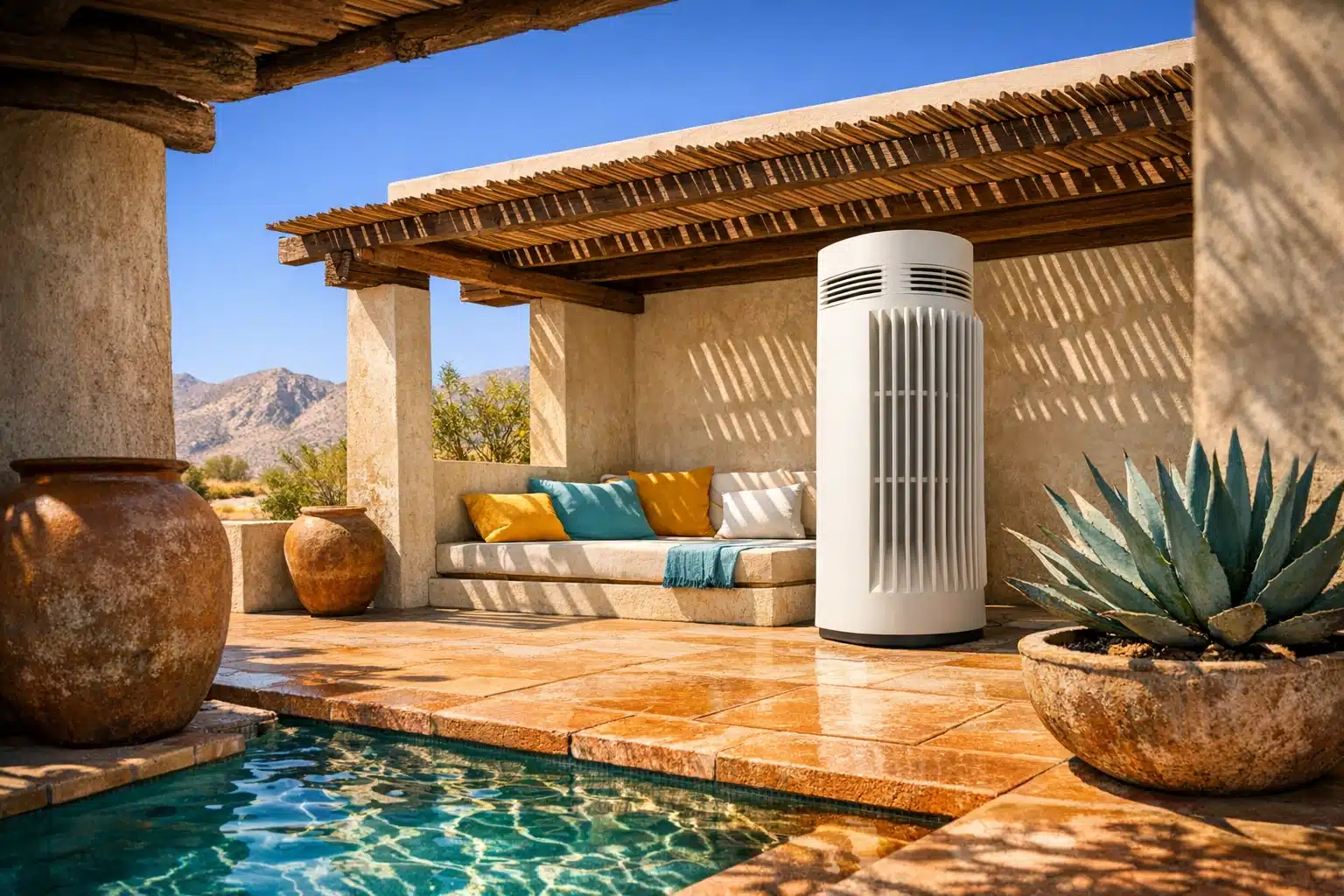
Innovative Cooling Systems Replacing Ceiling Fans in 2026
For decades, the ceiling fan was the easy answer to a hot room: cheap to buy, simple to wire, and familiar in almost every home. In 2026, that old standby is meeting a new generation of cooling systems that do more than stir air. Smart controls, quieter hardware, better insulation, and rising expectations around energy use are pushing households toward solutions that cool with greater precision, comfort, and flexibility.
Outline:
- Why ceiling fans are losing their central role in modern homes
- How ductless inverter systems and smart zoning are becoming mainstream replacements
- Why radiant cooling and chilled surfaces are drawing interest in efficient buildings
- Which climate-specific and personal cooling technologies are gaining traction in 2026
- How homeowners, renters, and renovators can choose the right system for real-life use
Why Ceiling Fans Are No Longer the Default Cooling Answer
Ceiling fans are not disappearing overnight, but their role is changing fast. For years they were treated as a near-universal fix for summer discomfort. The logic seemed obvious: install a fan, move the air, feel cooler. That still works in some situations, yet the modern expectation of comfort has moved well beyond a rotating set of blades. A fan can help people feel cooler because faster-moving air speeds up evaporation from the skin, but it does not lower the actual air temperature. In a sealed bedroom on a humid night, that difference matters more than it used to.
Several trends are pushing this shift. Homes in 2026 are often better insulated and more airtight than homes built a generation ago. That improves efficiency, but it also means indoor comfort depends more on controlled ventilation, humidity management, and precise cooling output. A ceiling fan does none of those jobs on its own. If a room is muggy, a fan may simply move warm, damp air around. If the room is empty, the fan may use electricity without delivering any practical benefit. Typical ceiling fans are not huge power users, often drawing somewhere between 15 and 75 watts depending on size and speed, but energy awareness now goes beyond wattage. People are asking whether a device solves the real problem.
Another factor is design. Open-concept living areas, home offices, compact apartments, and low-profile modern interiors do not always suit a large overhead fixture. Some people dislike the flicker of moving blades under recessed lights. Others find the dust buildup annoying, especially in allergy-prone households. And in rooms with bunk beds, tall furniture, loft spaces, or sloped ceilings, the classic fan is not always the best fit.
There is also the issue of comfort consistency. A ceiling fan can make one spot feel decent while leaving another corner stale. By contrast, newer systems increasingly aim to manage a whole indoor environment. That means cooling, dehumidifying, filtering, sensing occupancy, and adjusting output without constant manual tweaking.
In simple terms, the fan is being replaced not because it stopped working, but because the definition of “working” got stricter. In 2026, people want cooling systems that can:
- lower both temperature and humidity
- respond automatically to room conditions
- operate quietly enough for sleep and focused work
- target only occupied zones to reduce waste
- blend into the architecture rather than dominate it
The ceiling fan remains useful as a support tool, especially in mild weather, but it is no longer the uncontested star of residential cooling. The market is moving toward systems that treat comfort as a full equation rather than a breeze on demand.
Ductless Inverter Systems and Smart Zoning Are Becoming the Mainstream Replacement
If one technology is leading the practical replacement of ceiling fans in 2026, it is the ductless inverter heat pump paired with smart zoning controls. In many homes, this is the point where cooling stops feeling like a compromise. Instead of blowing air around and hoping for relief, these systems actively remove heat from the room and, crucially, take moisture out of the air when designed and sized correctly. That single difference explains much of their growing appeal.
Modern mini-split systems use variable-speed compressors, which means they can ramp output up or down instead of constantly switching on and off at full blast. That improves comfort because the room stays more stable. It can also improve efficiency because the system avoids the repeated energy spikes of older single-stage equipment. Many high-efficiency models in 2026 achieve strong seasonal performance ratings, and in real-world retrofits they often reduce energy use compared with older central air systems, especially in homes with poor ductwork or rooms that never cooled evenly in the first place.
The comparison with a ceiling fan becomes especially clear at night. A fan may make a bedroom feel tolerable, but a ductless indoor unit can quietly hold a set temperature, trim humidity, and direct air where needed. Add occupancy sensors, app-based scheduling, and room-by-room zoning, and the system starts to feel less like a machine and more like a calm background service. You notice the comfort first and the hardware second.
There are several forms this replacement can take:
- wall-mounted mini-split heads for quick retrofits
- ceiling cassette units that sit flush and preserve the look of the room
- slim ducted mini-splits for hidden air delivery in bedrooms or small suites
- window-mounted heat pumps for renters and smaller spaces
Smart controls are a big part of the story. In 2026, many systems can read indoor temperature, relative humidity, occupancy patterns, and even outdoor forecasts. That allows better pre-cooling before peak afternoon heat and less wasted operation when a room is empty. Some platforms also integrate with blinds, ventilation systems, and utility time-of-use pricing, helping households shift energy demand to cheaper periods.
Of course, ductless systems are not perfect. Up-front costs are higher than those of a basic fan, installation quality matters enormously, and some people do not like the look of a wall unit. Yet for households that want actual cooling rather than air movement alone, the value proposition is increasingly strong. This is especially true in older homes where adding full ducts would be invasive and expensive.
What makes inverter-based cooling so significant is that it turns a once-binary choice into something more nuanced. Instead of “fan or central AC,” buyers now have a middle path: efficient, zoned, scalable cooling that can fit apartments, additions, garages, renovated attics, and entire houses. That flexibility is exactly why ceiling fans are being pushed to the sidelines in so many 2026 upgrades.
Radiant Cooling, Chilled Ceilings, and Invisible Comfort Are Moving from Niche to Notable
Some of the most interesting cooling systems replacing ceiling fans in 2026 barely look like cooling systems at all. Radiant cooling panels, chilled ceilings, and chilled beam concepts are gaining attention because they shift the experience of comfort away from obvious airflow and toward quiet, even heat absorption. It is a different idea of cool: less wind on your face, more relief from the surrounding surfaces.
To understand the appeal, think about stepping into an old stone building on a hot day. The air may not be dramatically colder, but the room feels calmer and more comfortable because the surfaces around you are not radiating heat back at your body. Radiant cooling works on a similar principle. Water or another cooling medium circulates through panels in the ceiling or walls, drawing heat away from occupants and furnishings. Since people exchange heat with surfaces as well as air, reducing the mean radiant temperature can improve comfort without aggressive air blasting.
This approach has several advantages in the right building. It is exceptionally quiet, it avoids the visual presence of large fans or air handlers, and it can allow comfortable conditions at thermostat settings that might otherwise feel warm. In well-designed homes and offices, that can support lower peak energy demand. Radiant systems also pair naturally with heat pumps and hydronic infrastructure, making them attractive in high-performance construction and premium renovations.
Still, this is not a plug-and-play solution for every household. The biggest technical issue is condensation control. If a chilled ceiling surface drops below the dew point of indoor air, moisture can form. That means radiant cooling usually needs careful humidity management, often through dedicated ventilation or dehumidification equipment. Installation can also be more specialized, which raises initial cost.
Even with those caveats, interest is growing because the benefits are compelling:
- very low noise levels, often far quieter than fan-based cooling
- clean visual design with minimal ceiling clutter
- uniform comfort across a room rather than a strong breeze in one spot
- good compatibility with energy-efficient building envelopes
- reduced dust movement compared with conventional high-airflow methods
Where does this fit in everyday life? New custom homes, architect-designed apartments, boutique hospitality spaces, and net-zero projects are the most visible adopters. Offices and educational buildings are also exploring chilled beam and radiant strategies because they support acoustic comfort and flexible interiors. As component prices slowly normalize and designers gain experience, the idea is becoming less exotic.
The ceiling fan, in comparison, suddenly feels blunt. It occupies the center of the ceiling, creates visible motion, and offers one main function. Radiant cooling is almost the opposite: hidden, subtle, and integrated into the building itself. It does not suit every retrofit, and it certainly does not win on simplicity, but it shows where the market is heading. In 2026, innovation in cooling is not only about stronger airflow. It is also about making comfort feel quieter, cleaner, and almost invisible.
Climate-Specific Innovation: Evaporative Cooling, Thermal Storage, and Personal Microclimate Systems
Not every replacement for the ceiling fan tries to cool an entire home in the same way. One of the most important trends in 2026 is the rise of climate-specific and user-specific cooling. Instead of one generic solution for every room in every region, manufacturers are leaning into systems that respond to local weather patterns, occupancy habits, and even body-level comfort. This is where the cooling market starts to get creative.
In dry climates, advanced evaporative cooling is seeing renewed interest. Traditional swamp coolers had a mixed reputation, but newer indirect and hybrid evaporative systems are more refined. They can cool incoming air efficiently while avoiding some of the excess indoor moisture associated with older direct evaporative designs. In places with low humidity, they can use far less electricity than compressor-based air conditioning. For homeowners facing long hot seasons and expensive utility rates, that trade-off is hard to ignore.
Another emerging category involves thermal storage and phase-change materials. These systems do not always cool the room directly in a dramatic, immediate way. Instead, they absorb heat during warmer periods and release it later when conditions are milder. Some are built into wall panels, ceiling assemblies, or furniture-adjacent products. Others pair with heat pumps and smart controls to pre-cool spaces during off-peak hours. It is a little like giving the building a thermal memory. Rather than reacting late, it prepares early.
Then there is the rise of personal microclimate cooling. This category includes desk-area air systems, under-chair ventilation, bed cooling pads, sleep climate toppers, and compact directional air units that serve one person instead of a whole room. These products are especially attractive for apartments, shared households, and home offices where one person wants relief without cooling every square foot. In a world of hybrid work and staggered schedules, that matters.
What makes these options notable is their precision. They answer questions ceiling fans never really addressed well:
- What if only one person is in the room?
- What if the local climate favors evaporative cooling over refrigerated air?
- What if utility pricing rewards pre-cooling at specific times?
- What if sleep comfort matters more than daytime airflow?
These technologies will not replace every fan in every house. A personal bed-cooling system, for example, solves a nighttime comfort problem, not a full-house load. But together they reflect a major change in thinking. Cooling in 2026 is becoming modular. It is less about installing one appliance and hoping it suits every season, every body, and every room. It is more like building a layered strategy.
That is why the ceiling fan is increasingly being outpaced. It offers a broad, simple gesture of comfort. The newer systems offer a more tailored response. And once people experience targeted cooling that matches their actual habits, going back to a one-speed answer can feel like trading a smart map for a paper sketch.
What Homeowners, Renters, and Renovators Should Choose in 2026
For most readers, the big question is not whether cooling technology is changing. It is which option makes sense in a real home, with real constraints, and a real budget. The best replacement for a ceiling fan depends on the building, the climate, the number of occupants, and how long someone plans to stay in the property. The good news is that 2026 offers more paths than ever before.
Homeowners planning a long-term upgrade should usually start with a simple truth: comfort comes from the whole system, not a single device. Before buying equipment, it makes sense to check insulation, air sealing, window shading, and ventilation. A smaller, smarter cooling system often performs better in a tightened-up home than a bigger one in a leaky shell. After that, ductless inverter heat pumps are often the most practical replacement. They offer real temperature control, dehumidification, room zoning, and year-round heating value in many climates.
Renters need a different playbook. Permanent installations may be limited, so the most useful options are often:
- window heat pumps or efficient portable cooling units with proper venting
- compact tower circulators paired with dehumidifiers
- bed cooling or desk-area microclimate systems for focused relief
- smart plugs and sensors that automate operation around actual occupancy
Renovators and custom builders can think bigger. If the project involves opening ceilings or redesigning mechanical systems, radiant cooling, concealed mini-splits, or hybrid ventilation setups become more realistic. These approaches can improve aesthetics, lower perceived noise, and create a more polished indoor experience. In premium projects, the disappearance of visible cooling hardware is often part of the appeal.
There are also practical questions buyers should ask before choosing any system:
- Does it control humidity or only move air?
- How loud is it during sleep hours?
- Will installation quality make or break performance?
- How easy is filter cleaning and routine maintenance?
- Does it cool only occupied areas, or the entire home regardless of use?
For the target audience of this topic, the takeaway is clear. If you are still relying on a ceiling fan as your main defense against heat, 2026 offers better options almost everywhere. That does not mean fans are obsolete; they still work well as supporting tools in mild weather or alongside efficient cooling systems. But if your goal is lower humidity, steadier temperatures, quieter nights, and smarter energy use, the market has moved on.
The future of home cooling is not one dramatic invention that wipes out everything before it. It is a set of better-matched solutions: inverter systems for flexible zoning, radiant designs for silent comfort, climate-specific equipment for regional efficiency, and personal cooling for rooms that do not need full-scale treatment. For homeowners, renters, and renovators alike, the smartest move is to choose the system that fits how the space is actually used. That is the real replacement story of 2026.