Male Circulation Devices for Erectile Dysfunction and Vascular Health: What to Know
Erectile dysfunction is often discussed as a bedroom problem, but the bigger story usually runs through the blood vessels. Devices that support penile blood flow, monitor circulation, or encourage healthier vascular habits can help some men manage symptoms while also prompting a closer look at heart health. That makes this topic relevant not only for sexual function, but for long-term wellbeing. Knowing which tools are useful, which are overhyped, and when to involve a clinician can save time, money, and worry.
Article Outline
This guide starts with the vascular science behind erections, then compares the main circulation-focused devices used for ED. It also looks at tools that support whole-body vascular health, because better blood vessel function rarely stays in one place. The final section offers a practical framework for choosing safely and spotting exaggerated claims before they empty your wallet.
- Why circulation matters in erectile function
- How vacuum erection devices work and who may benefit
- Where constriction rings and combination systems fit in
- Which broader health tools support vascular function
- How to compare options, avoid red flags, and know when to see a clinician
Why Erectile Function Is So Closely Tied to Circulation
Erections depend on several systems working together, including blood vessels, nerves, hormones, and the brain. Of those pieces, circulation often plays the starring role. When sexual arousal triggers the release of chemical signals such as nitric oxide, the smooth muscle in penile arteries relaxes, blood flow increases, and the spongy tissue fills. If that vascular response is weak, inconsistent, or delayed, erection quality usually suffers. In other words, the penis is not a separate machine bolted onto the body. It is more like a small, sensitive vascular barometer.
That sensitivity matters because penile arteries are narrower than coronary arteries. Atherosclerosis, endothelial dysfunction, and poor vessel flexibility may show up in erectile function before they produce symptoms elsewhere. This is one reason clinicians sometimes describe ED as an early warning sign rather than a private inconvenience. Estimates often suggest that tens of millions of men experience some degree of erectile dysfunction, and the odds rise with age, diabetes, high blood pressure, smoking, obesity, and physical inactivity. The exact number varies by study, but the direction of the evidence is steady: when vascular risk climbs, erections often become less reliable.
Several common conditions can damage circulation gradually:
- High blood pressure can stiffen and injure blood vessel walls.
- Diabetes may harm both small vessels and the nerves that support arousal.
- High cholesterol can contribute to plaque buildup.
- Smoking impairs endothelial function and reduces nitric oxide availability.
- Sleep apnea and chronic stress may worsen vascular strain over time.
This is why circulation devices deserve a balanced discussion. Some are designed to create a temporary mechanical effect, such as drawing blood into the penis. Others are not ED devices at all, but tools that help a man improve the vascular conditions feeding the problem. A blood pressure cuff, for example, may not seem romantic, but it can be more important than a glossy gadget in a black box. If erectile changes are persistent, especially when they appear alongside reduced exercise tolerance, high blood sugar, or chest discomfort, the smarter move is not to chase miracle claims. It is to see ED as a clue worth decoding. That perspective turns the conversation from embarrassment into useful action.
Vacuum Erection Devices: The Best-Studied Mechanical Option
Among circulation-focused tools for ED, the vacuum erection device, often called a penis pump or VED, is the best established. Its design is simple: a cylinder fits over the penis, a manual or battery-powered pump creates negative pressure, and that vacuum pulls blood into the erectile tissue. In many systems, a constriction ring is then placed at the base to help maintain firmness long enough for sexual activity. The method is mechanical rather than hormonal, which makes it appealing to men who cannot take certain medications, prefer to avoid systemic side effects, or want a non-drug option after prostate treatment.
Clinical experience with VEDs goes back decades. Studies commonly report that a majority of motivated users can achieve an erection suitable for intercourse, often in the range of roughly 60 to 80 percent, though satisfaction is usually lower than raw success rates suggest. That gap matters. A device may technically work yet still feel awkward, interrupt the moment, or produce an erection that feels cooler, tighter, or less natural than expected. Good information helps men compare “can use” with “want to use.” Those are not the same question.
Advantages of a VED include:
- No systemic drug exposure
- Use on demand rather than waiting for a daily medication to accumulate
- Possible role in penile rehabilitation after some urologic procedures
- Lower long-term cost than repeated prescription refills for some users
There are also limitations and cautions. Bruising, temporary numbness, petechiae, mild discomfort, or a bluish color can occur, especially if the vacuum is too strong or used for too long. Men taking blood thinners, men with certain bleeding disorders, or those with reduced penile sensation should ask a clinician before use. It is wise to look for a device with a pressure limiter or clearly defined suction control rather than buying the cheapest anonymous listing online. Medical-grade models may cost more, but features such as better seals, more reliable pumps, clearer instructions, and safer pressure ranges can make the difference between a practical tool and a drawer-bound regret.
If there is a poetic lesson here, it is that physics can sometimes lend biology a hand. Still, a pump is a tool, not a cure. It helps create an erection in the moment. It does not repair diabetes, reverse smoking damage, or clear arterial plaque, so it works best when paired with a broader plan.
Constriction Rings and Combination Systems: Useful for Some, Unsuitable for Others
Constriction rings are often mentioned in the same breath as pumps, but they do a different job. A ring does not create new blood flow on its own. Instead, it helps slow the outflow of blood once an erection is achieved, whether naturally, with medication, or with a vacuum device. That distinction is important because many men buy a ring expecting it to solve weak inflow, when its real purpose is to improve retention. For a man who can get partly firm but loses the erection quickly, the right ring may be more useful than expected. For a man who struggles to become erect in the first place, it may do very little without another therapy.
There are several styles, including soft silicone rings, adjustable loops, and integrated systems packaged with vacuum devices. The softer models can be easier for beginners because they are more forgiving and simpler to remove. Adjustable versions can offer a more customized fit but require careful handling. Combination systems are common because they address both sides of the equation: the pump helps bring blood in, and the ring helps keep enough of it there for a practical window of time.
Safe use matters more than clever marketing. General guidance is to avoid leaving a constriction ring in place for more than 30 minutes. Pain, marked discoloration, coldness, numbness, or difficulty removing the ring are signs to stop immediately. These devices may not be appropriate for men with significant neuropathy, severe penile curvature, clotting concerns, sickle cell disease, or poor manual dexterity unless a clinician advises otherwise. Sleeping with a ring on is unsafe, and stronger compression is not better simply because it sounds more effective.
One important niche for combination use is penile rehabilitation after some forms of prostate surgery. Under a urologist’s guidance, low-pressure pumping may be recommended to support tissue oxygenation and preserve penile length while nerve recovery unfolds. The research is mixed on exactly how much long-term benefit this provides, but it remains a common clinical strategy because the downside is manageable when the device is used correctly. The practical takeaway is straightforward:
- Use a ring if the issue is mostly maintaining firmness.
- Use a pump if the issue is mainly creating enough blood inflow.
- Use a clinician-guided combination approach if recovery after treatment is part of the picture.
Like a good wrench, the value lies in matching the tool to the problem. Too many disappointed buyers never had a tool problem at all. They had a diagnosis problem.
Broader Vascular Health Tools That Can Matter More Than an ED Device
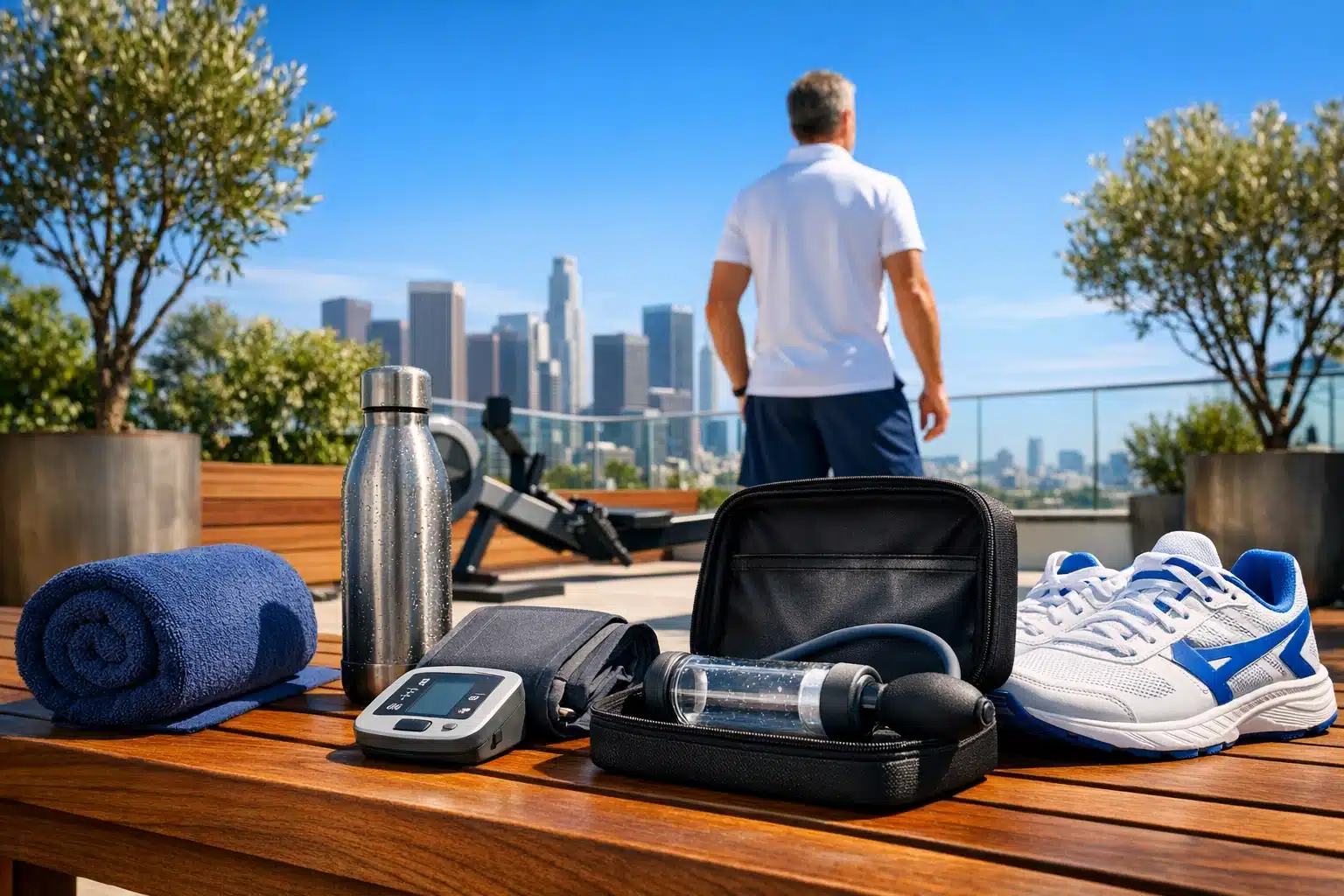
If circulation is central to erectile function, then the smartest tool may not always be the most intimate one. Many men focus on devices aimed directly at erections while ignoring the instruments that reveal why the problem is happening. A home blood pressure monitor, for example, can provide useful information within days. Elevated blood pressure often has no obvious symptoms, yet it can quietly damage arteries and reduce vascular responsiveness. Likewise, a glucose monitor for men with diabetes, or a wearable that helps track exercise, sleep, and resting heart rate, can support changes that improve endothelial function over time.
Evidence consistently supports lifestyle treatment for vascular health, and some studies show that better fitness, weight control, and cardiometabolic management can improve erectile function scores as well. Aerobic exercise is especially important. Public health guidance commonly recommends at least 150 minutes of moderate activity per week, and men who move more tend to see benefits that extend beyond the waistline. The body is wonderfully unsentimental in this regard. It rewards habits, not wishes.
Useful support tools may include:
- Home blood pressure cuffs for spotting trends rather than guessing
- Fitness trackers that make walking, sleep, and heart-rate data visible
- Stationary bikes, rowing machines, or walking pads that lower the barrier to regular exercise
- Resistance bands or simple strength equipment to improve metabolic health
- Smart scales that help track weight and body-composition changes over time
Not every gadget earns its shelf space. Products marketed as “circulation enhancers” through magnets, passive vibration, mystery frequencies, or unspecified energy fields often lean harder on language than evidence. Some may feel pleasant or relaxing, but that does not mean they improve endothelial function or treat clinically meaningful ED. Intermittent compression boots, for instance, may help leg recovery in some settings, yet there is little reason to assume they improve erectile function directly. A wearable that nudges you into a daily walk may be less glamorous, but it is often far more grounded in reality.
There is also value in tracking patterns. If erection quality worsens during periods of poor sleep, higher blood pressure, reduced exercise, or rising alcohol intake, that information can be actionable. The goal is not obsessive self-surveillance. It is pattern recognition. When a man starts seeing the links between his metrics and his symptoms, the problem becomes less mysterious and more manageable. In that sense, the best circulation tool may be the one that turns vague concern into measurable progress.
How to Choose Safely, Compare Claims, and Decide When Professional Help Matters
Shopping for an ED or circulation device can feel like entering a carnival where every booth promises a shortcut. Some products are legitimate tools. Others are dressed-up optimism with a return policy designed to outlast your patience. The safest way to compare options is to start with your actual situation rather than the loudest headline. Are you having trouble getting an erection, keeping one, or both? Did the problem begin gradually or suddenly? Are there symptoms such as pelvic pain, new penile curvature, reduced libido, numbness, fatigue, chest discomfort, or poorly controlled blood sugar in the background? Those details shape what kind of device, if any, makes sense.
A few practical buying questions can narrow the field quickly:
- Is the product clear about how it works, or does it rely on vague claims?
- Does it include safety guidance, pressure limits, sizing help, and cleaning instructions?
- Is there evidence for the mechanism, not just glowing testimonials?
- Do your medical conditions or medications create extra risk?
- Would a clinician-guided plan save money by avoiding trial and error?
Red flags are equally important. Be cautious with phrases such as “permanent enlargement,” “instant vascular repair,” “doctor-free cure,” or “guaranteed results in days.” Legitimate devices usually describe a function, not a fantasy. They help create or maintain erections, support rehabilitation, or aid health tracking. They do not rebuild arteries overnight or replace a medical evaluation when symptoms point to something bigger.
Professional guidance matters especially when ED appears suddenly, follows pelvic surgery, occurs with pain, or develops alongside signs of cardiovascular disease. A clinician may check blood pressure, fasting glucose or A1C, lipids, medication side effects, hormone levels when appropriate, and other contributors such as depression or sleep apnea. Sometimes the best plan combines approaches: a vacuum device for reliable mechanical help, exercise for vascular improvement, and treatment of underlying conditions that are quietly eroding function.
For many men, the most efficient path is not “device first, questions later.” It is “questions first, device second.” That order protects both health and budget. Used wisely, circulation tools can be helpful. Used as substitutes for diagnosis, they can become expensive distractions. The goal is not to buy hope in a box. It is to choose a tool that matches your body, your risks, and your real needs.
Conclusion for Men Comparing Circulation Tools and ED Devices
If you are weighing a pump, ring, monitoring device, or broader vascular health tool, think in layers rather than chasing a single fix. Mechanical devices can help with the immediate problem of getting or maintaining an erection, and for some men they are practical, effective, and worth keeping. At the same time, ED often reflects the condition of the blood vessels more broadly, which means the most meaningful progress may come from blood pressure control, diabetes management, exercise, better sleep, and medical follow-up. A smart approach is to treat symptom relief and long-term vascular health as partners, not competitors. When you choose tools with realistic expectations and a little clinical guidance, you are far more likely to improve both confidence in the present and health in the years ahead.