One-Pot Meals for Seniors: Simple and Nutritious Recipe Ideas
Cooking for one or two can become surprisingly complicated with age, especially when energy, appetite, and mobility shift from one day to the next. One-pot meals answer that problem with a simple advantage: fewer steps, less cleanup, and a complete meal that feels manageable instead of exhausting. They can be built from affordable staples, adjusted for softer textures, and portioned for later with very little effort. That makes them especially relevant for seniors who want reliable nourishment and a steadier, more comfortable rhythm in the kitchen.
Outline: This article begins by explaining why one-pot cooking suits older adults so well, then looks at the nutrition priorities that matter most in later life. It next covers practical planning, kitchen tools, and pantry habits that make cooking easier. After that, it offers adaptable recipe ideas with comparisons to help readers choose meals that fit their needs. It closes with a practical summary for seniors and caregivers who want to make these meals part of everyday life.
Why One-Pot Meals Work So Well for Seniors
One-pot cooking is not merely a trend built for busy families or glossy food magazines. For seniors, it can be a genuinely practical way to stay independent in the kitchen while reducing physical strain. A meal that comes together in one pot, one deep skillet, or one slow cooker limits the number of ingredients that need to be moved around, the number of surfaces that need cleaning, and the number of times a cook has to bend, lift, drain, or scrub. That matters more than many people realize. When grip strength is lower, balance is less steady, or standing for long periods feels tiring, a simple format is not a luxury. It is a useful design.
One-pot meals also support consistency. A person who feels overwhelmed by cooking may skip meals, rely on snacks, or fall back on highly processed options that are convenient but not especially filling. By contrast, a pot of soup, stew, beans and rice, or tender pasta can provide several meals with a single effort. It is the culinary version of putting a comfortable coat by the door before the weather turns cold: the work is done once, and the benefit keeps showing up.
Compared with takeout, one-pot meals are often lower in sodium, more flexible in portion size, and easier on the budget. Compared with frozen individual dinners, they usually provide better texture and more room for ingredient adjustments. A pot of chicken and vegetable rice, for example, can be made softer, salt-conscious, or higher in protein without much trouble. The same cannot always be said for prepackaged meals designed for a mass market.
Key everyday benefits often include: • less dishwashing after the meal • easier portion control for one or two people • fewer trips between sink, counter, and stove • simpler batch cooking for later in the week. There is also a quieter psychological advantage. When cooking feels approachable, people are more likely to keep doing it. That confidence matters. A senior who can prepare a warm, balanced dinner without turning the kitchen upside down is not just saving time. That person is preserving comfort, routine, and a sense of capability.
Nutrition Priorities to Keep in Mind When Building a One-Pot Meal
A good one-pot meal for seniors is not just easy to prepare. It also needs to do real nutritional work. As people age, calorie needs may decrease because activity levels often change, but the need for key nutrients does not vanish. In some cases, it becomes more important to get better nutrition from fewer bites. That is why a smart one-pot meal should aim for a practical balance of protein, fiber, vegetables, healthy fats, and enough fluid-rich ingredients when possible.
Protein is especially important because it supports muscle maintenance, strength, and recovery. Many dietitians encourage older adults to pay closer attention to protein intake, though individual needs vary based on health conditions and medical guidance. In everyday cooking, that can mean adding chicken, fish, eggs, beans, lentils, tofu, yogurt, or shredded turkey to a meal instead of relying mainly on noodles or rice. A pot of lentil stew, for instance, offers more staying power than a plain vegetable soup because it contributes both protein and fiber. That combination can help a meal feel more satisfying for longer.
Fiber deserves equal attention. Constipation is a common concern among older adults, and fiber from beans, oats, vegetables, barley, and whole grains can help support regular digestion. A one-pot meal makes it easier to combine those ingredients naturally. Vegetable and bean chili, chicken barley soup, or oatmeal with fruit and nuts are all simple examples. Texture matters too. Some seniors need softer foods because of dental issues, dry mouth, or difficulty chewing. The beauty of soups, porridges, casseroles, and slow-simmered dishes is that they can be gentle without feeling bland.
Flavor should not be sacrificed in the name of health. In fact, that can backfire. If a meal is dull, it is less likely to be eaten. Herbs, garlic, onion, ginger, lemon, mild spices, and a splash of olive oil can bring life to a pot without depending heavily on salt. This can be useful because many older adults are advised to watch sodium intake, especially if they live with high blood pressure or heart concerns.
A balanced one-pot meal often follows a simple structure: • a protein source such as beans, chicken, eggs, or fish • vegetables for color, vitamins, and fiber • a starch or grain such as rice, potatoes, pasta, or barley • seasoning and healthy fat for flavor and satisfaction. If appetite is small, nutrient density matters even more. A creamy bean soup with vegetables may nourish better than a large bowl of broth with little substance. If there are medical needs such as kidney disease, swallowing difficulties, or diabetes, the basic template can still work, but adjustments should follow professional advice.
Planning Ahead: Kitchen Tools, Pantry Staples, and Easier Cooking Habits
The difference between cooking often and cooking occasionally is not always motivation. Quite often, it is setup. A senior-friendly one-pot routine becomes much easier when the kitchen is arranged around convenience, safety, and predictable ingredients. The ideal goal is not a gourmet workspace. It is a calm, practical environment where reaching for dinner does not feel like starting a project.
A few tools do most of the heavy lifting. A medium soup pot, a deep skillet with a lid, and a slow cooker can cover a remarkable range of meals. Some people also like electric multicookers because they reduce stove time, though they are not necessary. Lightweight cookware can be easier to handle than heavy cast iron. Clear measuring cups, sharp but manageable knives, and cutting boards that do not slide around are small details that make a big difference. For someone with arthritis or reduced hand strength, an electric can opener and pre-chopped frozen vegetables may save enough effort to make cooking realistic again.
The pantry matters just as much as the equipment. One-pot cooking works best when a few dependable ingredients are always around. Useful staples include: • canned low-sodium beans • canned tomatoes • broth or bouillon with moderate sodium • quick oats • brown or white rice • barley or small pasta • frozen mixed vegetables • onions and garlic • potatoes or sweet potatoes • eggs • canned tuna or salmon • olive oil and dried herbs. These are not glamorous ingredients, but they are flexible, affordable, and easy to combine in dozens of ways.
Planning also helps reduce waste. Seniors cooking for one may find that buying large amounts of fresh produce leads to spoilage. Frozen vegetables solve part of that problem because they can be used in small amounts without worrying that half a bag of spinach will wilt in the refrigerator. Canned beans, shelf-stable grains, and broth cartons also keep meal planning realistic. If energy is highest in the morning, chopping vegetables or assembling ingredients earlier in the day can make dinner less tiring later on.
There is also the question of safety. Older adults are more vulnerable to foodborne illness, so cooling and storing leftovers properly is important. In general, cooked leftovers are best refrigerated within two hours and eaten within about three to four days. Reheated dishes should be steaming hot throughout, and soups or stews should reach a safe internal temperature. A little planning turns one-pot meals into more than recipes. It turns them into a system: shop simply, cook once, eat well more than once, and avoid making the kitchen feel like a battlefield after every meal.
Five Adaptable One-Pot Meal Ideas That Are Simple, Nourishing, and Flexible
The best one-pot meals for seniors are not rigid recipes with a hundred precise rules. They are frameworks that welcome substitutions, softer textures, and seasonal ingredients. Think of them as friendly blueprints rather than strict instructions. Here are five especially useful ideas, each with its own strengths.
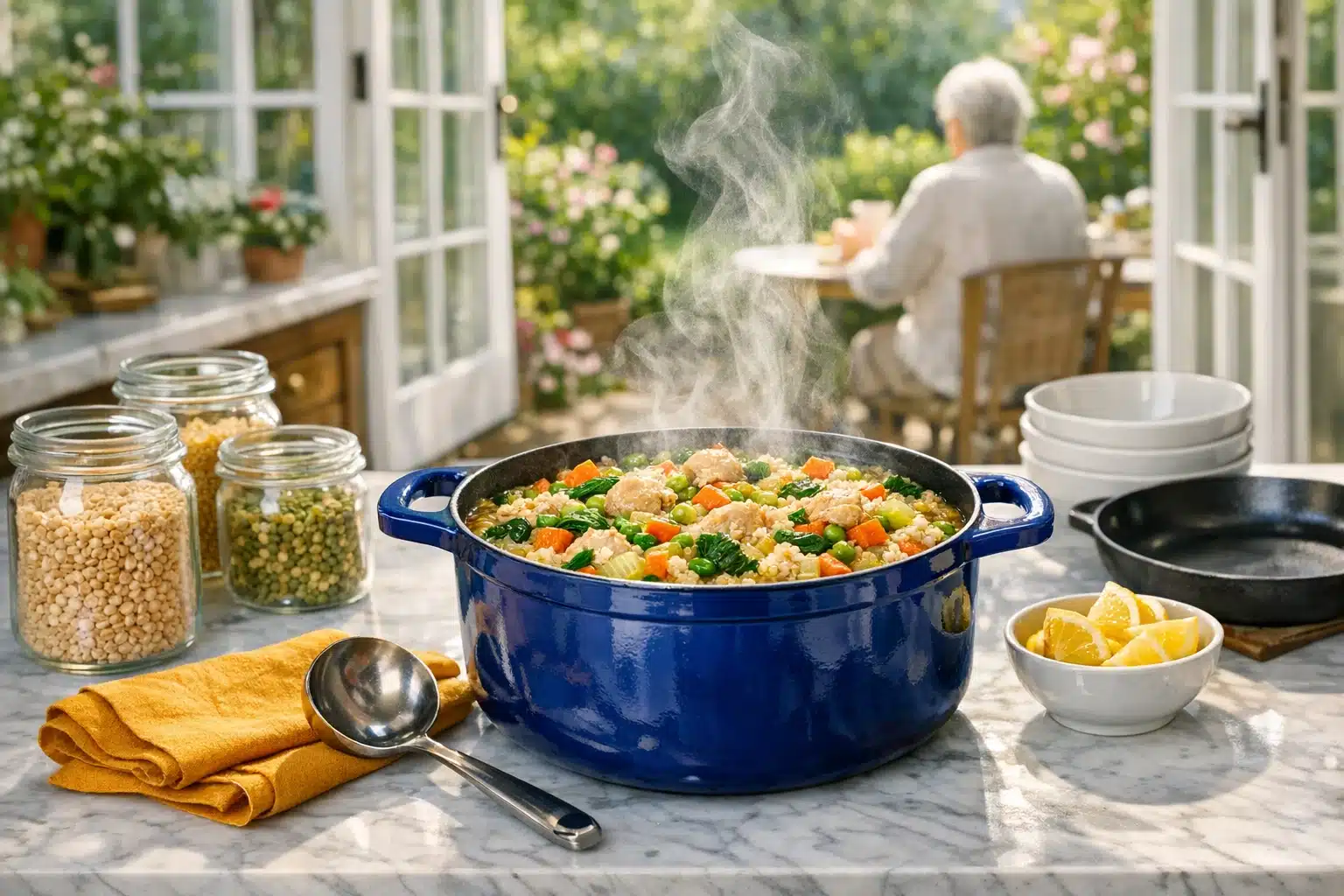
First, chicken, rice, and vegetable stew is a dependable all-rounder. Start with onion, carrot, celery, broth, rice, and bite-sized chicken. Simmer until the rice softens and the chicken is tender, then add peas or spinach near the end. This meal is gentle on the mouth, easy to portion, and simple to freeze. Compared with a dry rice dish served with separate vegetables, it usually reheats better and stays moist.
Second, lentil and sweet potato soup delivers excellent value. Lentils cook into a soft texture, sweet potatoes add mild sweetness and color, and tomatoes or broth create a full base. This option is generally less expensive than a meat-based stew and offers fiber along with protein. It is especially helpful for seniors who want more plant-based meals without sacrificing warmth or satisfaction.
Third, turkey or bean chili works well for those who enjoy bold flavor. Ground turkey gives lean protein, while beans add bulk and texture. Chili is easy to season mildly or more robustly, depending on preference. It can be served plain, with yogurt, or over a small scoop of rice. Compared with creamy casseroles, chili is often easier to freeze in single portions and can be thinned with broth if a softer texture is needed.
Fourth, vegetable pasta e fagioli is a strong choice when appetite is modest but comfort is still the goal. Small pasta shapes, beans, tomatoes, broth, and chopped vegetables create a meal that feels familiar and cozy. It offers a softer bite than many baked pasta dishes and can be made with whole-grain pasta if desired. If chewing is difficult, cook it a little longer so the vegetables and noodles become more tender.
Fifth, savory oatmeal with egg and greens is an often-overlooked option for lunch or supper. Oats cook quickly in broth or water, and a softly cooked egg, wilted spinach, mushrooms, or grated cheese can turn the bowl into a full meal. This is especially useful on low-energy days when a longer recipe feels out of reach. It is faster than soup, easier than a composed plate, and surprisingly satisfying.
When choosing among these meals, a few comparisons can help: • for the lowest prep, savory oatmeal and lentil soup are excellent • for freezer-friendly batch cooking, chili and chicken stew are strong choices • for softer textures, soups and stews usually outperform baked casseroles • for budget-conscious cooking, beans, lentils, oats, and frozen vegetables go far. A good recipe does not need to be fancy. It needs to be kind to the cook and generous to the eater.
A Practical Conclusion for Seniors and Caregivers
For seniors, one-pot meals offer more than convenience. They create a workable path between nutrition goals and real daily life. That path matters because the hardest part of healthy eating is often not knowing what is good for you. It is finding a way to prepare food regularly when energy is limited, appetite changes, hands tire more quickly, or the thought of washing several pans drains enthusiasm before dinner even begins. One-pot cooking narrows that gap. It asks less from the cook while still giving back something warm, balanced, and familiar.
The most useful approach is to start small and stay flexible. Choose two or three dependable meals instead of chasing novelty every night. Keep ingredients on hand for a basic soup, stew, chili, or grain bowl. Freeze leftovers in single servings so that a difficult day still ends with a proper meal. If taste changes, adjust seasoning. If chewing becomes harder, let dishes simmer longer, cut ingredients smaller, or use naturally softer foods like lentils, oats, beans, flaky fish, and cooked vegetables. If appetite is low, focus on meals that carry more nutrition in a modest portion.
Caregivers can also benefit from this style of cooking. A single pot is easier to monitor, easier to portion, and easier to customize for different needs. One batch can be mildly seasoned for one person and brightened with extra herbs or pepper for another. It also supports a calm kitchen routine, which can reduce stress for everyone involved. In households where time is limited, that simplicity has real value.
In the end, the best one-pot meal is the one that is realistic enough to make again. Not dramatic, not complicated, and not dependent on perfect energy or perfect timing. A pot of soup on the stove, a stew quietly bubbling, or oats turning creamy in a saucepan may not look glamorous, but they can support independence, nourishment, and comfort in a lasting way. For seniors who want meals that are easier to cook and easier to live with, one pot is often more than enough.