Paddle Boat Cruise on the Mississippi River: What to Expect
Gliding onto a paddle boat on the Mississippi is more than a sightseeing outing; it is a slow-moving introduction to one of America’s defining landscapes. These cruises connect travelers with river towns, engineering landmarks, music history, and the changing rhythms of life along the banks. Whether you book a two-hour excursion or a multi-day voyage, knowing what to expect helps you choose the right route, cabin style, season, and onboard experience.
Outline
- The river’s historical and geographic importance
- How cruise lengths and routes shape the trip
- What modern paddle boats are really like on board
- Planning, budgeting, and packing for the journey
- Who will enjoy the experience most and why
1. Why the Mississippi River Makes This Cruise Unique
A paddle boat cruise on the Mississippi River stands out because the river itself is not just a backdrop; it is the main character. Stretching roughly 2,340 miles from Minnesota to the Gulf of Mexico, the Mississippi has shaped trade, migration, agriculture, music, and regional identity for centuries. Its watershed drains about 41% of the contiguous United States, which helps explain why the river feels so influential even to travelers who have never seen it before. When you cruise here, you are not simply moving between ports. You are traveling along a working river system that helped build cities, move crops, and connect distant parts of the country long before highways and commercial aviation dominated long-distance travel.
The experience changes noticeably depending on where you sail. On the Upper Mississippi, travelers often see wooded bluffs, islands, narrower channels, and lock-and-dam systems that regulate navigation. This part of the river can feel intimate, scenic, and strongly tied to small-town Americana. On the Lower Mississippi, the scale changes. The waterway becomes broader, the currents can feel more powerful, and the cultural atmosphere shifts toward the Deep South, where port cities, levees, and musical history become more prominent. A route near New Orleans offers a different mood than one near Dubuque or St. Louis, and that contrast is one reason repeat travelers sometimes book more than one segment.
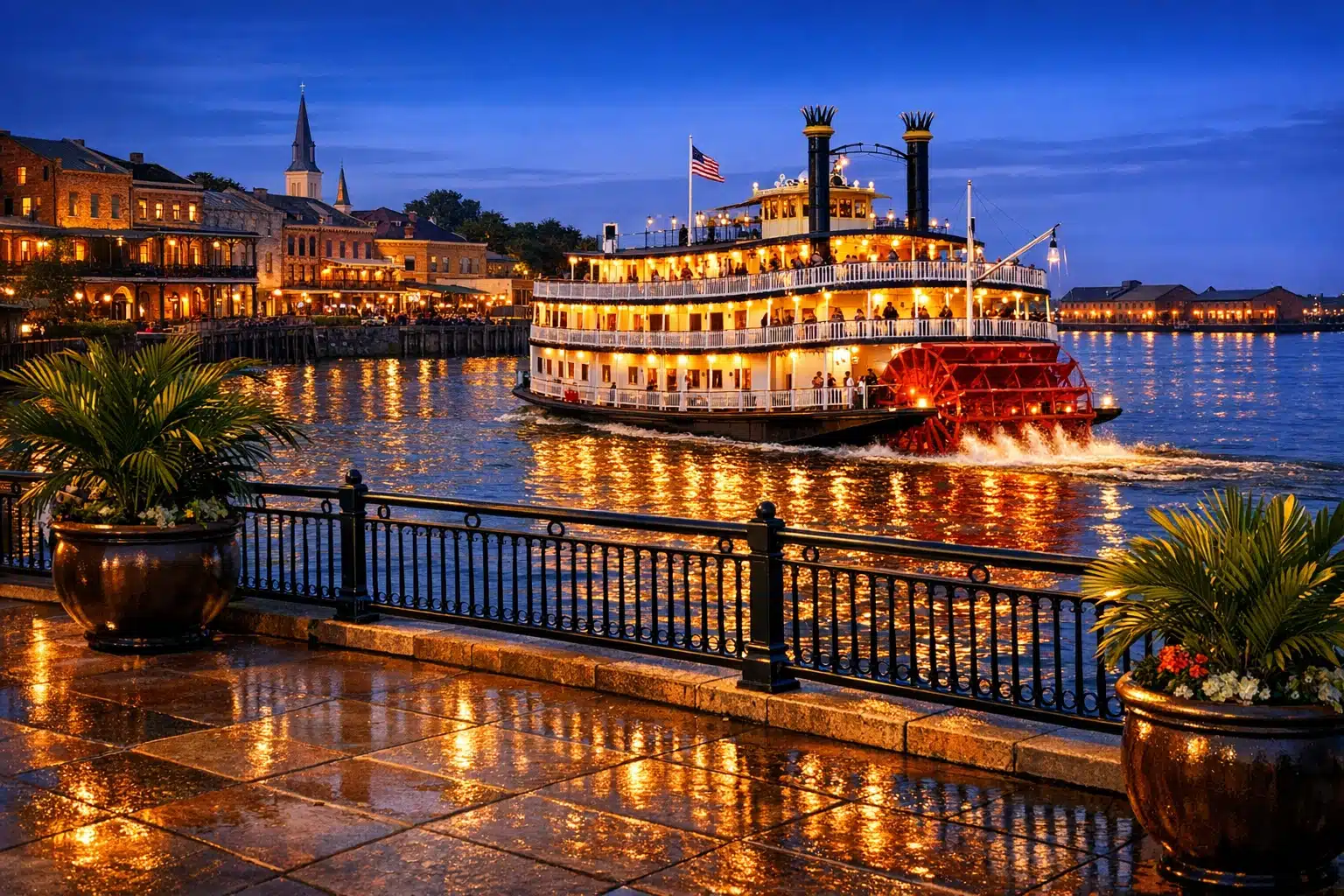
There is also the historical appeal of the boat itself. The classic paddle boat image comes from the 19th-century era of river steamers, when these vessels carried people, cotton, timber, and news through the interior of the United States. Today’s cruise vessels often borrow that look, especially with paddlewheel styling, wide verandas, and nostalgic interiors, but their navigation, safety equipment, and propulsion systems are modern. That means passengers get the romance of an older design without giving up basic comfort and regulation.
What makes the trip memorable is the combination of movement and meaning. Along the way, travelers may notice:
- Historic riverfront districts and preserved architecture
- Working barges that remind you the river still matters economically
- Changing ecosystems, from wetlands to bluff country
- Cultural links to blues, jazz, Mark Twain lore, and regional food traditions
In short, the Mississippi offers something many scenic cruises do not: a layered story. It is geography, history, commerce, and atmosphere moving together at the pace of the river.
2. Choosing the Right Cruise: Day Excursion, Overnight Stay, or Multi-Day Voyage
One of the biggest factors shaping your experience is the length of the cruise. People often use the phrase “paddle boat cruise” broadly, but not every trip delivers the same kind of travel. A short sightseeing cruise, usually lasting one to three hours, is ideal for travelers who want the feel of the river without a major commitment. These outings often focus on skyline views, narration about local landmarks, and a taste of life on the water. In cities such as New Orleans, Memphis, or St. Louis, a day cruise can work well as part of a larger itinerary. It gives you river atmosphere, photographs, and some historical framing, but it does not immerse you in the rhythm of overnight travel.
Overnight or weekend cruises create a very different experience. Once you sleep on board, the river begins to feel less like an attraction and more like a temporary way of life. Even a one-night itinerary changes your sense of distance and time. You may watch shorelines fade at dusk, wake to a different town, and settle into the gentle pattern of meals, narration, and deck time. This format suits travelers who are curious about river cruising but not yet ready to spend a week or more on board.
Multi-day voyages are where the Mississippi reveals its personality in full. These itineraries often connect culturally important stops and give passengers shore excursions that add context. Depending on the route, you might encounter Civil War sites, plantation-era architecture, literary history, museums, music venues, or bird-rich natural areas. Unlike ocean cruises, where sea days can separate destinations, Mississippi travel tends to keep the landscape close and visible. That proximity matters. You can actually watch the environment change as the boat moves from one region to another.
When comparing options, it helps to think in practical terms:
-
Day cruise: best for first-timers, families, and travelers on a city break
-
Overnight or weekend: best for couples or curious travelers testing the format
-
Multi-day voyage: best for history lovers, retired travelers, photographers, and anyone who enjoys slow travel
Season also matters. Spring often brings greener scenery and pleasant temperatures, though water levels can sometimes affect operations. Summer can mean long daylight hours and lively riverfront activity, but also more heat and humidity, especially farther south. Fall is popular because of milder weather and, in northern stretches, changing leaves. Winter departures are more limited in some areas, yet southern routes may remain appealing.
Before booking, ask a few simple questions: Do you want a scenic sampler or a deeper cultural journey? Are you more interested in urban riverfronts or smaller towns? Would you rather maximize shore excursions, or does sitting on deck with a drink and a view sound perfect? Your answers usually point to the right itinerary faster than any brochure does.
3. What Life On Board a Modern Mississippi Paddle Boat Is Really Like
Many first-time travelers imagine a Mississippi paddle boat as a floating time capsule, complete with antique décor, a calliope tune drifting over the water, and passengers dressed for a formal 19th-century dinner. The reality is more practical and, for most people, more comfortable. Modern paddle boats are built to satisfy contemporary safety standards, hospitality expectations, and accessibility needs, even when their exterior design nods to a classic riverboat silhouette. In other words, you get nostalgia as an atmosphere, not as an inconvenience.
Cabins and public spaces vary by vessel, but river boats are generally smaller than ocean-going cruise ships. That usually means fewer passengers, quieter common areas, and an easier sense of orientation. You are less likely to spend the trip navigating huge entertainment decks or waiting in long lines. Instead, the social experience often feels more relaxed. Guests may see the same people at breakfast, during an afternoon lecture, and again while watching the sunset from the deck. For some travelers, especially those who dislike the scale of mega-ships, this is a major advantage.
Dining tends to reflect the tone of the trip: regional influences, unhurried meals, and a schedule shaped around docking and excursions rather than nonstop nightlife. On some cruises, historians, naturalists, or local speakers provide talks that add depth to what you are seeing outside. That educational element is easy to underestimate until you are on the river. A levee, a bend in the channel, or a warehouse district becomes much more interesting once someone explains why it exists and how it changed the region. Good narration can turn a pleasant ride into an informed journey.
Travelers should also know what river cruising is not. It is usually not a high-energy resort vacation. Entertainment is often low-key, with live music, storytelling, local performers, or themed evenings rather than giant productions. Internet service may be inconsistent in some stretches. Motion is often gentler than on open sea routes, but docking maneuvers, passing traffic, and river conditions still create movement. The scenery is subtler than an alpine or tropical cruise, yet that subtlety is part of the appeal. The beauty comes in layers: old bridges, broad water at dusk, birds skimming the surface, grain elevators, church spires, and neighborhoods facing the current as they have for generations.
Typical onboard features may include:
- Observation decks or veranda spaces for sightseeing
- Regionally inspired meals and casual lounges
- Lectures, live music, or cultural presentations
- Shore excursions focused on history, food, architecture, or local music
If ocean cruising can feel like an event, Mississippi paddle boating often feels like a conversation. It asks you to look closer, slow down, and let the river do part of the storytelling.
4. Planning, Budgeting, and Packing for a Smooth River Journey
A Mississippi paddle boat cruise becomes much easier to enjoy when the planning matches the reality of the trip. Budget is the first practical issue. A short city sightseeing cruise may cost anywhere from the price of a museum outing to the cost of a special dinner, depending on meal service and timing. Multi-day cruises are a bigger investment and commonly run into the thousands of dollars per person, especially for private cabins with better views or balconies. That higher price can surprise travelers who assume river cruising should be cheaper than ocean cruising, but smaller vessels, limited capacity, and more inclusive programming often push the cost upward.
That said, comparing base fares alone can be misleading. Some trips include guided excursions, certain beverages, lectures, and transfers, while others charge separately for those extras. Reading the fare details matters. It is also wise to check whether gratuities are included, whether travel insurance is recommended, and whether air or rail connections to the embarkation city are simple or expensive. A cheap fare can stop looking cheap if you need an extra hotel night, paid transfers, and several add-on excursions.
Timing your booking can affect both availability and price. Popular sailings in mild-weather months often fill early, especially if the vessel is small. Cabin location matters more than some travelers expect. A room with direct outdoor access or a broad view can improve the trip if you love photography or want quiet private time with the river. On the other hand, budget-minded travelers who plan to spend most of the day in public areas may do perfectly well with a more modest cabin.
Packing should reflect the route and season rather than a romantic image of river travel. Comfort usually beats formality. A useful packing list often includes:
- Light layers for changing temperatures on deck and indoors
- Comfortable walking shoes for excursions on uneven streets or dock areas
- Rain protection, especially in spring and humid southern segments
- Sun protection, including a hat, sunglasses, and sunscreen
- Binoculars or a camera if you enjoy wildlife, architecture, or river traffic
One more point matters a great deal: flexibility. The Mississippi is a real river, not a fixed-stage attraction. High water, low water, fog, lock delays, and port logistics can occasionally alter schedules. That does not mean the trip is poorly run; it means the river still has authority. Travelers who accept that reality tend to enjoy themselves more than those who expect every hour to unfold exactly as printed. In fact, some of the most memorable moments come from the unscripted parts of the journey: a barge passing at sunset, a spontaneous story from a local guide, or a quiet morning on deck while mist lifts off the channel.
5. Conclusion: Who Should Take a Mississippi Paddle Boat Cruise?
A Mississippi paddle boat cruise is best suited to travelers who appreciate depth over speed. If your ideal trip includes context, atmosphere, and the pleasure of watching a place unfold gradually, this kind of journey can be deeply rewarding. It appeals especially well to people who enjoy American history, regional culture, architecture, music, and landscape seen at a human pace. The river does not rush to impress you with dramatic spectacle every minute. Instead, it rewards patience. That makes it a strong match for travelers who like to observe, listen, and connect details across time and place.
Several types of travelers tend to enjoy these cruises the most:
- History enthusiasts who want to connect stories of trade, war, migration, and river commerce to real locations
- Couples looking for a quieter alternative to large-ship cruising
- Older travelers or retirees who value comfort, manageable schedules, and educational enrichment
- Photographers and writers drawn to changing light, working waterfronts, and layered scenery
- Families with older children or teens interested in music, engineering, or American geography
It may be a weaker fit for travelers who want nonstop nightlife, highly structured entertainment, or a long checklist of thrill-based activities. The pleasures here are different. They come from stepping onto a deck before breakfast and seeing the river wake up, hearing a guide explain why one town prospered while another faded, tasting regional food in the place where it developed, and realizing that the route itself tells a national story. A good Mississippi cruise feels both restful and intellectually active, which is an unusual combination in travel.
For first-time river travelers, the smartest approach is to choose an itinerary that matches your attention span and curiosity. A day cruise can introduce the atmosphere with little commitment. A weekend sailing adds immersion without demanding a large block of time. A longer voyage works best when you genuinely want the river to set the tempo. However you begin, go with realistic expectations: this is not a theme-park version of history and not a floating luxury mall. It is a slower, more grounded form of travel.
For the right audience, that is exactly the point. A paddle boat cruise on the Mississippi offers room to think, to look closely, and to experience one of America’s most important waterways in a way that roads and airports simply cannot provide.