School District Security Jobs Guide
School district security jobs sit at the crossroads of safety, public service, and daily community life. From front-gate monitoring to emergency planning, these roles help students and staff focus on learning instead of uncertainty. The field is growing as districts rethink campus protection, visitor management, and crisis response. If you are exploring this career path, understanding the duties, qualifications, and realities of the work can save time and sharpen your next move.
This guide follows a practical roadmap. It begins with the types of roles commonly found in K-12 districts, moves into qualifications and training, then examines daily work, compensation, and long-term growth. It closes with application advice and a realistic look at who tends to thrive in these positions.
- Main job titles and how they differ
- Required skills, checks, licenses, and training
- Daily duties on elementary, middle, and high school campuses
- Pay, benefits, schedules, and advancement opportunities
- How to apply well and judge personal fit
Understanding School District Security Roles
One of the first surprises for job seekers is that school district security is not one single job. Districts use a wide mix of titles, and the title often reveals how the role is positioned in the larger safety plan. You may see listings for campus security officer, school safety assistant, security monitor, attendance and safety liaison, dispatcher, crossing guard supervisor, security coordinator, or school resource officer. Some of these positions are civilian roles hired directly by the district. Others, especially school resource officer posts, may be filled by sworn law enforcement officers through partnerships with local police or sheriff departments.
The difference matters because the mission inside a school is broader than simply “watch and report.” In a retail setting, a guard may focus heavily on theft prevention. In a school, the work usually combines access control, conflict de-escalation, student observation, visitor screening, and emergency readiness. The atmosphere is also different. A school is not just a worksite; it is a place where children learn social habits, families visit, teachers move between classes, and after-school programs stretch the day well beyond the final bell. Security staff become familiar faces, not distant shadows by the door.
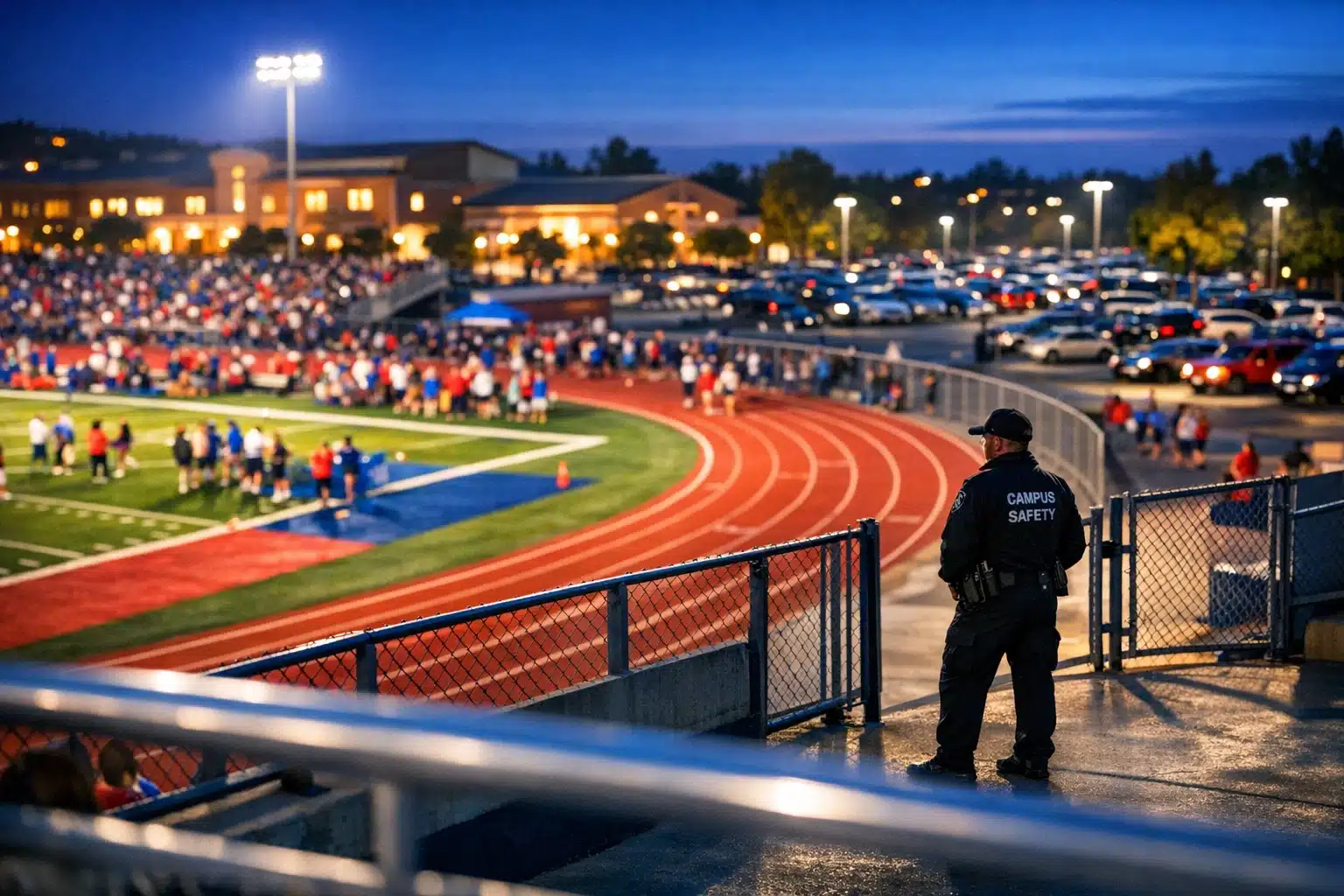
Most districts divide duties according to the age group and size of the campus. An elementary campus may need more support with parent check-ins, dismissal flow, and playground awareness. A high school may place more emphasis on parking lots, athletic events, late evening activities, and responding to larger groups of students moving between periods. Central office roles can involve camera review, radio dispatch, visitor management systems, safety audits, and coordination with transportation staff.
Here are common role patterns applicants should know:
- Unarmed security monitor or officer: usually focused on campus presence, access points, patrols, and incident reporting.
- School safety assistant: often blends security awareness with student supervision and rule enforcement.
- School resource officer: typically a sworn officer assigned to a campus, with law enforcement authority defined by local policy.
- Security coordinator or supervisor: may oversee staff schedules, investigations, drills, and districtwide procedures.
It is also useful to compare public-school security with private-sector security. District jobs may offer steadier schedules, pension options, and a clearer chain of accountability. On the other hand, the environment demands patience, emotional control, and skill with young people. A strong candidate understands that the role is preventive rather than theatrical. The best day on the job is often the quiet day when a concern was noticed early, a conflict was cooled down before it sparked, and everyone went home without needing a dramatic story to tell.
Qualifications, Background Checks, and Training Expectations
Requirements for school district security jobs vary by state, district policy, and the level of responsibility attached to the role, but several themes appear again and again. Nearly every district expects applicants to pass a criminal background check, fingerprint screening, and employment verification process. Because the work involves children, districts usually set a high bar for trustworthiness, judgment, and professional conduct. A minor detail on an application that might be shrugged off elsewhere can become a serious issue in public education hiring.
Education requirements are often flexible at the entry level, though not always. Some security monitor jobs require only a high school diploma or equivalent. Others prefer college coursework in criminal justice, public administration, psychology, or education. Supervisor and coordinator roles are more likely to ask for prior leadership experience, report-writing ability, and familiarity with emergency procedures. If a posting involves student behavior management, bilingual communication, or technology systems, those skills may move an applicant to the top of the list.
Licensing rules are another point of comparison. In some states, a district security officer may need the same guard card or registration required in private security. In others, the district may provide job-specific onboarding instead. Armed positions typically come with a much stricter standard, including firearms qualification, psychological review, use-of-force policy training, and continuing certification. Not every district uses armed personnel, so candidates should read job descriptions closely rather than assume a single national model exists.
Training often covers far more than physical security. A strong program may include:
- De-escalation and verbal intervention
- Emergency response and incident command basics
- Trauma-informed interaction with students
- Mandated reporting responsibilities
- Radio procedure and documentation standards
- Visitor management and access control systems
- First aid, CPR, and AED use
Soft skills carry enormous weight in this field. Districts want people who can speak firmly without escalating a situation, notice subtle warning signs, and remain professional when parents, staff, or students are upset. A candidate who writes clear reports, listens well, and understands boundaries may outperform someone with a more intimidating resume but weaker communication habits.
Experience from related fields can transfer well. Veterans, former corrections staff, private security officers, dispatchers, youth program workers, paraprofessionals, and even hospitality professionals sometimes make strong candidates because they already know how to manage space, follow procedures, and stay calm under pressure. The key is showing that you understand the difference between controlling a site and supporting a learning environment. Schools do not need unnecessary force or ego. They need alert adults who can protect people, build trust, and operate within policy every single day.
A Day on Campus: Duties, Pressure Points, and Tools of the Job
If you imagine this career as hours of standing still beside a doorway, the real picture is much more dynamic. Daily work usually starts before students arrive. Security staff may unlock designated areas, inspect gates, confirm radio function, review overnight alerts, check camera coverage, or prepare for scheduled visitors. Morning arrival can feel like a carefully timed machine: buses pull in, parents line up, staff report to posts, and hundreds of small moments need to flow smoothly. In that rhythm, good security work looks almost invisible, because order is being maintained without creating tension.
Once the day is in motion, the role can shift quickly. A single shift may include monitoring entrances, assisting with a medical call, helping locate a missing student, documenting a damaged door, calming a hallway argument, supporting an evacuation drill, and answering questions from a parent who showed up frustrated and in a hurry. The emotional temperature of the job can rise and fall like weather on a spring afternoon. One minute brings routine, the next brings a radio call that demands immediate focus.
The specific duties depend on the campus, but common responsibilities include:
- Patrolling hallways, parking lots, athletic areas, and entrances
- Monitoring visitors and enforcing sign-in procedures
- Writing incident reports and maintaining logs
- Assisting with lockdown, fire, evacuation, and shelter drills
- Observing student behavior and notifying administrators of concerns
- Supporting arrival, dismissal, and high-traffic events
- Coordinating with nurses, counselors, principals, and local responders
Tools vary by district. Some officers use radios, camera systems, digital reporting platforms, ID badge software, door access controls, and mass notification tools. Others work in lower-tech environments where observation, memory, and strong communication matter even more. Either way, the job rewards attention to detail. A propped-open side door, an unfamiliar vehicle near a restricted area, or a repeated argument between students may seem minor in isolation, but patterns often begin with small clues.
There is also a human side that job descriptions sometimes undersell. Students often remember the adult who greeted them every morning, noticed when they looked upset, or interrupted a bad decision before it turned into a bigger problem. In that sense, school security is part vigilance and part relationship-building. The best staff members are not trying to dominate the campus. They are trying to stabilize it.
Comparisons across grade levels are useful here. Elementary campuses may involve more family interaction and movement support. Middle schools often demand sharp de-escalation skills because impulsive behavior can spike during those years. High schools can bring larger events, parking issues, social media spillover, and a wider after-hours footprint. For job seekers, understanding that daily life changes with the campus setting is not a small detail. It may be the difference between a job that drains you and one that genuinely fits your strengths.
Pay, Schedules, Benefits, and Career Growth
Compensation in school district security roles depends on geography, union agreements, experience, certification level, and whether the position is civilian or sworn. There is no single pay number that fits every district. In many areas, entry-level school security staff earn modest but stable wages, while supervisors, coordinators, and sworn school resource officers earn more. Public-sector employment can also make the full package more attractive than the hourly rate alone suggests, especially when health coverage, retirement contributions, paid holidays, and predictable leave policies are part of the offer.
A practical comparison helps here. Private security jobs may sometimes offer faster hiring and overtime-heavy schedules, but district roles often provide a clearer structure and more consistent long-term benefits. For applicants with families, that distinction can matter a lot. School calendars may also create a rhythm that some workers prefer, though it is important not to assume every job mirrors student hours. Many districts require coverage for evening events, sports, graduations, summer programs, or emergency callouts. The bell schedule shapes the day, but the work can extend well beyond it.
Pay factors commonly include:
- Years of related experience
- Armed versus unarmed assignment
- Supervisory duties or districtwide responsibility
- Extra certifications such as CPR, emergency management, or defensive tactics
- Shift differential for evenings, nights, or special events
- Local cost of living and labor market competition
Career growth is often better than first-time applicants expect. Someone may start as a monitor or campus officer, then move into lead officer, dispatch, investigations support, emergency planning, or security coordination. In districts with larger safety departments, advancement can become fairly specialized. A worker with strong technical ability may handle cameras and access systems. Someone with polished communication and leadership skills may move into training, scheduling, or campus safety program management. Those interested in law enforcement sometimes use school security as a stepping stone, while others stay for the public-service mission and stable benefits.
One smart way to judge a posting is to look beyond the headline wage and ask better questions during the hiring process. Is the role full-time for twelve months, or tied to the academic year? Is overtime common, optional, or restricted? Does the district pay for licensing renewal, uniforms, or required training? Is there a salary schedule with step increases? Are there pension or civil service protections? Good questions reveal the real value of the role.
The broader outlook for campus safety work remains relevant because districts continue to invest in preparedness, visitor control, mental health coordination, and emergency communication. That does not mean every area is expanding at the same pace, but it does mean qualified, reliable applicants are likely to remain important. In a labor market full of flashy promises, this field is something different: practical, demanding, and rooted in steady service.
How to Apply Well and Decide Whether This Career Fits You
Applying for a school district security job is not just about sending a resume and waiting. The strongest applicants tailor their materials to the school environment rather than submitting a generic security profile. A district wants evidence that you can protect people while working within an educational culture. That means your resume should highlight incident reporting, de-escalation, emergency response, teamwork, youth interaction, visitor management, and professionalism under stress. If you have worked around students, families, or public institutions, make that visible. Even a short line about mentoring, coaching, dispatch support, or customer-facing conflict resolution can help frame your experience in the right way.
Before applying, study the posting carefully. District job ads usually tell you what matters most: patrol presence, attendance support, traffic control, technology systems, or coordination with administrators. Mirror that language honestly in your application. If the district emphasizes communication, do not lean only on physical security experience. If it emphasizes report writing, mention documentation quality. A hiring panel often compares multiple candidates with similar backgrounds, and small signs of job-specific understanding can separate one applicant from the pack.
Interview preparation should focus on scenarios rather than slogans. Be ready for questions such as: How would you respond to a verbal argument between students? What would you do if a parent refused visitor procedures? How would you handle confidential information? What steps would you take during a lockdown or evacuation? A good answer is calm, structured, and policy-aware. Schools generally prefer measured judgment over chest-thumping bravado.
Helpful application habits include:
- Gather references who can speak about reliability and judgment
- Bring copies of licenses, certifications, and training records
- Prepare concise examples of conflict resolution and documentation
- Research the district’s values, safety plans, and community profile
- Dress professionally and communicate with patience from the first contact
Just as important, ask whether the role fits you. This work suits people who can be observant without becoming cynical, firm without being harsh, and consistent without becoming rigid. If you need constant excitement, a school campus may feel too procedural. If you value routine with occasional high-stakes moments, it may feel exactly right. The job is built on presence, trust, and attention. You may spend days preventing problems no one else even notices, and that quiet success is part of the point.
For readers considering this path, the clearest takeaway is simple: school district security can be a meaningful career for people who want stable work tied to community safety. It asks for maturity, patience, and strong boundaries, but it also offers a chance to support students in a direct, practical way. If that combination appeals to you, start by researching local districts, matching your skills to real job descriptions, and preparing for a role that is far more human than the title alone suggests.