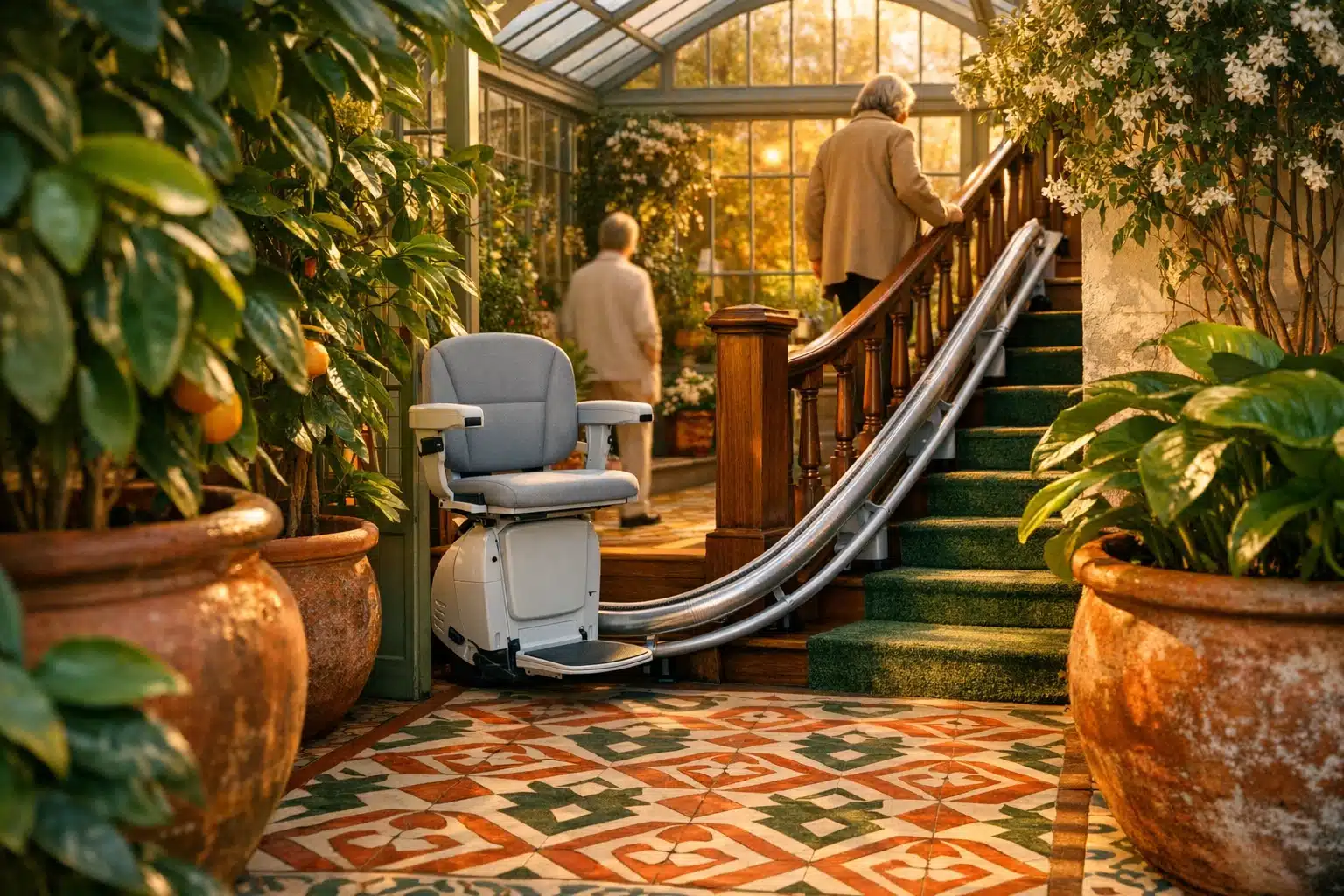
 Artificially generated image
 Stairlift Rental With Monthly Payments and No Deposit
When stairs begin to feel less like part of the home and more like a daily obstacle course, a stairlift can turn worry into routine again. Renting one with monthly payments and no deposit is appealing because it lowers the initial financial barrier and gives families room to adapt as needs change. It can suit recovery after surgery, temporary care arrangements, or situations where buying outright feels too permanent. The key is knowing how the pricing, service terms, and equipment choices fit real life.
Article Outline
- What a no-deposit stairlift rental is and why many households consider it
- How monthly payment plans are structured, including common fees and contract terms
- When renting makes more sense than buying, financing, or using a reconditioned unit
- How to compare providers, installation quality, maintenance support, and safety standards
- A practical conclusion for families, older adults, and caregivers choosing the right next step
Understanding Stairlift Rental With Monthly Payments and No Deposit
A stairlift rental with monthly payments and no deposit is, at its core, an access solution designed to reduce the pressure of a large one-time expense. Instead of paying a substantial sum upfront, the customer pays in smaller recurring amounts while using the equipment. The “no deposit” part matters because it removes one of the biggest roadblocks for many households: finding immediate cash during a stressful moment, often after a fall, a hospital discharge, or a sudden change in mobility.
For many people, mobility needs do not arrive with perfect timing or a tidy budget. A relative may need to return home sooner than expected. A knee replacement may make stairs difficult for several months. An older homeowner may want to remain on the upper floor of a familiar house instead of relocating downstairs. In situations like these, rental can feel less like a luxury and more like a bridge between challenge and stability.
This option is especially relevant because stairlifts are not one-size-fits-all products. Straight staircases are usually simpler and less expensive to serve than curved staircases, which often require custom rail designs. That difference affects rental availability, monthly price, and installation time. In many markets, no-deposit rental offers are more common for straight stairlifts because the equipment is easier to reuse and reinstall. Curved stairlift rentals can still exist, but they may come with higher charges or more limited provider options.
There is also a psychological benefit to renting. Buying can feel like making a permanent declaration about the future, while renting gives breathing room. Families can test whether the stairlift fits daily habits, whether the user feels comfortable on it, and whether longer-term home changes are necessary. That flexibility is often just as valuable as the payment structure itself.
Still, “no deposit” should not be mistaken for “no upfront cost” in every case. Some providers genuinely offer zero initial payment, while others shift costs into:
- an installation fee
- a rail fitting charge
- the first month’s payment in advance
- a call-out or survey fee
That is why the phrase sounds simple but deserves a closer look. The smart question is not only whether there is a deposit, but also how the entire arrangement works from day one. A good offer should be affordable, clearly explained, professionally installed, and supported by a service plan that matches the user’s health and the home’s layout. When all of those pieces come together, a rental stairlift can bring something more important than convenience: reliable independence at home.
How Monthly Payments Are Structured and What the Real Cost Usually Includes
Monthly stairlift rental plans can look straightforward in an advertisement, but the real value sits in the details. A provider may headline a low monthly rate, yet the full cost depends on the staircase type, the rental term, service coverage, removal policy, and any setup charges attached to the agreement. Looking only at the monthly figure is a bit like judging a car by its fuel gauge and ignoring insurance, repairs, and road tax. It gives part of the picture, not the full landscape.
In many cases, the payment structure includes several components. The monthly rental charge is the visible part, but there may also be a one-time installation fee, a charge for adapting the rail, and a collection fee when the stairlift is no longer needed. Some providers bundle maintenance and emergency support into the monthly amount, while others charge separately for call-outs outside standard hours. This is why two quotes with similar monthly numbers can be very different in total cost over three, six, or twelve months.
Common pricing elements often include:
- initial home assessment or survey
- installation and fitting
- monthly equipment use
- routine maintenance
- battery replacement policies
- repair response times
- removal after the rental ends
A useful way to compare offers is to calculate the total expected cost for the likely period of use. For example, if one provider charges a slightly higher monthly rate but includes installation, servicing, and removal, it may cost less overall than a lower monthly plan with multiple add-on fees. This is particularly important for short-term needs, where upfront charges can have a bigger effect on total spending.
Contract length matters too. Some companies offer monthly rolling agreements, which provide flexibility but can be more expensive over time. Others require a minimum rental period, such as three or six months. That can work well for planned recovery periods, but it may be less ideal if the need is uncertain. Ask whether the contract renews automatically, whether there are early termination fees, and how much notice is required before collection.
No-deposit plans can be genuinely helpful, but they often reflect a different allocation of risk by the provider. Because the company is not collecting money upfront as security, it may price the arrangement through slightly higher monthly payments or stricter contract terms. That is not necessarily unfair; it is simply part of how the business manages inventory, service labor, and transport costs.
The best approach is to request a written quote and read it line by line. Look for plain answers to plain questions: What is due before installation? What happens if the stairlift breaks? Is removal included? Are there charges for stairs with turns or narrow landings? A good provider should be able to explain the quote without vague language or sales pressure. If the explanation feels foggy, the invoice later may feel even foggier.
Who Benefits Most From Renting and When Buying May Be the Better Route
Stairlift rental is not automatically the best choice for everyone, but it can be an excellent fit for certain households. The biggest advantage is flexibility. If mobility needs are temporary, uncertain, or likely to change, renting allows a person to solve today’s access problem without making a long-term equipment commitment. That can be financially sensible and emotionally easier, especially during periods when the future is still taking shape.
One of the clearest use cases is short-term recovery. Someone returning home after surgery, injury, or rehabilitation may need help using stairs for a few months, not for the rest of their life. In that case, a rental can provide safe access during recovery and then be removed once strength or confidence returns. The same applies to temporary care situations, such as when an older parent moves in with adult children for a season of support.
Rental can also work well when families are testing options. Some people are unsure whether a stairlift will suit their routine, comfort level, or home layout. Renting offers a trial-like real-world experience without the larger cost of ownership. It can reveal practical questions that brochures never answer, such as whether the user prefers a powered swivel seat, whether transfers at the top landing feel secure, or whether other residents are comfortable sharing stair space with the rail.
Groups that often benefit from rental include:
- people recovering after surgery or injury
- families arranging interim care at home
- households waiting for larger home adaptations
- users with uncertain long-term mobility changes
- caregivers who need a fast, manageable solution
Buying, however, may be more cost-effective when the need is expected to last for years. Although rental reduces upfront expense, long-term monthly payments can eventually exceed the cost of purchasing a new or reconditioned stairlift. Ownership may also give more freedom in choosing features, upholstery options, rail design, and installation timing. For people with permanent mobility limitations, especially in a home they plan to stay in, buying may provide better long-range value.
There is a middle path as well: purchasing a reconditioned stairlift. In some markets, refurbished straight stairlifts offer a lower purchase price than brand-new units while still delivering reliable function when supplied by a reputable company. This option may appeal to buyers who need longer-term support but want to avoid the higher cost of a new installation.
The decision often comes down to three questions. First, how long is the stairlift likely to be needed? Second, how certain is that estimate? Third, what payment structure fits the household budget without causing strain elsewhere? A no-deposit rental can be a practical answer when life is in transition. Buying tends to make more sense when the need is stable and long-term. Neither choice is universally better; the right choice is the one that matches both the staircase and the story unfolding around it.
How to Compare Providers, Avoid Surprise Fees, and Check Service Quality
Choosing a stairlift provider is not just about finding a machine that fits the stairs. It is also about choosing the company that will install it, maintain it, answer emergency calls, and explain costs clearly. In other words, you are not simply renting equipment; you are entering a service relationship. That matters a lot when the user depends on the lift every day to move safely between floors.
The first step is to ask for a home assessment. A proper assessment should consider staircase width, bends, landing space, power supply, seat height needs, and the user’s physical ability to transfer on and off the chair. If a provider gives a firm quote without asking basic questions or seeing the staircase, treat that as a warning sign. Stairlifts are safety devices, and safety should never be estimated with a shrug.
When comparing providers, ask practical and specific questions such as:
- Is the stairlift new, reconditioned, or a mix depending on availability?
- Does the monthly price include maintenance and emergency repairs?
- What is the usual response time for breakdowns?
- Are there minimum rental terms?
- Is removal included when the agreement ends?
- Will the rail or fittings damage the stairs, and how is removal handled?
- What happens if the user’s needs change and a different model is required?
Written documentation is important. A clear quote should separate recurring charges from one-time fees and explain exactly what “no deposit” means in that provider’s system. If installation is charged separately, it should be stated plainly. If the provider requires the first month in advance, that should also be stated plainly. The more transparent the paperwork, the less room there is for unpleasant surprises.
Reviews can be helpful, but they are most useful when read with a practical eye. Instead of focusing only on star ratings, look for comments about punctual installation, respectful engineers, problem resolution, and billing clarity. A company with slightly fewer glowing reviews but excellent service communication can be more reassuring than one with flashy marketing and vague answers.
It is also worth asking about training after installation. A good provider should show the user and the caregiver how to operate the lift, fold it when not in use, use the seat belt, charge the unit properly if relevant, and respond if it stops mid-travel. These small moments of instruction can make a big difference in confidence.
Finally, compare with calm, not urgency, if time allows. Mobility changes can create emotional pressure, and some sales processes lean into that. Step back and compare total cost, support quality, safety checks, and contract flexibility. The best provider is rarely the one with the loudest promise. It is usually the one that combines fair pricing, competent installation, and dependable aftercare with explanations that are refreshingly easy to understand.
Conclusion: A Practical Choice for Families, Caregivers, and Older Adults
For the right household, a stairlift rental with monthly payments and no deposit can be a very practical way to restore confidence at home without the strain of a major upfront bill. It works best when flexibility matters: after surgery, during rehabilitation, while testing long-term options, or when a family simply needs time to decide what comes next. The appeal is easy to understand. Instead of rearranging life around the staircase, the staircase becomes manageable again.
Still, the smartest decisions come from looking beyond the headline offer. A no-deposit plan is only as good as the full agreement behind it. Monthly cost, installation fees, maintenance coverage, contract length, removal charges, and response times all shape the real value. When those details are clear, the decision becomes much less intimidating and much more practical.
If you are shopping for a stairlift rental now, keep your focus on a short checklist:
- confirm whether the need is temporary, uncertain, or long-term
- ask for a full written breakdown of all charges
- compare at least two or three providers if possible
- check what maintenance and emergency support are included
- make sure the stairlift suits both the staircase and the user’s mobility needs
For caregivers, this kind of planning can reduce stress and prevent rushed choices. For older adults, it can preserve independence in a familiar home. For families balancing care, cost, and timing, it can create a realistic middle ground between doing nothing and making an expensive permanent purchase too soon.
The most important takeaway is simple: affordability is not just about the lowest monthly number. True affordability means choosing a plan that is sustainable, transparent, and safe. A well-matched rental can provide comfort, access, and breathing room at a moment when all three matter deeply. If stairs have started to shrink the usable space of a home, a carefully chosen rental stairlift can help open that space back up, one smooth ride at a time.