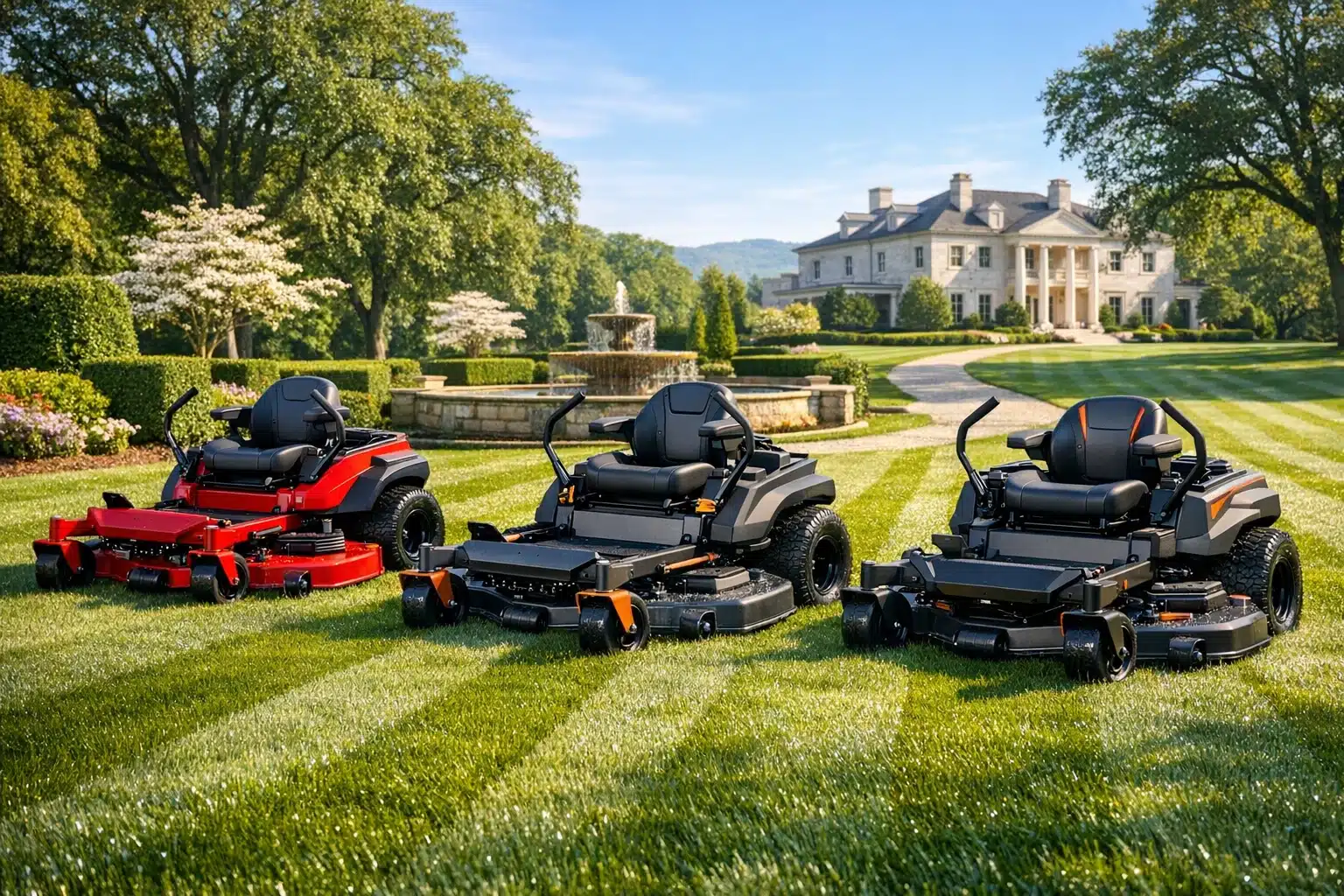
The Only 3 Zero Turn Mowers Worth Buying in 2026
How This List Was Built and Why Only Three Models Made It
Buying a zero-turn mower in 2026 is less about chasing shiny brochures and more about choosing a machine that cuts cleanly, turns precisely, and holds up after years of dusty Saturdays. Prices are still high, parts are not getting cheaper, and a weak transmission can ruin an otherwise promising deal. That is why a short, honest list matters more than a giant roundup packed with near-identical machines. This guide narrows the field to three standouts based on deck quality, drivetrain strength, comfort, dealer support, and long-term value.
Before naming the winners, it helps to lay out the article’s roadmap clearly. The outline is simple because the buying decision should be simple too:
- What separates a serious zero-turn mower from a disposable one
- The best all-around choice for most large residential properties
- The strongest value pick for buyers who want heavy-duty hardware without jumping to full commercial pricing
- The premium option for rougher ground, bigger acreage, or light professional use
- A final comparison that tells you which mower fits which owner
The first filter was transmission quality. On a zero-turn mower, flashy horsepower figures get the headlines, but the transmissions quietly decide whether the machine stays enjoyable after the first hundred hours. Entry-level residential models often rely on lighter-duty integrated drives that are fine for smaller, flatter lots, yet they can feel strained on multi-acre properties or in hot summer mowing cycles. Moving up to serviceable commercial-style transaxles, such as stronger Hydro-Gear families, usually means better durability, smoother control, and more confidence when the grass is thick and the afternoon is long.
The second filter was deck construction and cut quality. A fabricated deck does not automatically guarantee a beautiful cut, but it usually signals a stronger mower than a thin stamped deck aimed mainly at price-sensitive buyers. I also looked at deck depth, airflow reputation, anti-scalp support, and whether owners consistently report a clean finish in mixed conditions rather than only on perfectly dry turf.
The third filter was ownership reality. Dealer support matters. Parts access matters. Seat comfort matters more than many buyers expect. A mower that looks tough on paper can become tiring if every bump comes straight up your spine like a memo from the ground. For 2026 shoppers, price bands will still vary by region and trim, but the rough categories remain familiar: heavy residential models often live in the mid-thousands, while true commercial entries move higher quickly. That is why only three models made this list: each one occupies a clear lane and earns its place without relying on gimmicks.
Pick 1: Toro TITAN MyRIDE for the Best All-Around Residential Experience
If most buyers asked for one zero-turn mower that balances comfort, capability, brand support, and broad usefulness, the Toro TITAN MyRIDE would be the safest recommendation of the bunch. It is not the cheapest route into zero-turn ownership, and that is exactly the point. The TITAN line sits above many basic homeowner machines and feels built for owners who mow enough acreage to justify stepping past the bargain shelf. For 2026 buyers, assuming the platform remains in its current form or close to it, this is the mower that makes the most sense for large residential properties where comfort and consistency matter every week.
One of the biggest reasons is the MyRIDE suspension system. Toro’s suspended operator platform is not a gimmick for showroom theatrics; on rough ground it can make a surprisingly real difference in how fresh you feel after an hour or two. That matters more than it sounds. A less beaten-up operator usually mows more accurately, watches obstacles more carefully, and is less tempted to rush the last few passes. In plain language, the mower does not just save your body a little punishment; it can also help you do a better job.
The TITAN commonly appears in deck sizes such as 48, 54, and 60 inches, with engine choices that vary by trim and region, often in the low-to-mid 20 horsepower range from familiar suppliers like Kohler or Kawasaki. Toro’s fabricated deck design and sturdy frame give it the feel of a machine meant for repeat use rather than occasional duty. It is particularly convincing for owners mowing roughly 2 to 5 acres of mostly open ground. On that kind of property, it can cut time dramatically compared with lawn tractors, yet it does not feel as intimidating or overbuilt as a true commercial rig.
Where the TITAN pulls ahead of cheaper residential zero-turns is the total package:
- Noticeably better ride quality than most rigid-frame homeowner machines
- Stronger overall construction than basic entry-level zero-turns
- A reputable dealer and parts network in many markets
- Good fit for owners who want to mow quickly without feeling punished
Its limits should be stated honestly. This is not the ideal choice for full-time commercial crews running dawn to dusk, and zero-turns in general are not the right tools for steep banks. It also costs enough that small-lawn owners may never recover the value. But for the homeowner with meaningful acreage, bumpy ground, and a desire to buy once rather than “upgrade later,” the Toro TITAN MyRIDE is the most complete all-around answer on this list.
Pick 2: Hustler Raptor XDX for the Best Value in Heavy Residential Mowing
If the Toro TITAN is the polished all-rounder, the Hustler Raptor XDX is the practical buyer’s machine: less interested in creature comforts, more interested in giving you serious hardware for the money. This is the zero-turn for the person who reads the transmission spec before admiring the cup holder. In a market full of lookalike residential mowers that talk tough but hide lighter-duty guts, the Raptor XDX has built a reputation as one of the smarter value plays for buyers who want a real step up from entry-level equipment without vaulting straight into commercial price territory.
The Raptor XDX usually lands in popular deck widths such as 48, 54, and 60 inches, depending on configuration. Engine options vary, often from well-known suppliers such as Kawasaki or Kohler, and the power figures generally suit the machine’s intended role well. More important than peak horsepower, though, is the fact that this mower is commonly paired with stronger serviceable transmissions than the bargain-basement class. That matters because a zero-turn mower lives or dies by the confidence of its drive system. When you are turning around trees, correcting lines, or working through thicker grass, that extra drivetrain headroom is what keeps a mower feeling composed instead of breathless.
Hustler’s decks also deserve credit. The brand has long had a loyal following among owners who care about a clean, even finish and a straightforward machine layout. The Raptor XDX feels honest in the best sense of the word. It is not trying to be luxurious. It is trying to mow well, last longer than the flimsy alternatives, and stay serviceable. Sometimes that is the most attractive personality a machine can have.
Here is where the Raptor XDX really stands out:
- Excellent value for buyers prioritizing frame, deck, and transmission quality
- Simple, work-focused design with fewer frills to distract from the fundamentals
- Strong fit for 1.5 to 4 acres of regular mowing on relatively open ground
- Good option for owners who want prosumer toughness without a commercial invoice
There are trade-offs. The ride is typically firmer than a suspended platform like Toro’s MyRIDE or Ferris’s signature approach. If your property is rough enough to rattle your teeth, you will feel more of that texture through the seat. The finish quality and comfort details may also feel less plush than pricier competitors. Yet that is precisely why the Raptor XDX earns its place here. It avoids wasting money where many owners do not need it and spends more of the budget on the parts that affect longevity and mowing authority. For practical buyers, that is not a compromise. It is the strategy.
Pick 3: Ferris ISX 800 for Rough Ground, Bigger Acreage, and Light Commercial Use
Some zero-turn mowers look tough in the brochure and then turn skittish the moment the ground gets uneven. The Ferris ISX 800 is different. This is the mower on the list for buyers whose land is less “suburban lawn” and more “field with ambition.” If your property is large, imperfect, and full of the kind of bumps that make lesser machines chatter and bounce, the ISX 800 becomes very hard to ignore. It costs more, yes, but it also feels like it was designed by people who understand that mowing rough acreage is not a marketing concept. It is an endurance event.
Ferris has long leaned into suspension as a defining advantage, and the ISX 800 reflects that philosophy well. Depending on configuration, this model typically offers deck sizes such as 52 or 61 inches, paired with strong engine options from brands like Kawasaki in the mid-20 horsepower class. Just as importantly, it commonly steps into heavier-duty commercial-grade drive systems than typical homeowner machines. That combination of suspension, drivetrain strength, and deck performance gives the ISX 800 a different personality from the first two picks. It is calmer at speed, more settled over uneven ground, and better suited to owners who need productivity rather than just convenience.
The deck is another major part of the story. Ferris has earned a strong reputation for commercial-style cutting systems that maintain respectable finish quality while still moving serious volume. On larger properties, that matters because mowing is not just about making grass shorter; it is about doing it efficiently without leaving a ragged wake behind you. A wide deck paired with a stable chassis can turn an all-day chore into a manageable block of time, and that is often where premium mowers quietly justify their price.
The ISX 800 is especially compelling for these buyers:
- Owners maintaining 3 to 7 acres or more of regularly cut ground
- Properties with bumps, washboard sections, or less-than-ideal smoothness
- Buyers considering side-income mowing work or light commercial use
- Anyone who values higher-duty components over initial purchase savings
Of course, there are reasons not to buy it. Smaller lawns will never let this machine stretch its legs, and the purchase price can be difficult to defend for casual use. It is also larger, heavier, and more mower than many homeowners actually need. But if your land is demanding and your current mower makes every session feel like a wrestling match with terrain, the Ferris ISX 800 is the machine here that most clearly upgrades the entire experience. It does not merely cut grass. It brings order to stubborn ground.
Final Verdict: Which Zero-Turn Mower Makes Sense for You in 2026
The easiest mistake in zero-turn shopping is buying by headline instead of by workload. A flashy engine badge, a sale sign, or a giant deck can distract from the quieter questions that decide whether you will still like the mower three summers from now. How rough is your property, really? How many acres are you mowing each week? Are you cutting one tidy lawn, several family properties, or something that is quietly becoming a side business? Once you answer those questions honestly, this three-mower shortlist becomes much easier to use.
Here is the simplest breakdown.
- Choose the Toro TITAN MyRIDE if you want the best blend of comfort, capability, and homeowner-friendly ownership. It is the safest all-around recommendation for larger residential properties.
- Choose the Hustler Raptor XDX if you care most about value, strong core hardware, and avoiding unnecessary extras. It is the sensible buyer’s pick.
- Choose the Ferris ISX 800 if your ground is rough, your acreage is larger, or your mowing workload edges toward commercial territory. It is the premium performance choice.
There is also a fourth conclusion hiding in this article: many buyers should not buy a giant zero-turn at all. If you are mowing well under an acre with tight gates, heavy landscaping, and storage constraints, a smaller mower or even a premium walk-behind may be smarter. Bigger is not automatically better. The right machine is the one that matches your land without wasting money, fuel, or garage space.
For the target audience of this guide, the real lesson is to avoid under-buying the drivetrain and over-buying the deck. A strong transmission, a stable frame, and a trustworthy dealer will serve you longer than bragging rights over a few extra inches of cutting width. Test drive if possible. Sit in the seat. Work the controls. Ask about parts availability, service turnaround, and warranty support. The mower that feels balanced in your hands and is backed by a competent local dealer is usually the smarter purchase than the one with the loudest online praise.
If you want one sentence to carry into the dealership, take this one: buy the Toro for balance, the Hustler for value, and the Ferris for demanding ground. That is the cleanest map through the 2026 zero-turn market, and for most serious buyers, it is all the shortlist you need.