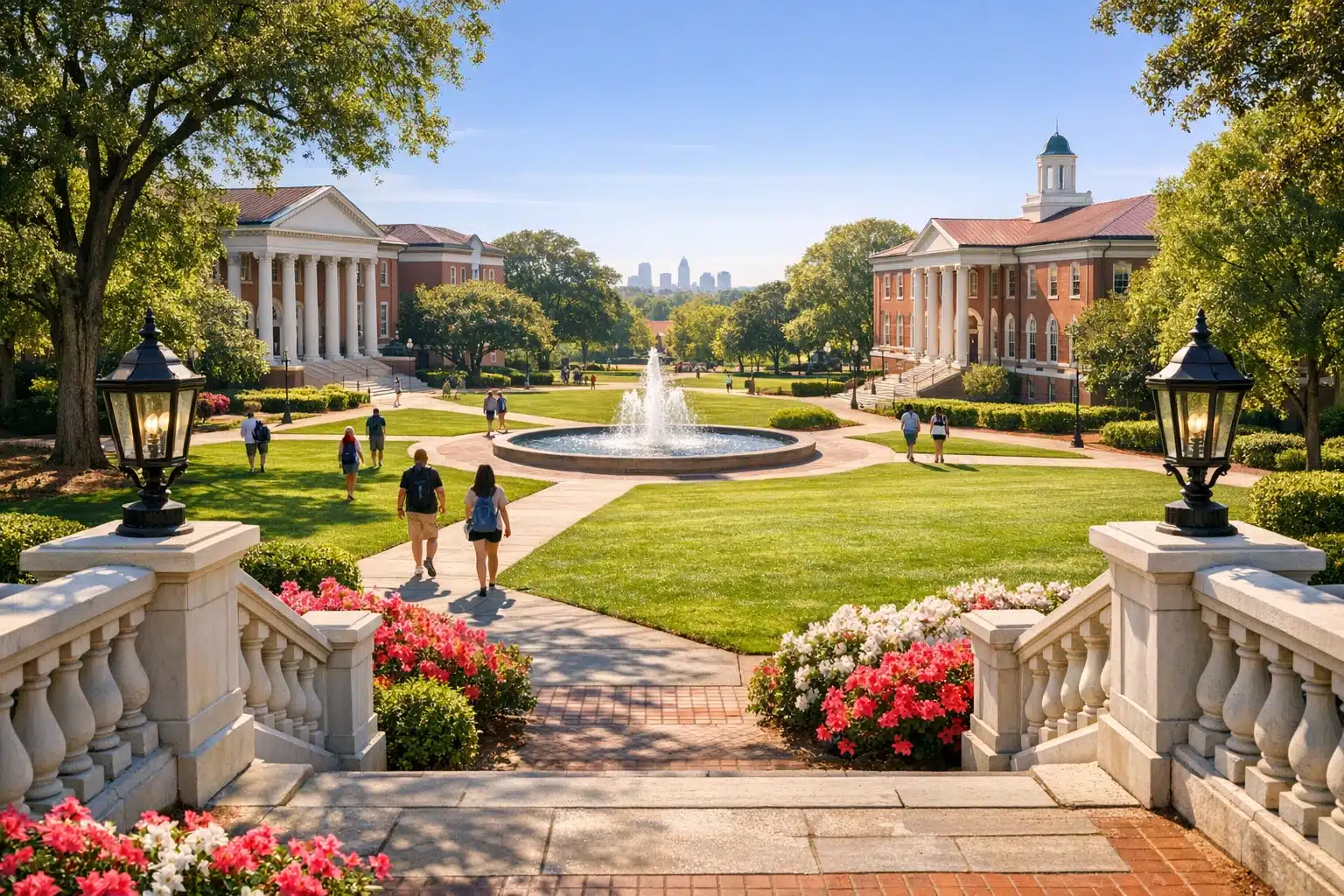
Top 5 Colleges in Georgia
Georgia has become one of the most interesting states for college shoppers because it offers elite private research, world-class public engineering, classic flagship traditions, and urban campuses tied closely to real employers. That range makes the search exciting, but it can also turn simple comparisons into a maze. This guide narrows the field to five standout institutions and explains what each one does especially well. If you want a clear starting point before applications begin, you are in the right place.
Outline and Ranking Criteria: How This List Was Built
Before jumping into names, it helps to define what “top” means. A great college is not just a famous one, and it is not only the campus with the lowest acceptance rate. For this article, the list is based on a blend of academic reputation, program strength, student outcomes, research activity, internship access, graduation momentum, campus environment, and long-term career value. That matters in Georgia more than in many states because the higher education landscape here is unusually diverse. Within a few hours, a student can move from a leafy private university with strong pre-med culture to a public engineering giant, then to a classic flagship campus, and finally to urban or smaller private institutions that serve very different needs extremely well.
The five colleges that most consistently rise to the top of the conversation are Emory University, the Georgia Institute of Technology, the University of Georgia, Georgia State University, and Mercer University. They are not identical, and that is exactly the point. One school may be better for a student who wants biomedical research and seminar-style classes, while another is a stronger match for someone chasing co-ops in engineering, a broad public university experience, or a more flexible path tied to a major city.
Here is the basic outline of the article: • first, how the schools compare overall • then a close look at Emory University • next, Georgia Tech • then the University of Georgia • finally, Georgia State and Mercer, along with advice on choosing between them. That structure matters because students often begin with a vague idea of prestige and only later realize that fit, debt, and day-to-day environment are just as important as rankings.
Georgia is also a strong state for practical career building. Atlanta alone gives students access to major employers in finance, logistics, healthcare, media, consulting, government, and technology. Beyond Atlanta, Athens offers a classic college-town ecosystem with deep alumni ties, while Macon provides a more personal private-school setting through Mercer. In other words, this is not a list built on marketing language. It is built on the question families actually ask around kitchen tables: where will a student learn well, grow well, and leave with real options? With that standard in mind, these five schools stand out not simply because they are known, but because they deliver distinct kinds of value.
Emory University: Elite Private Education with Serious Depth
Emory University belongs near the top of any Georgia college list because it combines academic rigor, strong student support, and a location that opens real professional doors. Based in the Atlanta area, Emory has built a national reputation as one of the South’s strongest private universities. It is especially well known for the health sciences, business, public health, political science, and the humanities, but its real strength is balance. Some colleges dominate in one lane and merely participate in others. Emory is different. It offers high-level research opportunities while still keeping undergraduate teaching central to the experience.
One reason students are drawn to Emory is scale. It is large enough to offer impressive resources, but not so large that undergraduates disappear into the crowd. Compared with huge public campuses, Emory often feels more contained and personal. Students who want close interaction with professors, smaller discussion-based classes, and strong advising usually find that the model works in their favor. The university’s connection to Emory Healthcare and its proximity to the Centers for Disease Control and Prevention give pre-med, biology, neuroscience, and public health students an especially compelling ecosystem. For many ambitious undergraduates, that is not just a nice feature. It can shape internships, research paths, and future graduate study.
Emory also compares well against its Georgia peers in a few specific ways. Against Georgia Tech, it offers a broader liberal arts feel and a stronger environment for students whose interests cross science, policy, ethics, and communication. Against the University of Georgia, it is smaller, more private, and more selective, which often translates into a different classroom atmosphere and a somewhat more intimate campus culture. That does not automatically make it “better” for everyone, but it does make it especially attractive for students who want a scholarly setting without losing access to a major city.
There are trade-offs, of course. Emory is expensive, as many private universities are, and the student experience can feel intense because many classmates are highly driven. Yet for students seeking strong academics, rich research access, and a polished bridge between undergraduate study and professional opportunity, Emory remains one of the clearest standouts in Georgia. It is the kind of place where a student can begin in a seminar on literature, spend the afternoon in a lab, and end the day hearing a public speaker discuss global health or policy. That range is hard to ignore.
Georgia Tech: A Powerhouse for Engineering, Computing, and Career Return
If Emory is Georgia’s polished private scholar’s campus, Georgia Tech is the state’s engine room. Officially the Georgia Institute of Technology, the school has long been one of the country’s strongest public institutions for engineering, computer science, analytics, architecture, and related fields. It is located in Atlanta, which gives students immediate access to one of the South’s largest job markets. That location matters because Georgia Tech is not built around theory alone. Its culture is intensely practical. Students are pushed to solve problems, build systems, work in teams, and connect classroom learning with industry.
The university’s national and international reputation is a major reason it lands on this list. Recruiters know the name, graduate schools respect the rigor, and employers often view Georgia Tech students as battle-tested. The school’s co-op programs, internships, research labs, startup culture, and alumni network create a pipeline that can be unusually powerful in fields like software development, aerospace, mechanical engineering, cybersecurity, and operations. For students who care about return on investment, Georgia Tech deserves serious attention. Public tuition for in-state students can make the value proposition especially strong, while out-of-state students still often view the degree as worth the cost because of the career outcomes associated with it.
Compared with Emory, Georgia Tech is more specialized and more technical. Compared with the University of Georgia, it is more intense in STEM and more urban in feel. Compared with Mercer or Georgia State, it has a sharper national profile in high-demand technical disciplines. That said, it is not only for engineers. Business, design, economics, and interdisciplinary technology-related fields have grown in visibility, and students increasingly use Tech’s resources to move into consulting, finance, product management, and entrepreneurship.
Still, this is not a campus for someone looking for a relaxed academic ride. The workload can be demanding, the pace can feel relentless, and the culture rewards persistence. Some students thrive in that environment. Others realize quickly that they would prefer a broader or less technical academic experience. That is why fit matters as much as reputation. For the right student, though, Georgia Tech can feel like a launching pad with a very long runway. It is one of those rare schools where the phrase “challenging but worth it” is not brochure language. It is simply how many students describe everyday life.
University of Georgia: The Flagship Choice with Breadth, Tradition, and Value
The University of Georgia, usually called UGA, remains one of the most important colleges in the state because it offers something the others cannot replicate in the same way: the full flagship university experience. Located in Athens, UGA combines academic breadth, deep school spirit, a large alumni network, and the kind of campus life many students picture when they imagine college. It is big, energetic, and packed with options. That alone makes it a serious contender for many applicants, but the school’s appeal goes beyond atmosphere. UGA is academically stronger than many people assume at first glance, with nationally respected programs in business, journalism, public affairs, agriculture, ecology, and the sciences.
One of UGA’s biggest strengths is versatility. A student can arrive undecided and still have room to explore without transferring schools or sacrificing quality. That flexibility matters because many seventeen-year-olds do not actually know what they want to do yet, even if application essays insist otherwise. UGA also benefits from the scale that large public universities can offer: robust student organizations, Division I sports, research opportunities, honors pathways, and a wide variety of majors and minors. For Georgia residents, the value can be especially compelling, particularly for students who qualify for state scholarship programs. Families often find that UGA delivers a strong mix of reputation and affordability.
In comparison with Georgia Tech, UGA is broader and less narrowly defined by STEM. In comparison with Emory, it is larger, more public, and more traditional in social atmosphere. In comparison with Georgia State, it offers a more residential college-town setting. And compared with Mercer, it generally provides more scale and major variety, though less of the small-campus intimacy some students want. That range of comparisons helps explain why UGA keeps showing up on shortlists for very different types of students.
Athens also adds something hard to quantify but easy to feel. It is one of those college towns where the university shapes the rhythm of daily life. Music, food, sports, student traditions, and local culture all blend into the experience. For some students, that becomes a genuine source of belonging. UGA may not be the most specialized school on this list, but it is arguably the most complete public option for students who want strong academics wrapped in a full campus experience. If you are looking for breadth, value, alumni reach, and a place that still feels unmistakably like college, UGA makes a very strong case.
Georgia State University and Mercer University: Two Different Strengths, One Final Decision Guide
Georgia State University and Mercer University finish this list for very different reasons, and that contrast is useful for students trying to think clearly about fit. Georgia State, based in downtown Atlanta, has become one of the most interesting public universities in the region because of its urban setting, large student population, improving academic profile, and well-known efforts around student success and social mobility. Mercer, by contrast, offers a smaller private-university experience with a more personal feel, a strong service ethic, and respected programs in areas like health sciences, law, pharmacy, engineering, and business. One school feels plugged into the speed of a major city. The other feels more intentionally close-knit and guided.
Georgia State’s biggest advantage is access. Students are studying in the middle of Atlanta rather than on the edge of it, and that changes the college experience in practical ways. Internships, part-time jobs, government offices, hospitals, nonprofits, media organizations, and corporate employers are part of the landscape. The university has also drawn attention for helping students stay enrolled and graduate through targeted support efforts, including emergency microgrants that have become a model others study. Academically, Georgia State is strongest when a student wants business, public policy, public health, law-related preparation, economics, psychology, or fields that benefit from direct city exposure. It may not have the residential charm of Athens or the elite aura of Emory, but it often makes up for that with flexibility, relevance, and upward mobility.
Mercer succeeds in a different register. With campuses in Macon and Atlanta and a reputation shaped by close instruction, Mercer is often appealing to students who want more faculty contact and a stronger sense of being known. It does not try to be the biggest school in the room. Instead, it leans into mentorship, professional preparation, and community. That can be a powerful combination for students who do not want to get lost in a huge system. Mercer’s programs in medicine, pharmacy, nursing, law, theology, and related professional pathways give it distinctive depth, and the school’s culture often feels more personal than the public alternatives. For certain students, that difference is not minor. It is decisive.
So how should a prospective student read this top-five list? A simple shortcut helps: • choose Emory if you want elite private academics with strong health, research, and liberal arts opportunities • choose Georgia Tech if your goals lean technical, quantitative, or innovation-driven • choose UGA if you want a classic flagship experience with major breadth and strong value • choose Georgia State if city access, flexibility, and career mobility matter most • choose Mercer if you want a smaller private setting with close guidance and strong professional pathways.
For the target audience of this topic, namely students and families trying to narrow a real college list, the main takeaway is straightforward. The best college in Georgia is not the same for every applicant, and that is good news rather than bad news. It means the state offers multiple high-quality routes to success. Start with your intended field, budget, preferred campus size, and comfort level with city life or residential tradition. Once those pieces are honest and clear, this list becomes more than interesting reading. It becomes a practical map.