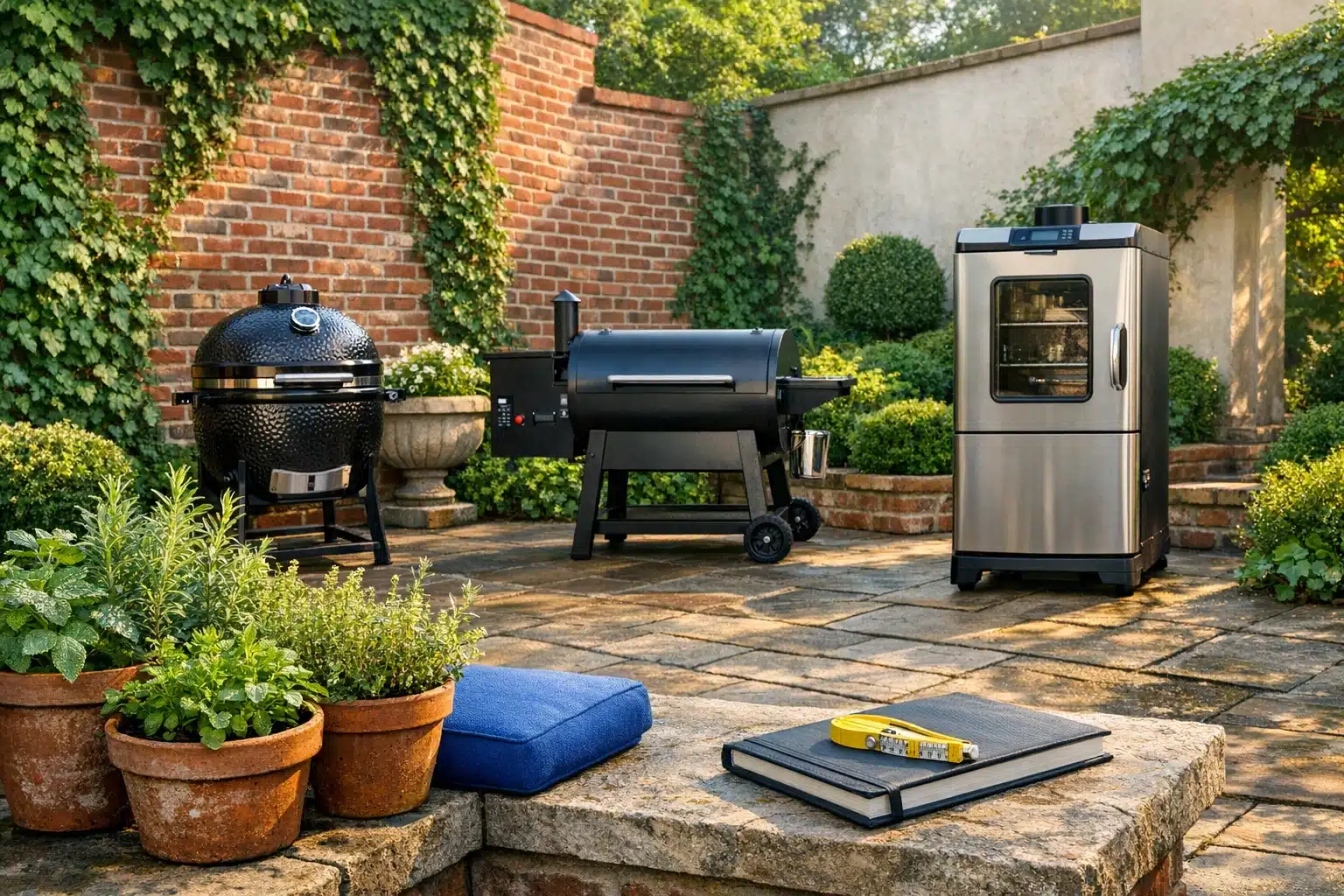
 Artificially generated image
 Walmart Smoker Grill Clearance: A Practical Buying Guide
A smoker grill on clearance can feel like striking gold in the garden aisle, but the smartest purchase is not always the one with the biggest markdown. Walmart clearance deals matter because they can lower the cost of outdoor cooking equipment at the exact moment shoppers are comparing features, space, fuel type, and durability. This guide shows how to read the discount, judge the condition of the unit, and match the grill to your cooking habits. By the end, you should be able to separate a real value from a rushed, regret-filled buy.
Outline: Section 1 explains how Walmart smoker grill clearance usually works and when discounts tend to appear; Section 2 compares major smoker grill types and who they suit best; Section 3 shows how to inspect a clearance unit and judge real value; Section 4 covers practical buying strategies for shopping online and in-store; Section 5 focuses on total ownership cost, accessories, warranty questions, and a final conclusion for bargain-minded buyers.
How Walmart Smoker Grill Clearance Works and When to Shop
Walmart clearance is rarely random, even if it sometimes looks that way from the shopper’s point of view. In most stores, smoker grills move through a retail life cycle: new seasonal inventory arrives, popular models sell at regular price, slower sellers get marked down, and remaining stock may be cleared out when the store needs space for the next wave of products. For outdoor cooking equipment, that timing often lines up with seasonal shifts. Late summer and early fall are commonly strong periods for markdowns because many retailers begin reducing patio and grilling inventory after peak demand. Some deals also appear after holiday selling waves, after packaging updates, or when stores decide to stop carrying a particular model.
That does not mean every clearance tag is a dramatic bargain. Early markdowns may be modest, especially on items that still have some demand. It is common to see the first round of reductions shave off only a small percentage, while deeper discounts sometimes arrive later if inventory lingers. The trade-off is simple: wait too long, and you might save more money but lose the model you actually wanted. This is where patience meets practicality. A yellow sticker can whisper “deal” from across the aisle, but it should not drown out the question that matters most: is this the right smoker grill for your cooking style?
Several clues can help you understand whether a clearance price is worth serious attention. Look for signs that a unit is a discontinued model, a boxed overstock item, a floor display, or a return that has been reboxed. Each case affects value differently. A new, sealed box with a seasonal markdown is usually lower risk than an assembled floor sample that has been rolled around, touched repeatedly, or exposed to weather near a garden center entrance.
Useful patterns to watch include:
• markdowns after summer demand cools;
• price changes tied to inventory resets;
• local store variation based on unsold stock;
• online listings that may not match in-store clearance pricing.
It also helps to think like a retailer for a moment. Stores do not discount products merely because they are “bad”; they discount them because shelf space has value. A bulky smoker grill takes up room, and room is money. If you understand that, clearance becomes less of a gamble and more of a map. You start to see why one store has a pellet smoker marked down while another still lists it near full price. Inventory, local demand, and timing all play a role. The best shopping window is often when you are flexible on model but firm on your needs.
Comparing Smoker Grill Types Before You Chase the Lowest Price
A clearance deal only becomes a good purchase when the smoker grill fits the way you actually cook. That is why comparison matters more than the sticker. Walmart may carry a mix of charcoal smokers, pellet grills, gas smokers, electric smokers, and combination grill-smoker units. Each type has strengths, trade-offs, and a different ownership experience. A shopper who wants simple weekend ribs may need something very different from a person planning long brisket cooks, frequent tailgates, or quick weeknight meals.
Charcoal smokers are often the traditionalist’s choice. They can produce strong smoke flavor, generally cost less than pellet models, and appeal to buyers who enjoy managing airflow and fuel. The downside is effort. They require more hands-on temperature control, more cleanup, and more patience. If you enjoy tending a fire, that is part of the charm. If you want to press a button and relax, it can become frustrating fast. Pellet smokers sit on the opposite side of the experience. They use compressed wood pellets and an electric auger system to feed fuel automatically, making them easier to manage over long cooks. Many buyers like them because they combine wood flavor with a more controlled cooking environment. They usually cost more, however, and their controllers, fans, and augers add mechanical complexity.
Gas and electric smokers deserve attention too, especially during clearance events, because they can offer practical value for beginners. Gas smokers heat quickly and are relatively easy to operate, while electric smokers are known for convenience and steady temperature control in suitable conditions. Their main weakness is often the depth of smoke flavor compared with charcoal or pellet cooking, though results can still be very satisfying for many home cooks.
Here are a few practical comparisons:
• For stronger smoke flavor and lower initial cost, charcoal often stands out.
• For easier temperature management over long sessions, pellet models are attractive.
• For convenience and straightforward operation, gas and electric smokers are often beginner-friendly.
• For maximum flexibility, combo units can help, but they may involve compromises in smoker performance or grill space.
Size also matters. For many households, roughly 300 to 600 square inches of primary cooking space is enough for family meals and small gatherings. Larger units make sense only if you regularly cook for a crowd or batch-cook multiple items at once. Clearance pricing can tempt buyers into oversizing, but a massive smoker grill is not a bargain if it hogs patio space, burns more fuel, and gets used twice a year. Before you fall in love with the markdown, imagine a normal Saturday, not a holiday party. The right grill should fit that ordinary day beautifully.
How to Inspect a Clearance Smoker Grill and Judge Real Value
The difference between a smart clearance purchase and an expensive headache often comes down to inspection. A smoker grill can be discounted for harmless reasons, such as a packaging change or end-of-season stock reduction, but it can also be marked down because it has cosmetic damage, missing parts, or signs of rough handling. The key is to evaluate the unit like a careful owner, not an excited bargain hunter. Once you do that, the clearance sticker stops being the star of the show and becomes only one line in the decision.
Start with the overall structure. Look at the lid alignment, hinges, side shelves, handle mounting points, wheels, and legs. A smoker grill should feel stable and close properly. If the lid sits unevenly or leaves obvious gaps, temperature control may suffer. For smokers, heat retention and airflow matter more than flashy appearance. Examine the cooking grates, firebox area, hopper if it is a pellet unit, ash tray, grease management system, and thermometer housing. Light surface marks on a display model may be harmless, but rust around critical joints, chipped enamel, bent vents, or cracked control components deserve caution.
Ask practical questions if the store staff can help. Is the unit new in box, an assembled display, or a returned item? Are the instruction manual, hardware pack, drip trays, probes, or grease bucket included? If something small is missing, replacement cost may be manageable. If a proprietary controller, burner component, or grate system is missing, the “deal” can unravel quickly. For pellet smokers and electronic models, pay extra attention to power cords, display panels, temperature controls, and connection points. Mechanical parts are not automatically bad, but they do add another layer to inspect.
A useful value check looks like this:
• Compare the clearance price with recent regular pricing, not only the tag’s claimed original price.
• Estimate whether accessories or replacement parts will erase the savings.
• Check return policy terms, especially on seasonal and clearance merchandise.
• Consider whether assembly time, transport, and fuel type still make sense for your budget.
One of the most overlooked details is warranty support. Some manufacturers honor warranties based on proof of purchase regardless of discount status, while others have conditions tied to authorized sales channels, registration, or excluded damage categories. A clearance unit should still be treated like an appliance you will depend on. If you save a moderate amount but inherit missing hardware, uncertain coverage, and a damaged lid, the economics stop looking attractive. Think of value as a full equation: purchase price, condition, lifespan, fuel cost, replacement parts, and ease of use. The best clearance buy is not the cheapest box in the aisle. It is the one that still makes sense six months later.
Smart Buying Strategies for Walmart In-Store and Online Clearance Hunts
Finding a Walmart smoker grill clearance deal is part timing, part observation, and part discipline. Many shoppers focus only on the shelf tag, but better outcomes usually come from combining online research with in-store verification. Walmart’s website and app can help you compare models, see broad availability, read specifications, and sometimes spot local pickup offers. Still, clearance pricing often varies by location, and certain in-store markdowns may not be reflected exactly online. That mismatch can be frustrating, but it also creates opportunity for shoppers willing to check both channels.
In-store shopping gives you the biggest advantage where smoker grills are concerned: you can inspect the physical unit. You can look for dented lids, missing hardware, uneven paint, rust spots, damaged caster wheels, and wear on floor models. It also lets you judge scale more honestly. A smoker that looks compact online can feel massive beside a small patio set, and a grill that seems generous on paper can turn out to have a cramped prep shelf or narrow grate layout. Clearance buying rewards the shopper who kneels, checks hinges, opens lids, and imagines assembly at home.
Online shopping, on the other hand, helps with comparison speed. You can review dimensions, fuel type, cooking area, and customer feedback without standing in an aisle. It is also useful for spotting model numbers, which matter because similar-looking smokers may have different materials, controller designs, or included accessories. If you find a unit in store, confirming the exact model online can prevent confusion. Sometimes an older version is marked down next to a newer one with better insulation or upgraded controls, and the price difference may be worth studying before you decide.
Practical tactics include:
• checking local inventory regularly during seasonal transition periods;
• comparing model numbers instead of relying only on product photos;
• measuring your patio, storage area, and vehicle before purchase;
• asking about return windows, assembly status, and missing parts;
• budgeting for fuel, cover, thermometer, gloves, and cleaning tools before checkout.
There is also a psychological side to shopping clearance. The urgency is real, and that can lead to impulsive decisions. A limited-stock notice or a lonely display model can make a grill seem more desirable than it would on an ordinary day. To counter that, set simple rules in advance. Know your maximum budget. Decide which fuel type you prefer. Set a minimum standard for construction and cooking area. If a deal does not meet those filters, let it go. Clearance shopping should feel focused, not frantic. The goal is not merely to leave with a large metal box on wheels. The goal is to come home with a smoker grill you will actually enjoy using.
Budget, Accessories, Long-Term Costs, and a Final Conclusion for Buyers
The purchase price of a clearance smoker grill is only the opening chapter. Real ownership cost includes fuel, accessories, maintenance, storage, and the small extras that turn a bare unit into a usable outdoor cooker. This matters because a discount can make buyers feel financially safe when the full setup still stretches the budget. A pellet smoker on clearance may seem affordable until you add pellets, a fitted cover, heat-resistant gloves, a quality meat thermometer, liners or cleaning supplies, and possibly a front shelf or spare grates. A charcoal unit may start cheaper but ask for ongoing spending on charcoal, wood chunks, chimney starters, and ash-handling tools.
That does not mean clearance is a trap. It simply means the best buyers think past the register. If you cook often, durability and ease of use usually matter more than squeezing out one last dollar of savings. A reliable mid-range smoker grill that you use every weekend can be a better value than a heavily discounted unit that frustrates you, leaks heat, or demands repairs. Consider your lifestyle honestly. Do you want low-effort smoking on busy weekends? A pellet or electric model may make more sense. Do you enjoy the ritual of managing airflow and live fire? Charcoal might reward you more over time. Are you short on space and want one appliance to handle direct grilling plus occasional smoking? A combo unit could be the practical middle road.
Before buying, run through this checklist:
• Is the grill size appropriate for your household and storage area?
• Is the clearance price meaningful after accounting for accessories and fuel?
• Is the unit complete, stable, and free from damage that affects performance?
• Are return policy details and warranty coverage clear enough for comfort?
• Does the smoker’s cooking style match how you actually plan to use it?
For first-time buyers, this is the heart of the matter: do not chase a clearance tag as if it were a trophy. Chase fit, function, and value. For experienced backyard cooks, clearance can be a smart way to add capacity, replace an aging unit, or experiment with a different fuel type without paying full retail. For budget-focused families, Walmart clearance can open the door to outdoor cooking equipment that might otherwise feel out of reach. The strongest deal is the one that respects your budget, suits your cooking habits, and still feels like a good decision after the excitement of the purchase fades. In short, buy the smoker grill that makes you want to light it up again next weekend, not the one that only looked impressive under fluorescent store lights.