7-Day All-Inclusive Stay in Marrakech
Marrakech is one of those cities that rewards both planning and spontaneity, especially when your hotel, meals, and local logistics are bundled into one simple booking. A 7-day all-inclusive stay can turn a busy travel week into a smoother, more flexible escape, leaving more time for gardens, souks, hammams, and desert light. This guide explains what is usually included, how different property styles compare, and how to shape a week that feels comfortable rather than rushed.
Article Outline
– What a 7-day all-inclusive stay in Marrakech usually includes, and what it often does not include.
– How to compare riads, city hotels, and larger resorts by location, atmosphere, and convenience.
– A realistic week-long structure that mixes sightseeing, rest, food, and day trips.
– Seasonal factors, budgeting details, dining expectations, and common extra costs.
– Which travelers benefit most from this format, and how to decide whether it fits your style.
1. What “All-Inclusive” Usually Means in Marrakech
A seven-day all-inclusive stay in Marrakech sounds simple on paper, but the term can mean different things depending on the property. In many beach destinations, all-inclusive often suggests an almost sealed world of constant snacks, unlimited drinks, entertainment, and airport logistics built into one price. In Marrakech, the model is usually a little more nuanced. Some hotels include three meals a day and soft drinks, others provide breakfast and dinner only, and some use the phrase to describe a package that also adds transfers, a spa credit, or one guided excursion. That makes it essential to read the fine print before booking.
The first practical distinction to understand is the difference between all-inclusive, full board, and half board. Half board typically covers breakfast and one main meal, often dinner. Full board generally includes breakfast, lunch, and dinner, but not necessarily drinks or snacks between meals. All-inclusive may go further, yet it still does not always include everything a traveler imagines. In Marrakech, imported alcohol can raise costs significantly, and some properties either limit alcoholic beverages or price them separately. That is not unusual; it reflects local hospitality patterns and licensing realities rather than poor value.
It also helps to compare the setting. A resort in the Palmeraie may offer a more traditional all-inclusive rhythm, with pools, scheduled activities, and several dining areas. A boutique riad inside the medina may include fewer formal inclusions but deliver something equally valuable: atmosphere, architecture, and immediate access to the old city. One is built around convenience on-site; the other around immersion outside the front door.
Before confirming a reservation, check the package against a short list of essentials:
– Are airport transfers included both ways?
– Do meals come from a buffet, set menu, or à la carte allowance?
– Are tea, coffee, bottled water, and soft drinks covered throughout the day?
– Does the rate include taxes, service charges, or resort fees?
– Are hammam treatments, kids’ clubs, or excursions extra?
Marrakech-Menara Airport is typically only around 15 to 20 minutes by car from central districts in normal traffic, so a transfer may not be expensive if it is not bundled. Even so, having it arranged can reduce arrival stress, especially when landing at night. In a city where sensory overload is part of the charm, knowing exactly what your package includes is not a minor detail. It is the difference between a week that flows naturally and one interrupted by small, avoidable surprises.
2. Choosing the Right Area and Property Style for a 7-Day Stay
Where you stay in Marrakech shapes the entire feel of your week. The city offers three broad accommodation experiences that appeal to different kinds of travelers: riads in the medina, modern hotels in districts such as Guéliz or Hivernage, and larger resorts in areas like the Palmeraie. None is automatically better than the others. The best option depends on how you like to move, rest, eat, and explore.
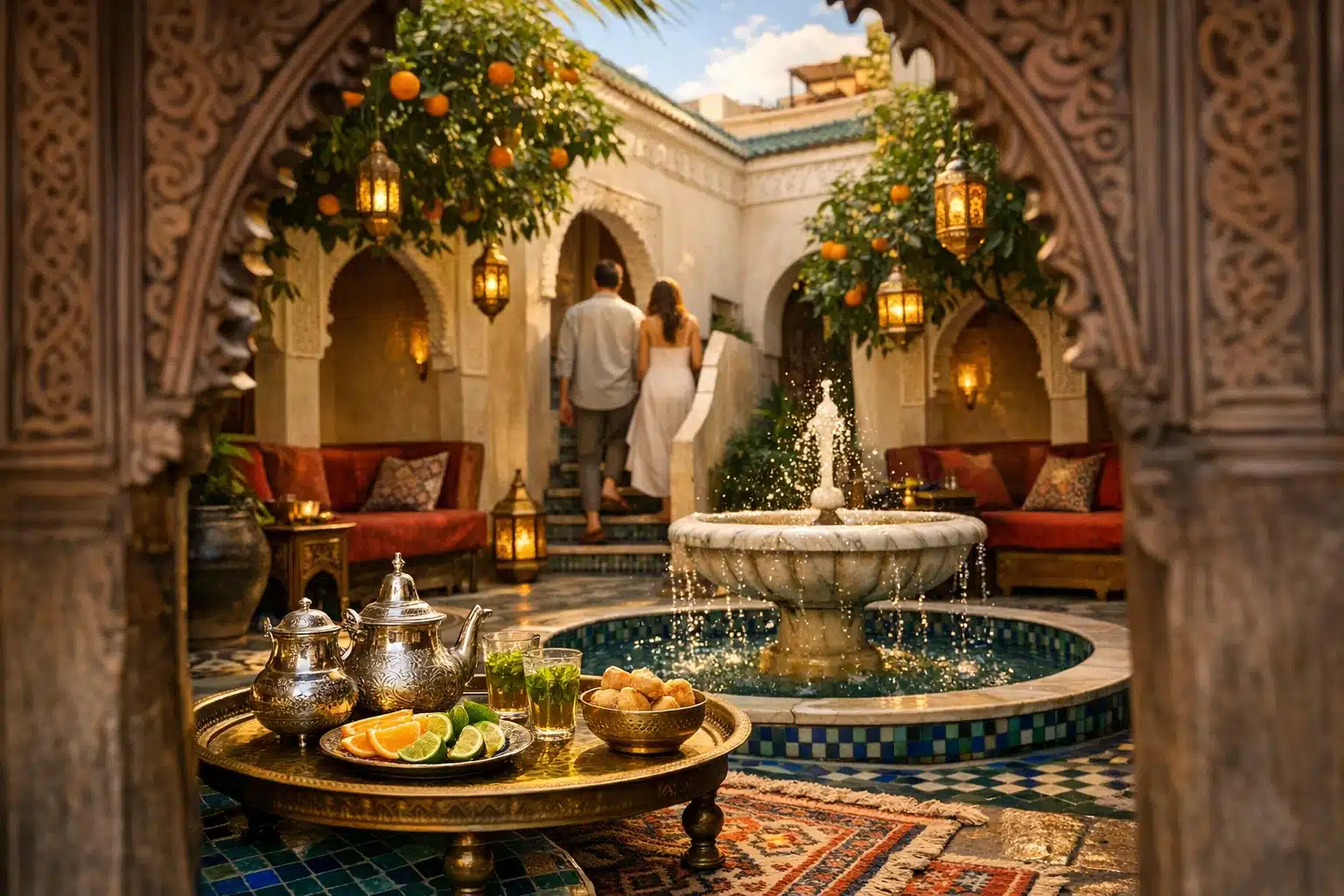
The medina is the historic heart of Marrakech and part of a UNESCO World Heritage site. Staying here places you within walking distance of souks, traditional courtyards, rooftop terraces, and iconic places such as Jemaa el-Fna. A riad usually offers intimacy rather than scale. Rooms may be limited, service feels more personal, and design often centers on carved wood, zellige tile, fountains, and shaded patios. The appeal is obvious: step outside and you are in the middle of the city’s most distinctive atmosphere. The trade-off is access. Cars cannot always stop at the front door, alleyways can be confusing on a first visit, and large pool complexes are rare.
Guéliz and Hivernage provide a different rhythm. These neighborhoods are more modern, with wider roads, contemporary hotels, cafés, boutiques, and easier transport links. If you value convenience, airier streets, nightlife, or business-hotel efficiency, these districts can be a smart base. You may sacrifice some romance compared with a tucked-away riad, but gain comfort in ways many travelers quietly appreciate after a long sightseeing day. Families with strollers, older travelers, or visitors staying during hot months often find these areas less physically demanding.
The Palmeraie sits farther from the old center and is known for resorts, landscaped grounds, and a slower tempo. This is where the all-inclusive model often feels most complete. You are more likely to find:
– Large swimming pools
– Family-friendly entertainment
– Spa facilities and sports courts
– Multiple restaurants on the same property
– Quiet evenings away from traffic and crowd noise
The compromise is distance. If your dream is to wander the medina at sunrise, pause for mint tea, return to the hotel, then head back out after sunset, a resort outside the center can feel less spontaneous. Taxi time adds up. For many visitors, the ideal formula is simple: choose a medina riad for cultural depth, a city hotel for balance, or a resort for relaxation. Think less about stars on a booking platform and more about how you want your days to unfold. In Marrakech, the right location is not background information; it is part of the experience itself.
3. A Balanced 7-Day Itinerary: Culture, Rest, and Excursions Without Rush
A full week in Marrakech gives you enough time to move beyond a checklist. That matters, because the city can be dazzling and tiring in equal measure. A strong seven-day plan should leave room for both discovery and recovery. Packing every day with major sights may look efficient, yet it often reduces enjoyment. The better approach is to alternate intense urban exploration with quieter blocks of time by the pool, in a garden, or over a long lunch in the shade.
One useful structure begins gently. On day one, keep expectations modest: arrive, settle in, learn the area around your hotel, and have an easy first dinner. Day two can focus on the medina, Jemaa el-Fna, and the souks, ideally with a guide if you want historical context and less navigational guesswork. Day three is well suited to major cultural sites such as Bahia Palace, Ben Youssef Madrasa, or a museum circuit, followed by a hammam or relaxed evening on a terrace. By day four, many travelers benefit from leaving the city for a few hours. The Atlas foothills, especially around Imlil, are reachable in roughly 1 to 1.5 hours depending on route and traffic, making them a practical day trip.
For days five and six, you can decide whether your week should lean toward coast, desert scenery, or more local depth. Essaouira is a popular full-day outing and usually takes about 2.5 to 3 hours each way by road. It offers sea air, a working port, and a very different urban mood from Marrakech. If you want a shorter desert-style experience, Agafay is much closer than the Sahara and often chosen for sunset dinners, camel rides, or outdoor camps. Day seven should remain flexible, allowing time for last shopping, a final lunch, or simply doing very little at all.
A practical weekly flow might look like this:
– Day 1: Arrival and orientation
– Day 2: Souks and main square
– Day 3: Historic sites and spa time
– Day 4: Atlas Mountains excursion
– Day 5: Pool day or garden visits
– Day 6: Essaouira or Agafay
– Day 7: Slow finale and departure preparation
The beauty of Marrakech appears in layers. Dawn reveals rose-colored walls and softer light. Late afternoon fills courtyards with warmth. Night brings lantern glow, grilled aromas, and the low hum of conversation from rooftops and lanes. A good itinerary respects that rhythm. It does not try to conquer the city. It learns to move with it.
4. Food, Budget, Weather, and the Real Cost of an All-Inclusive Week
One reason travelers consider an all-inclusive stay in Marrakech is cost clarity. When the room and most meals are prepaid, the trip can feel easier to manage, especially for couples or families watching daily spending. Still, “prepaid” does not mean “expense-free.” The smartest way to assess value is to separate included comforts from predictable extras.
Food is often the first point of comparison. In a resort, buffet dining can be convenient and varied, especially when traveling with children or mixed dietary preferences. City hotels may combine buffet breakfasts with set-menu dinners. Riads sometimes offer smaller but more personalized meals, which can feel less repetitive over a full week. Moroccan cuisine is diverse, and even travelers on an all-inclusive plan should leave room for at least a few meals outside the property. Marrakech is known for dishes such as tagine, tanjia, couscous, grilled meats, vegetable salads, pastries, and mint tea. Friday couscous remains a familiar tradition in many homes and restaurants, while street-level snacks and rooftop dining add another side to the culinary picture.
Season also affects value more than many first-time visitors expect. Spring and autumn are popular because daytime temperatures are often warm without being overwhelming. In summer, Marrakech can become intensely hot, with daytime highs frequently moving above the mid-30s Celsius and sometimes higher. That does not make travel impossible, but it does change how useful a pool, air conditioning, shaded courtyards, and flexible meal times become. In winter, sunny days can still be pleasant, though mornings and nights may feel cool enough to want an extra layer.
Even with an all-inclusive package, budget for common extras such as:
– Entrance tickets to gardens, palaces, and museums
– Tips for drivers, porters, and housekeeping
– Spa treatments beyond any included credit
– Private guides or day tours
– Taxi rides if your hotel is outside the center
– Shopping in the souks, where “just looking” often turns into “maybe one small lantern”
In practical terms, a package can offer excellent value if you plan to spend meaningful time at the property and prefer predictable daily costs. It may be less efficient if you intend to eat most meals around the city and take frequent excursions. Compare not only headline prices but also what you would otherwise spend on breakfast, transport, bottled water, and downtime amenities. The cheapest base rate is not always the better deal. In Marrakech, comfort has value, and good pacing often saves money by preventing hurried, last-minute choices.
5. Who Should Book a 7-Day All-Inclusive Stay in Marrakech?
A seven-day all-inclusive stay in Marrakech is not a one-size-fits-all solution, but it can be an excellent match for several types of travelers. First-time visitors often benefit the most. Marrakech is exciting, yet it can feel intense on arrival: the pace, traffic, bargaining culture, and density of the medina require a little adjustment. Having accommodation, meals, and often transfers already arranged removes much of the early friction. Instead of solving every practical detail from scratch, you begin with a stable base and build outward.
Couples also tend to do well with this format, particularly when they want a mix of city energy and protected downtime. A week can hold rooftop dinners, gardens, hammam sessions, and one or two day trips without becoming exhausting. Families may appreciate the financial predictability, especially if the property includes a pool, children’s menus, or open spaces. Retired travelers and anyone prioritizing convenience may prefer the ease of a well-run city hotel or resort over a more atmospheric but less accessible riad.
That said, the model is not ideal for everyone. Independent travelers who love sampling different cafés every morning, dining out every night, and spending most waking hours off-property may find that an all-inclusive plan pays for meals and amenities they barely use. For those travelers, a room-only or breakfast-only booking can offer greater freedom. The question is not whether all-inclusive is good or bad. The real question is whether your habits match the structure.
Ask yourself a few honest questions before booking:
– Do you want a restful base after busy sightseeing?
– Will you spend enough time at the hotel to use included meals and facilities?
– Are you traveling in hot weather, when on-site comfort matters more?
– Do you prefer fewer payment decisions during the trip?
– Are you comfortable staying farther from the medina if the resort experience is stronger?
For the right traveler, Marrakech on an all-inclusive basis can be a very smart way to experience the city for seven days. It gives shape to the week without reducing the city to a package product. You still have the call to prayer drifting across rooftops, the scent of orange blossom in a courtyard, the sudden turn into a quiet lane after a crowded market, and the pleasure of returning to a place that already feels organized around your comfort.
In summary, this format suits visitors who want discovery without constant decision-making. If that sounds like you, compare what is truly included, choose the area that matches your pace, and design a week with breathing room. Marrakech rewards curiosity, but it rewards balance just as much. A thoughtful seven-day stay can give you both.