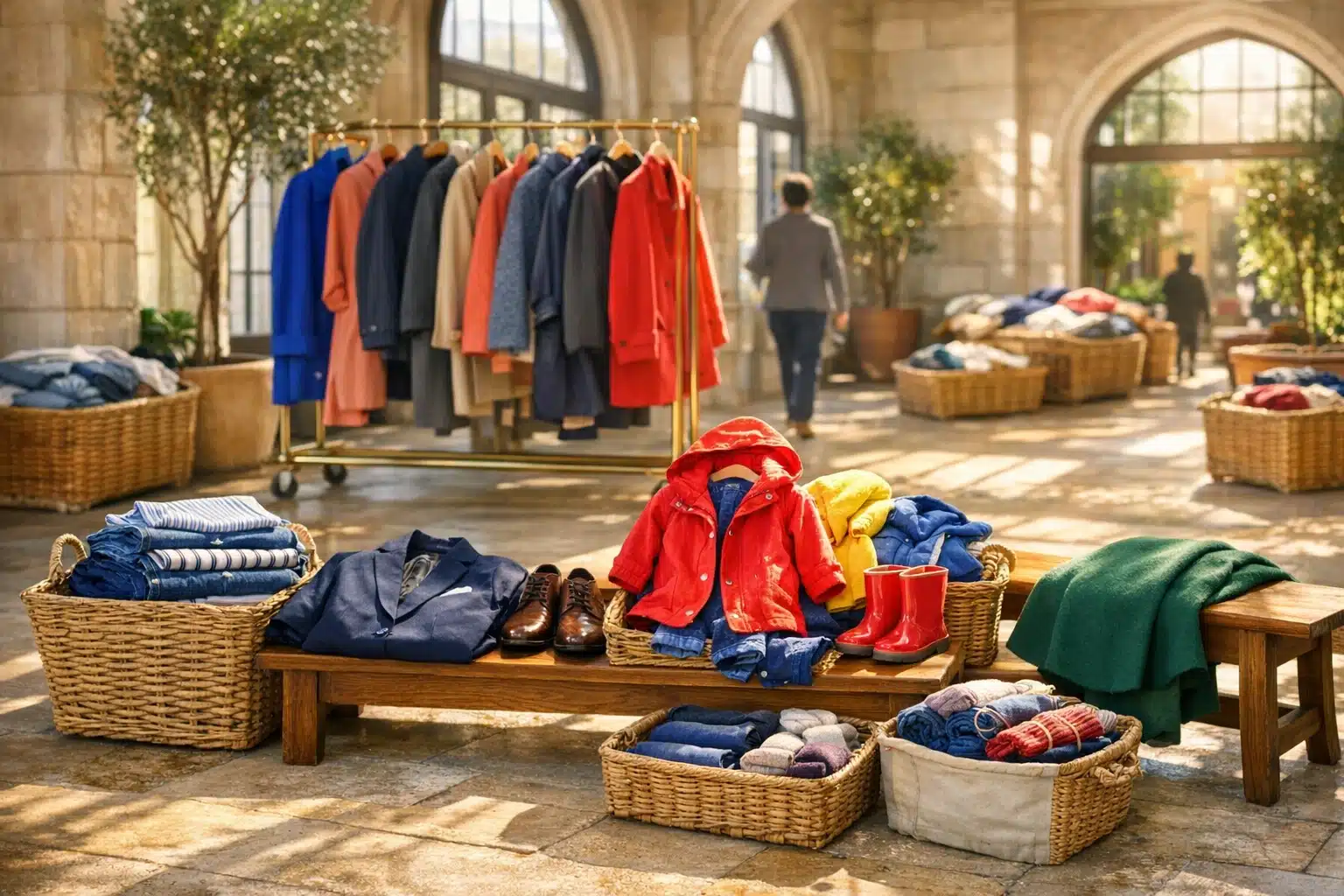
 Artificially generated image
 Where to Donate Clothes You No Longer Wear
Closets fill up quietly: a sweater that no longer fits, a jacket bought for one season, a pair of jeans you keep meaning to repair. Donating those items can free space at home while helping neighbors, nonprofits, and reuse programs that stretch the life of usable fabric. The real challenge is not deciding to give, but choosing the right destination so clothes reach people who can truly use them. This guide maps out the smartest options, from local shelters to textile recycling, and shows how to donate with more care and less guesswork.
Article Outline
- How to decide whether clothing should be donated, passed along directly, or recycled.
- The main places that accept wearable garments, and how they differ in purpose and impact.
- Specialized donation channels for workwear, winter gear, children’s clothing, and emergency needs.
- What to do with damaged textiles, stained items, single shoes, and other hard-to-place pieces.
- A practical conclusion for readers who want a simple, respectful, and effective donation routine.
Start With the Clothing Itself: What Deserves Donation and What Does Not
Before you choose a donation drop-off, start with a more basic question: are your clothes actually ready for another life? This matters because charities and community groups often spend time and money sorting through unusable items. A well-meant bag can become a burden if it is filled with torn, dirty, moldy, or badly damaged garments. The most respectful approach is to sort first, then donate only what another person could reasonably wear soon after receiving it.
A simple rule helps: if you would feel comfortable handing an item to a friend, it is probably suitable for donation. If you would apologize while handing it over, think again. Clothes in good condition should be clean, dry, and free from strong odors. Missing buttons are usually fixable, but large stains, stretched-out elastic, broken zippers, and worn-through fabric often make garments harder to place. Shoes should be paired, and coats should still offer warmth and function. A child’s winter jacket with a working zipper can be genuinely useful; a pilled shirt with underarm damage is not likely to help anyone.
Many people are surprised to learn how much textile waste is created each year. The U.S. Environmental Protection Agency has reported that millions of tons of textiles are generated in the waste stream annually. That makes responsible sorting more important, not less. Donation works best when usable items stay in circulation and non-usable items are diverted into recycling streams instead of hidden inside charity bags.
As you sort, create a few categories:
- Wearable and everyday: shirts, jeans, sweaters, skirts, children’s basics, and outerwear in solid condition.
- Special purpose: interview clothes, school uniforms, formalwear, maternity wear, or winter gear.
- Repairable but not ideal for donation: loose hems, missing buttons, minor seam issues.
- Recycling only: stained fabric, ripped textiles, socks with holes, and worn-out underwear.
This first step also prevents an emotional trap. Some pieces sit in our homes because they hold a memory, not because they hold a function. The dress from a wedding, the hoodie from college, the blazer from a first job: all of them can quietly become museum exhibits in a private closet. Sorting asks you to choose usefulness over hesitation. Once you know what you actually have, it becomes much easier to decide where each item belongs and which donation path will do the most good.
Best Everyday Places to Donate: Thrift Stores, Charities, Community Centers, and Mutual Aid
For everyday clothing in good condition, the most common donation destinations are thrift stores, charity-run resale shops, faith-based organizations, local community centers, and mutual aid groups. Each option serves a different model, and the best choice depends on what outcome matters most to you. Some places resell donated clothes to fund services. Others distribute items directly at low or no cost. Neither approach is automatically better; the right fit depends on local need, convenience, and transparency.
Charity thrift stores are often the easiest option. Organizations such as Goodwill or The Salvation Army, along with many regional nonprofit shops, accept a wide range of garments, shoes, accessories, and household textiles. These stores usually have regular hours, accessible locations, and clear donation procedures. Their model generally turns donated goods into revenue that supports job training, rehabilitation programs, family services, or other community work. This approach can be efficient, especially if you are donating a mixed bag of wearable casual clothing.
Community closets and church-based programs often feel more direct. Instead of reselling items, they may offer clothing to people facing immediate need, including low-income families, recent arrivals, people leaving unstable housing, or workers rebuilding after a crisis. These programs can be especially useful for practical items such as coats, children’s clothes, socks, and shoes. Because storage is limited, however, they may only accept seasonal or urgently needed garments at certain times of year.
Mutual aid groups offer another path. These are community-led networks that connect people directly, often through neighborhood groups, online forums, schools, libraries, or local social channels. Their strength is speed and specificity. Someone may post that a family needs size 6 winter boots, school uniforms, or warm blankets by the weekend. If your donation matches that request, the impact can be immediate and personal.
When comparing options, consider these questions:
- Will the clothing be sold, redistributed, or both?
- Does the organization publish what items it currently needs?
- Is it easy to donate during regular hours?
- Does the group have a reputation for using donations responsibly?
- Can it accept the volume and type of clothing you want to give?
There is also a practical truth here: the best donation place is often the one that will actually accept your clothing today and process it well. A perfect plan that leaves bags in your hallway for three months helps no one. If your clothes are in good shape, your local thrift nonprofit, community center, or mutual aid network may all be strong choices. The key is matching the condition and category of the garments to the system most likely to put them back into use quickly.
Specialized Donation Options: Workwear, Formalwear, Seasonal Gear, and Children’s Clothing
Some clothes should not be treated as generic donations because they serve a very specific purpose. A blazer is not just a blazer when someone needs it for a job interview. A prom dress is not simply an occasion item when a student cannot afford one. A heavy winter coat can be more than clothing in freezing weather; it can be protection. Specialized donation programs exist because certain garments carry more value when they are directed carefully.
For professional clothing, organizations such as Dress for Success and Career Gear are well known examples in many areas. They focus on interview and workplace attire, often requesting clean, modern, and ready-to-wear pieces. These programs usually want items that can help someone walk into an office, hospitality role, school placement, or training program with confidence. That means neutral blouses, structured jackets, dress pants, ties, belts, and polished shoes often matter more than trend-driven fashion. If you are donating office wear, check current guidelines first, because some programs only accept certain sizes, styles, or seasons.
Formalwear also has a natural home beyond the general donation bin. Schools, youth charities, and local community groups frequently run dress drives for prom, graduation, and special events. A gown worn once can be expensive for a family on a tight budget, and men’s suits for school dances or ceremonies are also often needed. These programs usually look for garments that are current enough in style, well cared for, and event-ready without costly alterations.
Seasonal gear deserves urgency and timing. Winter coats, gloves, hats, scarves, waterproof boots, and blankets are especially valuable when cold weather arrives. Homeless outreach teams, shelters, refugee support groups, and school social workers often know exactly what is needed and when. In warmer regions, rain gear and lightweight basics may be more useful than bulky knits. Timing changes impact: a coat donated in early autumn often has more practical value than the same coat dropped off in spring.
Children’s clothing is another category where targeted giving works well. Kids outgrow sizes quickly, which makes gently used items extremely useful. Daycare centers, foster care organizations, family shelters, and parenting support programs often need:
- Everyday basics such as leggings, T-shirts, pajamas, and hoodies
- School-ready shoes and outerwear
- Infant clothing in complete sets
- New or unopened socks and underwear when requested
Think of specialized donations as precision tools rather than general supplies. The closer the match between your item and a recipient’s need, the greater the real-world value. A targeted donation can spare someone an expense, reduce stress before an important event, and restore a little dignity in a moment when it is badly needed.
When Clothes Are Too Worn to Donate: Recycling, Take-Back Programs, and Smarter Alternatives
Not every garment belongs in a donation bag, and understanding that can make you a better donor. Clothes that are stained, ripped, misshapen, or heavily worn often cannot be placed in thrift shops or community closets. Yet throwing them straight into the trash is not the only option. Textile recycling, repair, repurposing, and brand take-back programs can help keep old fabric out of landfill and reduce pressure on donation systems that are already sorting huge volumes.
This part matters because clothing waste is not small. Textile production uses significant water, energy, chemicals, and transport resources, and the environmental cost does not vanish when a shirt leaves your wardrobe. Research from WRAP has shown that extending the active life of clothing by around nine months can lower carbon, water, and waste footprints by roughly 20 to 30 percent. Reuse comes first, but recycling has an important role when reuse is no longer realistic.
Textile recycling options vary by location. Some municipalities offer drop-off bins specifically for worn textiles. Certain retailers run take-back initiatives for old garments and fabrics, regardless of brand, though policies differ and should be checked carefully. There are also mail-in programs that accept worn clothing, bedding, and fabric scraps for sorting into reuse, industrial wiping cloths, insulation material, or fiber recycling. These systems are not magic, and not all collected textiles become new clothing, but they are often better than disposal.
Before you recycle, consider whether the item can be repurposed at home or in the community. Old cotton shirts can become cleaning rags. Towels can be useful for animal shelters if accepted. Denim may suit craft projects, mending patches, or quilting circles. That said, do not treat animal shelters or schools as a dumping ground for unusable fabric; always ask what they genuinely need.
Items that usually should not be donated as wearable clothing include:
- Underwear that has been used
- Socks with holes or thinning heels
- Items with mildew, smoke saturation, or pet damage
- Clothing with permanent stains or broken fasteners that make wear difficult
- Single shoes unless a program specifically accepts them for parts or recycling
A good donation habit includes a good refusal habit. Not every old piece deserves a secondhand rack, and that is fine. The goal is not to force every item into charity; the goal is to place each item in the most responsible stream available. When you separate donation from recycling with honesty, you save organizations time, improve outcomes for recipients, and make your decluttering far more effective.
Conclusion: How to Build a Donation Routine That Helps People and Reduces Waste
If you are staring at a crowded closet and wondering where to begin, the answer is simpler than it first appears: sort with care, match items to the right destination, and treat donation as a practical act of respect rather than a quick exit for unwanted stuff. Good donation is not about how fast you fill a bag. It is about whether the next person can use what you give without extra cost, repair work, or embarrassment. That mindset changes everything.
A strong routine can be surprisingly easy to maintain. Keep one container at home for wearable donations and another for recycling-only textiles. Wash clothes before giving them away. Fold items instead of stuffing them into torn grocery bags. Check seasonal needs before dropping off coats, schoolwear, or children’s sizes. If you have specialized items such as business attire or formalwear, look for a program designed to place them well. If your clothes are ordinary but still useful, a reputable thrift nonprofit or community clothing bank may be exactly the right answer.
It also helps to remember who benefits. Donation can support a parent replacing children’s clothes after a growth spurt, a student preparing for a ceremony, a job seeker building a basic wardrobe, or a family recovering from displacement or financial strain. On the environmental side, longer use reduces waste and lowers demand for newly produced goods. A shirt hanging unworn in your closet does nothing. A shirt worn again by someone who needs it has a second story.
For readers who want one practical checklist, here it is:
- Choose only clean, dry, usable items for donation.
- Separate specialty clothing from everyday basics.
- Call ahead or check websites for current acceptance rules.
- Use textile recycling for worn-out fabrics.
- Donate promptly so the pile does not drift back into storage.
The best place to donate clothes you no longer wear is not one universal destination. It is the place that fits the item, the season, and the need. Once you start thinking that way, your closet becomes less of a backlog and more of a resource. Clear space at home, send garments where they can do the most good, and let every useful piece move forward instead of fading quietly into waste.