2-Night Mini Cruise from Hull to Amsterdam
What the Trip Includes: Outline, Route, and Why It Appeals
A 2-night mini cruise from Hull to Amsterdam sits neatly between a full holiday and a spontaneous escape. You board in the evening, settle into your cabin, and let the North Sea carry you toward the Netherlands while you eat, chat, and unwind. By morning, Europe feels unexpectedly close, and that shift in mood is part of the appeal. For travellers who want movement, atmosphere, and city time without a long absence from home, it is a smart little adventure.
This guide follows the journey in a practical order so the trip makes sense before you book. It covers:
• what the route really involves
• how to choose cabins, meals, and extras
• what life on board feels like
• how to use your day in Amsterdam well
• which travellers get the best value from the experience
The phrase “Hull to Amsterdam” is simple and appealing, but the logistics are worth understanding. Most mini cruises marketed this way sail overnight from Hull to Europoort, the ferry terminal near Rotterdam, rather than docking in central Amsterdam itself. From there, passengers usually continue by coach transfer, and the journey into Amsterdam commonly takes around 60 to 90 minutes depending on traffic and the package booked. That detail is not a drawback, but it does shape expectations. This is a short-break format built around one overnight crossing each way and a concentrated day ashore, not a slow, open-ended city holiday.
Its popularity makes sense when you compare it with other quick getaways. Flying can be faster in pure travel time, yet airports often compress people into a cycle of early alarms, security queues, baggage rules, and transfers. A mini cruise replaces some of that friction with a more relaxed evening departure, a private cabin, and a sense that the journey has started the moment you step on board. For travellers in northern England especially, Hull can be far more convenient than a long drive to a major airport.
There is also an emotional dimension that matters. The ship gives the break a beginning, middle, and end. You watch the lights of the port fade, sleep at sea, spend a day among canals and narrow gabled houses, then return with the same gentle rhythm in reverse. Even when the schedule is compact, the experience often feels bigger than the calendar suggests.
Planning and Booking: Cabins, Documents, Packing, and Practical Choices
The easiest way to enjoy a 2-night mini cruise is to treat it like a short project with a few smart decisions made early. Because the trip is brief, every small choice has a noticeable effect on comfort. Your cabin, your meal arrangements, your paperwork, and even your footwear can make the difference between a smooth escape and a hurried dash through a timetable.
Start with the booking itself. Operators usually price these breaks according to season, day of departure, demand, and cabin type. Weekend sailings and school holiday periods often cost more than midweek departures, while promotional fares can make quieter dates look particularly attractive. An inside cabin is usually the budget-friendly option and is perfectly adequate for many people, especially if you mainly want a clean, dark place to sleep. A sea-view cabin adds natural light and a stronger sense of travel, though it is not essential on such a short route. If you are a light sleeper, check whether upgraded cabins offer a quieter location away from busier public areas.
Documents deserve more attention than many first-time bookers expect. Requirements depend on nationality and current border rules, so passports, visas where relevant, and official travel advice should be checked well before departure. It is also wise to verify boarding times, because ferry check-in typically closes earlier than casual travellers assume. Arriving at the terminal with time to spare lowers stress immediately.
Packing should be compact and deliberate. A useful mini-cruise bag often includes:
• passport and booking confirmation
• a small day bag for Amsterdam
• comfortable walking shoes
• a waterproof layer
• phone charger and power bank
• basic toiletries and any required medication
Food packages can be worth considering. Pre-booked meals may save money compared with buying everything on board, and breakfast is especially useful when you have a full day ahead. Travel insurance is another sensible addition, even on a short break, because delays, cancellations, and lost items do not become less inconvenient simply because the journey is brief.
Finally, think about your own travel style. If you love structure, book transfers, meals, and museum tickets in advance. If you prefer flexibility, leave space for wandering, but still map out the day. Amsterdam rewards spontaneity, yet a mini cruise runs on a clear schedule, and the clock never disappears for long.
Life On Board: What the Overnight Crossing Feels Like in Practice
A mini cruise ferry is not the same as a large ocean cruise ship, and that distinction matters in the best possible way. The atmosphere is usually simpler, more practical, and more sociable. You are there for one evening outward and one evening back, so the ship becomes a floating base rather than a destination with endless programming. That smaller scale can actually work in its favour. Instead of trying to do everything, you settle quickly into the pleasures that matter most: a meal, a drink, a view of the sea, a few hours of entertainment, and a proper night in a private cabin.
Most ships on this route offer a mix of dining spaces, bars, lounges, shops, and public seating. Some travellers head straight for dinner, while others prefer to drop bags in the cabin and walk the decks before sunset disappears. There is something quietly cinematic about standing outside in the evening air as Hull falls away behind you. The wind can be sharp, the sea can be dark and wide, and the horizon has a way of slowing down the mind. It is one of those travel moments that feels simple while it is happening and strangely memorable later.
Entertainment on board is often modest but enjoyable. Depending on the sailing, you may find live music, a casual bar atmosphere, family-friendly spaces, or a lounge where people chat until late. This is not usually the place for nonstop spectacle. Instead, it suits travellers who appreciate a relaxed crossing and understand that the novelty lies in being at sea overnight.
Cabin comfort tends to shape the overall impression. Even a basic en-suite cabin offers a welcome sense of privacy that no airport seat can match. If the North Sea is lively, some passengers notice motion more than others. Sea conditions vary by season and weather, so anyone prone to travel sickness may want to bring suitable remedies and choose lighter evening food. A steady mindset helps too: ferries are built for these crossings, and crew are well used to guiding passengers through ordinary rough-weather concerns.
Compared with a rushed flight, the overnight sailing offers a rare travel luxury: unbroken transition time. You are not merely getting somewhere. You are easing into somewhere else, hour by hour, which is why many repeat passengers value the crossing as much as the city visit itself.
Your Day in Amsterdam: How to Use Limited Time Without Feeling Rushed
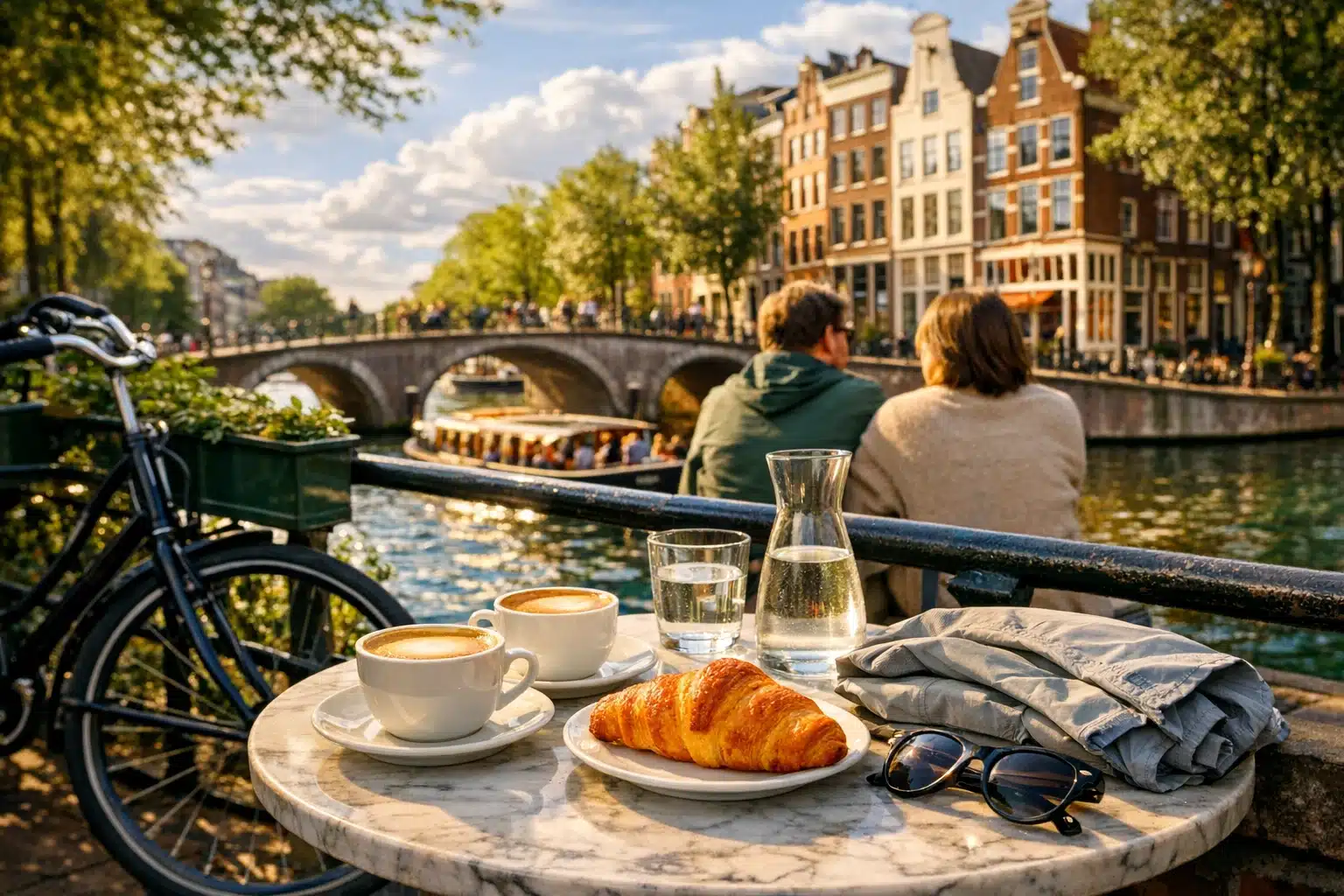
The central challenge of a 2-night mini cruise is also its charm: you only have one day in Amsterdam, so the city must be approached with intention. Once the ship reaches port and the onward transfer is complete, your hours in the Dutch capital become precious. The answer is not to cram in everything, because Amsterdam rewards observation as much as activity. Its beauty often sits in the details: the curve of a canal bridge, bicycles stacked against a railing, narrow houses leaning slightly as if sharing a secret, or a bakery window making a cold morning far more persuasive than your schedule.
First-time visitors usually do best with a compact route through the historic centre. A practical day might include Dam Square, the canal belt, the Jordaan district, and a canal cruise if timing allows. This combination gives you architecture, atmosphere, and an efficient overview. If art is your priority, Museumplein becomes the better anchor, with major institutions nearby. The key is to choose one strong theme rather than five weak ones.
A few realistic planning points help enormously:
• pre-book major attractions where possible, especially popular museums
• allow time for the return transfer, not just the outbound journey
• use trams strategically rather than walking every mile
• keep some cashless payment options ready
• build in at least one unplanned pause for coffee or lunch
Amsterdam can look compact on a map, but queues, bridges, and tempting detours consume time. The Anne Frank House, for example, is deeply meaningful for many visitors, yet it requires advance thought because demand is high. The Rijksmuseum suits those who want a broad cultural stop, while the Van Gogh Museum speaks to travellers who prefer a more concentrated artistic experience. If museums are not essential, a canal cruise gives excellent value because it doubles as sightseeing and rest.
Comparison matters here. A weekend city break with hotel nights allows neighbourhood-hopping, evening meals, and slower discovery. A mini cruise day trip asks for sharper choices, but it rewards them with clarity. You are not trying to “do Amsterdam.” You are sampling it intelligently. For many travellers, that sample is enough to be satisfying, and for others it becomes the spark for a longer future visit. Either outcome is a success.
Value, Trade-Offs, and Final Thoughts for the Right Traveller
The biggest question many people ask is whether a 2-night mini cruise from Hull to Amsterdam offers good value. The honest answer is yes, for the right kind of traveller. It is rarely the cheapest possible way to reach the Netherlands if you compare only raw transport costs against a sale airfare. Budget flights can look cheaper on paper. Yet cost alone does not tell the whole story. A mini cruise bundles travel, cabin accommodation, and the experience of the crossing into one purchase, and that combination changes the equation.
Value becomes clearer when you consider what you are actually buying:
• two nights of private cabin use
• transport across the North Sea and back
• a day in Amsterdam
• on-board facilities and entertainment
• a holiday feeling without a long time commitment
There are, of course, trade-offs. The stay in Amsterdam is short, and anyone hoping for an immersive cultural deep dive may find the timetable too tight. The coach transfer adds another layer to the journey, and bad weather can make the crossing feel less serene than the brochure image in your head. Travellers with limited mobility should also look carefully at walking distances, boarding arrangements, and transfer logistics before booking, because “easy” can mean different things to different people.
Where this format shines is with couples wanting an uncomplicated break, friends planning a sociable trip, first-time cruisers curious about overnight sailing, and northern travellers who would rather avoid airport routines. It also suits people who enjoy the theatre of travel itself. If you like the idea of departure as an event, not a chore, the ferry delivers something a flight usually cannot: atmosphere. You leave one shore, sleep in motion, and arrive with a story already underway.
For the target audience, the conclusion is straightforward. Choose this mini cruise if you want convenience, novelty, and a satisfying taste of Amsterdam wrapped into a short, memorable package. Skip it if your main priority is maximum time in the city at minimum cost, because a longer land-based break will serve that goal better. For everyone in between, especially those who enjoy a journey with character, this route offers a refreshing reminder that travel does not always need to be long to feel meaningful.