Very Cheap All-Inclusive Amsterdam Breaks
Amsterdam has a reputation for style, museums, and postcard-perfect canals, yet a budget break here is more achievable than many travelers assume. The trick is understanding that all-inclusive in a city destination rarely looks like an unlimited beach resort package. Instead, value usually comes from bundling flights, a well-located hotel, breakfast, transport, and a plan that keeps daily spending under control. Read on to see where the bargains are real, where marketing can mislead, and how to build a cheaper trip without flattening the fun.
Outline of the article:
- What cheap all-inclusive usually means in Amsterdam and what is often excluded
- How timing, airports, and neighborhood choice affect the final price
- Whether package deals really beat booking flights, hotels, and meals separately
- How to design an all-inclusive-style itinerary with low daily spending
- Which travelers benefit most and a final checklist before booking
Understanding Very Cheap All-Inclusive Amsterdam Breaks
The first thing to know is that Amsterdam is not a classic all-inclusive destination in the same way that Mediterranean beach resorts or Caribbean hotel complexes are. In those places, the hotel is often the experience: meals, drinks, pools, entertainment, and activities all happen on-site. Amsterdam works differently. The city itself is the attraction, and travelers usually spend more time outside the hotel than inside it. That is why very cheap all-inclusive Amsterdam breaks are usually closer to bundled city-break packages than to the unlimited-food-and-cocktails model many people imagine.
In practical terms, a budget-friendly Amsterdam package often includes flights and hotel accommodation, with breakfast as the most common meal inclusion. Some deals add airport transfers, public transport, or a canal cruise. Others use the phrase all-inclusive more loosely, meaning that several major costs are grouped into one booking price. This can still be useful because it gives travelers a clearer idea of the total spend before they go. For anyone trying to avoid surprise costs, that certainty matters almost as much as the headline price.
Typical inclusions on cheaper Amsterdam package breaks may include:
- Return flights or rail travel
- Two or three nights in a hotel
- Breakfast each morning
- Occasional dinner offers or restaurant credits
- Optional transport passes or attraction add-ons
What is often not included is just as important. City tax may be charged separately. Checked luggage can raise the cost of a low-looking flight package. Lunch, drinks, museum entry, and evening snacks are frequently extra, and Amsterdam is a city where a casual coffee stop or quick canal-side drink can quietly expand the budget. It is a place of small temptations: a warm stroopwafel, an extra ferry ride to explore Amsterdam Noord, a spontaneous museum visit when rain starts tapping on the pavement.
So, are cheap all-inclusive Amsterdam breaks real? Yes, but the smart way to read them is as structured value packages rather than luxury deals. The good ones help you lock in the expensive basics and reduce planning friction. The poor ones rely on the emotional pull of the phrase all-inclusive while leaving you to pay for most of the trip once you arrive. If you go in with realistic expectations, the category becomes useful rather than confusing, and that is the foundation of any genuinely affordable Amsterdam escape.
When to Book and Where to Stay for the Lowest Overall Price
Timing is one of the biggest factors in finding a very cheap Amsterdam break. Prices usually rise when demand spikes, and Amsterdam has several predictable pressure points. Spring draws visitors for tulip season, summer brings peak leisure travel, and December attracts festive weekend crowds. Add concerts, conferences, school holidays, and major events, and hotel prices can shift sharply within a matter of days. If your main goal is value rather than perfect weather, the most affordable periods are often the quieter months such as January, February, early March, and parts of November. Midweek departures can also help, because Friday and Saturday nights tend to command a premium.
Where you stay matters just as much as when you book. Many travelers immediately search for hotels around the canal belt, Dam Square, or Central Station. Those areas are convenient and atmospheric, but they are rarely the cheapest. Amsterdam rewards travelers who understand transport. A hotel that looks slightly farther out can still be easy to reach, and the savings are often meaningful. Districts and nearby areas worth comparing include Amsterdam Noord, Sloterdijk, Amsterdam West, Diemen, Amstelveen, and even Schiphol-area hotels for late arrivals or early departures.
Consider these practical location trade-offs:
- Central canal area: best atmosphere, highest room rates, easiest walking access
- Sloterdijk: often cheaper, strong train links, useful for short stays
- Amsterdam Noord: competitive pricing, free ferries from behind Central Station
- Schiphol area: airport convenience, less charm, good for one or two nights
- Diemen or outer metro zones: lower prices, efficient public transport
Schiphol Airport is particularly helpful for budget planning because the train to Amsterdam Centraal is fast, usually taking roughly 15 to 20 minutes. That means you do not always need an expensive city-center hotel to keep the trip easy. A slightly cheaper room with reliable rail or metro access can outperform a central hotel once you compare total value. The same logic applies to breakfast: a hotel outside the core with breakfast included may save more than a cheaper room in the center that leaves you buying café breakfasts every morning.
Booking strategy also matters. If you can travel with hand luggage only, cheaper flights become much more appealing. If you can avoid last-minute weekend departures, package prices often improve. And if your trip is two or three nights rather than four, you can concentrate spending on the parts that matter most. Amsterdam is compact, so smart geography beats prestige geography. Sometimes the best bargain is not a rock-bottom room rate but a stay that trims transport time, meal costs, and booking stress all at once.
Package Deal or DIY Trip: Which One Really Saves More Money?
Budget travelers often assume a package must be cheaper, but the answer depends on how they normally travel. In Amsterdam, the gap between a package break and a do-it-yourself booking can be narrow. A low-season package with flights, two hotel nights, and breakfast may land in a competitive range, especially if the operator has negotiated room blocks in outer districts. As a rough guide, budget-conscious travelers from nearby European markets may find short package deals in the lower hundreds of euros per person in quiet periods, while central, high-demand weekends can rise much higher. The point is not the exact number, which changes constantly, but the structure of the cost.
Let us compare the logic of three common booking styles. First, the package traveler pays one price for transport and accommodation, often with breakfast. This works well for first-time visitors who want predictable spending. Second, the DIY budget traveler books a low-cost flight or rail ticket, chooses a room-only hotel or hostel, and controls food costs with supermarkets, bakeries, and casual lunch spots. Third, the experience-focused traveler picks a central boutique hotel and pays separately for everything else, accepting that convenience carries a premium.
Here is where the arithmetic often shifts:
- If breakfast is included, you may save more than expected, because central café breakfasts add up quickly
- If checked bags are extra, a cheap package headline can lose its advantage
- If museum visits matter, a separate city card or combo ticket may outperform a so-called inclusive deal
- If you eat lightly, an included dinner may have less value than the brochure suggests
Amsterdam also has hidden budget pressure points. Tourist taxes are common and may be charged separately. Airport transfers, transit day passes, canal cruises, and timed-entry museum tickets can all alter the true cost. Two people who book the same hotel can finish with very different totals depending on how often they stop for coffee, how many paid attractions they choose, and whether they treat the city as a stroll or a schedule.
So which option wins? Package breaks often win on simplicity, budgeting comfort, and decent value for short stays. DIY trips often win for flexible travelers willing to compare transport, travel with minimal luggage, and eat strategically. The biggest mistake is choosing based only on the lowest visible number. A room-only deal can become expensive once breakfast, transfers, and attraction tickets are added. A package can also disappoint if the hotel is inconvenient or the included extras are things you would never use. The smartest approach is comparison by total trip cost, not by headline label. Once you do that, the cheapest option becomes easier to identify, and it is not always the one shouting the loudest.
How to Create an All-Inclusive Feel Without Paying Resort Prices
If genuinely all-inclusive Amsterdam packages are limited, the next best strategy is to create an all-inclusive-style experience yourself. This means locking in the big costs before departure and designing each day so that spending stays stable. Done well, the trip feels relaxed rather than restrictive. You are not counting every euro in panic; you are simply traveling with a plan. In a city as walkable and visually generous as Amsterdam, that approach works surprisingly well.
Start with the basics: book transport, hotel, and breakfast in advance. Then pre-book one or two anchor activities instead of trying to buy everything spontaneously. A canal cruise is a popular example because it gives a broad introduction to the city and can replace some aimless paid wandering on the first day. If museums are central to your trip, calculate whether a city pass or multi-attraction ticket makes sense. These cards are not automatically a bargain. They become cost-effective only if you genuinely use enough included entries and transport.
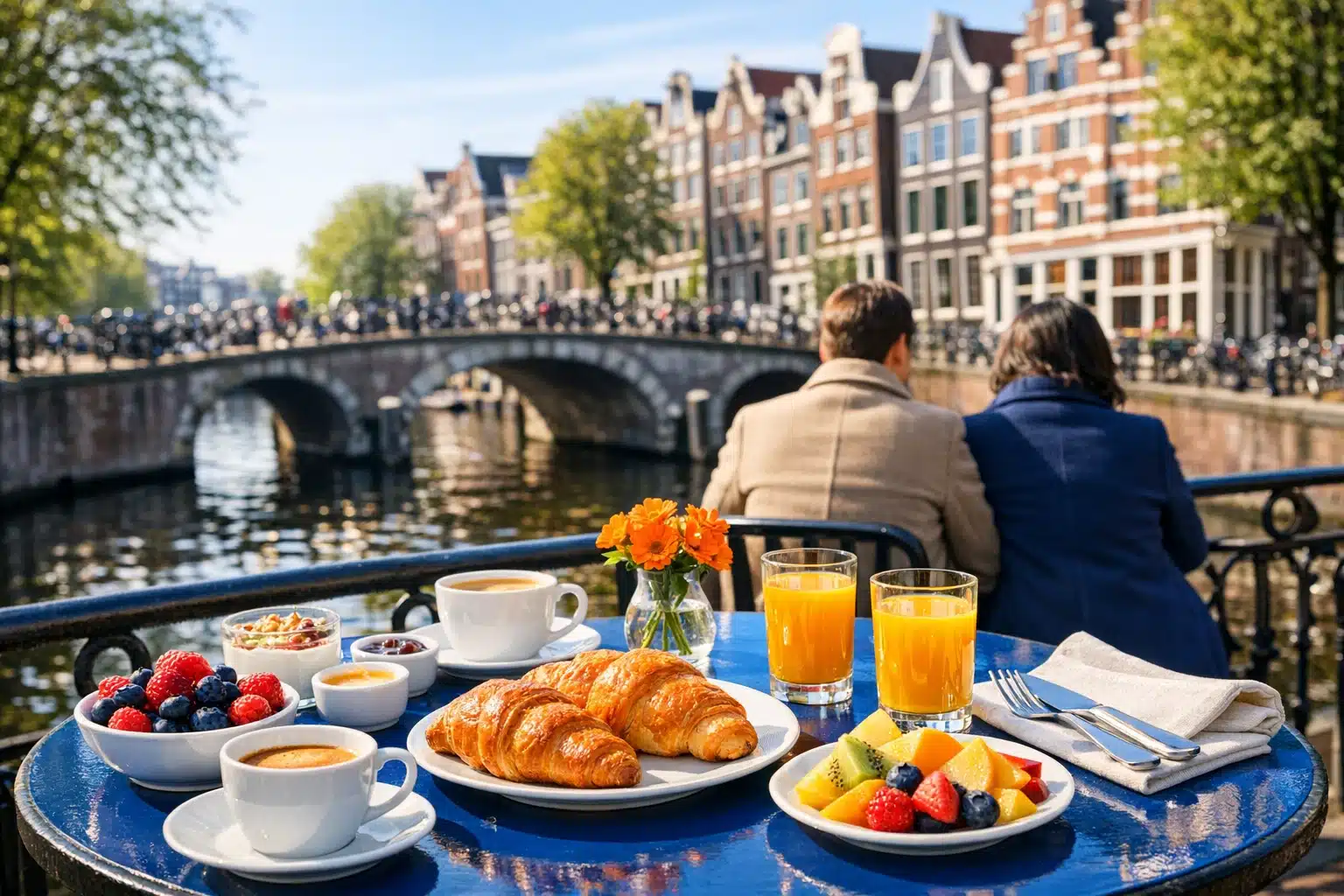
Low-cost Amsterdam days often follow a simple rhythm. Morning begins with hotel breakfast. Midday is ideal for a bakery lunch, market snack, or supermarket picnic. Afternoon can be built around free or low-cost attractions, and evening is where you decide whether to splurge or stay disciplined. The beauty of the city is that even frugal hours can feel cinematic. A free ferry crossing to Amsterdam Noord costs nothing yet gives you water, skyline, and wind on your face like a scene change in a film.
Ideas for keeping the daily budget controlled include:
- Use free ferries and walkable neighborhoods instead of frequent taxis
- Choose one paid museum per day rather than several expensive entries in a rush
- Eat your largest meal at lunch, when prices are often easier to manage
- Build in free highlights such as Vondelpark, the canal ring, Jordaan streets, and market browsing
- Carry a refillable water bottle and avoid impulse convenience-store spending
A practical two-night plan might look like this: arrive, check in, take a canal cruise, and spend the evening walking the canal belt and Jordaan. The next day, visit one major museum, browse a market, use the free ferry to Noord, and finish with a simple set-menu dinner. On the final morning, enjoy breakfast, stroll through a neighborhood you missed, and leave without that last-minute feeling of cash draining away. That is the secret of an all-inclusive-style city break. It is less about excess and more about designing a trip where the pleasures are already accounted for.
Final Thoughts for Budget Travelers Planning an Amsterdam Break
Very cheap all-inclusive Amsterdam breaks do exist, but they reward realism more than fantasy. If you expect a beachfront-style package with endless food and entertainment folded into one rate, the city will disappoint. If, however, you want a short, carefully planned break where flights, a decent hotel, breakfast, and perhaps one or two extras are fixed in advance, Amsterdam can be surprisingly manageable. The best-value trips are usually not the flashiest ones. They are the ones where each choice supports the next: the right travel dates, the right neighborhood, the right hotel setup, and the right daily rhythm.
This kind of trip suits several types of travelers especially well. First-time visitors benefit because a package reduces planning pressure. Couples on a short weekend often like the clarity of paying for the essentials upfront. Friends traveling light can also do well if they use outer-district hotels and spend money on experiences rather than location prestige. On the other hand, some travelers may be happier skipping the all-inclusive label entirely. Food-focused visitors who want to sample many cafés and restaurants may not get full value from included dinners. Travelers who prefer late nights and lazy mornings may not care much about breakfast bundles.
Before booking, run through a simple checklist:
- Check whether city tax is included or payable at the hotel
- Confirm baggage rules before comparing flight-inclusive deals
- Measure hotel value by transport time, not just by map distance
- Price breakfast separately if it is not included
- Decide in advance how many paid attractions you truly want
- Compare total trip cost, not just the advertised package headline
The target audience for this topic is clear: travelers who want Amsterdam’s canals, culture, and compact charm without turning a quick getaway into an expensive habit. For them, the smartest path is not chasing a mythical ultra-luxury bargain. It is choosing a realistic bundle, traveling off-peak when possible, and letting the city’s naturally rich atmosphere do some of the work. Amsterdam does not need to be overbought to feel memorable. A ferry ride at dusk, a careful breakfast before a museum morning, and a long walk beside glowing canal houses can provide the sense of abundance many people are searching for. Spend with purpose, book with patience, and the cheap break becomes not just possible, but satisfying.