A Practical Guide to Second-Hand Retail Shelving
Second-hand retail shelving sits at the crossroads of cost control, store presentation, and practical sustainability, which is why it deserves more attention than it usually gets. For independent shops, pop-up sellers, resale businesses, and growing chains, the right used fixtures can stretch a budget without making the shop look improvised. This guide maps the topic clearly, covering shelf types, inspection points, pricing, logistics, and layout decisions. Read on if you want shelves that support stock, shape customer flow, and still leave room in the budget for everything else.
Why Second-Hand Retail Shelving Matters and What This Guide Covers
Retail shelving rarely gets the glamour reserved for signage, lighting, or a dramatic shopfront, yet it quietly decides how a store performs. Shelves hold stock, frame sightlines, control traffic, and influence how full or sparse a space feels. When those shelves are bought second-hand, the decision becomes even more interesting because it touches three practical concerns at once: budget, speed, and resource use. A retailer opening a new unit, refitting a tired branch, or testing a temporary concept often needs fixtures quickly. New systems can be excellent, but long lead times, minimum order quantities, and fit-out costs can make them feel heavy before the first product is sold. Used shelving offers another route.
Commercial retail shelving is typically built to withstand years of use. That matters because a second-hand unit is not the same as a fragile household bookshelf picked up from a garage sale. Gondola shelving, wall bays, stockroom racks, and modular display systems are made for repeated loading, adjustment, and relocation. In many cases, they become available only because a store has changed concept, moved premises, or closed, not because the fixtures have reached the end of their useful life. For a buyer, that creates an opportunity to acquire capable equipment at a lower outlay and with less manufacturing demand attached.
There is also a sustainability angle that feels more solid than a slogan. Reusing fixtures extends the life of metal, timber, glass, and plastic parts that already exist. That does not solve every environmental issue around retail fit-outs, but it does reduce waste and lowers the need for producing entirely new units. In a business climate where many companies want to present more responsible operations, second-hand shelving can support that story in a practical, visible way.
This guide follows a simple structure so readers can move from broad understanding to confident decisions:
- What second-hand shelving is and why it can make business sense
- The main shelving formats and how they compare in real retail settings
- How to inspect used fixtures for safety, durability, and compatibility
- How to budget for transport, refurbishment, and hidden ownership costs
- How to plan a store layout that makes older fixtures feel coherent and professional
Think of shelving as the silent architecture of a shop. Customers may not comment on the uprights, brackets, and base decks, but they absolutely respond to the order those elements create. That is why a smart second-hand purchase is not just about buying less expensive metal. It is about buying structure, flexibility, and time. The sections that follow aim to show how to do that carefully, so the savings are real and the finished space still looks ready for business rather than rescued from a back alley.
Main Types of Second-Hand Retail Shelving and How They Compare
The used shelving market is wide enough to confuse first-time buyers, because “retail shelving” can describe several very different systems. The right choice depends on the products being sold, the visual style of the store, available floor area, and how often displays will change. A compact convenience shop, a boutique gift store, and a discount retailer may all buy second-hand fixtures, yet each will need a different balance of strength, visibility, and flexibility.
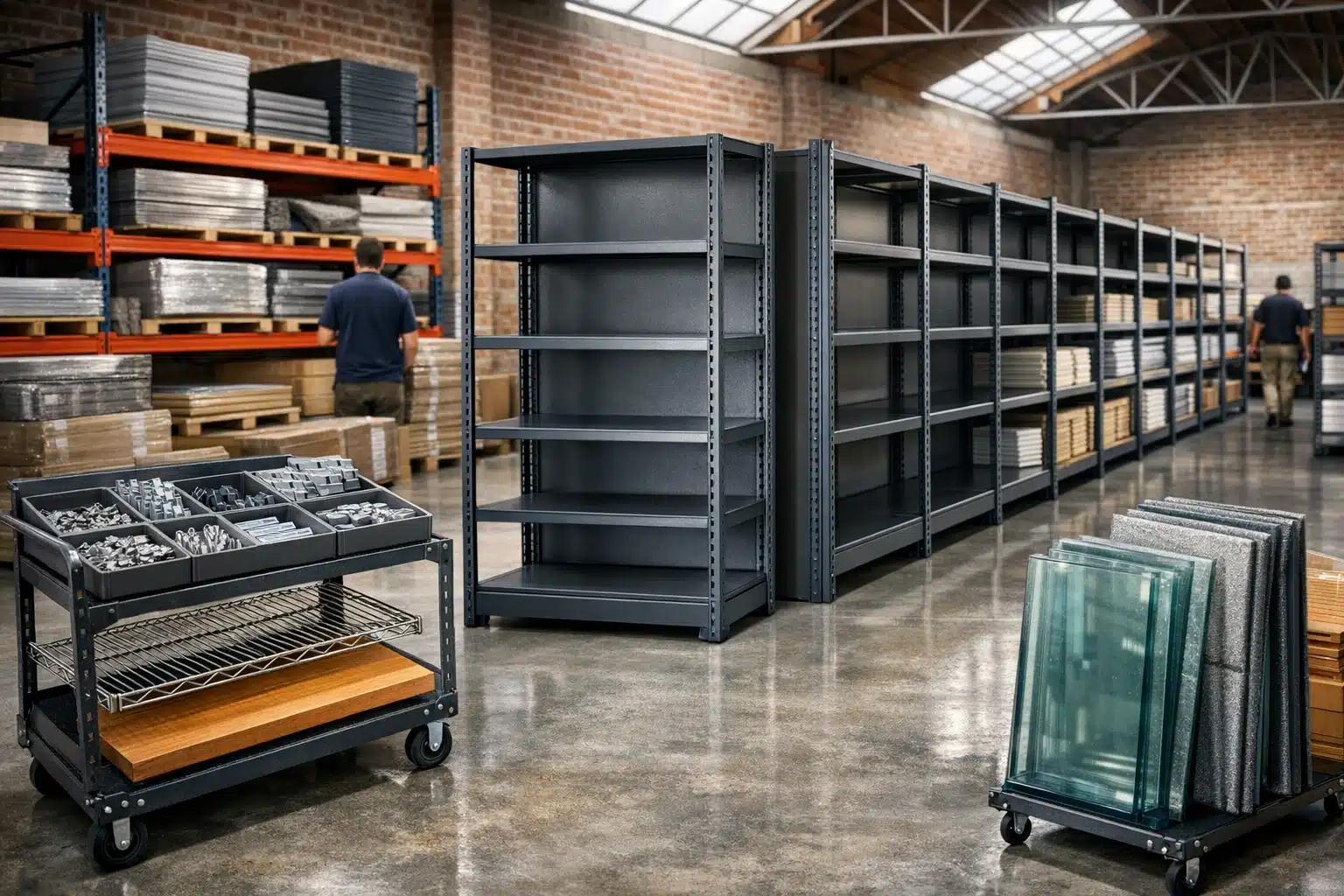
The most common option is gondola shelving. This is the familiar modular system seen in supermarkets, pharmacies, hardware stores, and many variety shops. Gondola bays usually include uprights, back panels, brackets, shelves, a base shelf, and a plinth. Their biggest advantage is adjustability. Shelves can be moved up or down, and accessories such as hooks, baskets, dividers, or signage holders can often be added. For stores selling mixed merchandise, gondola systems are usually the most practical choice. They are sturdy, widely available on the second-hand market, and relatively easy to expand if matching components can still be found.
Wall shelving is similar in principle but fixed against the perimeter. It often allows deeper shelves, cleaner product zoning, and a more open center floor. Retailers with limited square footage often use the walls to carry bulk or higher-margin lines while preserving central space for feature tables or narrower gondolas. Used wall bays can be a strong value purchase, though buyers need to check whether rails, brackets, and panel types match across the full run.
Wire shelving is another common category, especially in food retail, stockrooms, garden centers, and utility-driven stores. It provides airflow, easy cleaning, and visual lightness. It can also be useful where dust, moisture, or frequent wipe-downs matter. The trade-off is aesthetic. Wire units often look more industrial than sheet-metal or timber systems, so they may not suit fashion, cosmetics, or premium gift environments unless styled carefully.
Wooden and glass shelving sits at the other end of the spectrum. These fixtures can create warmth, softness, or a boutique feel that metal systems do not naturally provide. Second-hand timber units are especially attractive for bookstores, artisan food shops, lifestyle stores, and curated resale spaces. Yet they need closer inspection for scratches, warping, chipped veneer, or sun fading. Glass shelves add elegance and light, but they require attention to chips, thickness, support hardware, and safe loading.
For back-of-house needs, heavier-duty racks and stockroom shelving deserve separate consideration. They are less about customer presentation and more about operational efficiency. If a retailer plans to store reserve inventory on site, used stockroom shelving can reduce clutter and support faster replenishment. It also protects the sales floor from becoming an accidental warehouse.
A simple comparison helps clarify the options:
- Gondola shelving: highly flexible, durable, ideal for mixed merchandise
- Wall bays: efficient use of perimeter space, good for structured categories
- Wire shelving: practical, airy, easy to clean, more utilitarian in appearance
- Wooden shelving: warmer visual character, often less modular
- Glass shelving: attractive and light-looking, but more delicate and less forgiving
- Stockroom racks: functional rather than decorative, vital for operations
The key lesson is that there is no universal winner. Good second-hand shelving is not the system that looks cheapest on paper. It is the system that suits the rhythm of the shop, supports the weight and shape of the merchandise, and can still be maintained when something inevitably needs replacing.
How to Inspect Used Shelving Before You Buy
Buying second-hand shelving without a careful inspection is a bit like hiring staff after reading only their names. The basics may look fine, but the details decide whether the arrangement will work. A used fixture can appear solid from a distance and still hide enough damage, missing parts, or compatibility issues to turn a bargain into a repair project. The inspection stage is where disciplined buyers separate useful stock from expensive clutter.
Start with measurements. Retailers should confirm overall bay height, shelf width, shelf depth, base depth, and footprint before thinking about finish or price. A shelf that physically fits the room may still fail in practice if it blocks sightlines, narrows aisles, or prevents good product presentation. Ceiling height matters too, especially where top shelves, signs, or lighting need clearance. Even a difference of a few centimeters can affect how comfortably a system sits in the space.
Next, look at the structural condition. Metal shelving should be checked for bends, twists, rust, cracked welds, damaged tabs, and distorted brackets. Uprights must stand straight. Shelves should sit level without rocking or sagging. Base legs, feet, and fixings should be present and stable. With timber units, look for swelling, loose joints, deep gouges, delamination, and water marks. With glass, inspect edges and corners closely because chips and hairline damage can turn into safety risks under load.
Completeness is just as important as condition. Many second-hand lots look attractively priced until the buyer discovers that shelf clips, back panels, kick plates, dividers, hooks, or support brackets are missing. On modular systems, one missing component can prevent a whole bay from being assembled correctly. Buyers should ask for an inventory list and, if possible, compare assembled sample units to stacked loose parts. A compatible set is worth more than a cheap pile of mismatched pieces.
Compatibility deserves special attention because retail systems are often brand-specific. Brackets from one line may not fit uprights from another. Panel widths may differ slightly. Shelf angles and locking tabs can vary. Even when two systems look nearly identical, small manufacturing differences can make them awkward or unsafe to combine. If seller information is incomplete, take photos, dimensions, and a sample part before purchasing a large quantity.
A practical inspection checklist can help:
- Confirm dimensions for every bay and shelf size
- Ask whether the original manufacturer or model is known
- Check for load labels or documentation where available
- Inspect paint, coatings, and corrosion carefully
- Count all brackets, clips, panels, and feet
- Test whether shelves lock securely into position
- Examine wall-fixing or anti-tip requirements if relevant
- Ask how the units were dismantled, stored, and transported
Safety should never be guessed. If the intended stock is heavy, fragile, or frequently handled by customers, verified load information matters more than appearance. Retailers must also think about anchoring, edge safety, local fire requirements, and accessibility. A low-cost used system is only useful if it can be installed in a way that is safe for shoppers and staff. The smartest buyers inspect with both imagination and skepticism: they picture the shelving at work in the finished store, while also looking for every reason the deal could disappoint.
Budgeting, Sourcing, Transport, and Refurbishment Costs
The sticker price of second-hand shelving is only the opening number. What matters in practice is total ownership cost: the amount paid to buy, move, clean, repair, assemble, adapt, and maintain the fixtures until they are working properly on the shop floor. This is where many retailers either unlock excellent value or accidentally erase their savings.
Used shelving usually enters the market through a few predictable channels. Store closures, retail liquidations, refurbishment projects, specialist fixture dealers, auction platforms, and local business marketplaces are common sources. Each route has trade-offs. A liquidation sale may offer large matched quantities at attractive rates, but timelines can be tight and removal may be the buyer’s responsibility. Specialist resellers often charge more, yet they may grade stock, sort components, and offer replacement parts. Online marketplace purchases can be convenient for small quantities, though descriptions are not always consistent and condition can vary widely.
When comparing offers, buyers should think beyond unit cost. Transport is frequently the hidden heavyweight. Metal shelving is bulky, awkward, and expensive to move inefficiently. Long uprights may require larger vehicles. Glass or timber units need careful packing. If the fixtures are bought from a distant site, freight can narrow the gap between used and new surprisingly quickly. Loading access, stairs, restricted delivery hours, and storage space at the destination also affect real cost.
Assembly time has value as well. A complete, sorted, clearly matched lot can be installed much faster than a mixed pile of parts. If paid installers are involved, time becomes money immediately. Even when the work is done in-house, labor hours still matter because staff attention is pulled away from merchandising, training, or opening preparation.
Refurbishment can improve value dramatically when done selectively. A used bay with cosmetic scuffs may become perfectly serviceable after cleaning and touch-up painting. Replacement shelf strips, new ticket rails, fresh end panels, and consistent signage can make older fixtures look deliberate rather than second-hand. Some retailers even combine used metal frames with new timber shelves or decorative facings to create a custom look on a reasonable budget. The caution is simple: refurbishment should enhance a sound structure, not rescue a weak one.
Budget plans should include the following line items:
- Purchase price per bay or per lot
- Transport, packing, and loading equipment
- Replacement parts and missing hardware
- Cleaning, painting, or refinishing materials
- Installation labor and site preparation
- Storage costs if delivery and opening dates do not align
- Waste disposal for unusable components
A helpful way to judge value is to compare scenarios rather than isolated prices. One used lot may cost less initially but require long-distance transport, repainting, and extra brackets. Another may be slightly more expensive at purchase yet arrive complete, clean, and nearby. In that comparison, the second option can be the better deal. Good budgeting for second-hand shelving is therefore less about chasing the lowest headline number and more about buying predictability. A retailer does not need shelves that are merely cheap; they need shelves that become useful quickly, fit the concept cleanly, and do not keep generating avoidable costs after installation.
Planning the Layout and Making Second-Hand Shelving Work for Your Store
Once the shelving has been chosen wisely, the next challenge is turning it into a store that feels coherent, easy to shop, and appropriate for the brand. This is where second-hand fixtures either shine quietly or betray the fact that they were purchased piecemeal. Good layout planning closes that gap. It allows older shelving to support a fresh retail experience rather than feeling like leftovers from several unrelated shops.
The first principle is customer flow. Shoppers should be able to enter, orient themselves quickly, and move through key categories without friction. On a practical level, that means balancing aisle width, shelf height, and feature zones. Very tall used bays can maximize capacity, but they may also darken the room and reduce visibility across the store. Lower central shelving paired with taller wall runs often creates a better rhythm, especially in smaller units where sightlines are precious. The goal is not simply to fit more shelving. It is to create movement that encourages browsing and makes products easy to find.
Zoning matters just as much. Similar product families should live together, impulse items should sit where traffic naturally slows, and high-value or staff-assisted goods should be positioned with supervision in mind. A strong second-hand shelving layout often combines permanent structure with flexible points of change. Fixed wall shelving can anchor core categories, while mobile or easily adjusted bays support seasonal lines, promotions, or fast-moving stock shifts. That flexibility is one of the greatest strengths of modular used fixtures.
Visual consistency deserves attention because mixed second-hand stock can easily look accidental. Small design choices can unify different pieces:
- Use a limited color palette across shelves, plinths, and signage
- Standardize shelf heights within each category where possible
- Add matching ticket strips, dividers, or label holders
- Repeat materials intentionally, such as timber trims or black brackets
- Keep damaged or visibly tired pieces off the sales floor
Merchandising also changes how second-hand shelving is perceived. Full, tidy, well-faced shelves communicate confidence. Empty bays, inconsistent spacing, and random accessories make any fixture look weaker than it is. In that sense, presentation can do more for a used system than a fresh coat of paint alone. Lighting helps too. Even durable but plain metal shelving looks more considered when products are lit clearly and category signs are crisp.
For the target audience of this guide, especially independent retailers, pop-up operators, resale businesses, and budget-conscious store managers, the final takeaway is straightforward. Second-hand shelving is most useful when treated as a strategic asset, not a compromise purchase. Buy with measurements in hand, inspect carefully, calculate the full cost, and plan the layout before the van arrives. If you do that, used fixtures can deliver three things every retailer values: financial breathing room, operational flexibility, and a store environment that feels purposeful from the first step inside. In other words, the best second-hand shelving does not announce its age. It simply does its job well, day after day, while letting the merchandise and the business take center stage.