10-Night All-Inclusive Resort Stay in Crete
A 10-night all-inclusive stay in Crete suits travelers who want more than a quick beach escape; it creates room for slow mornings, full resort days, and short adventures beyond the gates. Greece’s largest island mixes reliable sunshine, deep history, village food culture, and coastlines that change dramatically from one region to the next. That combination makes Crete especially relevant for families, couples, and first-time visitors who want convenience without feeling locked into a single routine.
Outline:
• Why ten nights works better than a shorter resort break
• How to choose between Crete’s main resort areas
• What all-inclusive normally covers, and where extra costs appear
• Ways to use ten nights for both rest and exploration
• Which travelers benefit most from this format
1. Why a 10-Night Stay in Crete Works So Well
A 10-night resort holiday sits in a sweet spot that many travelers only recognize after they have tried it. A week can feel pleasant but compressed; by the time airport transfers, check-in, and the first day of settling in are done, the break already feels halfway through. Ten nights creates more breathing room. It gives you enough time to enjoy the core promise of an all-inclusive stay, namely ease, predictability, and comfort, while still leaving space for the island itself to enter the picture. In a place as varied as Crete, that extra time matters.
Crete is not a small, single-mood destination. It stretches roughly 260 kilometers from west to east and covers more than 8,000 square kilometers, making it the largest Greek island by a wide margin. One coast offers broad resort beaches and organized facilities, another reveals coves and mountain-backed villages, while inland routes lead to olive groves, monasteries, and archaeological sites. On a shorter trip, travelers often reduce the island to pool, buffet, and a single excursion. With ten nights, the rhythm changes. You can spend a few days fully relaxing, then head out for a town visit, a boat trip, or a historical site without feeling that every outing steals time from your holiday.
There is also a practical argument for the longer format. All-inclusive resorts tend to reward time spent on site: meals are already covered, drinks are easy to access, entertainment is scheduled, and family logistics become simpler. That matters for:
• parents managing nap times and snack schedules
• couples who want a low-friction holiday with some privacy
• multigenerational groups who need a base that keeps different ages happy
Compared with a city break or a faster island-hopping plan, Crete offers a softer, steadier experience. The island can be active if you want it to be, but it does not demand constant movement. A ten-night stay allows the first few days to act as decompression. Only after that do many travelers start noticing the color of the sea at different times of day, the contrast between resort buffets and tavern meals in nearby villages, or the way mountain silhouettes seem to shift at sunset. In other words, time does not simply lengthen the holiday; it deepens it. That is the real advantage of choosing ten nights rather than seven.
2. Choosing the Right Area: West, Central, or East Crete
Picking the right resort area in Crete matters almost as much as choosing the resort itself. The island has several distinct zones, and each creates a different version of the same holiday. For most visitors, the key decision is whether to stay in the west, central north coast, or east. All three work for an all-inclusive break, but they appeal to different priorities.
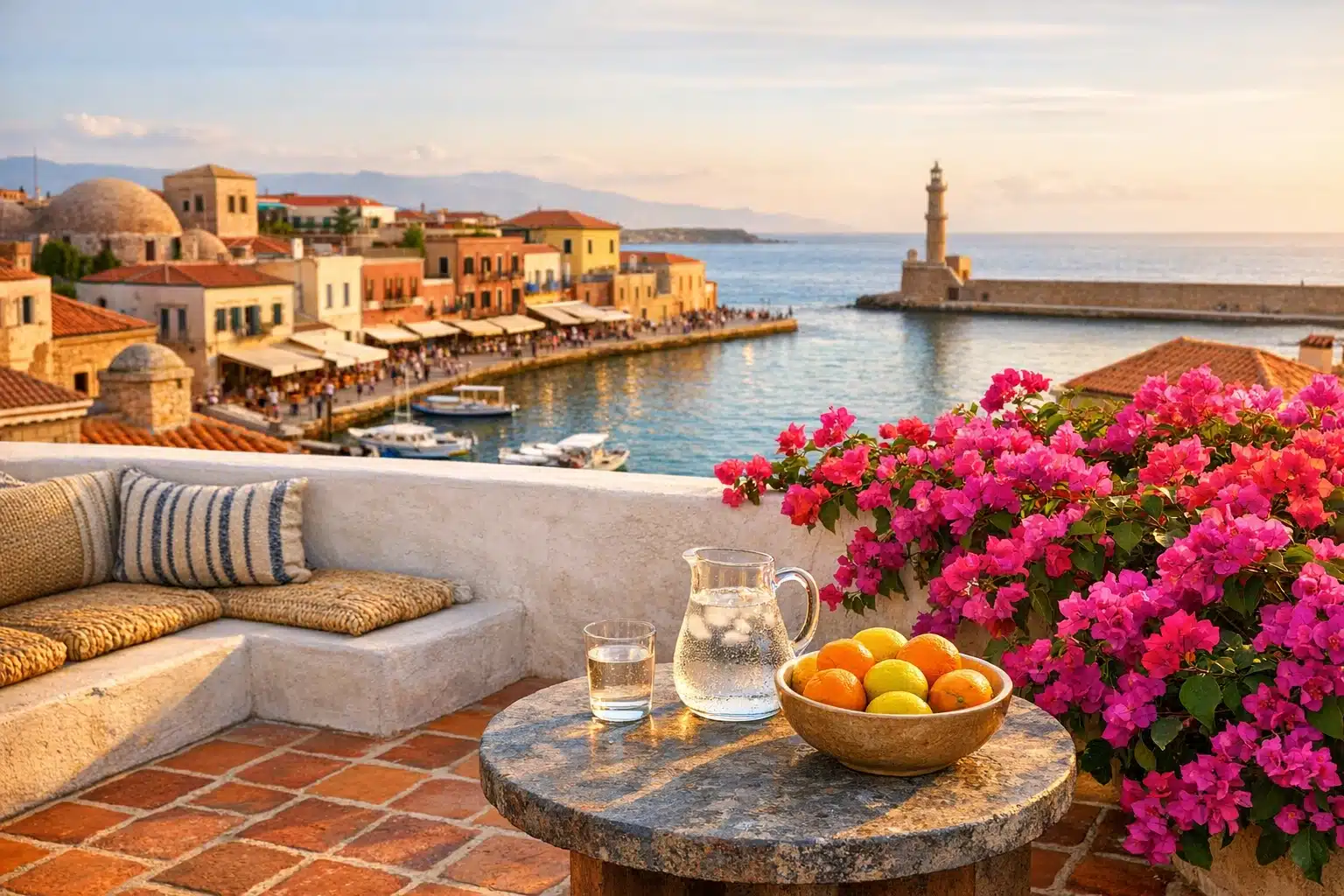
Western Crete, especially around Chania, Platanias, and Georgioupoli, tends to attract travelers who want scenery with strong postcard appeal. Chania Old Town is one of the island’s most atmospheric urban areas, with Venetian influences, harbor views, and narrow lanes that feel lively without needing to be chaotic. Resorts here often appeal to couples and mixed-age families who want beach time plus access to memorable day trips. The west is also the natural launch point for famous landscapes such as Balos Lagoon and Elafonissi Beach, although both can be crowded in peak season. The trade-off is that some transfers and excursions can be longer, especially if your hotel is far from Chania airport.
Central Crete, including the Heraklion region, Hersonissos, Stalis, and nearby resort strips, is usually the most practical option for travelers who value convenience. Heraklion is home to the island’s busiest airport, and many package holidays are built around easy access from there. This region often suits first-time visitors well because it offers:
• a broad choice of large all-inclusive resorts
• family-friendly beach infrastructure
• relatively simple access to Knossos and the Archaeological Museum of Heraklion
• plenty of organized excursions
The atmosphere in central resort areas can feel more commercial than in parts of the west, but that is not automatically a negative. For some travelers, especially families with children, the reliable services, short transfers, and wide selection of hotel facilities are exactly the point.
Eastern Crete, around Agios Nikolaos, Elounda, and parts of Lasithi, often feels a little calmer and more polished. Some of the island’s more upscale resorts are found here, and the views over Mirabello Bay are especially attractive. This area suits couples, adults traveling without children, and visitors who prefer a quieter base with strong service standards. Spinalonga is a notable excursion nearby, and Agios Nikolaos offers an easy evening outing if you want a change from resort life.
Then there is southern Crete, which is beautiful and more rugged, but less dominated by classic all-inclusive developments. If your priority is a fully featured resort with pools, kids’ programs, and a wide dining setup, the north coast will usually offer better options. In short, west Crete is strong on scenery and charm, central Crete wins on logistics and variety, and east Crete often feels the most refined.
3. What All-Inclusive Really Means in Crete, and How to Judge Value
The phrase all-inclusive sounds simple, yet the actual contents of a package can vary more than many travelers expect. In Crete, a standard all-inclusive resort stay usually includes your room, breakfast, lunch, dinner, selected snacks, soft drinks, local beer and wine, and access to core amenities such as pools, sun loungers, and basic entertainment. Some properties add kids’ clubs, light sports programming, evening shows, and one visit to an à la carte restaurant. Others market themselves as all-inclusive while quietly limiting snack times, branded drinks, or premium dining. That is why value should be judged by the detail, not just the headline.
A good way to compare resorts is to look beyond star ratings and ask what your daily routine would actually cost if it were not prepaid. Families often discover that frequent drinks, ice creams, simple lunches, and convenience meals near tourist beaches add up quickly outside a resort. Couples may notice the same when poolside cocktails, coffees, and late snacks are priced individually. All-inclusive pricing can make excellent sense when you expect to spend a meaningful share of your holiday on the property. It is often less compelling for travelers who plan to be out from morning to evening most days.
When reading resort descriptions, pay attention to the following areas:
• beverage policy: are drinks local brands only, and until what hour?
• dining access: are specialty restaurants included or merely discounted?
• room type: does sea view, family space, or swim-up access cost much more?
• beach setup: are loungers and umbrellas part of the package?
• extras: spa treatments, imported spirits, room service, and water sports are commonly excluded
Comparisons also matter. A lower room rate can become less attractive if the hotel is isolated and you end up paying for taxis whenever you want an evening out. By contrast, a slightly pricier property within walking distance of a town may offer more flexibility and a stronger sense of place. Similarly, a huge resort may deliver better activity choice, while a smaller one may feel calmer and offer more personal service. Neither model is universally superior; the best choice depends on how you travel.
Another useful distinction is between “good enough” and “worth it.” A resort can be acceptable on paper yet disappointing in lived experience if food quality is repetitive, drinks are watered down, or the beach is far weaker than the photos suggest. Reviews should therefore be read for patterns rather than emotional extremes. If many guests independently mention strong housekeeping, fresh local dishes, and efficient service, that usually says more than glossy marketing language. In Crete, true value is rarely just about the lowest package price. It comes from matching the resort’s inclusions to your real habits, so convenience feels genuine rather than staged.
4. How to Use Ten Nights Well: A Balanced Rhythm of Rest and Exploration
The smartest way to spend ten nights in Crete is not to treat the trip like a checklist. The island rewards pacing. If you try to turn every day into an excursion, the resort becomes an expensive backdrop. If you never leave the property, you miss what makes Crete different from a generic sun destination. The best version lies in the middle, where resort ease and local discovery support each other instead of competing.
A useful rhythm is to divide the stay into three phases. The first two or three days are for settling in. Learn the resort layout, test the restaurants, work out which pool or beach area suits you, and let the journey leave your body. This is the point where a long stay begins to show its value. You do not need to “maximize” day one because the calendar ahead is generous. After that, begin layering in excursions. One cultural outing, one beach or boat trip, and one town evening usually creates enough variety without overloading the holiday.
Depending on your base, a strong ten-night pattern could include:
• one day fully at the resort with no schedule at all
• one visit to Chania, Rethymno, or Agios Nikolaos for dinner and a walk
• one historical trip such as Knossos or the Heraklion museum
• one scenic excursion to a lagoon, gorge viewpoint, or boat destination
• several half-days where you return in time for swimming and dinner
Families often do best with half-day outings. Young children may enjoy an aquarium, a compact town walk, or a short beach change more than a long bus tour. Couples can usually stretch farther, perhaps combining a harbor town with a winery lunch or a coastal drive. Fit and adventurous travelers may consider Samaria Gorge or other hiking routes, but these are not casual excursions; they require planning, stamina, and often an early start.
There is also something to be said for leaving room for the unscripted moment. In Crete, these often become the stories people remember most: a bakery stop on the way back from a beach, a small church on a hillside, an elderly local explaining which olive oil to buy, or an evening where the wind drops and the sea looks polished flat. An all-inclusive resort gives structure, but the island gives texture. Ten nights is enough time for both.
If you want a practical rule, make every third day a lighter one. After an excursion, return to the basics: breakfast outside, a long swim, shade in the afternoon, dinner without rushing. That pattern keeps energy levels steady and helps the trip feel restorative rather than crowded. A good Crete holiday should leave you fuller, not merely busier.
5. Who Should Book This Trip, When to Go, and the Final Decision
A 10-night all-inclusive stay in Crete is not for every traveler, but it is an excellent fit for several common types of holidaymaker. It works especially well for families who want budgeting clarity, easy meals, and enough time for children to settle into a routine. It also suits couples who like comfort but still want to step outside the hotel for old towns, beaches, and local food. First-time visitors to Greece often benefit from the format because it removes a large share of logistical stress while still offering access to meaningful excursions. Multigenerational groups can also do well here, since grandparents, parents, and children can share a base while moving at different speeds.
The timing of the trip shapes the experience significantly. Late spring and early autumn are often the most balanced periods. In May, June, September, and early October, Crete usually offers warm weather, long daylight, and more manageable crowd levels than the height of summer. July and August bring hotter days, busier beaches, and stronger demand, which can affect both pricing and atmosphere. As a broad guide, coastal summer daytime temperatures often sit in the high 20s to low 30s Celsius, though hotter spells can push higher. If you prefer active sightseeing over peak sunbathing conditions, the shoulder seasons are usually the better match.
Before booking, ask yourself three honest questions:
• Do I want convenience to be a central part of this holiday?
• Will I spend enough time at the resort to use the inclusions properly?
• Do I want one comfortable base, rather than a fast-moving itinerary?
If the answer is yes to all three, Crete is a strong candidate. If your real goal is restaurant-hopping every night, frequent independent road trips, or island-hopping by ferry, a self-catering stay or split itinerary may suit you better. The all-inclusive format is most rewarding when it acts as a platform for relaxation, not a cage.
For the target audience of this topic, the final recommendation is straightforward. Choose Crete if you want sunshine, beaches, history, and practical comfort in one trip, and choose ten nights if you want the island to unfold at a natural pace. It is long enough to justify the journey, long enough to enjoy the resort properly, and long enough to add a few memorable outings without turning the holiday into work. In the end, that is the real appeal: not luxury for its own sake, but a well-shaped travel experience that feels easy, varied, and satisfying from the first morning to the flight home.