Careers in the Solar Energy Industry: Roles, Skills, and Opportunities
Solar energy careers sit at the meeting point of climate goals, skilled trades, engineering, and business strategy. As panels spread from suburban rooftops to utility-scale arrays in deserts and farmland, employers need people who can design systems, sell projects, install equipment, maintain performance, finance expansion, and navigate policy. For students, career changers, and working professionals, this field offers more than one doorway and more than one definition of success.
Outline of the article:
- The solar industry’s growth and why its career landscape matters
- Major roles across installation, design, operations, sales, and management
- Skills, education, certifications, and tools that employers value
- Pay, job outlook, work conditions, and long-term career progression
- Practical advice for entering the field and building a durable career
1. Why Solar Careers Matter and How the Industry Is Organized
The solar energy industry has evolved from a specialized engineering niche into a broad employment ecosystem. That shift matters because it changes who can participate. A decade or two ago, many people associated solar mainly with research laboratories, early adopters, or premium home installations. Today, the picture is much wider. Solar power appears on warehouses, schools, apartment buildings, remote telecom sites, parking canopies, farms, and giant utility-scale projects that feed entire grids. Wherever those systems appear, jobs follow.
Industry growth has been driven by several forces working together. Module costs have fallen dramatically over time, project financing has matured, and many governments, utilities, and corporations now include renewable energy in long-term planning. Global institutions such as the International Energy Agency have repeatedly identified solar as one of the fastest-growing sources of new electricity generation. At the employment level, the International Renewable Energy Agency has also reported that solar photovoltaic work represents one of the largest shares of renewable energy jobs worldwide. Those headline trends do not guarantee easy hiring in every local market, but they do show that solar is not a passing experiment.
To understand careers in this sector, it helps to see the industry as a chain rather than a single job category. A solar project usually moves through several stages:
- Site assessment and feasibility analysis
- System design and engineering
- Permitting, interconnection, and compliance
- Procurement and logistics
- Installation and electrical work
- Commissioning, monitoring, and maintenance
- Customer support, financing, and asset management
Each stage demands different kinds of talent. Some positions are hands-on and physically active. Others are analytical, office-based, or client-facing. Some require a degree, while others reward apprenticeships, technical training, or prior construction experience. That variety is one of solar’s strongest advantages as a career field. It does not ask every candidate to fit the same mold.
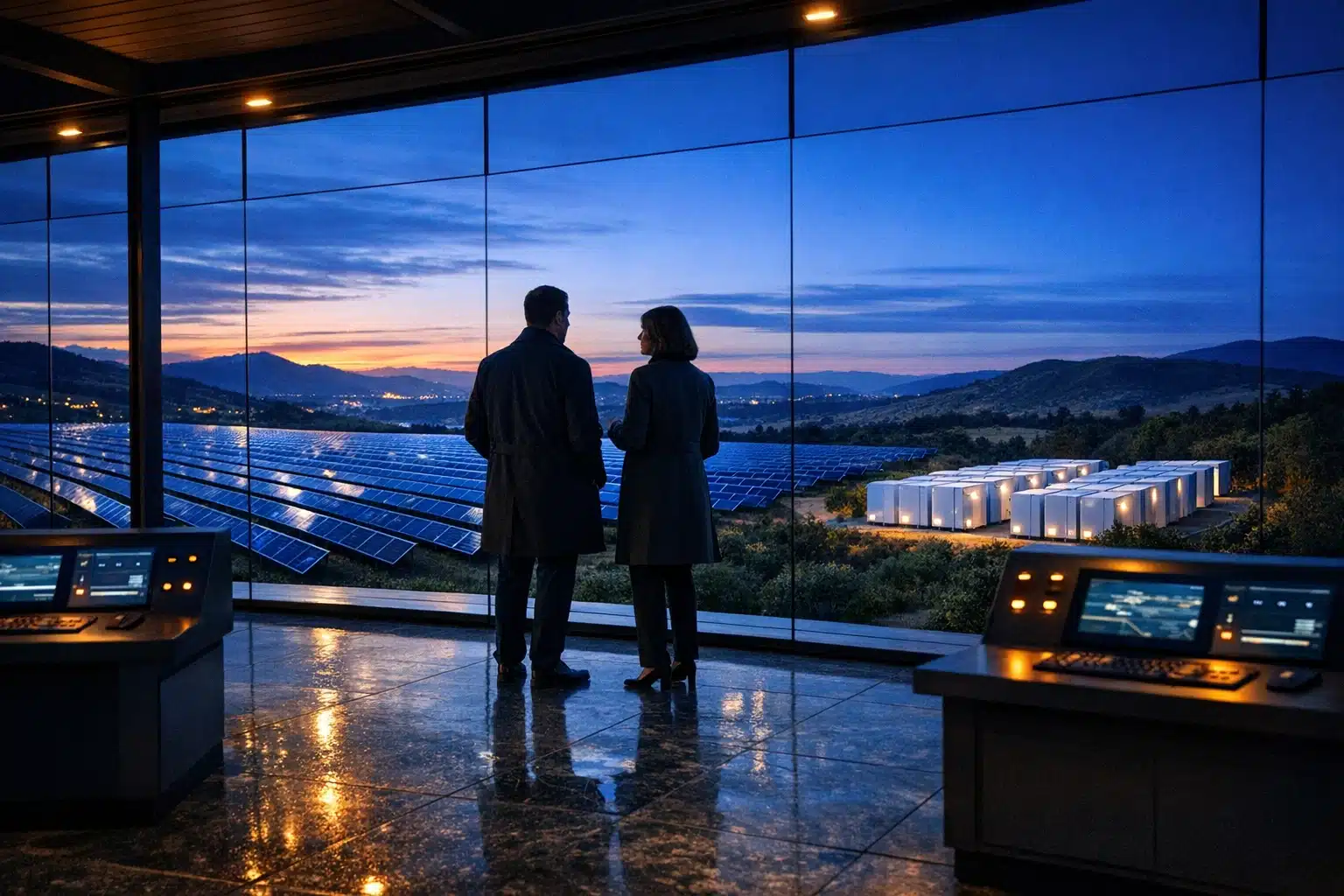
There is also an important distinction between market segments. Residential solar often emphasizes customer service, local sales, and smaller installation crews. Commercial and industrial projects involve larger systems, more complex economics, and closer coordination with facility owners. Utility-scale solar resembles major infrastructure development, with extensive land use planning, environmental review, high-voltage work, and long project timelines. In other words, “a job in solar” could mean climbing onto a roof at sunrise, modeling production data in software, negotiating contracts, or managing multimillion-dollar assets from a control room. That breadth is exactly why the sector attracts such a mixed and interesting workforce.
2. Key Roles in Solar: From Rooftops to Utility-Scale Projects
One of the best ways to understand solar careers is to look closely at the jobs themselves. The public often notices installers first, because they are the visible face of the industry, but installation is only one part of the story. Behind every functioning array stands a network of specialists whose work begins long before the first panel is lifted and continues long after the system starts producing electricity.
Solar installers and technicians are central to project delivery. They assemble racking, mount modules, route wiring, and help bring systems online safely. This work can be physically demanding, especially in hot weather, at height, or on large job sites with tight schedules. It often suits people who enjoy practical problem-solving and visible progress. A roof can look empty in the morning and energy-ready by late afternoon, which gives the job a satisfying sense of transformation.
Electricians occupy another critical space. Because solar systems must integrate with buildings and the grid, licensed electrical work is often essential. Electricians may handle inverters, disconnects, service panels, grounding, battery connections, and code compliance. In many markets, an electrical background significantly strengthens long-term employability, especially as solar increasingly overlaps with storage, backup systems, and electric vehicle charging.
On the design side, solar engineers and system designers use software to size systems, model energy output, optimize layouts, and check structural or electrical constraints. Their work may involve AutoCAD, PVsyst, Helioscope, or similar tools, depending on the company. A designer must balance performance, safety, material cost, shading, interconnection requirements, and real-world installation conditions. It is part science, part puzzle, and part negotiation with reality.
Project managers keep the whole machine moving. They coordinate timelines, crews, contractors, permits, budgets, inspections, and client expectations. When weather shifts, equipment is delayed, or permit comments arrive at the wrong moment, the project manager becomes the translator between chaos and completion. Strong communication matters here as much as technical knowledge.
Sales professionals, account executives, and energy consultants also play a major role, particularly in residential and commercial markets. A good solar salesperson does more than pitch hardware. They explain return on investment, utility savings, financing structures, tax incentives where applicable, and system fit. Trust is everything. Misleading sales practices can damage both customers and the industry, so credible firms tend to value clarity over hype.
Other important roles include:
- Operations and maintenance technicians who monitor performance and troubleshoot issues
- Procurement specialists who source modules, inverters, and balance-of-system components
- Permitting and interconnection coordinators who manage paperwork and utility approvals
- Policy analysts and regulatory staff who track incentives, standards, and compliance rules
- Asset managers who oversee long-term financial and technical performance
The result is a career field with room for many personality types. Some people thrive in harnesses and hard hats. Others prefer spreadsheets, site plans, contracts, or client calls. Solar does not move forward on sunlight alone; it moves because many kinds of work fit together with surprising precision.
3. Skills, Education, and Certifications That Open Doors
A common question from job seekers is whether they need a specific degree to work in solar. The honest answer is no, not always. The industry includes both degree-based professions and skill-based trades, which means entry routes are flexible. What matters most is matching your background to the type of role you want.
For technical field positions, employers often value practical experience over formal academic credentials. Candidates with backgrounds in construction, roofing, electrical work, HVAC, telecommunications, or general maintenance can transition into solar more smoothly than they expect. Familiarity with tools, job-site safety, and teamwork under changing conditions translates well. If someone already understands ladders, lockout procedures, conduit runs, or inspection culture, they are not starting from zero.
Engineering, design, analytics, and higher-level development roles are more likely to favor formal education. Degrees in electrical engineering, mechanical engineering, civil engineering, environmental science, energy systems, or business can be relevant depending on the position. Yet even here, employers usually prefer applied competence over theory alone. A graduate who can model production, read drawings, and communicate tradeoffs clearly may stand out more than someone with strong grades but little project exposure.
Several skill categories repeatedly appear across the industry:
- Technical literacy, including electrical basics, system components, and safety procedures
- Digital fluency with spreadsheets, design tools, CRMs, and project platforms
- Communication, especially when explaining technical information to nontechnical people
- Problem-solving under real constraints such as weather, budget, and code requirements
- Reliability, because delays in construction and energy delivery are expensive
Certifications can help, although they are not a magic ticket. In North America, for example, credentials associated with organizations such as NABCEP are often recognized in the market. OSHA safety training can also strengthen a candidate’s profile for site-based work. Electrician licensing, where required, is especially valuable because electrical competence remains one of the most transferable assets in the broader clean energy economy.
Soft skills deserve equal attention. Solar projects are collaborative by nature. Installers coordinate with supervisors. Designers respond to field realities. Sales teams hand off projects to operations. Finance and legal staff shape what gets built. Someone who can stay organized, communicate calmly, and learn quickly often advances faster than a person who relies only on technical knowledge.
For newcomers, the smartest preparation path often includes a blend of short training, job-site awareness, and targeted specialization. Think of solar not as a locked gate, but as a workshop with many entrances. Some people come in carrying a toolkit. Others arrive with a laptop. The strongest careers are built when both hands learn to speak to each other.
4. Pay, Job Outlook, Working Conditions, and Career Progression
Career decisions are not driven by idealism alone. People also want to know whether solar work pays reasonably, offers advancement, and supports a stable life. The answer depends heavily on geography, role type, employer quality, and project scale, but overall the field offers a credible mix of opportunity and variability.
Entry-level field positions may begin modestly compared with highly licensed electrical roles or advanced engineering jobs. However, solar pay can improve meaningfully when workers add specialized skills, travel availability, leadership responsibilities, or licensing. Residential crews, commercial installers, utility-scale technicians, and electrical specialists often operate on different pay bands. The same is true for office-based roles. A permitting coordinator, a project developer, and an asset manager may all work in solar, yet their compensation structures can differ substantially because their responsibilities and market leverage differ.
Location matters a great deal. Regions with strong policy support, high electricity prices, abundant construction activity, or utility-scale land development often produce more openings. Weather also shapes work patterns. Some jobs involve outdoor labor in heat, cold, wind, or dust. Others include long drives between sites or extended travel for remote projects. Not every role offers a neat desk and a predictable schedule, which is worth understanding before making the leap.
Job outlook remains favorable in many markets because electrification and decarbonization are expanding the wider clean energy economy. In the United States, the Bureau of Labor Statistics has repeatedly listed solar photovoltaic installers among the faster-growing occupations, even though the total number of jobs remains smaller than more established trades. That detail is important. Fast growth does not mean every applicant is guaranteed immediate success, but it does suggest the sector is creating real demand.
Career progression in solar can be more dynamic than in some traditional industries. A motivated worker might move through stages such as:
- Installer to crew lead to site supervisor
- Junior designer to design engineer to engineering manager
- Sales representative to account executive to regional sales manager
- Operations technician to field service specialist to asset performance manager
- Project coordinator to project manager to development director
There are also crossovers into battery storage, EV charging infrastructure, microgrids, energy management, and grid modernization. That makes solar a useful launchpad rather than a narrow lane. If the industry were a road network, solar would be less like a dead-end street and more like a busy interchange. It can lead to a skilled trade, a technical profession, a commercial career, or a leadership track, provided the worker keeps building competence instead of standing still.
5. A Practical Conclusion for Students, Career Changers, and Professionals Exploring Solar
If you are considering a career in solar, the most useful mindset is not to ask, “Is this the perfect industry?” but rather, “Where do my strengths connect with this industry’s real needs?” That question leads to better decisions. Solar rewards people who can solve problems, keep learning, and contribute to projects that must function safely and reliably in the real world. It is not a fantasy job market, and it is not a one-size-fits-all answer to economic uncertainty. It is a serious field with genuine opportunities for people who prepare thoughtfully.
Students can benefit by exploring internships, technical programs, and introductory coursework in energy, electrical systems, drafting, data analysis, or sustainability. Career changers should take inventory of transferable skills before assuming they need to start over. A roofer may already understand site safety and weatherproofing. An electrician may have a powerful foundation for solar-plus-storage work. A project coordinator from another sector may already know how to manage vendors, deadlines, and documentation. Even someone from customer service or retail can build a path into solar sales or client support if they learn the technical basics well enough to speak honestly and clearly.
For professionals already established in engineering, finance, policy, construction, or operations, solar can offer a chance to apply existing expertise in a sector with long-term relevance. The industry benefits from people who can bring discipline from adjacent fields instead of treating renewable energy as a completely separate universe.
A practical starting plan might include:
- Research local employers and identify which market segment is active near you
- Choose one entry lane such as installation, design, sales, or project coordination
- Build a small portfolio of evidence, such as training certificates, drawings, case studies, or field experience
- Learn the vocabulary of the trade so interviews feel grounded rather than generic
- Look for firms with good safety culture, realistic sales practices, and room for advancement
The solar industry is ultimately powered by more than sunlight. It runs on skilled labor, careful planning, steady communication, and people willing to improve systems one project at a time. For readers who want work that combines practicality with forward-looking purpose, solar is worth serious attention. The door is open, but like any worthwhile path, it favors those who arrive prepared to step through it with both curiosity and discipline.