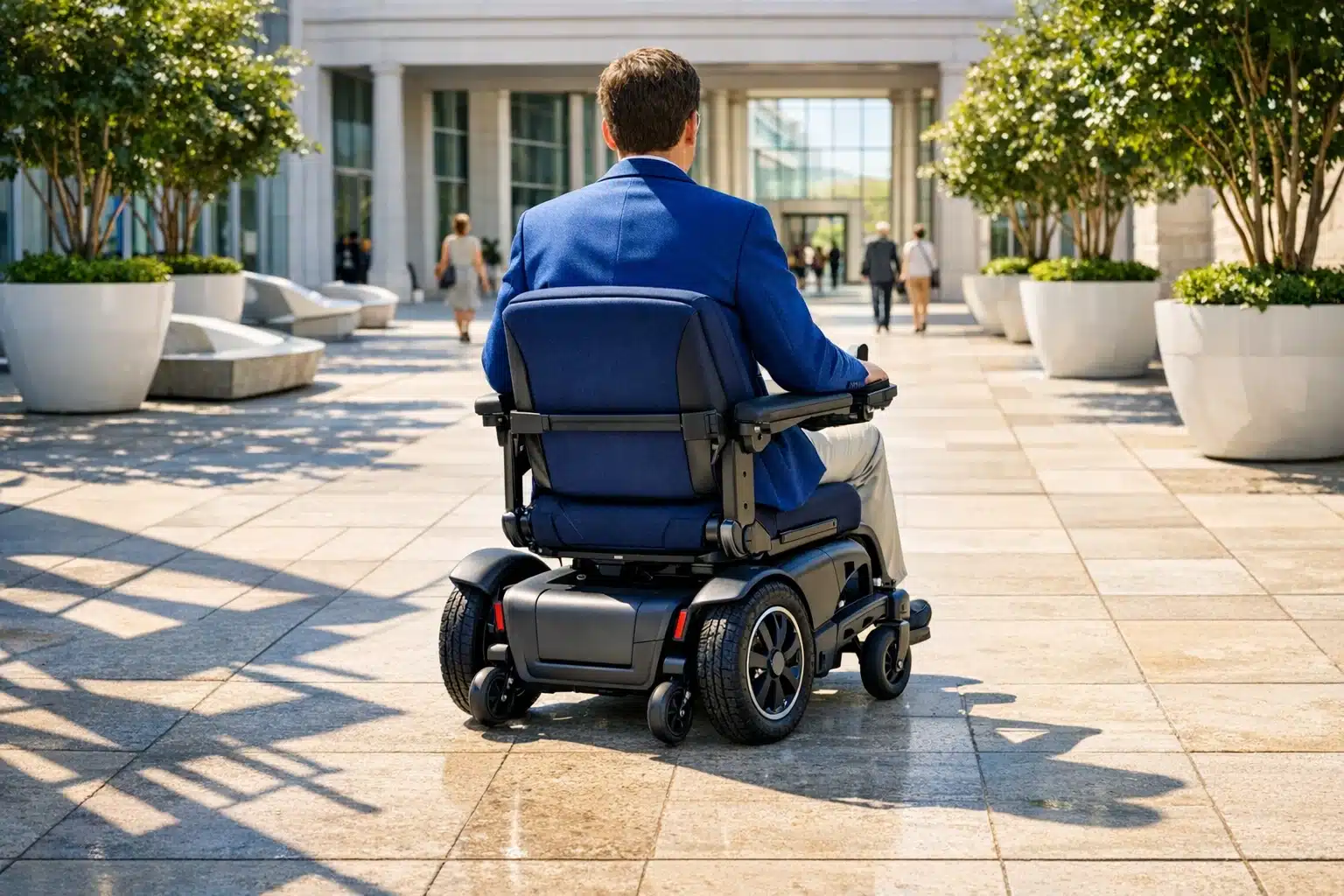
Electric Lightweight Folding Wheelchairs: Revolutionizing Mobility
Mobility is not just about reaching a doorway; it influences work schedules, family visits, grocery runs, and the quiet confidence of leaving home without turning the trip into a project. Electric lightweight folding wheelchairs matter because they blend powered movement with practical portability, giving users more control in places where heavy equipment can feel restrictive. Their relevance keeps rising as populations age, cities demand flexibility, and people expect assistive technology to fit real life rather than reshape it. This article looks at the technology, the benefits, the trade-offs, and the buying decisions that deserve close attention.
Article outline:
- The market shift that made lightweight folding power mobility more important.
- The engineering behind frames, motors, batteries, controls, and safety systems.
- How these chairs affect daily routines, travel, caregiving, and independence.
- What buyers should compare before choosing a model for long-term use.
- Future trends and a practical conclusion for users, families, and caregivers.
Why Electric Lightweight Folding Wheelchairs Matter More Than Ever
Electric lightweight folding wheelchairs sit at the intersection of medical necessity, personal freedom, and smart industrial design. That combination explains why they have moved from niche products into a much broader conversation about accessibility. A traditional power wheelchair can provide excellent support and stability, but many models are large, heavy, and difficult to transport without a van lift or significant storage space. Manual wheelchairs, by contrast, may be easier to load into a car, yet they often require upper-body strength, caregiver assistance, or both. Folding power chairs aim to bridge that gap by offering motorized mobility in a form that is easier to store, lift, and travel with.
This shift matters because mobility needs are not rare. According to the World Health Organization, more than 1 billion people worldwide live with some form of disability, and mobility limitations affect a significant share of that population. At the same time, populations in many countries are aging, which increases the demand for practical assistive devices that can fit apartments, sidewalks, taxis, clinics, and family vehicles. For many households, the real question is no longer whether powered mobility helps. The question is whether it can fit everyday life without becoming a logistical puzzle.
That is where the lightweight folding category becomes compelling. Many portable power chairs are far lighter than traditional full-size power models, with some designs landing in a range that one or two adults can manage when loading into a trunk. The folding frame reduces storage strain in smaller homes, and the compact footprint can make restaurant seating, office entryways, and hotel stays less stressful. In a world where a good day can be undone by one inaccessible step or one overbuilt chair, portability becomes more than a feature. It becomes part of dignity.
Several forces are driving adoption:
- Greater interest in aging in place rather than moving into institutional care.
- Improved lithium-ion batteries that offer useful range without extreme weight.
- Consumer demand for travel-friendly mobility devices.
- Growing awareness that assistive equipment should support social participation, not just indoor transport.
In short, these wheelchairs matter because they respond to a real modern need: dependable powered movement that is easier to live with, easier to transport, and easier to integrate into ordinary routines.
How the Technology Works: Frames, Motors, Batteries, and Folding Design
The phrase lightweight folding wheelchair sounds simple, but the design challenge behind it is anything but simple. Engineers must balance strength, stability, battery range, motor output, comfort, and total weight in one compact package. Every design choice affects another. A stronger frame can increase weight. A bigger battery can improve range but make lifting harder. A more compact fold can help in a car trunk, yet it may reduce room for advanced seating adjustments. Good products in this category succeed because they negotiate these trade-offs intelligently rather than trying to win every specification at once.
Most electric folding wheelchairs use aluminum alloy frames because aluminum offers a strong mix of durability and lower weight. Some models use steel for added robustness, while premium designs may incorporate lighter materials in select components. The folding mechanism usually works in one of two ways: a central frame collapse similar to a stroller-like fold, or a simpler hinge-based structure that reduces the chair’s footprint for storage. The best systems are secure when opened, easy to operate, and stable under repeated daily use. A chair that folds elegantly in a showroom but fights the user at the curb is not truly well designed.
Motor and battery systems define how the chair performs. Many portable power chairs use dual electric motors, one linked to each rear wheel, enabling responsive turning and steady traction. Electromagnetic brakes are common and important because they help stop the chair smoothly when the joystick is released. Lithium-ion batteries have become standard in many modern units because they typically weigh less and recharge more efficiently than older battery types. Depending on model, terrain, user weight, and driving style, common travel ranges often fall around 8 to 15 miles per charge, though some go beyond that. Typical top speeds are often in the 3.5 to 5 mph range, which is practical for sidewalks, shops, and indoor settings.
Core features usually include:
- A joystick controller that can often be mounted on either armrest.
- Solid or semi-pneumatic tires designed to reduce maintenance.
- Anti-tip wheels for added rear stability.
- Adjustable footrests, armrests, or cushions depending on the model.
- Quick-release batteries for charging on or off the chair.
Technology also shapes user experience in less obvious ways. A better suspension setup can make rough pavement feel less punishing. A tighter turning radius can transform how easily the chair moves through hallways or store aisles. A smarter control system can make acceleration feel predictable instead of jerky. When people compare specifications, they often focus on weight and range, yet real comfort often comes from these quieter engineering details. In that sense, a well-made folding power chair is like a neatly folded map hiding a whole landscape inside it: compact at rest, capable in motion.
Daily Life, Travel, and Independence: Where These Chairs Truly Change the Experience
The strongest argument for electric lightweight folding wheelchairs is not found in a brochure. It appears in small moments that add up to a more self-directed life. A user who can move from bedroom to kitchen without exhausting effort begins the day with more energy. A parent can attend a school event without worrying about whether the venue has space for a larger mobility device. A grandparent can visit family without needing a specially equipped van. These are practical improvements, but they also carry emotional weight. Independence is often built from ordinary tasks completed without negotiation.
At home, portability helps in tight spaces. Apartments, older houses, and shared living environments rarely feel designed for large medical equipment. A folding power chair can be easier to position near a dining table, easier to park near a bed, and less intrusive in a hallway. For caregivers, lighter designs may reduce the strain of loading the chair into a vehicle or moving it for storage. That does not eliminate caregiving demands, but it can make routines less physically taxing and more sustainable over time.
Travel is where these chairs often stand out most clearly. Many users want a mobility aid that can handle real outings rather than only indoor use. Portable power chairs can make museum visits, airport transfers, neighborhood walks, and family gatherings more feasible. Some batteries are designed to comply with airline mobility rules, though policies vary by carrier and country, so verification before travel is essential. A compact chair may also fit better in rideshare vehicles, hotel rooms, cruise terminals, or public transit spaces where maneuvering room is limited.
Still, the category has real limits, and understanding them prevents disappointment. Lightweight does not mean all-terrain. Many models perform well on smooth indoor surfaces, sidewalks, and mild outdoor routes, but struggle on deep gravel, thick grass, snow, loose sand, or steep uneven ramps. Range also changes in the real world. Heavier user weight, hills, stop-and-go driving, and poor surface conditions can reduce how far a charge lasts.
Common benefits and practical limits include:
- Benefit: easier car transport compared with many traditional power chairs.
- Benefit: faster setup for social outings and appointments.
- Benefit: less reliance on upper-body propulsion.
- Limit: reduced seating customization compared with complex rehab chairs.
- Limit: varying performance on rough outdoor terrain.
- Limit: weight capacity may be lower than on larger clinical models.
For the right user, though, the gains can be substantial. The chair becomes less of a barrier to plans and more of a passport to participation. That is not a dramatic fantasy. It is a practical shift from asking, “Can I manage this trip?” to asking, “What time should we leave?”
What to Compare Before Buying: Comfort, Safety, Range, Cost, and Long-Term Ownership
Buying an electric lightweight folding wheelchair should never be reduced to a race for the lowest price or the lightest frame. A chair that looks impressive online may be uncomfortable after thirty minutes, unstable on ramps, or awkward to fold in real use. The better approach is to match the chair to the user’s body, routine, environment, and support needs. That means thinking beyond marketing phrases and focusing on how the device will function over months and years.
Start with fit and posture. Seat width, seat depth, back support, cushion quality, armrest height, and footrest placement all influence comfort and pressure management. A chair that is too narrow or too shallow can cause discomfort quickly, while poor positioning may affect transfers and daily endurance. Users with complex seating needs, trunk weakness, or pressure-relief requirements may need professional input from an occupational therapist, physical therapist, or seating specialist before choosing a portable model.
Next, compare performance specifications in context. Weight matters, but ask a better question: who will lift the chair, and how often? A 40-pound chair may still be too heavy for one caregiver to load repeatedly, especially once the battery is included. Range matters too, but compare claimed mileage with your actual routine. If most outings last two hours around shops, clinics, and sidewalks, a moderate range may be enough. If the user spends long days outdoors, attends events, or lacks easy charging access, battery performance becomes more important.
Important buying points include:
- User weight capacity and how it affects stability and battery efficiency.
- Folded dimensions for trunk storage, closets, and apartment entryways.
- Battery removal, recharge time, and travel compliance information.
- Tire type, suspension quality, and expected terrain.
- Warranty coverage for frame, electronics, motors, and battery.
- Availability of replacement parts and local repair support.
Cost deserves careful attention. Portable power chairs often sit in a wide price range depending on materials, battery system, comfort features, and service support. Lower-cost options may work well for light use, but cheaper electronics, limited warranty terms, or poor parts access can create headaches later. In some regions, insurance or public programs may cover a power wheelchair when it is medically necessary, but travel-friendly features are not always funded in full. In the United States, for example, coverage rules can depend on whether the equipment is needed primarily for use inside the home, and private plans vary widely.
Before purchasing, it helps to request a demo, ask how the chair behaves on inclines, confirm return policies, and check whether the joystick can be repositioned. The right chair is not simply the one with the most attractive specification sheet. It is the one that fits the user’s real life without creating new burdens.
Conclusion: What Users and Caregivers Should Take From This Mobility Shift
Electric lightweight folding wheelchairs are not miracle devices, and that is exactly why they deserve serious attention. Their value comes from being practical. They answer a very specific problem: many people need powered mobility, but they also need equipment that can be stored, transported, and used in ordinary settings without excessive effort. When that balance is achieved, the result can be life-changing in a grounded, believable way. The user gets more control over movement, and the caregiver often gains a routine that is less physically demanding and easier to manage.
For users, the key lesson is to think about lifestyle before specifications. A chair should match the places you actually go, the surfaces you actually cross, and the help you realistically have available. If you ride mostly indoors and on smooth outdoor paths, a compact folding power chair may be an excellent fit. If you require advanced posture support, frequent all-day seating, or rugged outdoor performance, a larger clinical power chair may still be the better choice. The goal is not to chase the newest format. The goal is to choose the tool that supports confidence, comfort, and consistency.
For families and caregivers, these chairs offer a more flexible middle ground between heavy power mobility and manually pushed solutions. They may reduce lifting complexity, make vehicle transport more realistic, and simplify outings that once felt exhausting to organize. That said, buyers should still evaluate battery handling, folding mechanics, repair access, and seating comfort with patience. Convenience on day one means little if maintenance becomes frustrating six months later.
Looking ahead, the category is likely to improve further through better battery chemistry, lighter materials, more modular seating, and smarter diagnostics. Yet the biggest innovation may be cultural rather than technical: the growing expectation that assistive devices should support full participation in daily life. That expectation is healthy. For anyone considering this kind of mobility aid, the smartest next step is a careful comparison, a hands-on trial if possible, and a clear assessment of daily needs. When chosen wisely, a folding power chair does more than save space. It opens time, energy, and possibility for the person who uses it most.