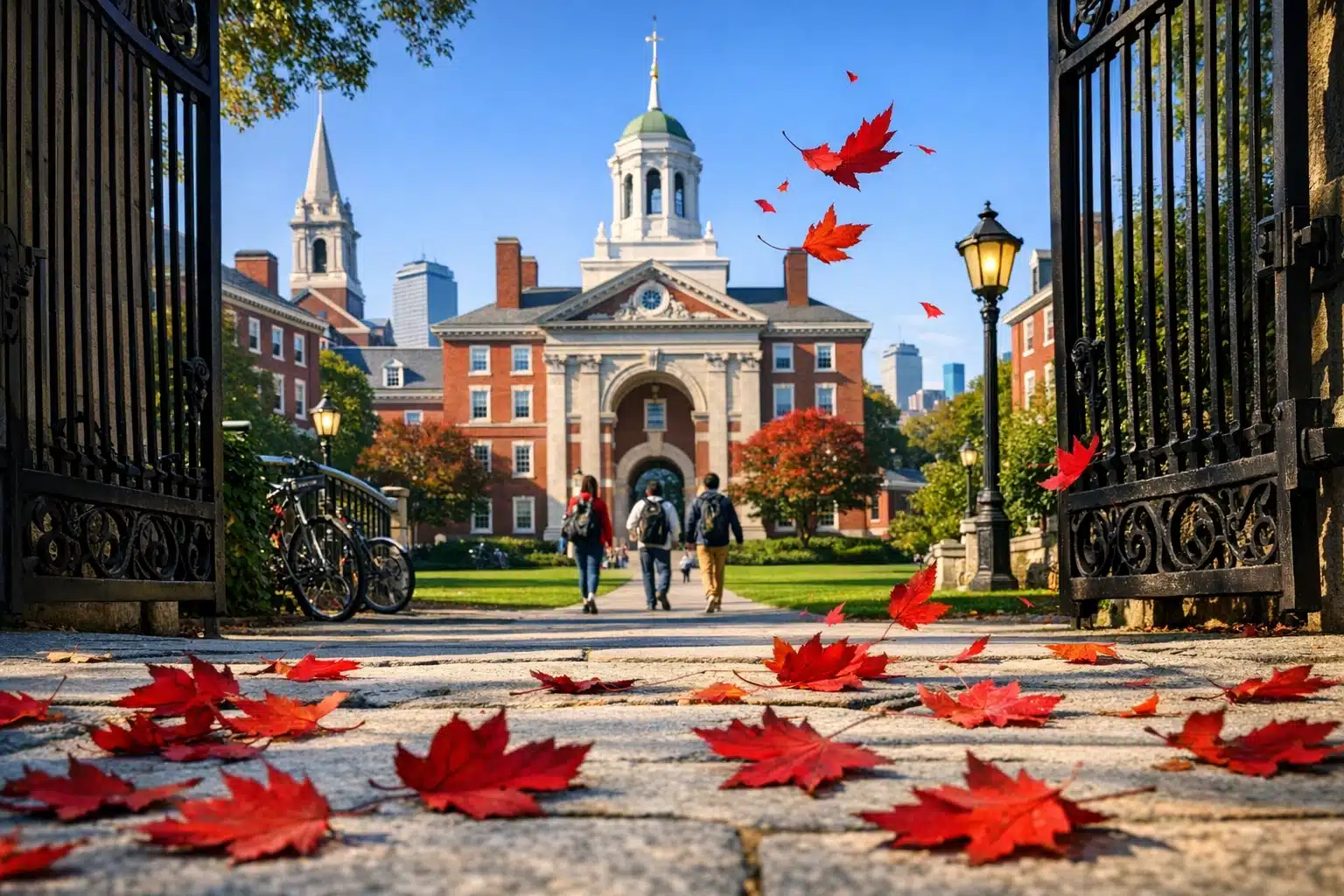
Guide to the Top 5 Colleges in Massachusetts
Massachusetts packs an unusual amount of academic firepower into one state, making it a magnet for students who want rigorous classes, lively campus culture, and strong career pathways. This guide highlights five standout colleges with distinct personalities, from research powerhouses to intimate liberal arts communities. If you are comparing fit, cost, setting, and opportunity, the details ahead can narrow the field. Think of it as a practical map for turning a long college wish list into a smarter shortlist.
The schools below are widely respected choices rather than a universal ranking, because the right college depends on your goals, learning style, budget, and preferred campus environment. Each profile looks at academic strengths, student life, admissions reality, and the kind of undergraduate experience each college is most likely to deliver.
Article Outline
- Why Massachusetts remains one of the strongest states for higher education
- Harvard University and the value of exceptional academic breadth
- MIT and the appeal of hands-on, high-intensity STEM learning
- Amherst College and the advantages of an open liberal arts model
- Tufts University as a middle path between research scale and personal attention
- Boston College for students seeking structure, community, and strong professional pathways
- Final advice for applicants choosing among very different types of excellent colleges
1. Harvard University: Extraordinary Range and a Powerful Academic Network
Harvard University, located in Cambridge, is often the first Massachusetts college people think of, and that is not simply because of name recognition. For undergraduates, Harvard combines the appeal of a historic campus with the resources of a vast research university. Students can study in a place where Nobel laureates, major historians, public policy leaders, and pioneering scientists work within the same broader ecosystem. That scale matters. A student interested in government can take courses with leading scholars, attend public lectures by world figures, and still join a small seminar that demands close reading and careful argument. A student leaning toward biology or computer science can find labs, research centers, and interdisciplinary programs that stretch well beyond the classroom.
One of Harvard’s biggest advantages is breadth. The university is strong across the humanities, social sciences, natural sciences, mathematics, and several interdisciplinary fields. It also benefits from its residential House system, which gives a large institution a more grounded feel once students move beyond their first year. Libraries, advising support, research funding, student organizations, and access to nearby Boston all add depth to daily life. Financial aid is another important strength. Harvard is known for substantial need-based aid, which can make a school with a high sticker price more attainable for families than they first assume. That does not mean it is automatically affordable for everyone, but it does mean applicants should not rule it out without running the numbers carefully.
- Best for students who want wide academic choice
- Strong fit for future researchers, writers, public leaders, and entrepreneurs
- Especially appealing to students who enjoy high expectations and intellectual range
Compared with MIT, Harvard offers a less specialized undergraduate identity and a broader menu for students who are still exploring. Compared with Amherst College, it is larger, busier, and far more layered institutionally. That can be thrilling for independent students who like abundance, but it may feel overwhelming to someone seeking a very intimate campus. Admissions are famously selective, so no applicant should treat Harvard as a likely option. Still, for students who want world-class resources, ambitious classmates, and an education that can move in many directions at once, Harvard remains one of the most compelling colleges in the state.
2. Massachusetts Institute of Technology: Intensity, Innovation, and Applied Learning
The Massachusetts Institute of Technology, also in Cambridge, has built its reputation on scientific rigor, engineering excellence, and a culture that prizes solving hard problems. Yet reducing MIT to a school for coders and lab coats misses the real picture. Yes, it is one of the world’s strongest institutions for computer science, engineering, mathematics, physics, and related fields. But MIT also pushes students to communicate clearly, think ethically, and engage with the humanities, arts, and social sciences. The result is an undergraduate environment shaped by technical depth without being intellectually narrow.
What makes MIT distinct is the way ideas are expected to become tangible. Research is not a distant graduate-level activity tucked away behind closed doors. Undergraduates often enter labs early, build prototypes, join design teams, contribute to faculty projects, and participate in entrepreneurial initiatives. The famous Undergraduate Research Opportunities Program has long helped students connect coursework to discovery. On campus, the atmosphere often feels like a workshop crossed with a think tank. One hallway can lead to robotics, another to climate modeling, and another to economics research with heavy quantitative muscle. It is a place where curiosity tends to arrive wearing safety goggles.
Academically, MIT is demanding. Problem sets are real, time management matters, and students usually need resilience as much as talent. Even so, the culture is often described as collaborative rather than cutthroat. Many students talk about shared struggle, late-night teamwork, and a sense that learning happens through trying, revising, and trying again. That is an important distinction for applicants worried that intensity automatically means isolation.
- Ideal for students who enjoy math, systems thinking, experimentation, and technical challenge
- Excellent choice for future engineers, scientists, quantitative social scientists, and founders
- A good fit for learners who prefer doing and building, not only discussing and reading
Compared with Harvard, MIT has a more focused identity and a more visibly hands-on culture. Compared with Tufts or Boston College, it is substantially more specialized and quantitatively demanding. Students interested in literature, political theory, or studio art can still find meaningful work there, but the overall campus pulse beats fastest around invention, analysis, and design. If your idea of a great education involves turning abstract ideas into tools, models, software, machines, or solutions, MIT deserves very serious attention.
3. Amherst College: Small Classes, Big Ideas, and the Freedom of an Open Curriculum
Amherst College offers a very different kind of excellence from Harvard or MIT, and that difference is exactly why it belongs in this guide. Located in the town of Amherst in western Massachusetts, the college is one of the country’s most respected liberal arts institutions. Its undergraduate focus is central to its appeal. There are no large professional schools pulling attention elsewhere, and there is no sense that undergraduates are waiting in line behind graduate researchers. At Amherst, teaching, discussion, mentoring, and close intellectual development sit at the core of the experience.
The college is especially known for its open curriculum, which gives students unusual freedom to design an education around their interests rather than a long list of required general courses. For the right student, that freedom feels exhilarating. A first-year student might combine political philosophy, statistics, environmental studies, and creative writing before settling into a major. Another might move deeply into economics while still taking small seminars in religion or Black studies. This model rewards initiative. Students who enjoy asking their own questions, building thoughtful course plans, and taking responsibility for their academic direction often flourish here.
Amherst’s small size is one of its strongest advantages. Classes are frequently discussion-based, faculty contact is direct, and advising can feel personal in ways that are harder to replicate at larger universities. The campus also benefits from the Five College Consortium, which connects Amherst with Smith College, Mount Holyoke College, Hampshire College, and the University of Massachusetts Amherst. That arrangement gives students access to additional courses and social spaces while preserving Amherst’s intimate scale. It is a rare combination: small-college attention with access to a wider academic network.
- Excellent for students who want close faculty interaction and seminar-style learning
- Strong match for undecided students who value academic flexibility
- Appealing to readers, writers, debaters, researchers, and thoughtful generalists
Compared with Harvard, Amherst is quieter, smaller, and more deliberately personal. Compared with MIT, it is less about technical specialization and more about wide intellectual exploration. Compared with Boston-area colleges, it trades urban access for a classic New England college-town atmosphere. Some students will find that setting peaceful and deeply conducive to study, while others may want the energy of a city nearby. For applicants who value strong teaching, independence of mind, and a campus where conversation is a daily sport, Amherst can be an exceptional fit.
4. Tufts University: A Balanced Choice for Global Thinkers and Multidisciplinary Students
Tufts University, located in Medford and Somerville just outside Boston, occupies an appealing middle ground in the Massachusetts college landscape. It is large enough to offer significant research opportunities, varied majors, and a broad student life scene, yet compact enough to feel more personal than the largest universities. That balance is a major reason many students are drawn to it. Tufts often attracts applicants who want serious academics without a campus culture that feels overly rigid or narrowly defined.
The university is particularly well regarded for international relations, political science, biology, economics, engineering, psychology, and pre-med pathways. Its global outlook is one of its signature traits. Students interested in public service, diplomacy, development, global health, and cross-cultural study often find the campus ethos especially attractive. At the same time, Tufts is not only for internationally minded students. It also works well for undergraduates who want to combine different interests, such as computer science with cognitive science, biology with community health, or economics with environmental policy. That flexibility gives Tufts a multidimensional feel that many applicants find refreshing.
Campus life tends to be described as collaborative, curious, and socially aware. Students are often involved in service, student government, performance groups, research, and discussion-heavy classes. Proximity to Boston expands internship access, hospital connections, and cultural opportunities, while the main campus still maintains a distinct identity of its own. There is enough city access for ambition, but enough campus cohesion for community. In practical terms, that means students can spend a morning in class, an afternoon at an internship or lab, and an evening back on campus with friends.
- Well suited to students who want academic flexibility and a socially engaged campus
- Strong option for future doctors, policy professionals, researchers, and nonprofit leaders
- A good fit for students who like medium-sized schools over very small or very large settings
Compared with Harvard, Tufts usually feels less formal and less overwhelming. Compared with Amherst, it is larger and more connected to metropolitan life. Compared with Boston College, it often has a more explicitly international and interdisciplinary flavor. Tufts may not have the singular technical focus of MIT or the historic aura of Harvard, but that is part of its charm. It serves students who want a college experience with strong academics, broad options, and room to keep evolving.
5. Boston College: Strong Community, Structured Learning, and Excellent Professional Pathways
Boston College, set in Chestnut Hill on the edge of Boston, brings together academic seriousness, a strong sense of community, and a clear institutional identity rooted in the Jesuit tradition. Even students who are not Catholic often find the school’s emphasis on reflection, ethics, service, and intellectual formation appealing. There is a certain steadiness to Boston College. The campus, with its striking collegiate Gothic architecture, feels as if it was designed for decisive walks, thoughtful conversations, and the occasional dramatic autumn afternoon. Under that visual charm sits a university known for strong teaching and impressive outcomes, especially in business, economics, nursing, psychology, political science, and the liberal arts.
One major attraction is structure. Boston College’s core curriculum encourages students to engage philosophy, theology, history, writing, and social analysis alongside their major. For students who want their education to include moral reasoning and broad intellectual grounding, that approach can be a real strength. The school also has a well-developed alumni network, which matters for internships, mentorship, and first-job opportunities. In fields such as finance, consulting, education, and health-related professions, that network can be especially valuable. A college does not need to promise shortcuts to open doors; it simply needs to place students in a community where guidance and connections are active, and Boston College often does that well.
Student life blends academics, school spirit, service, and campus tradition. Division I athletics add visible energy, but the college is not only for sports-minded students. Many undergraduates are involved in volunteer work, ministry, performing arts, academic clubs, and leadership roles. The atmosphere can feel more cohesive and more tradition-oriented than some neighboring institutions. That makes Boston College appealing to students who want belonging as well as challenge.
- Excellent for students seeking a values-informed education with strong professional outcomes
- Notable choice for business, nursing, economics, and social sciences
- Best for applicants who like a structured curriculum and a clear campus identity
Compared with Tufts, Boston College is often seen as more tradition-centered and more formally grounded in a common core. Compared with Amherst, it offers a more urban-adjacent setting and a larger undergraduate scene. Compared with Harvard and MIT, it may have less global mystique, but it can offer a more cohesive undergraduate culture. For many students, that trade-off is not a drawback at all. It is the reason the school feels like home.
Conclusion for Prospective Students
If you are building a college list, the biggest takeaway is simple: Massachusetts does not offer one ideal college experience, but several excellent ones with very different personalities. Harvard rewards students who want breadth and extraordinary institutional reach. MIT stands out for technical intensity and invention. Amherst offers close mentorship and unusual academic freedom. Tufts appeals to students who want interdisciplinary study with a global outlook, while Boston College serves those seeking strong community, structure, and professional momentum.
The smartest next step is not to ask which school sounds most impressive at first glance. Ask where you would learn best, which environment matches your habits, and what kind of daily life you want for four years. Look closely at course offerings, financial aid policies, location, class size, and campus culture. A famous name can open a conversation, but fit is what shapes the lived experience. If this guide helps you move from vague admiration to focused comparison, then it has done its job well.