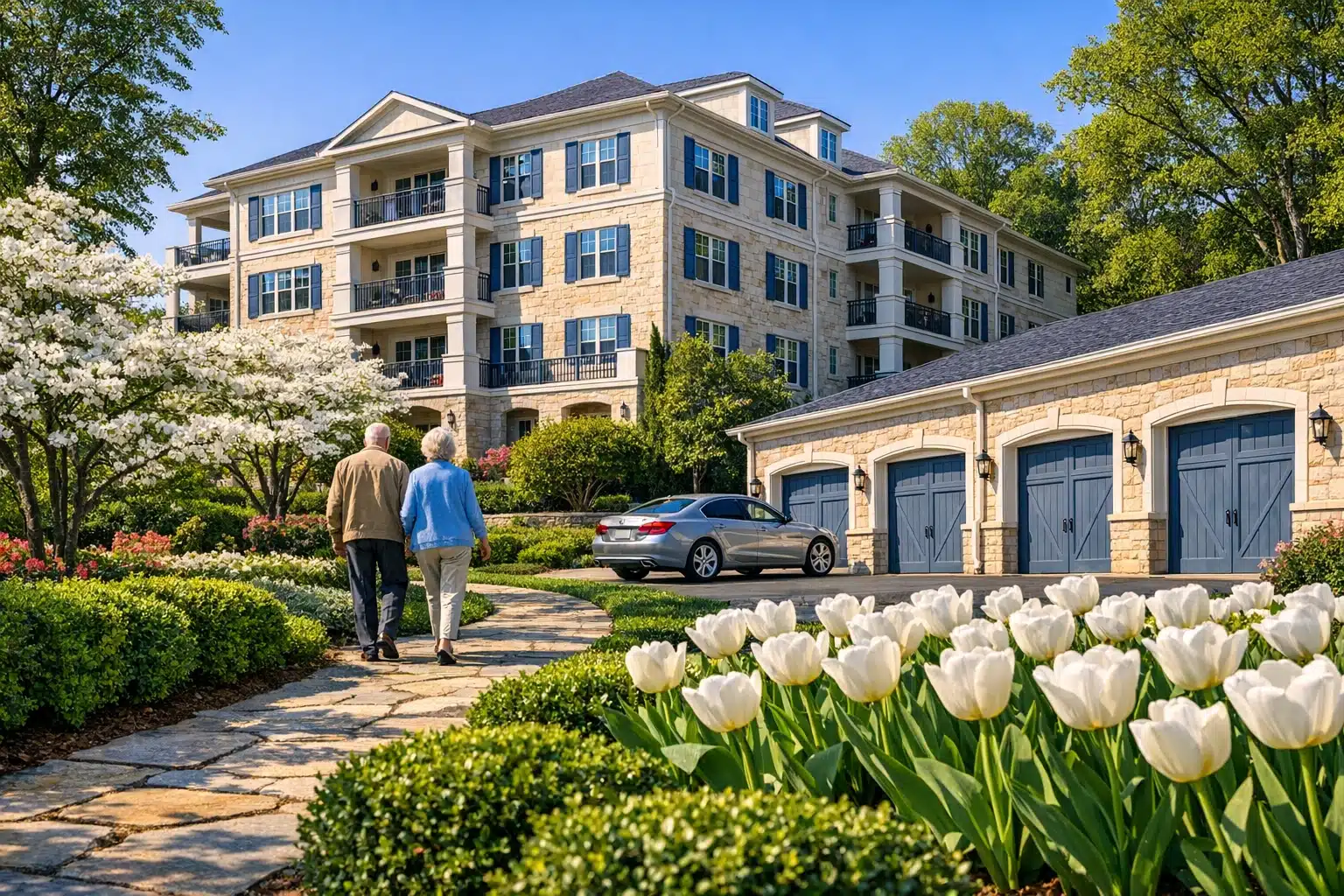
 Artificially generated image
 How Much Do Senior Apartments with a Garage Cost?
The monthly price of a senior apartment with a garage rarely comes down to one neat number. A quiet suburban complex, a luxury 55+ building, and an assisted living campus may all advertise parking, yet the cost structure behind that feature can be very different. Because a garage adds convenience, safety, and weather protection, it is worth understanding exactly what you are paying for before you sign a lease. Once you see how pricing works, comparisons get much easier.
Article Outline and the Main Factors That Shape Cost
Before diving into price ranges, it helps to map the landscape. Senior apartments with garages are not one single housing product. They may be age-restricted rental apartments, independent living units in a retirement community, senior condominiums, or part of a larger campus that offers optional care services. The garage itself can also vary widely. In one property, it may be an attached private garage with direct unit access. In another, it might be a detached shared structure, a reserved underground space, or simply an enclosed stall rented separately.
Here is the basic outline of the cost discussion this article follows:
- How base rent changes by property type and region
- What kind of premium a garage usually adds
- Which extra fees can raise the total monthly bill
- How amenities and services affect value
- What retirees and families should compare before signing
The biggest driver is still location. In lower-cost parts of the Midwest or South, a one-bedroom senior apartment may be far more affordable than a comparable unit in a major metro area or on the coasts. The second major factor is housing style. A simple 55+ apartment community with no meals or care services will usually cost less than an independent living community that includes dining, housekeeping, transportation, and social programming. Then comes the garage itself, which is often priced as a convenience upgrade. Think of it as the difference between economy seating and extra legroom: both get you there, but one costs more because comfort matters.
Apartment size matters as well. A studio or one-bedroom with a detached garage will usually cost less than a two-bedroom with an attached private garage. Newer properties often charge more because they offer wider doorways, elevators, fitness rooms, package handling, smart entry systems, and more polished common areas. Even small details can shift the numbers, including whether utilities are included, whether a second vehicle is allowed, and whether the garage has climate control or extra storage.
As a starting point, many senior renters in the United States will find that the base monthly rent for a standard 55+ apartment falls somewhere between roughly $1,200 and $3,500, depending heavily on market and quality. In upscale urban or coastal areas, rents can move well above that range. A garage may add anywhere from about $75 to $400 per month, while premium private or deeded garage options can cost more. Those are broad planning figures rather than universal rules, but they give a useful frame for the deeper comparisons that follow.
Typical Monthly Costs by Property Type and Region
If you are trying to estimate how much a senior apartment with a garage will cost, start by identifying the housing category. A 55+ rental apartment is usually the most straightforward option. Residents live independently, pay monthly rent, and may enjoy amenities such as a clubhouse, fitness room, or walking paths. In many secondary markets, a one-bedroom 55+ apartment might range from around $1,300 to $2,200 per month before any garage premium. In higher-cost metro areas, that same style of apartment can run from $2,400 to $4,000 or more.
Independent living communities are a different creature. They often include hospitality-style features such as meals, housekeeping, transportation, scheduled events, and front-desk staff. Because these services are bundled, the monthly fee is generally higher than in a standard apartment complex. A one-bedroom independent living unit may range from about $2,500 to $4,500 in many markets, with luxury communities climbing beyond that. If the property includes secure indoor parking or a private garage, the parking component may be built into the overall rate or listed as a separate line item.
Regional variation is impossible to ignore. A senior apartment in a smaller city or suburban area may offer more square footage and a garage for less than a compact unit in a dense urban neighborhood. Weather can influence demand too. In snowy regions, enclosed parking tends to carry extra value because it protects both driver and vehicle from winter conditions. In hot climates, shaded or enclosed parking may be prized for keeping the car cooler and reducing sun exposure.
Here is a simple way to think about regional pricing:
- Lower-cost markets: often better odds of finding garages included or modestly priced
- Mid-cost suburbs: common to see a separate monthly garage charge
- High-cost urban or coastal areas: garage space may be limited, wait-listed, or notably expensive
Ownership models can also change the math. In senior condominiums or active adult communities where units are purchased rather than rented, the garage may be attached to the home and reflected in the sale price instead of the monthly rent. In that case, the ongoing cost may show up through homeowners association dues, maintenance fees, or insurance rather than a separate parking charge.
For practical budgeting, retirees should look at total occupancy cost, not just advertised rent. A property listed at $1,850 with a $150 garage fee, $95 utility package, and $40 amenity fee can easily cost more each month than a unit listed at $2,100 with parking and utilities already included. On paper, the cheaper option can sometimes be the more expensive road.
How Much Extra Does a Garage Add and What Type of Garage Are You Getting?
The word garage sounds simple, but in senior housing it can describe several very different arrangements. That distinction matters because each option carries its own price, convenience level, and long-term value. A private attached garage is usually the premium choice. It offers easy access, protection from bad weather, and sometimes extra room for storage. A detached garage can still be valuable, but it may require a short outdoor walk. An underground or structured garage may be especially attractive in larger communities where security and elevator access are priorities.
In many rental properties, a garage adds roughly $75 to $250 per month for a basic detached or shared enclosed space. In newer communities, urban settings, or properties with secure indoor access, the premium can rise to $300 or $400 per month or more. Some communities include one garage space with larger two-bedroom units, while smaller units may have to rent one separately if available. Limited supply is often the hidden engine behind the price. If only a fraction of residents can have garages, demand can keep rates elevated.
It is also important to ask what the garage includes. A few examples:
- Is the garage private, shared, or assigned by management?
- Does it include electricity for lighting or charging mobility devices?
- Is there enough clearance for larger vehicles or accessible vans?
- Can the resident use part of the space for storage, or is that prohibited?
- Is the garage close to the elevator or unit entrance?
For older adults, those details are not minor. A garage near the apartment can make everyday routines easier, especially for people carrying groceries, using walkers, or avoiding icy sidewalks. In that sense, the garage is not just a place for the car. It can function as a small layer of comfort, predictability, and physical ease. That added convenience may justify the extra monthly expense for many residents.
There is also a difference between included value and visible value. Suppose Property A charges $1,900 and includes a private garage, while Property B charges $1,760 plus $180 for a detached garage. The totals are close, yet the resident experience may not be. One setup could save steps, reduce hassle, and improve safety. Another may be perfectly adequate but less convenient. Price matters, but so does daily usability.
Some communities offer parking bundles or promotions, especially when occupancy is slower. Others keep garage units on a waitlist. That is why prospective residents should ask not only “How much is the garage?” but also “Can I actually get one, and will I keep the same space over time?” The answer can make a meaningful difference in both budget and satisfaction.
Hidden Costs, Value Comparisons, and Questions to Ask Before Signing
When people shop for senior apartments, they often focus on the headline number. That is understandable, but it can hide the real cost. The more useful figure is the all-in monthly total. A garage fee may be only one extra charge among several. Communities sometimes add utility packages, trash fees, pet rent, technology fees, amenity charges, storage fees, or one-time move-in costs. In independent living settings, services such as meals and housekeeping may be included, while in 55+ apartments they may not exist at all. Comparing those models requires more than a glance.
A careful value comparison should include both money and lifestyle. For example, a property with a garage and elevator access may cost more than a walk-up building with outdoor parking, but it may also reduce the physical strain of daily living. A community that bundles transportation might help a resident drive less often, lowering fuel, maintenance, and insurance costs. In that case, the apartment itself is more expensive, yet the overall living arrangement may still make financial sense.
Here are useful questions to bring on a tour or phone call:
- What is the full monthly cost including garage, utilities, and mandatory fees?
- Is the garage optional, guaranteed, or subject to availability?
- Are rent increases for the apartment and garage handled separately?
- Does the lease include maintenance for the garage door, lighting, or snow removal?
- Are there extra fees for a second vehicle, guest parking, or storage inside the garage?
Another smart move is to compare the cost of the garage against the resident’s actual driving habits. Someone who still drives regularly, travels to appointments, and shops independently may see strong value in enclosed parking. Someone who drives rarely and relies more on family or community transportation may decide that a standard parking space or carport is enough. There is no universal right answer. The best choice depends on routine, mobility, climate, and comfort preferences.
Families should also look beyond the first year. Ask how often rents tend to rise, whether garage fees have increased in recent years, and whether moving to a different unit later would affect parking access. A community can feel affordable at move-in and become harder to manage if the contract is vague or fees escalate quickly. The fine print is rarely glamorous, but it is where the budget story becomes honest.
In short, the cheapest listed rent does not automatically deliver the best deal. A thoughtful comparison weighs convenience, access, safety, maintenance, and future flexibility. That approach turns apartment shopping from a guessing game into a practical, grounded decision.
Conclusion for Retirees and Families: Building a Realistic Budget for a Senior Apartment with a Garage
For most older adults, the true answer to “How much do senior apartments with a garage cost?” is not a single number but a range shaped by location, property type, unit size, and parking design. In broad terms, many renters will see standard 55+ apartments start around the low-to-mid four figures per month in less expensive areas, while upscale or service-rich communities can reach much higher levels. The garage may be included, priced modestly, or treated as a premium upgrade. What matters most is understanding the total package before making a commitment.
If you are a retiree shopping for yourself, focus on the life you want the apartment to support. A garage can be more than a convenience upgrade. It may protect you from rain, snow, heat, and long walks across parking lots. It may also simplify errands, improve security, and make the move feel more comfortable. Those quality-of-life benefits are real, and for many people they are worth paying for. At the same time, it is wise to avoid paying top dollar for features that do not match your habits or needs.
If you are an adult child or family helper, your role is often to bring structure to the comparison. Gather written quotes, ask for a fee sheet, and compare communities line by line. A simple checklist can help:
- Base monthly rent
- Garage fee or inclusion status
- Utilities and service packages
- Lease terms and expected increases
- Accessibility, safety, and distance from the garage to the unit
That kind of side-by-side review can reveal surprising differences. One property may look expensive until you realize it includes parking, utilities, and maintenance. Another may look affordable until separate charges begin stacking up like small stones in a pocket. By the time the lease is signed, those stones can feel heavy.
The best approach is simple: ask detailed questions, compare all-in monthly costs, and weigh convenience against budget with clear eyes. A senior apartment with a garage can be an excellent fit for comfort and independence, but only when the pricing makes sense for the resident’s daily life and long-term finances. A careful decision today can create a calmer, more practical home tomorrow.