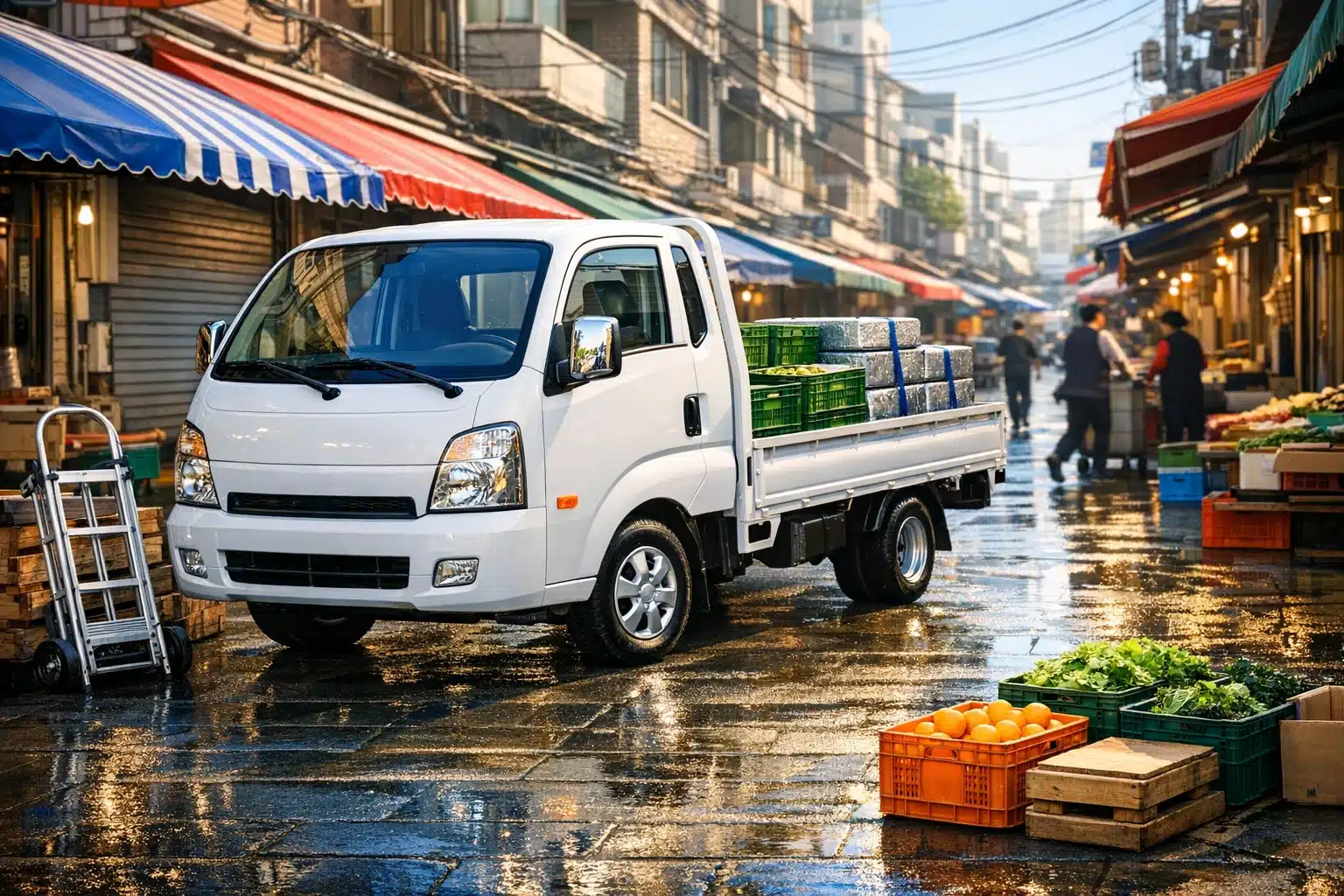
The All-New 2026 Hyundai Porter Has Arrived
The 2026 Hyundai Porter arrives at a moment when compact work trucks matter more than ever, especially for delivery firms, tradespeople, and small businesses that count every mile and every minute. A fresh model in this segment is not just news for enthusiasts; it can affect loading convenience, operating costs, route efficiency, and driver comfort in real working conditions. This article explores why the new Porter deserves attention, how it may differ from the truck many operators already know, and what buyers should examine before signing a contract. For anyone who earns money with a vehicle rather than merely driving it, this launch is genuinely relevant.
Outline
- Why the 2026 Hyundai Porter matters in the current light commercial market
- Design, cab layout, and everyday usability for busy operators
- Powertrain choices, efficiency, ride quality, and safety expectations
- Payload, body configurations, and total ownership considerations
- Who should buy it, what to compare, and a practical conclusion for real users
1. Why the 2026 Hyundai Porter Matters in a Hard-Working Market
The Hyundai Porter has long occupied an important place in the world of compact commercial vehicles. It is not the kind of machine that usually steals the spotlight with theatrical styling or headline-chasing performance figures. Instead, it builds its reputation in the dark before sunrise, at wholesale markets, construction sites, repair depots, and neighborhood delivery routes. That is exactly why a new Porter matters. When a vehicle like this changes, the effect is felt not in a showroom conversation alone but in daily business routines that depend on reliability, maneuverability, and sensible costs.
Small trucks sit in a very specific sweet spot between larger vans and midsize pickups. A van can protect cargo from weather and theft, but it may not be ideal for awkward loads such as pallets, tools, landscaping materials, piping, or refrigeration equipment. A pickup offers flexibility, yet many pickups are designed with private ownership in mind and may not optimize cargo space within a compact footprint as efficiently as a cab-over truck. The Porter’s appeal has always come from this practical formula: a short overall length, a useful bed, straightforward packaging, and a structure tailored for work rather than lifestyle marketing.
The 2026 model arrives as business conditions continue to change. Urban routes are tighter, labor is more expensive, and operators have less patience for vehicles that waste time. Deliveries are more frequent, service businesses are more mobile, and many buyers want a truck that can handle real payload demands without becoming a burden in crowded streets. In that context, an updated Porter is relevant for several reasons:
- It speaks directly to small-business productivity.
- It may improve driver comfort during long shifts.
- It can influence fuel or energy spending over time.
- It remains one of the clearest alternatives to a larger, costlier commercial vehicle.
There is also a broader industry story here. Light commercial buyers increasingly expect more than a bare-bones workhorse. They want better seating, smarter storage, useful safety systems, and drivetrains that match modern operating pressures. A truck like the Porter no longer lives in a world where toughness alone is enough. It must be durable, yes, but also efficient, easy to manage, and pleasant enough that drivers are not exhausted before lunch. In that sense, the arrival of the 2026 Porter is significant not simply because it is new, but because it reflects how the definition of a good work truck is changing.
2. Design, Cab Layout, and Daily Usability: Where the Porter Wins or Loses Time
The most important design feature of the Hyundai Porter has traditionally been its cab-over architecture, and that core layout remains central to why buyers consider it in the first place. In a cab-over truck, the driver sits above or very near the front axle, which allows the vehicle to dedicate more of its overall length to cargo rather than hood space. That design can look humble from a distance, but in real life it is a clever answer to a simple business question: how do you move useful loads through narrow streets without stepping up to a bigger, more expensive truck?
For the 2026 Porter, the real evaluation should begin with usability rather than appearance alone. A good work truck must help a driver complete repetitive tasks smoothly. That means clear outward visibility when reversing into tight alleys, sensible mirror placement, easy step-in height, durable cabin materials, and controls that can be used without frustration. Even modest improvements in these areas can save minutes across a shift, and those minutes quietly become money. A vehicle that is easier to enter and exit matters to couriers, technicians, and delivery operators who may stop dozens of times a day.
Compared with older-generation commercial trucks, buyers now reasonably expect the cabin to do more. The days when basic transport was enough are fading. Even a hardworking compact truck benefits from a more refined interior, because driver fatigue is a real operating cost. If the 2026 Porter brings improvements in seat support, storage bins, switch placement, infotainment usability, or climate control, those are not cosmetic extras; they are productivity tools. A pen holder, charging port, shelf behind the seat, or better cup holders may sound trivial until you spend ten hours on the road. Then they become part of the job.
There is also the matter of loading and unloading. Commercial buyers should look carefully at bed access, tie-down practicality, and how the truck’s shape works with common cargo types. A compact truck can be more versatile than a van in several everyday situations:
- Palletized goods can be loaded more directly.
- Bulky equipment is easier to secure on an open bed.
- Tradespeople can configure racks, boxes, and service bodies more freely.
- Dirty or wet loads are less of a problem than they would be in an enclosed cargo area.
In short, the Porter succeeds when its design reduces friction. A work vehicle should feel like a reliable tool, not a daily argument. If Hyundai has sharpened the cabin, improved the ergonomics, and retained the format that made the Porter useful in the first place, then the 2026 version strengthens its case exactly where it matters most: in the ordinary, repetitive, profit-making work that fills a business week.
3. Powertrains, Efficiency, Ride Quality, and Safety: The Mechanical Story Behind the Badge
When commercial buyers discuss a new truck, styling usually fades from the conversation quickly and the powertrain takes over. That is understandable. Engine response, transmission behavior, energy consumption, low-speed drivability, and maintenance demands determine whether a vehicle becomes a dependable asset or a recurring expense. With the 2026 Hyundai Porter, buyers should pay close attention not only to what powertrain options are available in their market, but also to how those options suit the actual work being done. Final specifications can vary by region, so checking official local details remains essential before making a purchase decision.
The Porter line has historically been associated with practical, work-oriented drivetrains, and that context matters when comparing the new model with alternatives. Many light commercial operators still value diesel for its low-end torque and long-distance efficiency, especially when the truck regularly carries weight or spends most of its time outside dense city centers. Others may favor electric or low-emission solutions for urban routes, shorter daily distances, and access to areas with stricter environmental rules. The right answer depends less on trend and more on route profile, payload habits, and refueling or charging access.
Ride quality also deserves more attention than it often gets. A compact truck can carry tools, produce, equipment, or parcels all day, but the person in the seat must remain alert, patient, and physically comfortable. Better suspension tuning, improved steering response, and reduced cabin noise can make a visible difference in driver endurance. This is one of those areas where a newer generation can justify its price, not through luxury, but through reduced strain. A truck that feels calmer over poor surfaces helps keep mistakes down and concentration up, especially in stop-start urban work.
Safety expectations have risen across the commercial market. Even basic driver-assistance technology is no longer viewed as a novelty. Buyers should look for features that offer real-world value rather than brochure drama, such as:
- More useful forward visibility and improved lighting
- Parking assistance or clearer camera support where available
- Stability-focused systems that help when carrying uneven loads
- Braking and alert features that reduce the stress of dense traffic
Compared with older work trucks that relied heavily on driver experience alone, the modern expectation is different. Businesses want vehicles that support the driver, protect uptime, and reduce the chance of costly incidents. A truck like the 2026 Porter does not need to pretend to be a luxury car to benefit from this shift. It simply needs to translate modern engineering into practical confidence. That is the real standard by which its mechanical package should be judged.
4. Payload, Body Styles, and Ownership Economics: The Part Buyers Cannot Afford to Ignore
A commercial truck may look appealing on paper, but the buying decision becomes serious only when payload, configuration, and cost of ownership are examined together. This is where the Hyundai Porter has traditionally built its reputation. Buyers do not choose a vehicle like this for weekend image. They choose it because the truck has to justify itself through invoices, delivery windows, service calls, and repair schedules. The 2026 Porter must therefore be evaluated not only as a new model, but as a business instrument.
One of the strongest points of the Porter formula is flexibility. Compact commercial trucks often serve a wide range of industries precisely because they can be adapted to different jobs. Depending on market and upfit availability, buyers may consider standard cargo beds, dropside arrangements, chassis-cab versions for custom bodies, refrigerated solutions for food logistics, utility bodies for maintenance teams, or specialized conversions for municipal and service work. This versatility is a major difference between a purpose-built light truck and a consumer-oriented pickup. The Porter is not just something you load; it is something you configure.
That flexibility matters because different businesses earn money in different ways. A florist delivering fragile arrangements, an electrician carrying reels and ladders, a produce vendor serving local markets, and a contractor moving materials all need distinct solutions. A good light truck should support those variations without forcing the owner into expensive overkill. In many cases, a larger van or heavier truck adds cost without improving productivity. The smarter purchase is often the one that fits the job closely rather than impresses from a distance.
Total ownership cost should be broken into simple questions:
- How much fuel or energy will it use on the routes you actually run?
- How often will it require maintenance, and how easy is service access?
- How expensive are wear items and parts in your region?
- What level of downtime can your business realistically absorb?
- Will the truck hold value well enough when replacement time comes?
These questions sound plain, but they decide profitability. A cheaper purchase price can be misleading if the vehicle becomes costly to operate or difficult to keep on the road. By contrast, a slightly more expensive truck may be the better deal if it reduces service interruptions, keeps drivers happier, or adapts easily to future business changes. In this segment, ownership economics are often more important than the headline specification sheet. The 2026 Porter will succeed with serious buyers if it offers a balanced equation: useful carrying ability, broad body compatibility, manageable upkeep, and the kind of durability that makes a truck feel dependable six months after purchase, not just on delivery day.
5. A Practical Conclusion for Owner-Operators and Fleet Buyers
The 2026 Hyundai Porter deserves attention because it addresses a part of the market where practicality is everything. This is not a vehicle people usually buy on impulse. It is chosen by operators who know that a truck must earn its keep in traffic, in weather, under load, and on ordinary weekdays when nobody is taking photos of it. That alone makes the Porter interesting. A machine built for work tells the truth quickly. Either it saves time, carries what it should, and stays out of the repair bay, or it does not.
For many buyers, the biggest question will not be whether the Porter is good in isolation, but whether it is the right tool compared with a van, a pickup, or another light truck. The answer depends on the nature of the job. If your business deals with awkward cargo, repeated loading, open-bed convenience, or route patterns where compact dimensions matter, the Porter makes a persuasive case. If weather protection or secure enclosed storage is the higher priority, a van may still be the better fit. If private use, image, and mixed family-duty flexibility matter heavily, a pickup may offer a different balance. The Porter is strongest when the job is unapologetically commercial.
Before buying, serious users should ask a few direct questions:
- What loads do I carry most often, and how are they loaded?
- How narrow are my routes, parking spaces, and delivery points?
- Which matters more for my business: maximum flexibility, enclosed security, or lowest long-term cost?
- Can my drivers benefit from improved comfort and safety over older trucks?
- Does the local dealer and service network support fast, predictable uptime?
That last point is easy to overlook, yet it often decides owner satisfaction. A great specification sheet means little if parts are slow to arrive or service support is inconsistent. Commercial vehicles live and die by support quality.
So, who should pay closest attention to the all-new 2026 Hyundai Porter? Small-business owners, urban delivery operators, tradespeople, municipal users, and fleet managers who need a compact truck with honest utility should look carefully. For that audience, the Porter is not just another launch. It is a reminder that the most important vehicles are often the least glamorous ones. They carry goods, tools, and schedules on their shoulders, and when they are well designed, they quietly make whole businesses run better. If the new Porter delivers on usability, efficiency, and real-world durability, it will not need hype to prove its value. It will prove it one working day at a time.