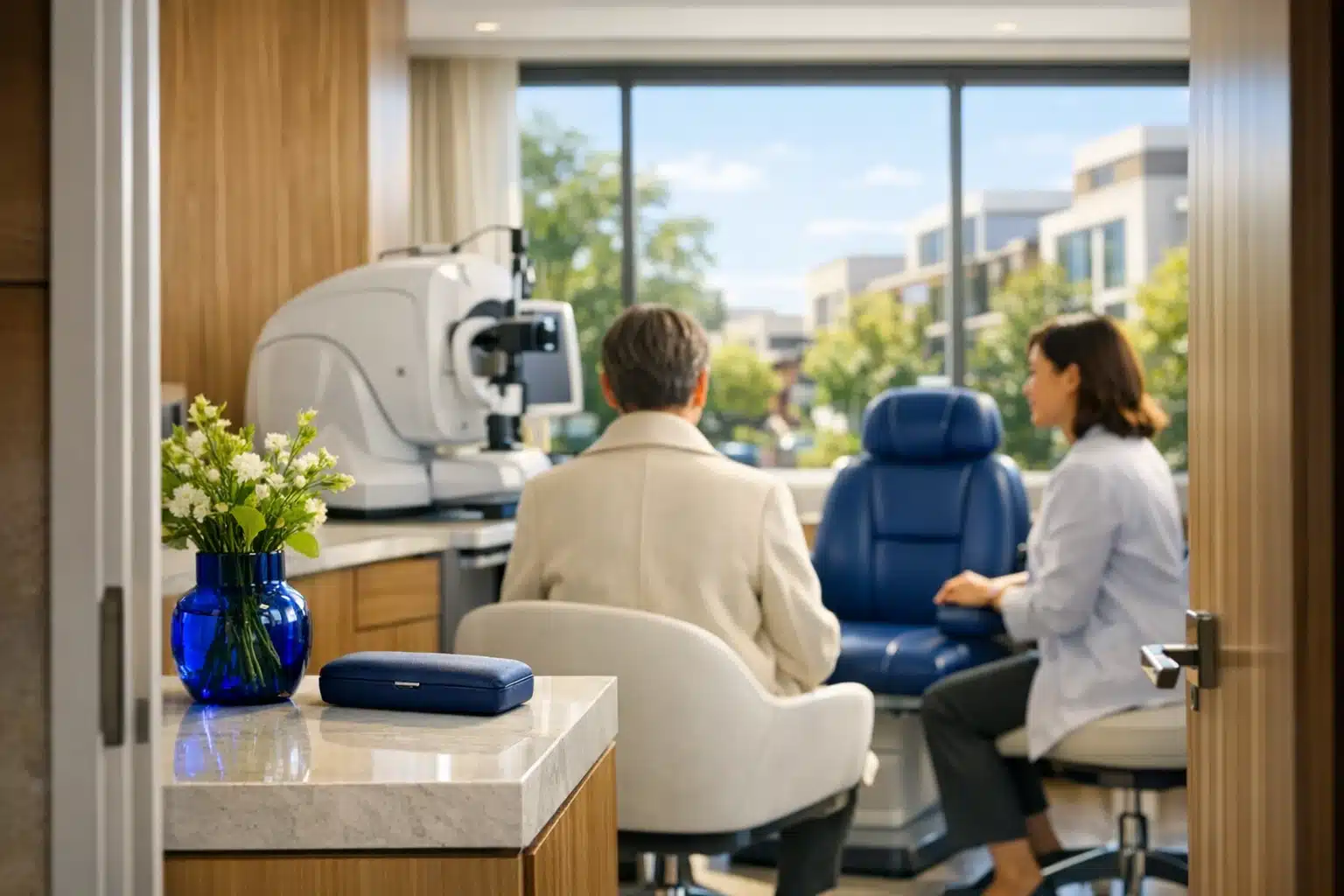
What to Know About a Local Eye Laser Clinic
Choosing a local eye laser clinic is not simply a matter of distance; it is a decision about trust, safety, comfort, and the quality of vision you may live with for years. Laser procedures can be quick, but the path to a good outcome depends on screening, technology, surgical skill, and follow-up care that does not disappear after payment. The guide below explains how clinics differ, what questions to ask, and how to weigh convenience against clinical standards.
Outline
This article is organized around five practical areas that matter to most readers considering laser vision correction close to home.
- What a local eye laser clinic typically offers and how common procedures differ
- How to evaluate quality, credentials, technology, and patient experience
- What happens during the consultation and why candidacy matters more than marketing
- How to compare costs, financing, convenience, and follow-up value
- What recovery looks like and how to make a careful final decision
1. What a Local Eye Laser Clinic Actually Does
A local eye laser clinic is more than a place where a short procedure happens. At its best, it is a coordinated care setting that screens patients, measures the eyes in detail, performs surgery when appropriate, and monitors recovery afterward. Most clinics focus on refractive surgery, which means procedures designed to reduce dependence on glasses or contact lenses by reshaping the cornea. The conditions being addressed are common refractive errors such as nearsightedness, farsightedness, and astigmatism. That sounds simple on paper, yet the practical work behind each case is highly individualized.
The most familiar procedure is LASIK, but it is not the only option. Many clinics also offer PRK, and some offer SMILE or other laser-based approaches depending on equipment and surgeon training. These procedures share a goal, though they differ in technique, healing, and suitability. A good local clinic explains those differences without pushing one method as a magic answer for every face that walks through the door.
-
LASIK often appeals to patients who want rapid visual recovery and who have corneas suitable for flap-based surgery.
-
PRK may be considered when corneal thickness, lifestyle, or other factors make a flapless surface procedure more appropriate.
-
SMILE, where available, may be discussed for selected patients with certain prescriptions and anatomical profiles.
Local clinics also differ in who performs which part of the process. The surgeon is usually an ophthalmologist, while preoperative testing and postoperative checks may involve optometrists, technicians, or co-managing clinicians. That team structure is normal, but patients should understand it clearly. It helps to ask who conducts the scan, who confirms candidacy, who performs the operation, and who is available if symptoms appear later in the evening.
One of the strongest advantages of a nearby clinic is continuity. Vision correction is not like buying headphones and walking out of a store. You may need several appointments, beginning with measurements of corneal shape, pupil size, tear film quality, prescription stability, and overall eye health. If a clinic discovers dry eye, irregular corneal findings, thin corneas, cataract changes, or unstable vision, the safest outcome may be to delay surgery or decline it altogether. Oddly enough, that can be a sign of quality. A careful clinic protects patients by saying no when the numbers say no.
In short, a local eye laser clinic should be judged as a center of evaluation, treatment, and follow-up rather than a room with a laser in it. When that broader role is understood, patients are in a much better position to compare clinics intelligently.
2. How to Judge Clinic Quality Beyond Advertising
Two clinics can use similar phrases on their websites and still deliver very different experiences. Words like advanced, customized, premium, or state-of-the-art sound reassuring, but they do not automatically tell you whether a clinic is careful, transparent, and consistent. The more useful question is not who markets well, but who evaluates thoroughly and communicates honestly.
Start with credentials. The operating surgeon should be a qualified ophthalmologist with specific experience in refractive surgery. Experience alone is not the only measure, yet it matters. A clinic should also be able to explain the surgeon’s training, the procedures offered most often, and how patients are selected. If a center is vague about who performs surgery or avoids direct answers about qualifications, that is worth noticing. Professional confidence rarely needs smoke and mirrors.
Technology matters too, but it should be discussed in context. Newer diagnostic imaging and eye-tracking systems can improve planning and precision, yet no machine replaces good judgment. The strongest clinics use technology to improve decision-making, not as a substitute for it. A laser suite may look futuristic, almost like a set from a science-fiction film, but the important question is whether the clinic uses those tools to assess risk, personalize treatment, and monitor outcomes responsibly.
Patient reviews can help, though they need to be read with a calm mind. A glowing review written one day after surgery does not say much about stability three months later, and a single angry comment may reflect a billing dispute rather than a medical problem. Look for patterns instead of drama. Repeated mentions of long waits, rushed consultations, unclear fees, or difficulty reaching staff after surgery should carry more weight than polished testimonials on a homepage.
-
Ask whether the clinic provides a written breakdown of the procedure, risks, and follow-up schedule.
-
Ask how enhancement procedures are handled if vision does not settle as expected.
-
Ask whether emergency contact support is available after surgery.
-
Ask what percentage of patients are told they are not suitable candidates.
That last point is surprisingly revealing. A clinic that accepts nearly everyone may be prioritizing volume. A clinic that declines some cases is acknowledging reality: not every eye is a good match for laser surgery. That can be frustrating in the moment, but it reflects clinical discipline.
Local reputation also matters in practical ways. Nearby follow-up care is easier to attend, and accountability tends to feel more concrete when the clinic is part of the community rather than a distant destination center. The best local clinic is often the one that treats decision-making as medicine, not retail. When the sales tone fades and the medical standards remain strong, you are probably looking in the right direction.
3. What Happens at the Consultation and Why It Matters So Much
If the waiting room feels calm but the diagnostic area looks like a tiny cockpit, that is often because the consultation is where the real story begins. Before anyone talks seriously about surgery, a proper clinic gathers detailed measurements and medical history. This stage is not administrative filler. It is the foundation of safety and suitability.
A thorough consultation usually includes a review of your prescription history, general health, medications, contact lens wear, and any symptoms such as dryness, glare, fluctuating vision, or eye rubbing. Clinics commonly ask patients to stop wearing contact lenses for a period before measurements, because contacts can temporarily alter corneal shape. The exact timing varies by lens type and clinic protocol, so following instructions matters. If you show up without preparing properly, the data may be less reliable, which can delay decisions.
Testing often includes corneal mapping, measurement of corneal thickness, pupil evaluation, refraction, tear film assessment, and a health check of the front and back of the eye. Some clinics dilate the pupils, while others schedule dilation based on findings. The goal is to answer several key questions: Is your prescription stable? Is the cornea suitable for surgery? Are there signs of dry eye or disease? Are your visual expectations realistic? A patient who wants perfect vision in every lighting condition may need a careful reset before any procedure is discussed.
This is also the moment when good clinics separate themselves from rushed ones. A strong consultation includes time for explanation. It should cover likely benefits, reasonable alternatives, common side effects, and genuine risks. Those risks may include dry eye symptoms, glare, halos, undercorrection, overcorrection, and the possibility that glasses may still be needed for some tasks. Age-related reading changes should be mentioned too. Laser correction can reduce distance prescription needs, but it does not freeze the clock on natural aging.
-
What procedure do you think fits my eyes, and why?
-
What findings could make you recommend against surgery?
-
How often do your patients need enhancement treatment?
-
What symptoms should prompt me to call after the procedure?
-
Who will examine me at each follow-up visit?
Comparing consultations can be revealing. One clinic may spend an hour building a complete clinical picture, while another may speed from scan to sales quote with the efficiency of a checkout line. Fast is not automatically bad, but incomplete is. The purpose of a consultation is not to close a deal; it is to determine whether surgery serves the patient well. That distinction is crucial. A local clinic earns trust when it treats your eyes as individual, not interchangeable.
4. Understanding Cost, Convenience, and Long-Term Value
Price is often the first number people search for, yet it should not be the only one guiding the decision. Laser vision correction is usually an elective expense, so budget matters. Still, the cheapest headline offer may not reflect the real cost of care, and the most expensive clinic is not automatically the best. The smarter comparison is total value: what you are paying for, what is included, and how much support exists after the procedure.
In many markets, fees vary based on the procedure type, the surgeon’s experience, the clinic’s technology, regional pricing, and the level of follow-up included. Some clinics advertise a low starting price that applies only to limited prescriptions or selected appointment slots. Others quote a more inclusive fee from the start. Patients should ask for a written estimate that spells out exactly what is covered. If the quote feels slippery, it probably is.
-
Is the consultation fee separate from the surgery fee?
-
Are postoperative visits included, and for how long?
-
Does the package include medications, protective shields, or artificial tears?
-
If enhancement surgery becomes appropriate later, what are the terms?
-
Are financing plans available, and do they add interest or administrative fees?
Convenience deserves a place in the financial conversation as well. A nearby clinic may reduce travel costs, time away from work, and the stress of arranging transport for surgery day and early follow-up visits. Those savings are easy to overlook, but they matter. Recovery is smoother when patients can return for checks without turning every appointment into a road trip. If a center is local, support feels more reachable, and small concerns can be reviewed before they become large worries.
There is also the question of insurance. Standard health insurance often does not cover elective refractive surgery, although flexible spending accounts or health savings accounts may sometimes be used, depending on local rules and plan details. A clinic should explain billing clearly rather than letting patients discover the fine print later. Transparency in money tends to reflect transparency in other areas too.
Comparisons are helpful here. A discount clinic may offer an attractive entry price but charge separately for tests, medications, enhancement assessments, and extended follow-up. A more established local clinic may quote a higher figure while including those elements from the beginning. The second option can end up being the more predictable and less stressful choice. Value is not about chasing the lowest number on a banner. It is about understanding whether the care package matches the seriousness of the decision. When eyesight is involved, clarity should apply to invoices as much as to vision charts.
5. Recovery, Realistic Results, and a Final Decision Guide
After all the research, questions, and measurements, many patients focus on one simple thought: what will life feel like afterward? Recovery is where expectations need to be both hopeful and grounded. Many people notice meaningful visual improvement quickly, especially after LASIK, but healing is not identical for everyone. Some procedures recover faster, some stabilize more gradually, and nearly all require short-term discipline. The eye may be small, but it is not fond of shortcuts.
Common early experiences can include tearing, light sensitivity, mild discomfort, fluctuating clarity, or a gritty sensation. Dry eye symptoms and night glare may appear during the initial recovery period. PRK generally involves a longer and sometimes less comfortable early phase than LASIK, while healing patterns vary for SMILE and other procedures as well. This is why a clinic’s instructions matter so much. Using prescribed drops correctly, avoiding eye rubbing, attending follow-up visits, and respecting activity restrictions are all part of the outcome.
A reliable local clinic should tell patients what is normal, what is temporary, and what deserves a prompt phone call. That guidance reduces anxiety and improves safety. It also helps to plan everyday logistics in advance. Arrange transportation for the procedure day, expect reduced screen tolerance for a short time, and give yourself room to rest. Vision recovery is not always a cinematic moment where the world snaps into perfect focus before the opening credits roll. Sometimes it is more like sunrise through thin cloud: steady, brightening, and clearer by degrees.
-
Choose a clinic that explains risks and alternatives without defensive language.
-
Prefer a team that offers accessible follow-up rather than distant reassurance.
-
Look for written instructions, direct contact pathways, and realistic result discussions.
-
Be cautious if a clinic minimizes side effects or pressures you to book immediately.
Conclusion for Prospective Patients
If you are considering a local eye laser clinic, the best decision usually comes from balancing medical quality with practical comfort. Look for a clinic that screens carefully, speaks plainly, prices transparently, and remains available after the procedure is over. The right local option is not necessarily the nearest office or the boldest advertisement; it is the one that treats your vision as a long-term responsibility. Use this article as a decision framework, then rely on a personal clinical evaluation to determine whether laser vision correction is suitable for your eyes and your goals.